wayground logo

Free Printable Worksheets

Font size

S
M
L
XL
Worksheets

Elements and The Periodic Table

Total questions: 40

Worksheet time: 28mins

Name
Class
Date
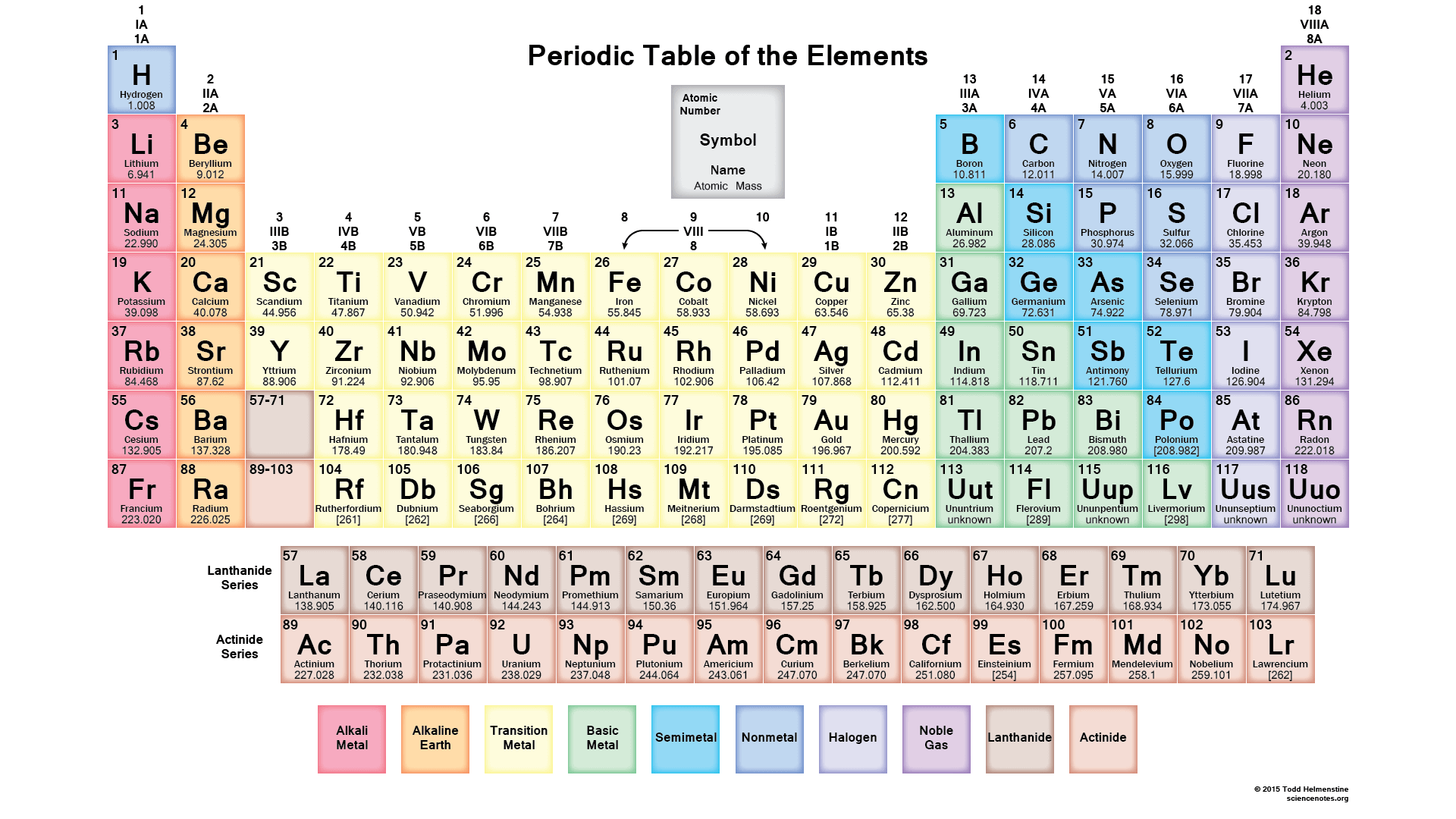
1.

period

a)

Elements that occur in vertical columns on the periodic table.

b)

A horizontal row of elements in the periodic table

c)

Found in group two of the periodic table; highly reactive

d)

A subatomic particle that has a negative charge

2.

not able to conduct heat or electricity, little to no metallic luster

a)

Non-metals

b)

noble gases

c)

atomic mass

d)

Neutron

3.

Elements that occur in vertical columns on the periodic table.

a)

Neutron

b)

metalloids (semimetals)

c)

groups

d)

Proton

4.

The vertical (up and down) columns in the Periodic Table are called

a)

groups

b)

towers

c)

periods

d)

atomic numbers

5.
The Modern Periodic Table of Elements is arranged by
a)
atomic mass
b)
atomic number
c)
valence electrons
d)
number of isotopes
6.
Sodium (Na) is found in period 
a)
3
b)
2
c)
4
d)
1
7.
Sodium (Na) is found in group 
a)
1
b)
2
c)
3
d)
4
8.
These are found on the Periodic Table.
a)
Compounds
b)
Elements
c)
Mixtures
9.

The horizontal (side to side) rows in the Periodic Table are called

a)

groups

b)

families

c)

periods

d)

atomic numbers

10.
All matter is made of .....
a)
energy 
b)
atoms 
c)
air
d)
chemistry
11.
Which item on this element square is the chemical symbol?
a)
Copper
b)
29
c)
Cu
d)
63.546
12.
What is the chemical symbol for Lithium?
a)
H
b)
He
c)
Li
d)
N
13.
A substance composed of two or more elements chemically bonded together.  Examples are H2O and CO2.
a)
Element
b)
Compound
c)
Electron Cloud
d)
Metalloid
14.

Which two elements on the periodic table are in the same group?

a)

Na and He

b)

O and C

c)

Li and Ne

d)

He and Ar

15.

Which pair of properties describes the elements in Group 1?

a)

They are chemically stable

b)

They have 8 valence electrons

c)

They are the most reactive metals

d)

They are the most reactive non metals

16.

What properites do nonmetals have in common?

a)

Poor conductor of electricity

b)

Good conductor of thermal energy

c)

Soft and Malleable

d)

Shiny, lustrous surface

17.

Metals are...

a)

dull, brittle, insulators.

b)

shiny or dull, brittle, semiconductor.

c)

shiny, malleable, conductors.

d)

shiny, dull, insulator.

18.
a)

Metal

b)

Nonmetal

c)

Metalloid

19.
Elements on the periodic table are arranged in increasing order of ______________.
a)
number of neutrons
b)
atomic number
c)
isotopes
d)
charge
20.
Elements which are shiny, conduct electricity and heat are called
a)
metal
b)
nonmetal
c)
metalloid
d)
nonexistent
21.

Carbon

a)

CA

b)

C

c)

Ca

d)

Cn

22.

Sn

a)

tin

b)

sulfur

c)

iron

d)

sodium

23.

Zinc

a)

Z

b)

Zi

c)

ZN

d)

Zn

24.

Sulfur

a)

Sf

b)

Su

c)

Sr

d)

S

25.

Neon

a)

N

b)

No

c)

Ne

d)

Nn

26.

Calcium

a)

Cl

b)

Ca

c)

C

d)

Cm

27.

Copper

a)

CU

b)

Cp

c)

Cu

d)

Cr

28.

Helium

a)

He

b)

Hl

c)

HE

d)

Hm

29.

Hydrogen

a)

Hy

b)

H

c)

Hr

d)

Hn

30.

N

a)

Sodium

b)

Nitrogon

c)

Nonium

d)

Nitrogen

31.

Gold

a)

Go

b)

Gl

c)

AU

d)

Au

32.

Pb

a)

Gold

b)

Lead

c)

peanut butter

d)

Paribium

33.

Iron

a)

Ir

b)

In

c)

Fe

d)

FE

34.

Nickel

a)

Ni

b)

N

c)

Nl

d)

Nc

35.

Mercury

a)

Me

b)

Hg

c)

HG

d)

ME

36.

Iodine

a)

Ie

b)

I

c)

Id

d)

Io

37.

Potassium

a)

P

b)

K

c)

Pt

d)

k

38.

Aluminum

a)

A

b)

Al

c)

Am

d)

Au

39.

Mg

a)

Manganese

b)

Mangium

c)

Magnesium

d)

Manzanium

40.

Xenon

a)

Xe

b)

X

c)

Xn

d)

Xo