wayground logo

Free Printable Worksheets

Font size

S
M
L
XL
Worksheets

primary

Total questions: 99

Worksheet time: 3hrs 31mins
Name
Class
Date
1.
wood is a _____?
a)
conductor
b)
insulator
2.
Silver is a _____?
a)
insulator
b)
conductor
3.
A material in which electrons are able to move easily
a)
Circuit
b)
Insulator 
c)
Resistance 
d)
Conductor 
4.
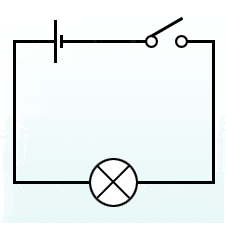
this circuit is .....?
a)
open
b)
parallel
c)
closed
d)
The cutest little circuit evah!
5.
A fifth grade class constructed this circuit.  Which of these objects most likely made the light glow when connected to points X and Y?
a)
plastic straw
b)
cotton string
c)
aluminum foil
d)
rubber eraser
6.
Which of these substances conducts electricity the best?
a)
wood
b)
brick
c)
copper
d)
plastic
7.
What is the power source for this circuit?
a)
Battery
b)
Electric socket
c)
Wires
d)
Magic
8.
An object through which electrons can easily flow is called a(n) ___________.
a)
Conductor
b)
Insulator
9.
Which one is a conductor? 
a)
wood 
b)
iron 
c)
plastic spoon 
d)
paper 
10.
If u add more batteries to your circuit with one light bulb it will get brighter. 
a)
True
b)
False 
11.
A circuit in which energy can freely flow.
a)
Closed Circuit
b)
Free Circuit
c)
Open Circuit
d)
Energy Circuit
12.
Choose the correct sentence.
a)
This circuit will work because it is an open circuit.
b)
This circuit will work because it is a closed circuit.
c)
This circuit will NOT work because it is an open circuit.
d)
This circuit will NOT work because it is a closed circuit.
13.
Which will light a bulb?
a)
A battery and a paper clip
b)
A battery and a wire
c)
A paper clip and a wire
d)
A switch and a wire
14.
To have a complete electric circuit, the path must be _____
a)
small
b)
closed
c)
big
d)
open
15.
In most electrical circuits, the pathway is made of:
a)
Metal
b)
Plastic
c)
Static
d)
Wood
16.
What is a common energy source for a circuit?
a)
A battery
b)
A bulb
c)
A wire
d)
An appliance
17.
Who is this?
a)
Grouch
b)
Grinch
c)
Gus
d)
Gary
18.
What's my name?
a)
Tweety Bird
b)
Whirlly Bird
c)
Angry Bird
d)
Mocking Bird
19.
Who Am I?
a)
Rez
b)
Taz
c)
Moz
d)
Wez
20.
Name this guy.
a)
Waggy
b)
Shaggy
c)
Yaggy
d)
Baggy
21.

If a circuit is OPEN...

a)

the circuit is complete and the light will work.

b)

the circuit is broken and the light will NOT work

c)

the circuit is a series circuit

22.

What are the three components needed for a complete circuit?

a)

wire, load, energy source

b)

wire, switch, load

c)

wire, switch, energy source

23.

A series circuit...

a)

has a single path for energy to flow

b)

has multiple paths for energy to flow

c)

has a single load

24.

A battery can be a ______________ in an electric circuit.

a)

energy source

b)

load

c)

switch

25.

A complete, unbroken path that allows electricity to flow is called a ___________ circuit.

a)

open

b)

closed

c)

parallel

26.

The buildup or electrical charges is called ________. It is what makes clothes stick together.

a)

static electricity

b)

charged particles

27.

What type of circuit is this?

a)

parallel circuit

b)

series circuit

c)

open circuit

d)

closed circuit

28.

What type of circuit is shown?

a)

series circuit

b)

open circuit

c)

parallel circuit

29.

Will the light bulb light in this circuit?

a)

Yes

b)

No

30.

Is a plastic fork an insulator or conductor?

a)

insulator

b)

conductor

31.

Is a paperclip an insulator or a conductor?

a)

insulator

b)

conductor

32.

Which of the following is an insulator?

a)

nail

b)

screw

c)

cardboard

d)

copper sheet

33.

When ___________ and __________ charges are not balanced they can cause object to attract to one another.

a)

positive, positive

b)

positive, negative

c)

negative, negative

34.

Which of the following is a conductor?

a)

plastic chip

b)

yarn

c)

brass ring

d)

paper

35.

Anything that takes up space and has mass is

a)

Matter

b)

Volume

c)

Liquid

d)

Atom

36.

A solid

a)

has particles that are far apart

b)

has a size and shape of its own

c)

takes the shape of its container

37.

The smallest part of matter and makes up molecules

a)

is an atom

b)

is a molecule

c)

is a gas

d)

is matter

38.

Oxygen is

a)

a gas you can breathe

b)

a solid you can eat

c)

a liquid which changes shape

d)

a brother to carbon dioxide

39.

In a _______ the molecules are close together.

a)

solid

b)

liquid

c)

gas

40.

All _______ can move and flow.

a)

liquids

b)

solids

c)

gases

41.

An example of a solid is

a)

a desk

b)

oxygen

c)

water

d)

juice

42.

An example of a liquid is

a)

honey

b)

a stapler

c)

a water bottle

43.

One similarity between solids, liquids and gases is

a)

all three have atoms and molecules

b)

all three have molecules that are close together

c)

all three take the shape of their containers

44.

A ________ has no shape and no size.

a)

gas

b)

liquid

c)

solid

45.

What method can we use to separate materials of different sizes?

a)

Filtering

b)

Sieving

c)

Evaporating

d)

Decanting

46.

Which of the following is an example of insoluble material?

a)

Salt and water

b)

Sugar and water

c)

Flour and water

d)

Coffee and water

47.

What method could we use to separate insoluble materials?

a)

Decanting

b)

Filtering

c)

Dissolving

d)

Evaporating

48.

What process would help us reverse (undo) mixing of soluble substances?

a)

Sieving

b)

Filtering

c)

Decanting

d)

Evaporating

49.

What energy source do we need to evaporate a liquid?

a)

Electricity

b)

Heat

c)

Light

d)

Gas

50.

How would you separate stones, sand and salt?

4 lines
51.

How could you speed up the process of dissolving?

a)

Use more water

b)

Use warmer water

c)

Use more salt

d)

Use colder water

52.

Which of these is a reversible change?

a)

Melting chocolate

b)

Baking cakes

c)

Burning wood

d)

Cutting paper

53.

Which of these is an irreversible change?

a)

Mixing salt and water

b)

Burning toast

c)

Melting wax

d)

Mixing sugar and water

54.

What is absorption?

a)

The bending of light when it moves through one kind of matter to another

b)

The bouncing of light off an object

c)

The taking in of light by a material

55.

What is reflection?

a)

The bending of light when it moves through one kind of matter to another

b)

The bouncing of light off an object

c)

The taking in of light by a material

56.

What is refraction?

a)

The bending of light when it moves through one kind of matter to another

b)

The bouncing of light off an object

c)

The taking in of light by a material

57.

Light is a kind of ____.

a)

color

b)

reflection

c)

energy

d)

heat

58.

What happens to light after it hits a mirror?

a)

It bounces off the mirror.

b)

It goes around the mirror.

c)

It goes straight through the mirror.

d)

It goes through the mirror and bends.

59.

Which of these describes how light travels through an empty space?

a)

It travels straight but may change direction to avoid objects.

b)

It changes direction often even if there are no objects.

c)

It comes to a stop after it travels a certain distance.

d)

It travels in a straight line without stopping.

60.

What does the pencil in this picture show about light?

a)

Light is refracted when it hits a curved object.

b)

Light is reflected when it hits a curved object.

c)

Light is refracted when it passes from air into water.

d)

Light is reflected when it passes from air into water.

61.

What kind of surface best reflects light?

a)

dull

b)

shiny

c)

clear

d)

black

62.

What kind of path does light take?

a)

straight

b)

curvy

c)

up and down

d)

zig zag

63.

What happens to light when it passes through a prism? Select all that apply.

a)

The light is refracted (bends) as it passes through the prism.

b)

All of the light is reflected off the surface of the prism.

c)

Each color that makes up the light bends a different amount.

d)

The light does not pass through the prism.

e)

The light breaks into the colors of the rainbow.

64.

How is refraction different from reflection?

a)

Refraction is the taking in of light, while reflection is the bouncing of light off an object.

b)

Refraction is the bouncing of light off an object, while reflection is the bending of light when it moves through one kind of matter to another.

c)

Refraction is the bending of light when it moves through one kind of matter to another, while reflection is the taking in of light.

d)

Refraction is the bending of light when it moves through one kind of matter to another, while reflection is the bouncing of light off an object.

65.

These cars have been parked outside for a long time on a sunny day. What is the name of the process that affects the cars' temperatures?

a)

reflection

b)

refraction

c)

absorption

66.

These cars have been parked outside for a long time on a sunny day. Which car will be the hottest?

a)

The black car

b)

The white car

c)

The red car

67.

These cars have been parked outside for a long time on a sunny day. Which car will be the coolest?

a)

The black car

b)

The white car

c)

The red car

68.

These cars have been parked outside for a long time on a sunny day. Which car will be neither the hottest nor the coolest (medium temperature)?

a)

The black car

b)

The white car

c)

The red car

69.
The Heart has how many chambers?
a)
1
b)
2
c)
3
d)
4
70.
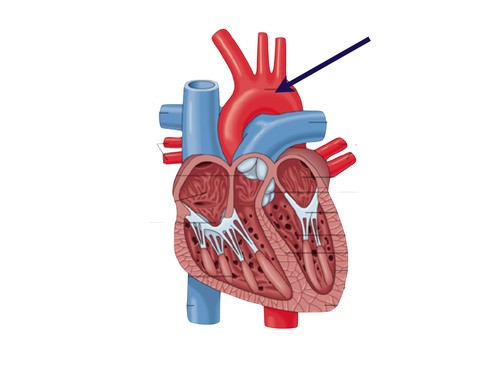
What part of the heart is the arrow pointing to?
a)
Pulmonary veins
b)
Pulmonary artery
c)
Aorta
d)
Vena cava
71.
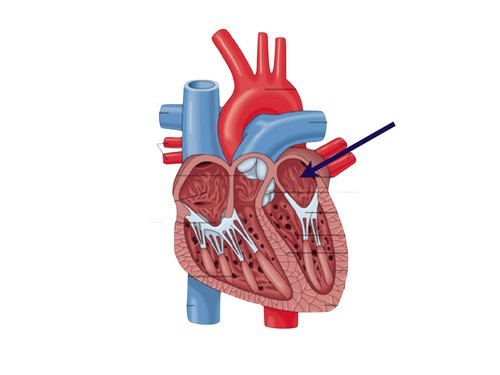
Identify the chamber the arrow is pointing to.
a)
Left atrium
b)
Right atrium
c)
Left ventricle
d)
Right ventricle
72.
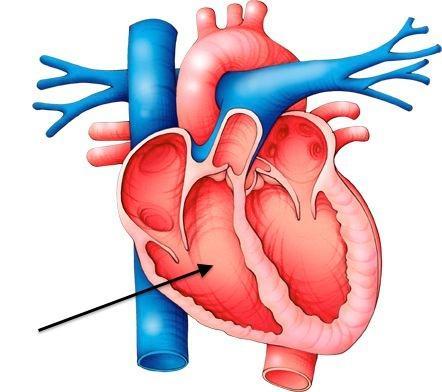
Identify the chamber the arrow is pointing to.
a)
Left atrium
b)
Right atrium
c)
Left ventricle
d)
Right ventricle
73.
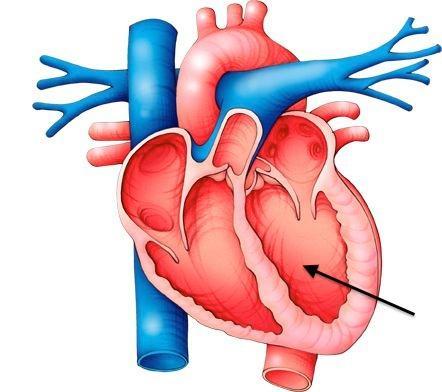
Identify the chamber the arrow is pointing to.
a)
Left atrium
b)
Right atrium
c)
Left ventricle
d)
Right ventricle
74.
These blood vessels carry blood Away from the Heart
a)
Arteries
b)
Veins
c)
Capillaries
d)
Atrium
75.
These blood vessels carry our blood to the Heart.
a)
Arteries
b)
Capillaries
c)
Veins
d)
Ventricles
76.
Arteries, veins and capillaries are all types of these
a)
Blood Vessels
b)
Pulmonary Circulation
c)
Blood Cells
d)
Brain Cells
77.
The Blood Vessels where the exchange of Oxygen and CO2 (carbon dioxide) takes place are the_______.
a)
Arteries
b)
Veins
c)
Capillaries
78.
What is pulmonary circulation?
a)
Blood travelling between the heart and lungs.
b)
Blood travelling to the heart and the rest of the body.
c)
A blood clot in the lungs
d)
The vessel that brings blood to the lungs
79.
Blood traveling from the heart to the rest of the body is called our __________________ circulation.
a)
Full body
b)
Systemic
c)
pulmonary
d)
heart to lung
80.
Which is the correct definition of the Circulatory system?
a)
The system fights disease so the body stays healthy.
b)
The system that circulates blood and oxygen through the body, consisting of the heart,blood vessels,and blood.
c)
Breaks down food into smaller pieces and absorbs those nutrients into the body.
d)
Provides shape and structure for the body.
81.
What is the function of the heart?
a)
Protects organs and produces red blood cells.
b)
Generates heat.
c)
Breaks down food into nutrients.
d)
Pumps blood
82.
What is the function of the Circulatory System?
a)
Circulates the Blood throughout the body
b)
Circulates Water throughout the body
c)
Excretes Waste
d)
Controls all parts of the body
83.
What is the range of our Resting Heart Rate?
a)
130-170
b)
60-100
c)
200-220
d)
0-100
84.
When sitting in class, what Heart Rate Zone are we in?
a)
Maximum
b)
Target
c)
Resting
d)
Overdrive
85.
What is our Target Heart Rate zone?
a)
130-170
b)
100-200
c)
60-100
d)
200-220
86.
How do we find our Maximum Heart Rate?
a)
100 + your age
b)
200 - your age
c)
0 + your age
d)
220 - your age
87.
What exercise will most likely get you in your Target Heart Rate zone?
a)
walking
b)
10 push-ups
c)
running a mile
d)
5 jumping jacks
88.
When coloring our heart, blue represented areas of our heart with________________.
a)
more oxygen 
b)
less oxygen
c)
more CO2 (carbon dioxide)
d)
less CO2 (carbon dioxide)
89.
What is in the nucleus of an atom? 
a)
Protons 
b)
Neutrons
c)
Electrons 
d)
Protons and Neutrons 
90.
What is the negatively charged particle in an atom? 
a)
Proton
b)
Neutron
c)
 Electron 
91.
What particle almost has no mass in the atom? 
a)
Proton 
b)
Neutron
c)
Electron 
92.
What particle determines the name of the element? 
a)
Proton 
b)
Neutron 
c)
Electron 
93.
What particle in the atom has a positive charge? 
a)
Proton 
b)
Neutron 
c)
Electron 
94.
What is another name for atom? 
a)
Nucleus 
b)
Element 
c)
Subatomic 
95.
What does subatomic mean? 
a)
Bigger than an atom
b)
Smaller than an atom 
c)
Same size as the atom
96.
Atoms make up all _____________. 
a)
Matter 
b)
Space 
c)
Time 
97.
What do electrons do in the atom? 
a)
They are apart of the nucleus 
b)
They orbit or move around the nucleus 
c)
They do nothing 
98.
What particle makes chemical reactions possible? 
a)
Protons
b)
Neutrons 
c)
Electrons 
99.
When you put multiple atoms together it creates what? 
a)
Molecule 
b)
Mass 
c)
Nothing