
 Worksheets
T2. Physics test Part 2
Total questions: 120
Worksheet time: 2hrs 13mins
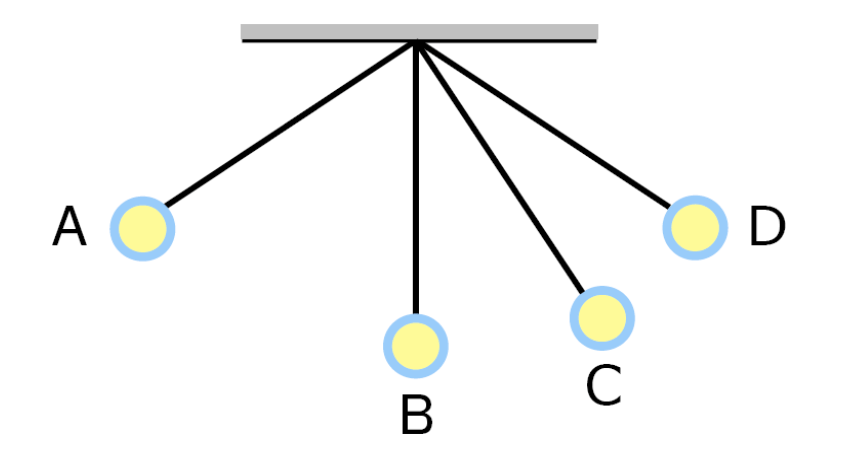
Maximum gravitational potential energy (choose all that apply)
A
B
C
D



Which objects in the list experience an unbalanced force?

An object has the least amount of Potential Energy at which point in the image?
A
B
F
D


A wrench is used to tighten a nut. A 15N perpendicular force is applied 0.50m away from the axis of rotation, and moves a distance of 10 cm as it turns. What is the torque applied to the wrench?
7.5 Nm
1.5 Nm
750 Nm
150 Nm
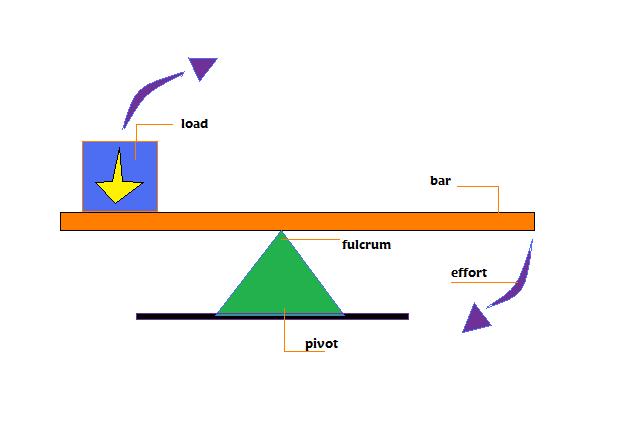
What force does not cause any torque?
Force perpendicular to the fulcrum.
Force horizontal to the planck.
Force slightly off center of the fulcrum
Forces at a 45 degree angle to the fulcrum, and not on the fulcrum


If the torque required to loosen a nut on the wheel of a car has a magnitude of 60.0 N• m, what minimum perpendicular force must be exerted by a mechanic at the end of a 0.5m wrench to loosen the nut?
.666 Nm
120 N
66.7 N
13.3 Nm


A state of equilibrium is also seen below. Each of the cars weighs the same 9800 N. Despite the fact that there is only one car on the left-hand side that is 9 m from the fulcrum, the torques balance because, the cars on the right-hand side, are ____meters from the fulcrum.
4.5 m
3 m
1 m
2 m

Find the magnitude of the torque produced by a 5.0 N force applied to a door at a perpendicular distance of 0.65m from the hinge.
75 Nm
3.25 Nm
6.3 Nm
8.75 Nm


The momentum of an object depends upon the object's ___________&_____________.
size and shape
mass and weight
mass and veloctiy
Speed and energy
The variables that make up the "Momentum Equation" are...
m = mass
v = velocity
p = momentum
m = miles
v = velocity
p = momentum
m = mass
v = distance
p = momentum
None of these options
What are the correct units when calculating for "Momentum"?
g m/s
kg m/s^2
kg m/s
None of these options
Which of the following is conserved in a collision?
Conservation of charge
Conservation of mass
Conservation of momentum
Conservation of energy

mass
Velocity
force
acceleration
An impulse depends on
weight and force
force and time
electric charge and time
none of these
What object has the most Momentum
20kg moving 2m/s
20kg moving 8m/s
20kg moving 10m/s
20kg moving 1m/s
A 5kg object is moving 3m/s, what is the momentum?
15kgm/s
5kgm/s
3kgm/s
2kgm/s
To reduce the time of an impact I must
Make the force stronger
Make the force weaker
Make the distance shorter
Make the object more squishy
During a collision. an object experiences an impulse. How can this impulse be calculated?
Multiplying force by time
Multiplying mass by velocity
Dividing velocity by time
Multiplying mass by acceleration
Change in momentum is called:
Force
Impulse
Acceleration
Torque
Momentum is a ____ quantity.
Energy
Science
Scalar
Vector
The impulse experienced by a body is equal to the change in its _____.
Velocity
Momentum
Kinetic Energy
Potential Energy

What is happening to the ice skater?
Decreased Angular velocity, decreased rotational inertia
Decreased Angular velocity, increased rotational inertia
Increased Angular velocity, increased rotational inertia
Increased Angular velocity, decreased rotational inertia

What does Rotational Inertia depend on?
Mass
Mass Distribution
Both Mass and its Distribution
Neither Mass nor its distribution

Does this woman have a high or low rotational inertia?
High
Low
Angular Momentum is the product of...
rotational inertia and linear velocity.
linear inertia and angular velocity.
linear momentum and angular velocity
rotational inertia and angular velocity.

Which of these objects has the most rotational inertia?
Left
Middle
Right

Which of these items is easier to turn?
Left
Right
Both are just as easy to turn

What happens to rotational inertia of an object when mass is moved close to axis of rotation?
Decreases
Increases
Stays the Same
The transfer of energy through motion is....
Work
Energy Transfer
Fuel
Elastic
The ability to cause change or the ability to do work is...
Fuel
Thermal
Energy
Joules
Something that provides energy to do work
potential
Fuel
gravity
sun
Energy comes in two primary forms. These are...?
endothermic, exothermic
molecular, non-molecular
thermal, mechanical
potential, kinetic
Energy that is stored is....
Possible
Potential
Kinetic
Latent
This type of energy means the amount of energy an object has the opportunity to expel or release
Gravitational
Kinetic
Elastic
Potential
This form of energy is energy that is in motion....
kinetic
force
potential
elastic
Energy that is being used is.....
Kinetic
Potential
Work
Thermal
Energy and Work are measured in....
meters
grams
joules
time
Energy can be stored.
True
False
Fill in the blank:
The formula for Work is....W = F x ___
D, depends
D, depth
D, diameter
D, distance
The formula for Work is....W = F x D, what does F stand for?
Fight
Force
Forward
Foreign
Energy that is stored by an object due to its position above the ground. Depends on weight and height
Elastic Potential Energy
Chemical Potential Energy
Gravitational Potential Energy
Name a source of chemical potential energy
sun
heater
gasoline
neon light
You are moving a couch across the living room. The couch weighs 420 N and you need to move it 6 meters. Which formula are you going to use?
work
kinetic energy
potential energy
You are moving a couch across the living room. The couch weighs 420 N and you need to move it 6 meters. Calculate the work.
420 j
2520 j
2400 j
1600 j
Energy is the ability to do work or cause changes.
True
False
A car at the top of the drop on a roller coaster has ________ energy.
potential
kinetic
chemical
sound
A car rolling down the drop of a roller coaster has ________ energy.
potential
kinetic
chemical
sound
We receive ________ and heat energy from the Sun.
sound
mechanical
radiati
kinetic
Food has which two types of energy stored inside of it?
kinetic
potential
light
chemical
sound
Which of the following is an example of kinetic energy?
A rock at the top of a hill.
Water falling down a waterfall.
A pencil sitting on a desk.
A backpack on the ground.
Objects with a higher temperature have particles that are vibrating _______.
faster
slower
Pushing a filing cabinet across the room is an example of ________ energy.
radiati
thermal
chemical
mechanical
_________ energy is the energy of motion.
Potential
Kinetic
Thermal
Sound
_______ energy is stored energy.
Potential
Kinetic
Light
Sound
______ energy is a type of potential energy that is stored in links between molecules of food and fuel.
Mechanical
Light
Chemical
Sound
Potential and kinetic energy combined are the ________ energy an object has.
light
chemical
mechanical
sound
______ energy is the energy of moving particles of matter.
Light
Thermal
Potential
Chemical
_____ is the flow of thermal energy from one substance to another.
Heat
Light
Sound
Movement
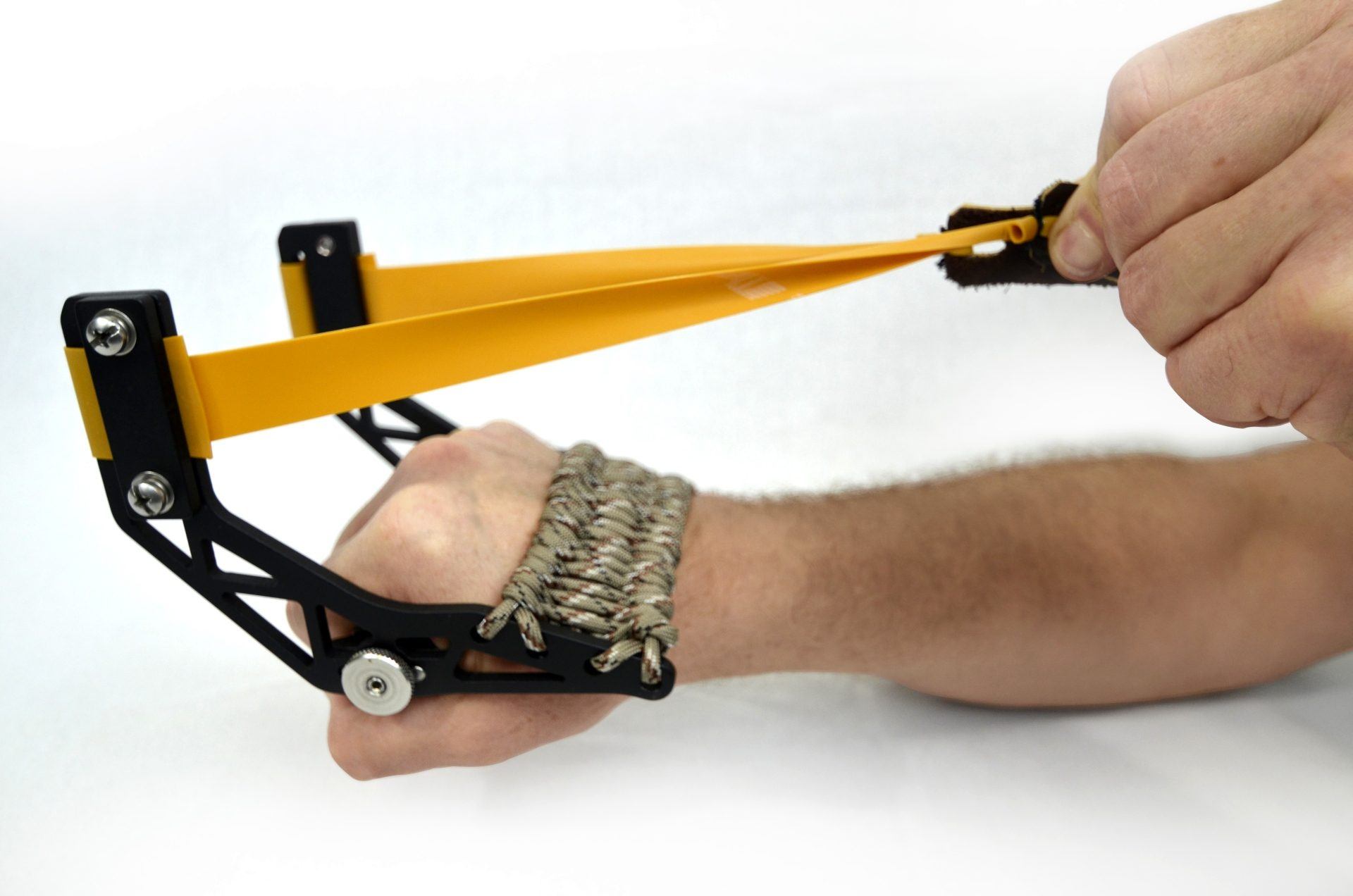




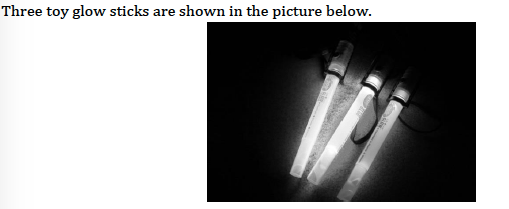
thermal to radiat
gravitational to potential
radiant to electrical
chemical to radiant


A lamp that plugs into a wall socket draws energy, which flows through a thin wire in the bulb, causing it to heat up until it glows. What energy transformations are taking place?
Chemical → light → electrical
Mechanical → sound → light
Thermal → solar → electrical
Electrical → thermal → light

Turning the handle makes a current that causes the light bulb to glow. What are the energy transformations that happen in this hand generator?
Thermal → solar → light
Mechanical → electrical → light
Electrical → mechanical → light
Solar → light → electrical
When energy enters a system and then comes out of the system later, the law of conservation of energy states that–
some of the energy that entered the system will remain in the system.
the energy will always create a change in the properties of the parts of the system.
the form of energy that comes out of the system must be the same form that entered.
the amount of energy coming out of the system must equal the energy that entered the system.
In which of the following scenarios would this energy transformation be observed?
chemical → light → heat
Plucking a guitar string
Lighting a match
Turning on a fan
Starting a car
The law of conservation of energy states ___.
electrical energy can be transformed into other forms
energy can be created and destroyed
energy is never created nor destroyed
what goes up must come down
A baseball is hit into the air with a bat. When does baseball have the greatest gravitational potential energy?
when it hits the ground
when it reaches its highest point
when it leaves the bat
when the mechanical and kinetic energies of the baseball are equal

What type of energy is stored in a battery?
electrical
thermal
radiant
chemical
Which energy transformation occurs in a toaster?
electrical → thermal
chemical → thermal
nuclear → electrical
thermal → electrical
A battery converts what type of energy to another?
electrical → thermal
chemical → electrical
kinetic → nuclear
light → heat
Energy transformations occur when ___.
a chemical reaction takes place
energy changes from one form to another
energy is created through conduction
two forces slide together that are touching
Which items would have this energy transformation: chemical → mechanical
a candle burning
eating a big breakfast before a race
a ball bouncing
using a hairdryer
Which of the following is not a source of stored chemical energy that can be turned into a form of kinetic energy?
a battery in a toy car
food
the nucleus of an atom
fossil fuels

What is this simple machine?
Wedge
Inclined plane
Lever
Screw

What is this simple machine?
Wedge
Inclined plane
Lever
Screw

What is this simple machine
Wedge
Inclined plane
Lever
Screw

What is this simple machine?
Wedge
Inclined plane
Lever
Screw

What is this simple machine?
Pulley
Wheel and axle
Lever
Screw

What is this simple machine
Pulley
Wheel and axle
Lever
Screw
This simple machine ______________
cuts
holds things together
moves heavy objects
changes the direction of a force
Simple machines help you make work __________.
easier
more difficult
interesting
wonderful
This simple machine connects levels.
lever
wheel and axle
pulley
screw
inclined plane
This simple machine helps you to move heavy things across distance.
lever
wheel and axle
pulley
screw
inclined plane
This simple machine holds things together,
lever
wheel and axle
pulley
screw
inclined plane
This simple machine cuts things.
lever
wheel and axle
wedge
screw
inclined plane
This simple machine moves and lifts objects.
lever
wheel and axle
wedge
screw
inclined plane
This simple machine changes the direction of a force.
lever
wheel and axle
wedge
pulley
inclined plane

