
 Worksheets
APS Semester 1 Review
Total questions: 116
Worksheet time: 2hrs 28mins
Name
Class
Date
1.
0.57 mL = ___________ L
a)
5.7
b)
0.057
c)
0.0057
d)
0.00057
2.
Is 55,000 mg greater than, less than, or equal to 5 kg?
a)
greater than
b)
equal to
c)
less than
3.
120 mm = ______ cm
a)
1,200
b)
20
c)
12
d)
120,000
4.
1,000 cm = _____ m
a)
100
b)
10
c)
1
d)
10,000
5.
28.5 kg = ____ mg
a)
28,500
b)
28,500,000
c)
0.0285
d)
0.0000285
6.
When writing a number in scientific notation, the first number must be greater than 1, but less than 10.
a)
False
b)
True
7.
How would you write 0.0005 in scientific notation?
a)
50 x 10-5
b)
5 x 10⁻⁴
c)
5 x 10⁻³
d)
.5 x 10-3
8.
How do you write
8.317 x 10⁶
in standard form?
8.317 x 10⁶
in standard form?
a)
8,371,000
b)
83,170,000
c)
837,100
d)
8,317,000
9.
Express the following in standard notation:
8.025 x 10⁻⁸
8.025 x 10⁻⁸
a)
.00000008025
b)
.000000008025
c)
802,500,000,000
d)
80,250,000,000
10.
How many seconds are in 1 day?
a)
43,200 sec
b)
1440 sec
c)
86,400 sec
d)
3,600 sec
11.
How many cm are there in 1 ft? (1 in = 2.54 cm)
a)
12 cm
b)
30.48 cm
c)
91.44 cm
d)
4.72 cm
12.
How many yards are there in 1 km?
(1 in = 2.54 cm)
(1 in = 2.54 cm)
a)
13,123.4 yards
b)
3,280.8 yards
c)
1,093.6 yards
d)
393.7 yards
13.
How many inches are in 1 mile?
a)
5280 in
b)
63360 in
c)
160934.4 in
d)
66330 in
14.
How many significant digits are there in "8003"?
a)
1
b)
2
c)
3
d)
4
15.
How many significant digits are there in "0.0805"?
a)
2
b)
3
c)
4
d)
5
16.
Round "0.002927" to three significant digits.
a)
0.01
b)
0.00293
c)
0.00292
d)
0.0029
17.
Solve and round accordingly.
"7.9 + 9.19 + 75.351"
"7.9 + 9.19 + 75.351"
a)
92.4
b)
92.441
c)
92.44
d)
92
18.
Solve and round accordingly.
"9.4991 - 7.3"
"9.4991 - 7.3"
a)
2.2
b)
2.1991
c)
2.200
d)
2.20
19.
Solve and round accordingly.
"791.6 x 52"
"791.6 x 52"
a)
41000
b)
41
c)
41160
d)
41200
20.
Solve and round accordingly.
"730 / 1.89"
"730 / 1.89"
a)
390
b)
386.243
c)
386
d)
386.24
21.
Solve and round accordingly.
"80 / 6.64"
"80 / 6.64"
a)
10
b)
12.0
c)
12.1
d)
12
22.
What is our two word "definition" for hypothesis?
a)
Tentative Explanation
b)
Educated Guess
c)
Lab Question
d)
Step One
23.
How many variables can you change in an experiment?
a)
1
b)
2
c)
3
d)
depends on the experiment
24.
What type of variable is purposefully changed in an experiment?
a)
dependent
b)
independent
c)
control
d)
command
25.
What type of variable is measured in an experiment?
a)
dependent
b)
independent
c)
control
d)
command
26.
What type of variable is held constant throughout an experiment?
a)
dependent
b)
independent
c)
control
d)
command
27.
What are the two I's of the I2 strategy?
a)
Incredible and Inconceivable
b)
Imagine and Impress
c)
Indicate and Inform
d)
Identify and Interpret
28.

The correct equation to calculate speed is
a)
distance/time
b)
time/distance
c)
distance x time
d)
distance/time2
29.

What is velocity?
a)
the quickness of an object
b)
the location of an object
c)
acceleration
d)
speed in a specific direction
30.

Total distance divided by total time is
a)
average speed
b)
constant speed
c)
instantaneous speed
d)
acceleration
31.

Alan travels 100 km in 5hrs. Find his average speed in km/h
a)
5km/hr
b)
10km/hr
c)
50km/hr
d)
20km/hr
32.

How far will a person go if they jog for 2 hours at a speed of 12 km/hr?
a)
6 km
b)
0.5 km
c)
10 km
d)
24 km
33.

What is happening at D?
a)
Stationary
b)
Accelerating
c)
Fast steady speed; moving away from the starting position
d)
Slower steady speed; moving away from the starting position
34.

What is happening at E?
a)
Stationary
b)
Accelerating
c)
Fast steady speed; moving away from the starting position
d)
Steady speed; returning to start position
35.

What is happening at A?
a)
Stationary
b)
Accelerating
c)
Slower steady speed; moving away from the starting position
d)
Steady speed; returning to start position
36.

Which runner won the race?
a)
A
b)
B
c)
C
d)
It was a tie
37.

Which runner had a head start?
a)
A
b)
B
c)
C
d)
None of them
38.
John took 90 minutes to bicycle to his grandmother's house, a total of 6 kilometers. What was his speed (pay attention to units)?
a)
540 km/hr
b)
.066 km/hr
c)
4 km/hr
d)
9 km/hr
39.
Which of the following is a unit for acceleration?
a)
km/s
b)
m/s2
c)
mi/hr
d)
ft
40.
Acceleration of an object happens when things ________
a)
slow down
b)
go faster
c)
change direction (turn)
d)
All of the above
41.
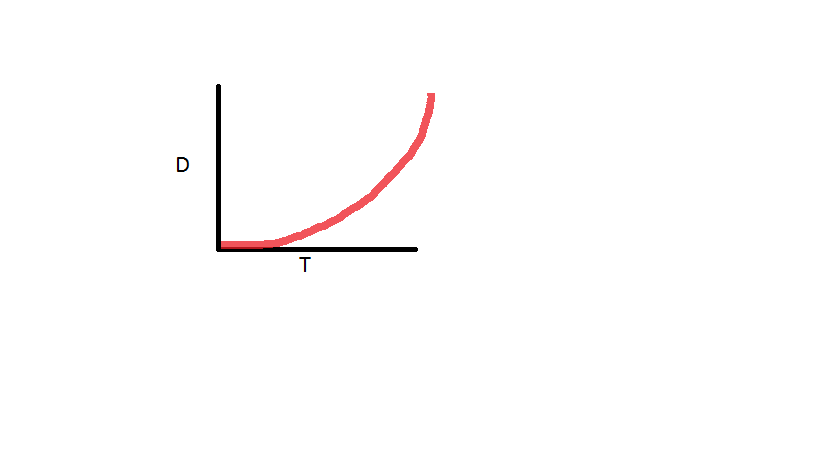
The graph represents
a)
Speed
b)
Velocity
c)
Acceleration
d)
Deceleration
42.
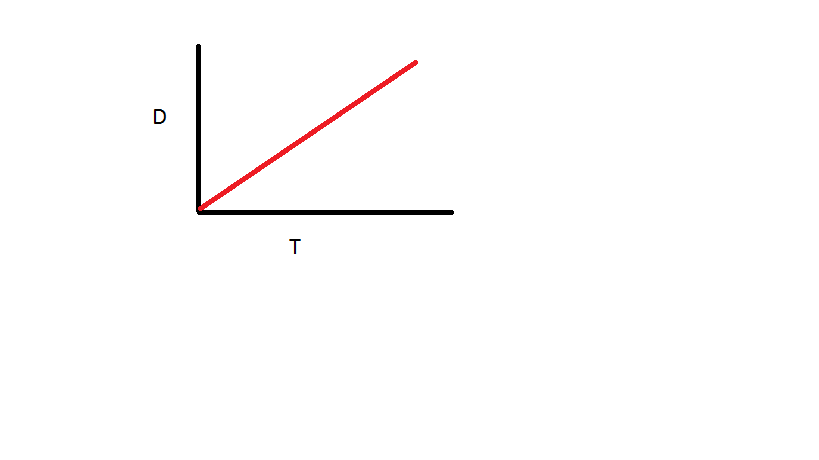
The graph represents
a)
Acceleration
b)
No motion
c)
Deceleration
d)
Constant Velocity
43.

The graph represents
a)
No motion
b)
Constant Velocity
c)
Acceleration
d)
Deceleration
44.

The graph represents
a)
no motion
b)
Constant velocity
c)
Acceleration
d)
negative acceleration
45.

The graph represents
a)
no motion
b)
constant velocity
c)
acceleration
d)
negative acceleration
46.
g is defined as
a)
acceleration of all objects in motion
b)
acceleration of objects moving horizontally
c)
acceleration of gravity
d)
none of the above
47.
If a car is traveling forward at 15 m/s, how fast will it be going in 1.2 seconds if the acceleration is -10 m/s/s?
a)
27 m/s
b)
3 m/s
c)
-27 m/s
d)
-3 m/s
48.

A roller coasters accelerates from an initial velocity of 6.0 m/s to a final velocity of 70 m/s over 4 seconds. What's the acceleration?
a)
24 m/s2
b)
18 m/s2
c)
16 m/s2
d)
16 m/s
49.

This graph shows the motion of a remote controlled car from the start of a race to the finish line 10 meters away. Which statement is the best explanation of the graph?
a)
The car is at rest for 4 seconds and then steadily increases in speed
b)
The car is at rest for 4 seconds and then steadily decreases in speed
c)
The car increases in speed for 4 seconds and then decreases in speed
d)
The car decreases in speed for 4 seconds and then increases in speed
50.
When a car goes around a corner at 20 mph, why do we say it accelerates?
a)
The car is accelerating because of the velocity is constant
b)
The car accelerates because it's going 20 mph
c)
Cars always accelerate when they are in motion
d)
The car is accelerating because it's changing direction
51.
Acceleration is a change in ________.
a)
direction
b)
speed
c)
velocity
d)
distance
52.
A rock is dropped off a roof and falls for 1.26 seconds. How tall is the roof?
a)
16 m
b)
7.8 m
c)
6.2 m
d)
38 m
53.
A water balloon is thrown down from a window at a velocity of -18.3 m/s. The water balloon hits an unsuspecting 9th grader 0.95 seconds later. What was the velocity of the balloon as it hit the 9th grader?
a)
9.0 m/s
b)
-9.0 m/s
c)
-28 m/s
d)
28 m/s
54.
An object in free fall has a ____________ acceleration.
a)
constant
b)
increasing
c)
decreasing
d)
random
55.
An object in free fall has a ____________ velocity.
a)
constant
b)
changing
c)
random
d)
scary
56.
What are the units for force?
a)
m/s2
b)
kgm/s
c)
N
d)
kg
57.
What are the units for momentum?
a)
m/s2
b)
kgm/s
c)
N
d)
kg
58.
A force is defined as ________________
a)
how strong you are
b)
U.S. fighter pilots
c)
something you use to blow up the death star
d)
a push or a pull
59.
Which force resists motion?
a)
gravity
b)
normal
c)
friction
d)
tension
60.
What is the attractive force between all objects with mass?
a)
gravity
b)
normal
c)
friction
d)
tension
61.
What is the supporting force that keeps us from falling through the floor?
a)
gravity
b)
normal
c)
friction
d)
tension
62.
An object with a constant velocity will maintain that velocity unless acted on by an unbalanced outside force. This is Newton's ____ Law
a)
1st
b)
2nd
c)
3rd
d)
Not one of Newton's Laws
63.
[Force = mass x acceleration]
This is Newton's ____ Law
This is Newton's ____ Law
a)
1st
b)
2nd
c)
3rd
d)
Not one of Newton's Laws
64.
Every action force has an equal and opposite reaction force. This is Newton's ____ Law
a)
1st
b)
2nd
c)
3rd
d)
Not one of Newton's Laws
65.
[Force = ambition x determination x discipline]
This is Newton's ____ Law
This is Newton's ____ Law
a)
1st
b)
2nd
c)
3rd
d)
Not one of Newton's Laws
66.
If all forces acting on an object are balanced, then the object is _____________.
a)
accelerating
b)
always at rest
c)
at equilibrium
d)
going in circles
67.
If an object is experiencing Net Force ≠ 0, then the forces are _________________ and the object is ___________________.
a)
unbalanced, accelerating
b)
unbalanced, at constant velocity
c)
balanced, accelerating
d)
balanced, at constant velocity
68.
If a teacher weighs 800. N on Earth, what is their mass?
a)
364 kg
b)
81.6 kg
c)
200 lbs
d)
7840 kg
69.
What are the two ways to reduce the friction between two objects?
a)
smoother surfaces, less weight
b)
rougher surfaces, less weight
c)
smoother surfaces, more weight
d)
rougher surfaces, more weight
70.
A teacher has a mass of 80 kg. What is their mass on the moon. (g = 1.6 N/kg)
a)
128 kg
b)
784 kg
c)
80 kg
d)
50 kg
71.
A teacher has a mass of 80 kg. What is their weight on the moon. (g = 1.6 N/kg)
a)
128 N
b)
784 N
c)
80 N
d)
50 N
72.
How does the gravitational force between objects change if you increase the distance between them?
a)
Force decreases
b)
Force increases
c)
Force stays the same
d)
objects can't attract each other through gravity
73.

Which way is the box moving?
a)
to the right
b)
to the left
c)
we only know which way it's accelerating, not which way it's moving
d)
not moving at all
74.

Which way is the object accelerating?
a)
left
b)
right
c)
down
d)
up
75.
If I punch the table, the table will hit back with the exact same force. This is an example of Newton's ____ Law
a)
1st
b)
2nd
c)
3rd
d)
Not one of Newton's Laws
76.
My cousin Jimmy will stay at rest laying on his couch until I apply a force and pull him up. This is an example of Newton's ____ Law.
a)
1st
b)
2nd
c)
3rd
d)
Not one of Newton's Laws
77.

What is the net force?
a)
400 N Up
b)
400 N Down
c)
0 N
d)
800 N Down
78.
Which action requires no Work:
a)
carrying a 25 kg backpack home from school
b)
picking up a pencil off the ground
c)
pushing a table across the floor
d)
lifting a balloon over your head
79.
Energy is measured in units of:
a)
Newtons
b)
Joules
c)
Watts
d)
kg*m/s2
80.
How much work is done when a server lift an 84 N tray of food 0.5 meters and then carries it 30 meters to the other side of the restaurant?
a)
42 J
b)
2520 J
c)
15 J
d)
2562 J
81.
How much force is need to pull a wagon 6.5 meters and do 325 J of work?
a)
50. N
b)
2100 N
c)
0.020 N
d)
330 N
82.
How much work is done to lift a 4.75 kg box to a height of 1.4 m?
a)
6.7 J
b)
65 J
c)
33 J
d)
3.4 J
83.
Gravitational Potential Energy of an object depends on the object's...
a)
speed
b)
acceleration
c)
height
d)
color
84.
Kinetic Energy of an object depends on the objects...
a)
mass and velocity
b)
velocity
c)
weight
d)
mass and height
85.
What is the velocity of a 2.40 kg toy car that has 17.8 J of kinetic energy?
a)
3.85 m/s
b)
7.42 m/s
c)
6.18 m/s
d)
Not enough info
86.
What happens to EP of a book resting on a book shelf if you double it's mass?
a)
gets cut in half
b)
stays the same
c)
doubles
d)
quadruples
87.
How high do you need to lift a 6.0 kg baby to increase it's EP to 180 J?
a)
3.06 m
b)
30. m
c)
0.033 m
d)
7.75 m
88.
How high does Lebron James jump if he has a mass of 113 kg and he leaves the ground with an upward velocity of 5.42 m/s?
a)
1.50 m
b)
0.277 m
c)
3.00 m
d)
2.13 m
89.
A roller coaster with a mass of 1000. kg starts at rest at the top of hill that is 25 m tall. How fast is the roller coaster going after it goes down the hill to a height of 0 m? (Ignore Friction)
a)
7.1 m/s
b)
490 m/s
c)
16 m/s
d)
22 m/s
90.
Lebron James has a mass of 113 kg. When he jumps in the air to grab an alley oop, he has a potential energy of 1940 J. What upward velocity did he have as he left the ground?
a)
5.86 m/s
b)
4.14 m/s
c)
why are you asking me about Lebron?
d)
34.3 m/s
91.
Power has units of:
a)
Newtons
b)
Joules
c)
Watts
d)
kg*m/s2
92.
Work has units of
a)
Newtons
b)
Joules
c)
Watts
d)
kg*m/s2
93.
All energy that supports life on Earth comes from:
a)
the Sun
b)
the Moon
c)
the Earth has always had the same total energy
d)
the Wind
94.
A small child is sledding down a hill. They start with EP of 3000 J and finish with EK of 2400 J. Where did the energy go?
a)
This is a trick question
b)
thermal energy
c)
stored energy
d)
friction
95.
A water heater raises the temperature of water by adding 120,000 J in 85 seconds. What level of Power was used by the water heater?
a)
1400 W
b)
1400 J
c)
96000 W
d)
96000 J
96.
The rate at which Energy is used, defines
a)
Work
b)
Potential Energy
c)
Kinetic Energy
d)
Power
97.
Which two things have the same units?
a)
force and energy
b)
force and work
c)
power and work
d)
work and energy
98.
Mr. O'Neill pushes a table with 800. W of Power for 12 seconds. How much Work was done?
a)
9600 J
b)
67 J
c)
160 J
d)
4800 J
99.
What are the two types of charge?
a)
positive, negative
b)
up, down
c)
big, small
d)
right, left
100.
Different charges ____________, and like charges _______________.
a)
repel, attract
b)
attract, repel
c)
attract, no impact
d)
repel, no impact
101.
This is caused by an imbalance in positive and negative charges.
a)
Electric Current
b)
Voltage
c)
Electric Circuit
d)
Static Electricity
102.
The flow of electric charge is:
a)
Electric Current
b)
Voltage
c)
Electric Circuit
d)
Static Electricity
103.
A complete path through which electricity travels:
a)
Electric Current
b)
Voltage
c)
Electric Circuit
d)
Static Electricity
104.

What does this symbol represent in a circuit diagram?
a)
Battery
b)
Light Bulb
c)
Resistor
d)
Switch
105.

What does this symbol represent in circuit diagrams?
a)
Battery
b)
Light Bulb
c)
Resistor
d)
Switch
106.

What does this symbol represent in circuit diagrams?
a)
Battery
b)
Light Bulb
c)
Resistor
d)
Switch
107.

What does this symbol represent in circuit diagrams?
a)
Battery
b)
Light Bulb
c)
Resistor
d)
Switch
108.
Current only flows in a circuit if the circuit is ___________.
a)
closed
b)
open
c)
full
d)
charged
109.

This is an example of a ______ circuit
a)
Series
b)
Parallel
c)
Open
d)
Dihexihedral
110.
What happens when two north poles of a magnet are placed together?
a)
they repel
b)
they attract
c)
they cancel each other out
d)
the strength of the magnet is doubled
111.

Where could you hold a south pole of a permanent magnet to get the rotor to move counter-clockwise?
a)
A & B
b)
B & C
c)
A & C
d)
B & D
112.

What do the lines around this magnet represent?
a)
North Pole
b)
South Pole
c)
Magnetic Declination
d)
Magnetic Field
113.
On Earth, where is Magnetic North approximately located?
a)
The Equator
b)
The North Pole
c)
The South Pole
d)
New Brighton
114.
A paper clip is an example of a:
a)
magnetic material
b)
permanent magnet
c)
bar magnet
d)
insulator
115.

If the North Pole of a permanent magnet is placed next to a compass as seen in the picture, which direction will the needle move?
a)
Clockwise
b)
Counter-clockwise
c)
It will not move
d)
Need more information
116.

Which direction is the North Pole of this electromagnet?
a)
Right
b)
Left
c)
Up
d)
Down
100 %

