wayground logo

Free Printable Worksheets

Font size

S
M
L
XL
Worksheets

Semester 1 Final Exam Review 2020

Total questions: 121

Worksheet time: 4hrs 58mins

Name
Class
Date
1.

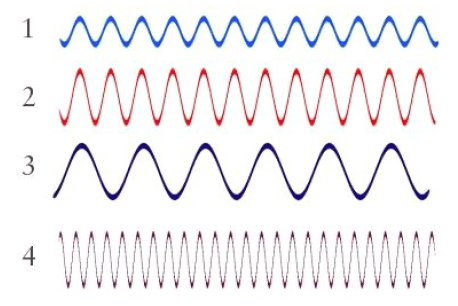
Which transverse wave has the highest frequency?

a)

1

b)

2

c)

3

d)

4

2.
Carries energy from one place to another
a)
Waves
b)
Amplitude
c)
Frequency
d)
Crest
3.
The measurement of the distance the particles move from the resting point of the wave
a)
Wavelength
b)
Frequency
c)
Amplitude
d)
Crest
4.

The measurement of the length of a wave from one point of the wave to the next identical part of the wave (for example, top to top or bottom to bottom)

a)

Crest

b)

Amplitude

c)

Frequency

d)

Wavelength

5.

The number of waves that passes a certain point in a set period of time

a)

Frequency

b)

Amplitude

c)

Wavelength

d)

Amplength

6.
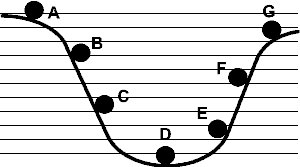
Which vocabulary term is used to identify the distance between points C & G?
a)
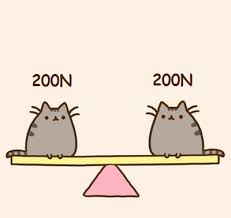
Amplitude
b)
Crest
c)
Frequency
d)
Wavelength
7.

Which vocabulary term is used to identify the distance between points C & E?

a)

Amplitude

b)

Crest

c)

Frequency

d)

Wavelength

8.
Top of the wave
a)
Wavelength
b)
Amplitude
c)
Trough
d)
Crest
9.
Bottom of the wave
a)
Crest
b)
Trough
c)
Frequency
d)
Wavelength
10.
The measurement from one point of the wave to the next identical part of the wave (for example, crest to crest or trough to trough)
a)
Crest
b)
Amplitude
c)
Frequency
d)
Wavelength
11.
The matter (solid, liquid, or gas) through which waves can travel
a)
Medium
b)
Object
c)
Transverse Wave
d)
Wavelength
12.

What are waves used for?

a)

Transferring Energy

b)

Storing Energy

c)

Moving Objects

d)

Removing Energy

13.

What is transferred in waves?

a)

Energy

b)

Objects

c)

Magic

d)

Light

14.

Which one shows the amplitude of a wave?

a)
b)
c)
15.

Which one shows the wavelength of a wave?

a)
b)
c)
16.

Which behavior of light does the image represent

a)

refraction

b)

reflection

c)

diffraction

d)

interference

17.

Light travels in a straight line

a)

True

b)

False

18.

Bouncing back of a light ray from a mirror is called

a)

refraction

b)

reflection

c)

diffraction

d)

interference

19.

The lowest point of the transverse wave is called

a)

crest

b)

trough

c)

frequency

d)

amplitude

20.

What type of wave is pictured?

a)

Transverse wave

b)

Longitudinal wave

c)

Wave, what wave?

d)

Slinky wave

21.

Sound travels in which kind of wave?

a)

Longitudinal waves

b)

Transverse waves

22.

What type of waves are these?

a)

Transverse waves

b)

Longitudinal waves

23.
Which wave travels parallel in relation to a medium?
a)
Transverse
b)
Longitudinal
c)
Both
d)
Neither
24.

Water waves and light waves are both examples to ___

a)

Longitudinal Wave

b)

Transverse Wave

c)

Frequency wave

d)

Sound Wave

25.
Liza is swimming laps from one end of a 50 meter pool to the other. Going from one end to the other is considered one lap. If she swims four complete laps, which statement is TRUE?
a)
Her distance and displacement are both zero.
b)
Her distance is zero, but her displacement is 200 meters.
c)
Her distance is 200 meters, but her displacement is zero.
d)
Her distance and displacement are both 200 meters.
26.

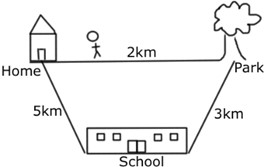
Jerry walked from home to school, then from the school to the park. What is his total displacement?

a)

2 km

b)

5 km

c)

8 km

d)

10 km

27.

Jerry walked from home to school, then from the school to the park. What is his total distance?

a)

2 km

b)

5 km

c)

8 km

d)

10 km

28.
A series of steps used by scientists to solve a problem or answer a question. 
a)
scientific method
b)
recipe
c)
data collection
d)
metric system
29.
A testable explanation to a problem that has not yet been tested. 
a)
data
b)
theory
c)
hypothesis
d)
fact
30.
Testing a hypothesis often involves a(n):
a)
answer
b)
experiment
c)
problem
d)
safety check
31.
This step of the scientific method is an educated guess or a prediction. 
a)
Hypothesis
b)
Research
c)
Observation
d)
Conclusion
32.
This is the group that we will compare our experimental group to. This group stays "normal."
a)
Control Group
b)
Experimental Group
c)
 Normal Group
d)
Weird Group
33.
Research question: does the distance a person kicks a soccer ball effect how well they will do on their math test.  What is the dependent variable?
a)
How far they kick the soccer ball
b)
who the person is
c)
how well they do on the math test
d)
Type of soccer ball.
34.
When experimenting with the growth of a plant, a scientist uses three (of the same type of) plants, two different fertilizers, equal light, and equal water. What type of variable is the fertilizer?
a)
Dependent
b)
Independent
c)
Control
d)
Compound
35.
Research Question: Does the type of gasoline put in a car effect how fast the car can drive. What is the independent variable?
a)
Type of gasoline
b)
which car the gas is put into
c)
how fast the car can drive
d)
how much gas is put into the car
36.
Ms. S set up an experiment to see how the mass of a ball affects the distance it rolls off a ramp. What is the dependent variable?
a)
Distance traveled by the ball
b)
Height of the ramp
c)
Mass of the ball
d)
Where the experiment took place.
37.
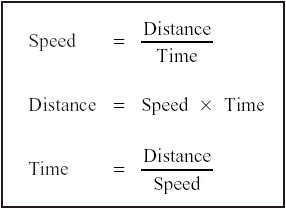
What is the formula to calculate speed?
a)
S = t/d
b)
S = d/t
c)
S = d x t
d)
S = t x d
38.

A runner races in the 100 meter dash. It takes her 10 seconds to finish. What is her average speed?

a)

10 m/s

b)

1000 m/s

c)

100 seconds

d)

10 seconds

39.
Which of the following is a unit of time?
a)
sec
b)
mi
c)
m/s
d)
km
40.
Which of the following is a unit of speed ?
a)
sec
b)
mi
c)
m/s
d)
min
41.
Which of the following is a unit of distance ?
a)
miles/hr
b)
mi
c)
s
d)
min
42.

Speed -

a)

A measure that gives rate of change and position

b)

A measure that dissolves to one unit

c)

A measure of distance an object travels per unit of time.

d)

A measure of distance an object travels per unit of measurement.

43.
Reese can run 10 meters in 5 seconds. What is her speed?
a)
5 meters/sec
b)
2 meters/sec
c)
5 miles/hour
d)
2 miles/hour
44.
Avery likes to walk 30 feet in 10 seconds. What is her speed?
a)
3 feet/sec
b)
6 feet/sec
c)
10 feet/sec
d)
2 feet/sec
45.
Which of the following is a unit for acceleration?
a)
km/s
b)
m/s2
c)
mi/hr
d)
ft
46.
What is velocity?
a)
the quickness of an object
b)
the location of an object
c)
acceleration
d)
speed in a specific direction
47.
Calculate the average speed (in meter/sec) if a cheetah runs 180 meters in 10 seconds.
a)
198 m/sec
b)
170 m/sec
c)
12 m/sec
d)
18 m/sec
48.
Acceleration is defined as the CHANGE in 
a)
time it takes for one place to move to another place. 
b)
velocity of an object.
c)
distance divided by the time interval 
d)
velocity divided by the time interval 
49.
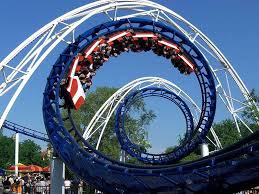
A roller coasters accelerates from an initial velocity of 6.0 m/s to a final velocity of 70 m/s over 4 seconds.  What's the acceleration?
a)
24 m/s2
b)
18 m/s2
c)
16 m/s2
d)
16 m/s
50.
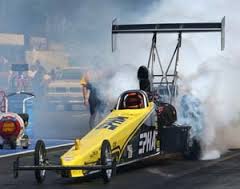
A drag racer accelerated from 0 m/s to 200 m/s in 5 s.  What was the acceleration?
a)
0 m/s
b)
40 m/s2
c)
-40 m/s2
d)
40 m/s
51.

Which of the following graphs represents an object that has zero acceleration during the entire time period?

a)

a

b)

b

c)

c

d)

d

e)

e

52.

During which entire line segment shown is the object at rest?

a)

none of them

b)

A

c)

B

d)

C

e)

D

53.

During which entire line segment shown is the object moving with zero acceleration?

a)

none of them

b)

A

c)

B

d)

C

e)

D

54.

During which entire line segment shown is the object moving with negative acceleration?

a)

none of them

b)

A

c)

B

d)

C

e)

D

55.
a)
Balanced
b)
Unbalanced
56.
a)
Balanced
b)
Unbalanced
57.

Why did Izzy fall when playing tug of war?

a)

he tripped

b)

unbalanced forces

c)

balanced forces

d)

he was pushed

58.
What is a force?
a)
the PUSH or PULL on an object 
b)
The MOTION an object creates
c)
The objects HITTING one another
d)
Going REALLY FAST
59.
What is the FORCE? 
a)
5 N
b)
10 N
c)
400 N
d)
0 N
60.
What is the unit for FORCE? 
a)
N (Newtons)
b)
lbs (pounds)
c)
g (grams)
d)
m/s (meters per second)
61.

The net force acting on the object is acting _____.

a)

to the right

b)

to the left

c)

up

d)

down

62.

Velocity has both _____ and _____.

a)

mass and direction

b)

speed and acceleration

c)

speed and direction

63.

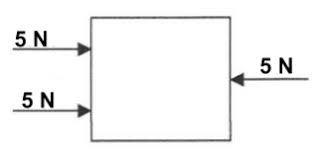
The net force acting on the block is (a)   N.

64.

How do you find the net force of this image.

a)

Add up all the arrows

b)

Add a green arrow and the orange arrow.

c)

Subtract all the arrows.

d)

Add the green arrows and subtract the orange arrow.

65.

What is the net force and to what direction.

a)

210 N to the right

b)

280 N to the right

c)

110 N to the left

d)

180 N to the left

66.

What is the overall Net Force and which side has a greater Net Force?

a)

641, Left

b)

571, Left

c)

601, Right

d)

480, Right

67.

What is the Overall Net Force and which side has a greater Net Force?

a)

12, Right

b)

0, Both are balanced

c)

12, Both are balanced

d)

0, Left

68.

Is the Net Force balanced or Unbalanced?

a)

Balanced

b)

Unbalanced

69.

A ball at the top of a hill has ________ ________ because if pushed it will roll down the hill.

a)

Mechanical Force

b)

Unbalanced Energy

c)

Potential Energy

d)

Unbalanced Force

70.

When a student runs and kicks a ball, they have applied an ___________ force to move the ball.

a)

Balanced

b)

Magnetic

c)

Spring

d)

Unbalanced

71.

___________ ____________ in a moving football player can move people out of the way.

a)

Kinetic Force

b)

Bad breath

c)

Negative acceleration

d)

Kinetic Energy

72.

The __________ between the sole of you shoe and the floor keeps you from slipping.

a)

friction

b)

gravity

c)

acceleration

d)

motion

73.

Which law of motion says that you must push or pull objects harder if they have more mass?

a)

1st

b)

2nd

c)

3rd

d)

4th

74.

Which law of motion says that for anything to move you must apply an unbalanced force to it?

a)

1st

b)

2nd

c)

3rd

d)

5th

75.

Letting go of a balloon full of air is demonstrating Newton's ______ _______ ________ _________ because the air comes out of the back and the balloon moves forward.

a)

1st law of motion

b)

2nd law of motion

c)

3rd law of motion

d)

13th law of motion

76.

Which is newtons first law states

a)

An object at rest will remain at rest unless a force is applied

b)

An object is moving

c)

An object has stopped

d)

An moving object will keep going when a force is applied to it

77.

Which is newtons 3rd law

a)

for every thing there is reaction

b)

for every reaction there is a unusual action

c)

For every reaction there is an equal and opposite reaction

d)

for every reaction there is an good action

78.

Which is newtons 2nd law

a)

Acceleration is a change in speed

b)

Acceleration is a change in action

c)

Acceleration is a change in name

d)

Acceleration is a change in velocity

79.

What is an example of newtons 2nd law

a)

sleeping

b)

velocity

c)

driving

d)

sitting

80.

Newton's third law states that any action will have a(n) _______ and ______ reaction

a)

equal and same

b)

equal and opposite

c)

equal and equal to

81.

The tendency of objects to resist a change in motion is called:

a)

Friction

b)

Inertia

c)

Gravity

d)

Velocity

82.
What law is best described by inertia?
a)
1st
b)
2nd
c)
3rd
d)
law of conservation of mass
83.
A person not paying attention while skateboarding hits a rock. The skateboard stops...they don't.
a)
The Law of Inertia (1st law)
b)
The Law of Acceleration (2nd law)
c)
The Law of Conservation of Momentum
d)
Action Reaction Law (3rd law)
84.
A magician pulls a tablecloth out from under dishes and glasses on a table without disturbing them.
a)
Newton's 1st Law
b)
Newton's 2nd Law
c)
Newton's 3rd Law
85.
What is Newton's First Law
a)
F=ma
b)
Every action has an equal and opposite reaction
c)
An object at rest stays at rest, an object in motion stays in motion. 
d)
Friction 
86.
A person is pushed forward into their seatbelt when a car stops
a)
1st
b)
 2nd
c)
2 and 3
d)
3rd 
87.
What are the appropriate units to describe acceleration?
a)
m/s
b)
m/s2
c)
cm
d)
there are no units associated with acceleration
88.
This variable in an experiment is the one being deliberately changed by the scientist. 
a)
dependent variable
b)
independent variable
c)
data
d)
control group
89.
In a controlled experiment, how many independent variables can be worked with at a time? 
a)
one
b)
none
c)
two or more
d)
how ever many makes sense.
90.

Which is the SI unit of measurement for energy?

a)

Joules

b)

Watts

c)

Moles

d)

Amps

91.

The number of waves that pass a fixed point in a given amount of time is...

a)

frequency

b)

wave speed

c)

amplitude

d)

wavelength

92.
Which wave in the diagram has the greatest wavelength?
a)
1
b)
2
c)
3
d)
4
93.
According to the Law of Conservation of Energy, energy cannot be _________ or ____________. 
a)
destroyed, destroyed
b)
created, saved
c)
created, destroyed
d)
lost, found
94.
The Law of Conservation of Energy states:
a)
Energy can created or destroyed but not transformed 
b)
Energy cannot be created or destroyed, it can only transformed
c)
Energy can't be created, destroyed or transformed
95.
According to the Law of Conservation of energy, the amount of energy before and after a reaction must be the same. Which statement below is true?
a)
The total amount of energy is conserved
b)
The total amount of energy is less after a reaction
c)
The total amount of energy is more after a reaction
96.
Potential or kinetic?
Stretched bow and arrow?
a)
kinetic
b)
potential
97.
What kind of energy is in a moving skateboard?
a)
Potential
b)
Kinetic
98.
What kind of energy is in a rock at the edge of a cliff?
a)
Potential
b)
Kinetic
99.
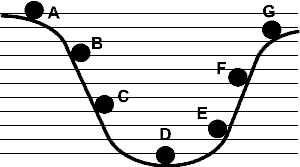
Which point has the most potential energy?
a)
G
b)
f
c)
b
d)
a
100.
Which 2 letters have the most kinetic energy
a)
W & Y
b)
X & Z
101.
How much potential energy is at the top of a hill on a rollar coaster ride
a)
100%
b)
50%
c)
0%
d)
20%
102.
At which point is potential energy greatest?
a)
W
b)
X
c)
Y
d)
Z
103.
At which point is kinetic energy greatest?
a)
W
b)
X
c)
Y
d)
Z
104.
What kind of energy is in an acorn hanging from an oak tree?
a)
Potential
b)
Kinetic
105.
What energy is pulling an arrow back 
a)
kinetic energy
b)
potential energy
c)
energy
106.
Which type of energy increases when you compress a spring?
a)
elastic potential energy
b)
kinetic energy
c)
radiant energy
d)
sound energy
107.

Energy stored because of gravity is called:

a)

Gravitational Potential Energy

b)

Kinetic Energy

c)

Mechanical Advantage

d)

Chemical Energy

108.

At which point does the ball has the greatest gravitational potential energy (GPE)?

a)

A

b)

G

c)

D

d)

C

e)

G

109.

Which would have the LEAST gravitational potential energy (GPE)?

a)

A ball sitting on the ground

b)

Moon viewed from the Earth

c)

An airplane flying 30,000 feet above the ground

d)

A rock sitting on top of Mt. Everest

110.

How could you increase the gravitational potential energy of an object without changing its mass and gravity?

a)

Make the object larger

b)

Lower the object towards the ground

c)

Raise the object farther off the ground

d)

Allow the object to roll on the ground
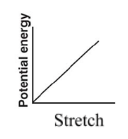
111.

What potential energy is this graph representing?

a)

Electric

b)

Elastic

c)

Magnetic

d)

Gravitational

112.
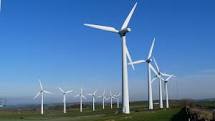
What type of energy resource is wind?
a)
Nonrenewable
b)
Renewable
c)
Exhaustible 
113.

What are renewable resources?

a)

A limited amount and cannot be replaced in a human life time.

b)

Plastic bags

c)

Coal, oil, and natural gas

d)

Can be replaced in our lifetime through natural processes

114.

Sunlight is...

a)

Very bright

b)

Will eventually run out soon

c)

A renewable resource

d)

A nonrenewable resource

115.

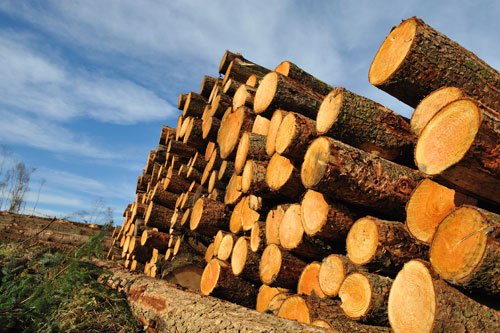
Wood is...

a)

A renewable resource

b)

A nonrenewable resource

c)

Used to make oil

d)

Used to make plastic

116.

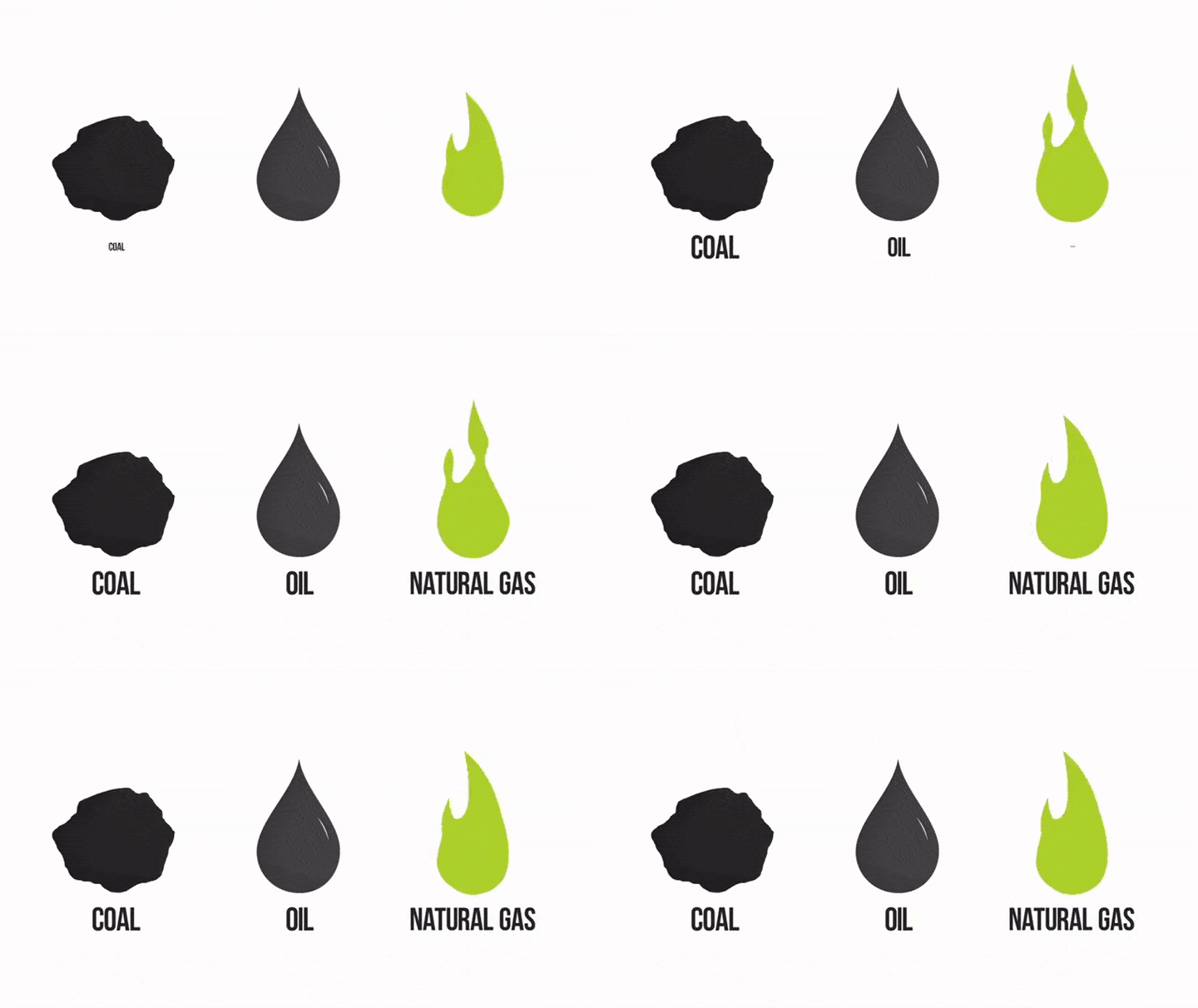
A group of non-renewable resources, called ______________, include coal, oil, and natural gas.

a)

Fossils

b)

Energy

c)

Resources

d)

Fossil fuels

117.

Which state of matter do sounds travel fastest in?

a)

Solid

b)

Liquid

c)

Gas

d)

Plasma

118.

Why does sound travel faster in solids than in liquids or gases.

a)

They are harder.

b)

The particles are closer together.

c)

Solids have more energy.

d)

Gases fill their container.

119.

Roughly what is the speed of sound in air?

a)

The speed of light.

b)

About 10 m/s

c)

About 340 m/s

d)

About 1 500 m/s

120.

Calculate the speed of sound if a sound wave travels 680 m in 2 seconds.

a)

1360 m/s

b)

340 m/s

c)

The speed of sound is always the same

d)

250 m/s

121.

What is the SI unit for frequency?

a)

Hertz

b)

Newtons

c)

Joules