
 Worksheets
✨ STAAR Review: Category 3
Total questions: 119
Worksheet time: 1hrs 17mins
Warm air is ______ dense than cool air. Warm air rises and cool air sinks.
less
more


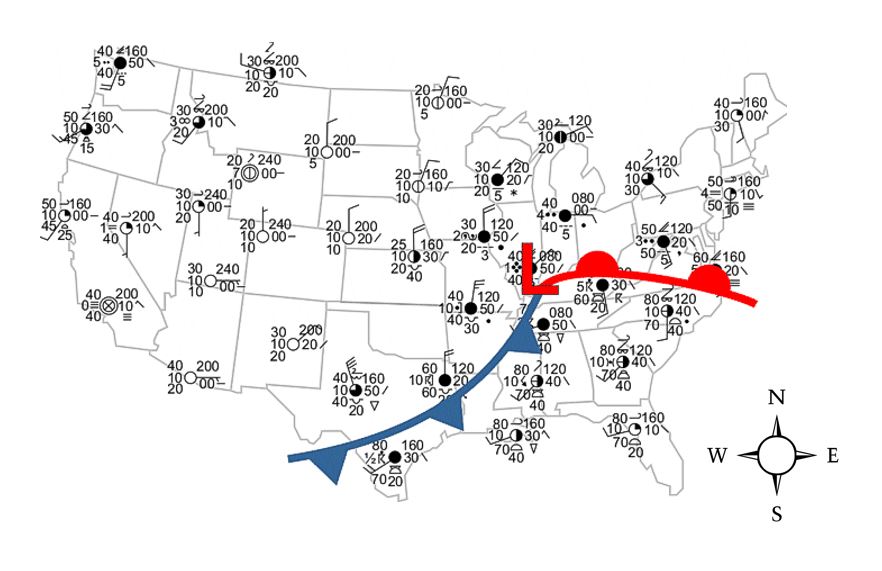

What city will experience decreasing temperatures in the next day?
Denver
El Paso
Memphis
Los Angeles


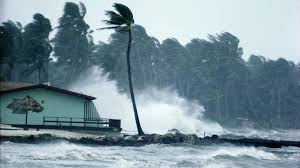
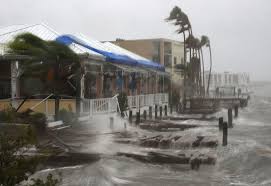
When is peak hurricane season?
May 1 until June 1
June1 until September 1
June 1 until November 30
December 1 until January 30
How warm must the ocean water be in order for a hurricane to form?
60 degrees F
80 degrees F
100 degrees F
Where do the winds that create the hurricanes in the Atlantic Ocean originate from?
Africa
Alaska
Antarctica
What creates the low pressure system at the surface?
cool, dry air sinking
warm, moist air sinking
warm, moist air rising


The earth's outer shell is divided into slabs of rock called ______ .
continental plates
crustal plates
trench plates
tectonic plates
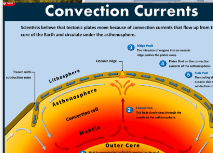
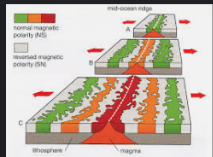
What is the driving force behind the movement of the plates?
divergent
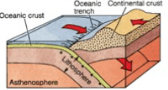
convergent
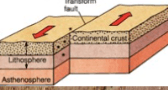
transform
What type of crusts are involved with one plate subducting beneath another?
continental and continental
Oceanic and continental
oceanic and divergent
continental and convergent
What types of landforms are formed at convergent boundaries?
PICK TWO
volcanoes
new crust
Trenches
rift valley
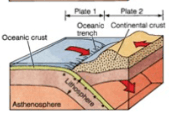
What is the WHOLE AREA called where the oceanic crust goes beneath the continental crust?
subtraction zone
section zone
secondary zone
subduction zone
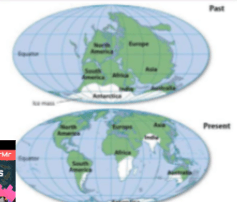
What is Pangaea?
the name of the supercontinent that existed a million years ago.
another name for continental drift.
the name of a German scientist.
the name of an ancient fossil that existed a hundred thousand years ago.
The theory of ___________ was that all the continents were once joined as a single super-continent and have since drifted apart.
subduction
volcanic activity
continental drift
seafloor spreading

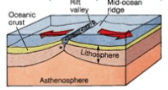
What is happening in this diagram?
Two continental plates are diverging.
The continental plates are creating a rift valley.
Two continental plates are converging.
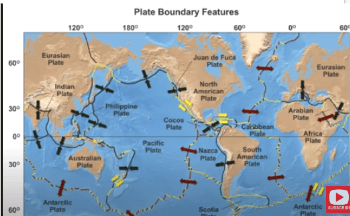
The North American plate and the Pacific plate are sliding past each other in opposite directions (at the San Andreas fault), this is called a ________________ boundary.
convergent
divergent
transform
rift valley
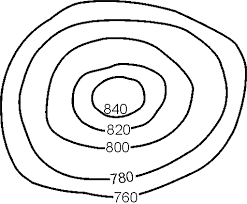

What is elevation?
Height
An elevator
The width

The distance between contour lines is called...
Contour interval
Contour line
Colors
Mountains
The steepness or flatness of Earth's Surface
Topography
Topographic Map
Contour Lines
Contour interval
A map that shows the surface features of Earth
Road Map
Topographic map
water map
hybrid map

Water that flows along Earth's surface to eventually return to the ocean is called ___.
runoff
storm drain
tributary
groundwater

A ___________________ is the area of land that collects runoff and channels it into a main river.
peninsula
tributary
groundwater
watershed
All water in a watershed flows ----
downstream
upstream

Which point would best be described as the coastline?
A
B
C
D
Which area would experience the most erosion from waves?
A
B
C
D
The movement of rock and sediment to new places is -
Erosion
Weathering
Deposition
The breaking down of rock into sediment is -
Weathering
Erosion
Deposition

Which of the following factors carves out canyons through the processes of weathering and erosion?
Water
Wind
Roots
Gravity

The Sun is our star made mostly of
helium
hydrogen and helium
hydrogen
helium, hydrogen, and gold

Which star is brighter than the sun?
Sirius B
Procyon B
Van Maanan's Star
Aldebaran

Which of the following has the longest wavelength?
microwaves
UV rays
Infrared
Gamma rays

Which quadrant has the hottest, dimmest stars?
Quadrant 1
Quadrant 2
Quadrant 3
Quadrant 4
What is the name of the stars located in quadrant 2?
Main Sequence
White Dwarfs
Red Giants
Blue Giants
Where would our sun be located?
Quadrant 1
Quadrant 2
Quadrant 3
Quadrant 4
Where would blue giants be found?
Quadrant 1
Quadrant 2
Quadrant 3
Quadrant 4

What section is considered the main sequence?
Area M
Area P
Area X
Area Z
Where are red giants?
Area M
Area P
Area X
Area Z
Where are white dwarfs?
Area M
Area P
Area X
Area Z
What are the reasons for the seasons?
Earth's tilt and rotation.
Earth's rotation and revolution.
Earth's tilt and revolution.


The invisible line that passes through the North Pole and the South Pole is called Earth's ____
axis
equator
ecliptic

Earth is tilted as it revolves around the sun which gives us seasons. Which season would it be in North America at letter D?
Summer
Spring
Winter
Fall
From 10 am today to 10 am tomorrow is ...
365 days
24 hours
From December 2020 to December 2021 is
365 days
24 hours
In that time, Earth will make one ...
Rotation
Revolution

It is ______ on the side of the Earth facing the Sun.
night
day
summer
winter
It is ______ on the side of the Earth facing away from the Sun.
night
day
summer
winter
Imagine there was no tilt to the Earth's axis and Earth's orbit was circular. What would be true about the length of days and nights on Earth?
The periods of day and night would be fixed all year, for any location.
Night, as we know it on Earth, would end. We would be in constant daylight.
The periods of day and night would be fixed all year for anyone living at Earth's equator.
The areas closest to the equator would have constant daylight during the year; the areas near the poles, constant night.

If you live in Earth's northern hemisphere, on June 20th or 21st you experience summer solstice, which represents the official start of summer. This is the longest day of the year. What causes this change in day length?
The apparent counterclockwise movement of the Earth.
The Earth is orbiting closest to the sun at this time.
Earth's tilt toward the sun is maximized at this time in the Northern Hemisphere.
The Northern Hemisphere is tilted toward the sun while the Earth is orbiting at its closest point to the sun.

Check out the image of Earth. The Northern Hemisphere is found above the equator (Points A and B) and the Southern Hemisphere is located below the equator (Points C and D). Here it is warmer in summer (C) than in winter (A), because in summer
the Southern Hemisphere is tilted away from the Sun.
Point C gets more direct sunlight.
the Earth is closer to the Sun.
the days are shorter.

What month during the year occurs at X?
March
June
September
December

What month during the year occurs at W?
March
June
September
December

What would happen if the Earth's rotation was faster?
There would be no high or low tides
There would be less days in a year
There would be more seasons
There would be shorter days

The path that the earth follows is called its _______.
rotation
day and night
revolution
orbit


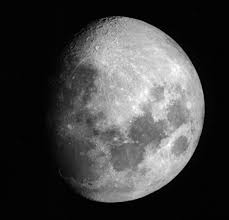
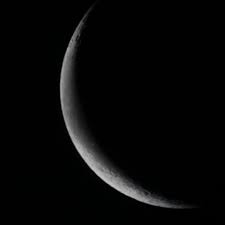
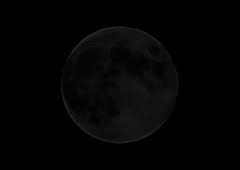
Name the moon phase
First Quarter
Third Quarter
New Moon
Full Moon
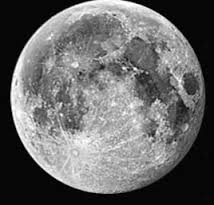
Name the moon phase
First Quarter
Third Quarter
New Moon
Full Moon
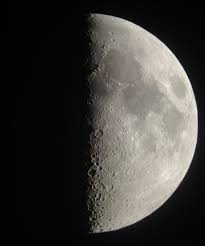
Name the moon phase
First Quarter
Third Quarter
New Moon
Full Moon
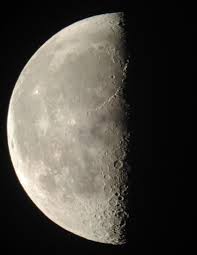
Name the moon phase
First Quarter
Third Quarter
New Moon
Full Moon
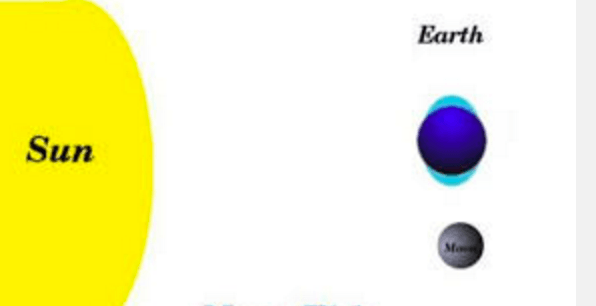
Which moon phase is shown in this diagram?
new moon
1st quarter
full moon
3rd quarter
How long does it take the Moon to move around the Earth?
29.5 days
28 days
23.5 days
30 days
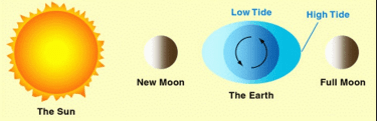
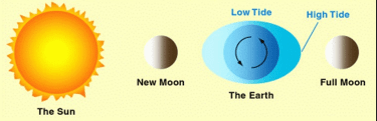
Which tide occurs during the Full or New Moon phase?
normal low and high tides
Highest high and lowest low tides
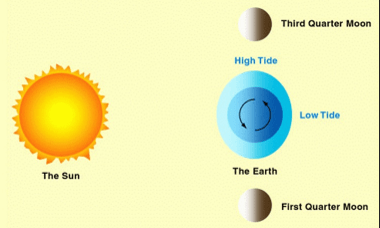
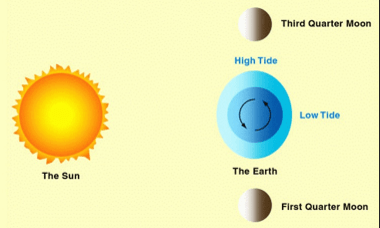
Which tide occurs during the quarter Moon phases?
A normal low and high tide
A higher high tide and lower low tide
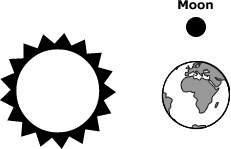
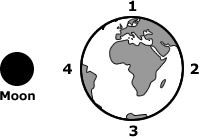
The diagram shows Earth and the moon. In which position(s) will a Spring tide occur?
4 only
1 and 4
3 and 4
2 and 4

If we are experiencing a new moon on March 6 what will the moon look like on 15?


What should the moon look like on the 5 of March?


What moon would you expect to see on March 23rd?


If we are experiencing a new moon on March 6 what will the moon look like on 15?
What should the moon look like on the 5 of March?
What moon would you expect to see on March 23rd?

What moon would you expect to see on March 18th?


What comes directly after this moon phase?
First Quarter
waning gibbious
New Moon
Full Moon
It's Full Moon today how long does it take to have another Full Moon?
30 days
1 year
18 weeks
1 hour


What is the missing lunar phase?
Third Quarter
Waxing Crescent
New Moon
Waning Gibbous

Use the calendar to predict the moon phase on March 9th.
New Moon
Full Moon
Third Quarter
First Quarter
Use the calendar to predict the moon phase on March 26th.
Waxing Crescent
Waning Crescent
Waning Gibbous
Waxing Gibbous
Use the calendar to predict the moon phase on March 30th.
New Moon
Full Moon
Third Quarter
First Quarter

