wayground logo

Free Printable Worksheets

Font size

S
M
L
XL
Worksheets

newton and motion

Total questions: 122

Worksheet time: 4hrs 36mins
Name
Class
Date
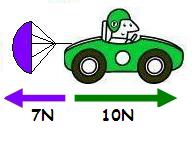
1.

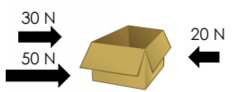
What is the net force?

a)

3 N

b)

3 N, right

c)

17 N, right

d)

3 N, left

2.

What type of force is this man using to push his grocery cart?

a)

Normal Force

b)

Gravity

c)

Air Resistance

d)

Applied Force

3.
What is the net force?
a)
20 N 
b)
0 N 
c)
400 N 
d)
40 N 
4.

What is the unit to MEASURE force?

a)

Kilogram

b)

Meter

c)

Pounds

d)

Newton

5.
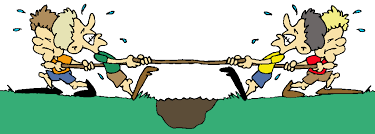
If these teams are pulling with the same amount of force what will happen?
a)
The boy in blue will win.
b)
They will not move at all.
c)
The boy in red will win.
d)
Both will fall down.
6.
The sum of all forces acting on an object.
a)
Contact Force
b)
Balanced Force
c)
Unbalanced Force
d)
Net Force
7.
Calculate the Net Force. 
a)
60N, Left 
b)
40N, Right 
c)
0N
d)
60N, Right
8.
What does the strength of gravity between two objects depend upon?
a)
Mass & distance
b)
Mass & weight
c)
Gravity & inertia
d)
Inertia & mass
9.
This type of force resist motion between two surfaces that are pressed together
a)
contact
b)
gravity
c)
friction
10.

What is inertia?

a)

an object's state in which the object stays at rest or keeps moving in the same direction until a greater force acts in the object

b)

an unbalanced force

c)

it is weight

11.

Newton's First Law of Motion says An object in______ with still in motion, and an object at rest will stay at ___________.

(a)  

12.

What is friction

a)

It is fire

b)

force equal in size and opposite in direction

c)

Two object rub together: friction slows down objects.

13.

An example of Inertia is.....

a)

Gravity that is always acting on us

b)

Driver steps on the brakes, and your body continues moving (goes forward)

c)

Two sticks that causes fire

14.

An apple falling to the ground is an example of...

a)

inertia

b)

force

c)

gravity

15.

What is acceleration?

a)

the change in speed of a moving body

b)

a state when forces are equal

c)

the amount of material in an object

16.
What is the net force?
a)
10 N
b)
0 N
c)
25 N
d)
1 N
17.
What is the net force?
a)
400 N Up
b)
400 N Down
c)
- 400 N Down
d)
800 N Down
18.
You and your dad are moving the couch from one side to another. Your dad pushes with a force of 35 N to the right and you push with a force of 25 N right. What is the net force on the couch?
a)
60 N right
b)
10 N left
c)
60 n right
d)
50 N left
19.
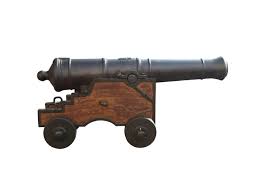
When a cannon fires a cannonball we observe Newton's third law. Which force is the reaction force?
a)
The cannon moving forward
b)
The cannonball moving forward
c)
The cannon moving backward
d)
The cannonball moving backward
20.
Matt measured a small rubber ball and made 3 other balls of the same diameter from lead, foam, and wood. Which has the greatest inertia?
a)
rubber ball
b)
lead ball
c)
foam ball
d)
wood ball
21.
What law?
a)
1st
b)
2nd
c)
3rd
22.
This person bought coffee and put it on the seat next to them. If they stopped quickly and the coffee spilled which law would that represent?
a)
Newton's 1st Law
b)
Newton's 2nd Law
c)
Newton's 3rd Law
23.
A magician pulls a tablecloth out from under dishes and glasses on a table without disturbing them.
a)
Newton's 1st Law
b)
Newton's 2nd Law
c)
Newton's 3rd Law
24.

A heavy ball is suspended as shown. A quick jerk on the lower string will break that string but a slow pull on the lower string will break the upper string. The first result occurs because:

a)

the force is too small to move the ball

b)

action and reaction is operating

c)

the ball has inertia

d)

air friction holds the ball back

e)

the ball has too much energy

25.

A shopping cart accelerates more slowly when full. This is an example of Newton's ________ Law.

a)

1st

b)

2nd

c)

3rd

26.
For every action there is ______ and opposite reaction.
a)
an equal
b)
a stronger
c)
a weaker
d)
an exciting
27.
_______ force is needed to move objects of larger mass.
a)
Less
b)
Equal
c)
More
d)
Light
28.

It is much more difficult to move a dresser full of clothes than an empty dresser.

a)

Newton's 1st Law of Motion

b)

Newton's 2nd Law of Motion

c)

Newton's 3rd Law of Motion

29.

This force is a support force when you're leaning against a surface.

a)

Applied force

b)

Normal force

c)

force of Gravity

d)

Air resistance

30.

The upward force acting on the parachute is called ______________.

a)

Force of friction

b)

Force of gravity

c)

Normal force

d)

Air resistance

31.

What force ultimately slows the roller coaster to a stop?

a)

Applied

b)

Normal

c)

Friction

d)

Gravitational

32.
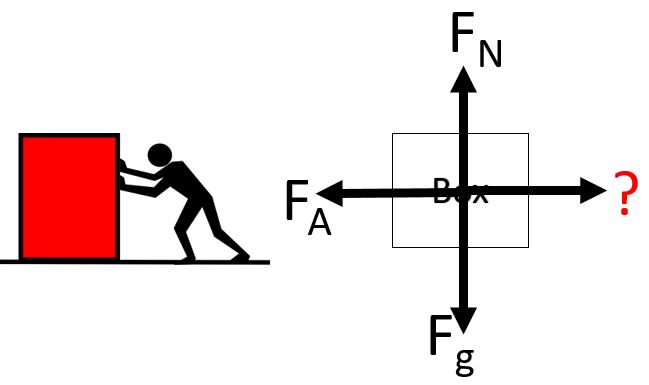
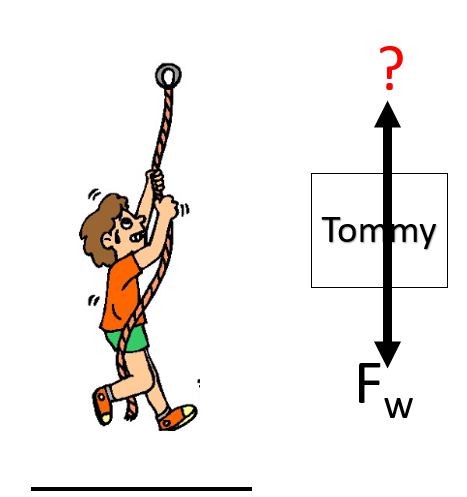
Name the missing force....
a)
weight force
b)
normal force
c)
frictional force
d)
tension force
33.
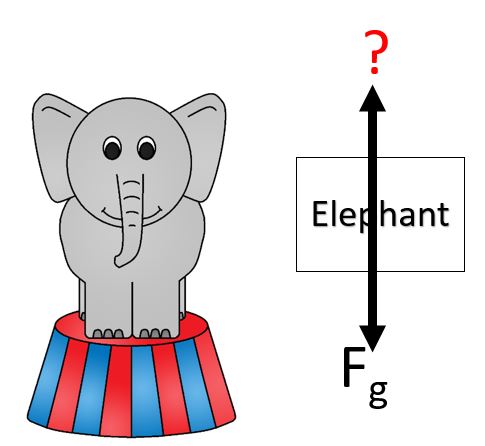
Name the missing force...
a)
frictional force
b)
weight force
c)
thrust
d)
buoyant force
34.
Name the missing force...
a)
tension force
b)
gravitational force
c)
normal force
d)
applied force
35.
Name the missing force...
a)
weight force
b)
normal force
c)
applied force
d)
frictional force
36.
What type of force?
a)
Magnetic
b)
Gravitational
c)
Applied
d)
Normal
37.
The illustration below shows what happened when a balloon touched a girl’s hair.
Which type of force caused the girl’s hair to cling to the balloon?
 
a)
magnetic force
b)
frictional force
c)
electrical force
d)
gravitational force
38.

Which has the MOST inertia?

a)
b)
c)
d)
39.
the tendency of an object to resist a change in its motion
a)
acceleration
b)
inertia
c)
mass
d)
frame of reference
40.

Objects with greater _________ also have greater inertia.

a)

speed

b)

mass

c)

force

d)

friction

41.
a force that opposes motion between any surfaces that are touching
a)
velocity
b)
friction
c)
inertia
d)
position
42.

(a)   = mass x acceleration

43.

A (a)   is required to change the motion of an object

44.

If the mass of an object is 5 kg, and the acceleration is 2 m/s2. What is the force?

a)

10 N

b)

7 N

c)

3 N

d)

12 N

45.

Is a car going around a corner an example of acceleration?

a)

Yes

b)

No

46.
45 m/s2 is the... 
a)
Mass
b)
Force 
c)
Acceleration
d)
weight
47.
20 N is the
a)
mass
b)
weight
c)
force
d)
acceleration 
48.
How much force is needed to accelerate a 2 kg physics book to an acceleration of 6 m/s/s?
a)
36 N
b)
12 N
c)
3 N
d)
0.33 N
49.

When force is 20 N, mass is 5 kg, what is acceleration?

a)

25 m/s/s

b)

5 m/s/s

c)

100 m/s/s

d)

4 m/s/s

50.
What is the acceleration of an object traveling at a constant velocity?
a)
10 m/s2
b)
0 m/s2
c)
250 m/s2
d)
20 m/s2
51.

Jenny applies a 60 N force to a 20 Kg cart, what is the acceleration of the cart if friction can be neglected?

a)

1200 m/s2

b)

0.33 m/s2

c)

20 m/s2

d)

3 m/s2

52.
An object accelerates 5 m/s2 when a force of 20 newtons is applied to it. What is the mass of the object?
a)
4 Kg
b)
20 Kg
c)
0.5 Kg
d)
2 Kg
53.

According to Newton's second Law, which would take more force to slow down?

a)

The silver car

b)

The green car

c)

They would both take the same force

54.

The equations to solve for acceleration is?

a)

F/M

b)

M*A

c)

M/A

55.

Mass is measured in?

a)

N

b)

kg

c)

m/s2

56.

Using the correct equation solve this problem. How much force is required to move a 5kg boulder at 3m/s2

a)

10N

b)

1.6N

c)

15N

57.
Convert 300 meters to centimeters:
a)
3000 cm
b)
0.3 cm
c)
30,000 cm
d)
3 cn
58.
1000 grams = _____ kilograms
a)
0.0001
b)
1,000,000
c)
10
d)
1
59.
490,000 g =____ kg
a)
490
b)
49
c)
4,900
d)
0.49
60.
Is 20 g greater than, less than, or equal to 2 kg?
a)
greater than
b)
less than
c)
equal to
61.
240 cm = ___________ m
a)
2400
b)
24
c)
2.4
d)
0.24
62.

Which of the following options is the base unit?

a)

kilometer

b)

centimeter

c)

meter

d)

millimeter

63.

What does this triple beam balance read?

(a)  

64.

What does this triple beam balance read?

(a)  

65.

The acceleration of objects falling on Earth due to gravity is

a)

9.8 m/s

b)

9.8 m/s2

c)

9.8 g/mL

d)

9.8 g/m/m

66.

When a falling object stops accelerating and falls at a constant speed, it is

a)

fluency

b)

constant velocity

c)

acceleration

d)

terminal velocity

67.
An object with which of the following densities will float on water?
a)
0.7 g/cm3
b)
1.2 g/cm3
c)
3.5 g/cm3
d)
11.4 g/cm3
68.
A block has a mass of 54g and a volume of 20cm3.  What is the density of the block?
a)
74 g/cm3
b)
1080 g/cm3
c)
34 g/cm3
d)
2.7 g/cm3
69.
A can of Coke will sink in a bowl of water.  A can of Diet Coke will float in a bowl of water.  What does this tell you about the density of the Diet Coke?
a)
it is bigger than 1
b)
it is smaller than 1
c)
it is equal to 1
d)
it is equal to -1
70.
Why do ice cubes float in a  glass of water?
a)
the ice cubes are more dense than the water
b)
the water is more dense than the ice cubes
c)
the water is more dense than the glass
d)
the ice is more dense than the glass
71.
Veal finds a gold colored rock in a river.  It has a mass of 9.65 grams and a volume of 0.5 cm3.  What is the density of the rock?
a)
10.15 g/cm3
b)
19.3 g/cm3
c)
9.15 g/cm3
d)
4.825 g/cm3
72.
Which property of matter is determined by dividing its mass by its volume?
a)
elasticity
b)
buoyancy
c)
density
d)
viscosity
73.
The following liquids are poured together in a beaker: alcohol (density=0.79), corn syrup (density=1.38), water (density=1.0), and cooking oil (density=0.93).  Which of these liquids will sink to the bottom of the beaker?
a)
alcohol
b)
corn syrup
c)
water
d)
cooking oil
74.
Will an object with a density of 1.01 g/cm3 float or sink?
a)
float
b)
sink
75.
Will an object with a density of 1.01 g/cm3 float or sink?
a)
float
b)
sink
76.
What is the density of a liquid that has a mass of 27g and a volume of 30ml?
a)
0.9 g/ml
b)
3 g/ml
c)
57 g/ml
d)
810 g/ml
77.
Will an object with a density of 0.999 sink or float in water?
a)
sink
b)
float
78.
What is the density of water?
a)
0 g/ml
b)
1 g/ml
c)
10 g/ml
d)
100 g/ml
79.
It is a measure of how close measurements come to each other when they are made in the same way
a)
Accuracy
b)
Precision
c)
Error
d)
Extrapolation
80.

How close a measurement is to the accepted value is called..

a)

Accuracy

b)

Precision

c)

Significant

d)

Estimate

81.
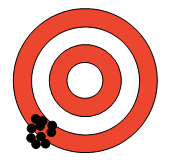
This bullseye demonstrates...
a)
High Accuracy & High Precision
b)
High Accuracy & Low Precision
c)
Low Accuracy & High Precision
d)
Low Accuracy & Low Precision
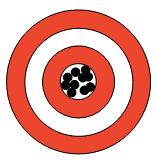
82.
?
a)
High Accuracy & High Precision
b)
High Accuracy & Low Precision
c)
Low Accuracy & High Precision
d)
Low Accuracy & Low Precision
83.

Which is the more precise measurement?

a)

4 mL

b)

4.3 mL

c)

4.30 mL

d)

4.300 mL

84.

Which Student is the most Precise?

a)

Alex

b)

Shandra

c)

Luis

85.

What is the length of the paperclip?

a)

2.3 cm

b)

2.5 cm

c)

2.0 cm

d)

2.35 cm

86.

What is the volume in the graduated cylinder?

a)

2.73 cm

b)

2.6 cm

c)

2.68 cm

d)

2.65 cm

87.

What is the volume in the graduated cylinder?

a)

56.0 mL

b)

5.6 mL

c)

55.8 mL

d)

50.5 mL

88.

The length is

a)

12.50 cm

b)

12.5 cm

c)

12.4 cm

d)

12 cm

89.

What is the mass on this triple beam?

a)

220g

b)

222g

c)

20g

d)

221.5 g

90.

What is the mass on this triple beam?

a)

270g

b)

202g

c)

273g

d)

272.5

91.

What is the mass on the triple beam balance?

a)

566 g

b)

656 g

c)

560.6 g

d)

650.6 g

92.
Find the volume of the figure.
a)
63 cm³
b)
91 cm³
c)
819 cm³
d)
409.5 cm³
93.
What is this?
a)
Measuring tube
b)
Test tube
c)
Graduated Cylinder
d)
Pipette
94.

Which equation would help you find the volume?

a)

5-4=1 mL

b)

5.6-4.8=0.8 mL

c)

4-5=1 mL

d)

5+4=9 mL

95.

What is the volume of the ring?

a)

4 mL

b)

60 mL

c)

64 mL

d)

68 mL

96.
Reese can run 10 meters in 5 seconds. What is her speed?
a)
5 meters/sec
b)
2 meters/sec
c)
5 miles/hour
d)
2 miles/hour
97.
Avery likes to walk 30 feet in 10 seconds. What is her speed?
a)
3 feet/sec
b)
6 feet/sec
c)
10 feet/sec
d)
2 feet/sec
98.
Distance over time.
a)
Travel
b)
Motion
c)
Velocity
d)
Speed
99.
Speed plus direction.
a)
Velocity
b)
Motion
c)
Position
d)
Acceleration
100.
How is speed calculated?
a)
S= D/M
b)
S= D/T
c)
S= T/D
d)
T= S/D
101.
If I choose to walk to school at a speed of 3mph, it will take me 4 hours to arrive. How far away do I live?
a)
7 miles
b)
12 miles
c)
1 mile
d)
.75 miles
102.
Which of the following is an example of velocity?
a)
running 20 mph
b)
running 20 miles
c)
running 20 mph quickly
d)
running 20 mph south
103.
During which interval is the object not moving?
a)
B to C
b)
C to D
c)
D to E
d)
only at point A
104.
During which interval is the object traveling at a constant velocity?
a)
B to C
b)
D to E
c)
F to G
d)
it traveling at a constant velocity during all of the intervals shown.
105.
During which interval is the object speeding up?
a)
A to B
b)
B to C
c)
D to E
d)
E to F
106.
During which interval is the object slowing down?
a)
A to B
b)
D to E
c)
E to F
d)
G to H
107.
Which runner stopped for a rest?
a)
Albert
b)
Bob
c)
Charlie
108.
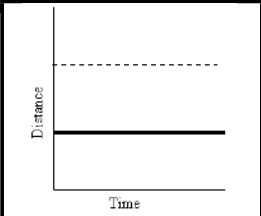
What does this graph represent?
a)
Constant Speed
b)
Acceleration
c)
Not moving
109.
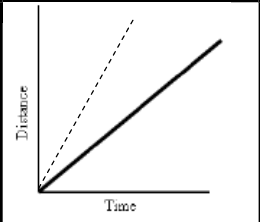
What does this graph represent?
a)
Constant speed
b)
Acceleration
c)
Not moving
110.
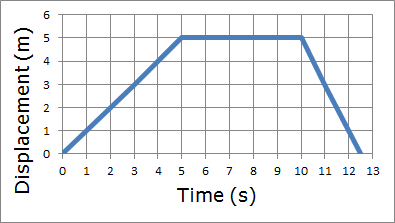
According to the graph how fast does the person travel in the first 5 seconds?
a)
2 m/s
b)
10 m/s
c)
12.5 m/s
d)
1 m/s
111.
The speed of the vehicle between points A-B is...
a)
12m/s
b)
8m/s
c)
10m/s
d)
16m/s
112.
For which time period, is there a constant velocity of 10m/s?
a)
1-2 seconds
b)
2-5 seconds
c)
5-6 seconds
113.
At which point in time, does this person turn around?
a)
3 seconds
b)
5 seconds
c)
10 seconds
d)
25 seconds
114.
Which of the lines represent a constant velocity?
a)
A
b)
B
c)
C
d)
D
115.

Which best describes this motion in the graph?

a)

stopped, walking, running home

b)

running, walking, stopped, walking home

c)

walking, stopped, walking, running home

d)

walking, running, running, stopped

116.

What is the formula for velocity?

a)

Time/Distance + Direction

b)

Distance/Time + Direction

c)

Direction/Time + Distance

d)

Time/Direction +Distance

117.
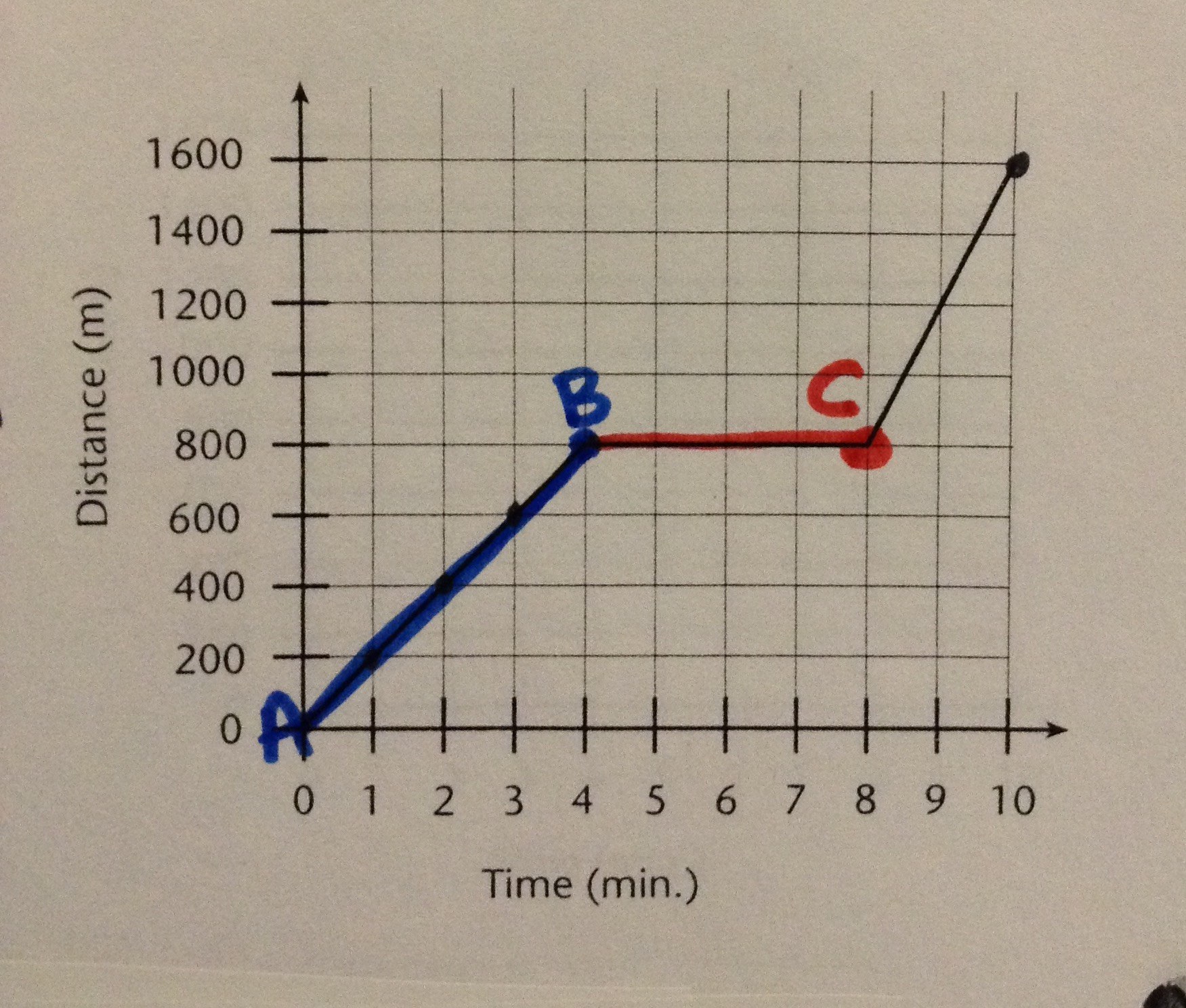
The graph shows Ashley riding her bike to Maria's house. 
What was occurring from point B to point C?
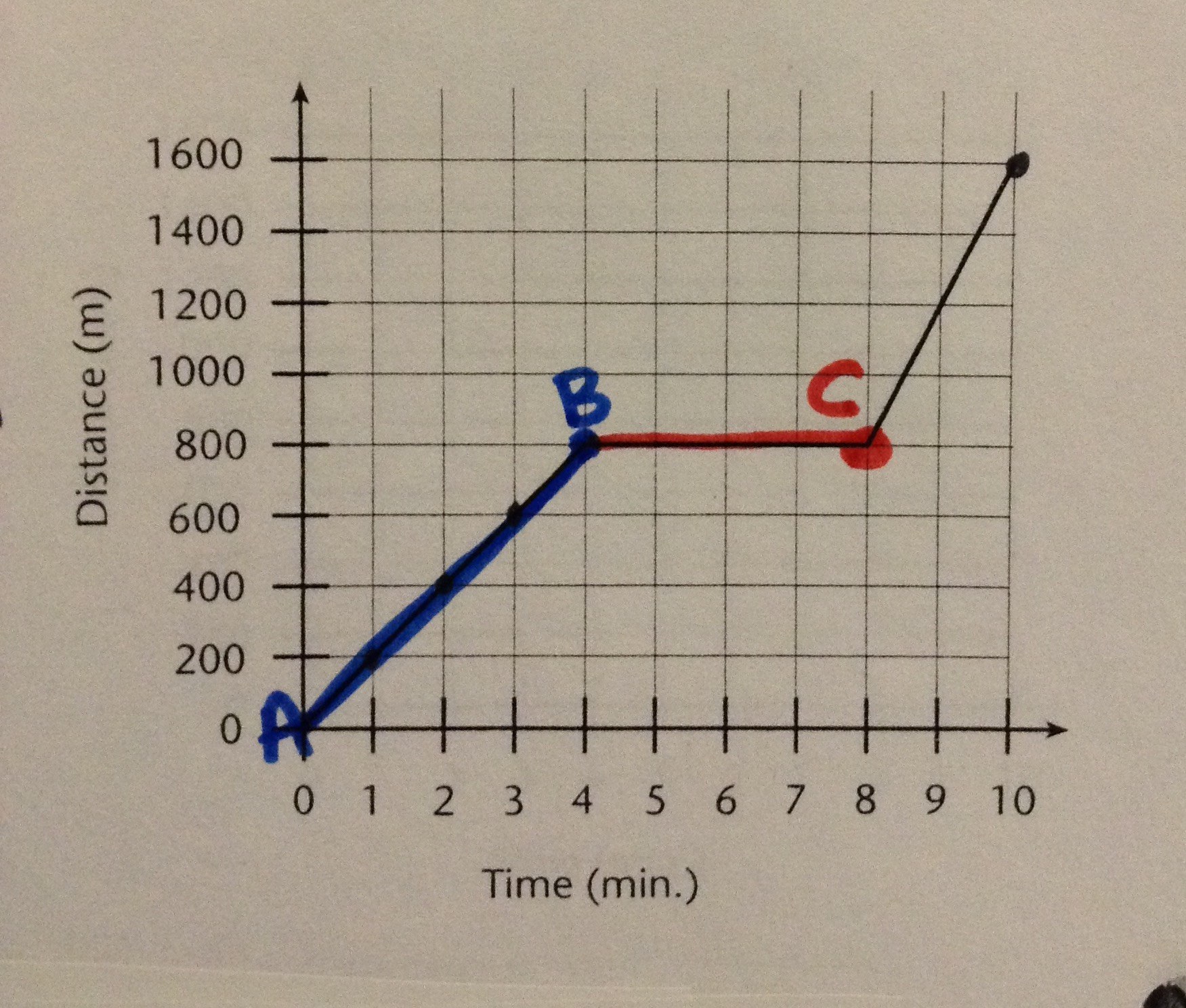
a)
She was increasing her speed.
b)
She stopped for 4 minutes
c)
She was decreasing in speed
118.
 The graph shows Ashley riding her bike to Maria's house. 
What is occurring from point A to point B?
a)
they are traveling at a constant speed
b)
they are decreasing in speed
c)
they stopped to take a break
119.
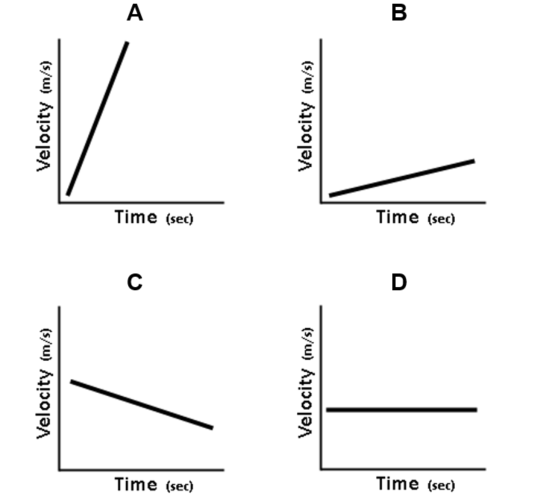
Which graph represents zero acceleration (constant velocity)?
a)
A
b)
B
c)
C
d)
D
120.
What is the motion represented in this Distance-Time graph?
a)
Not moving
b)
Moving forward at a constant speed
c)
Moving backward at a constant speed
d)
Decelerating
121.
What is the motion represented in this Speed-Time graph?
a)
Not moving
b)
Moving forward at a constant speed
c)
Moving backward at a constant speed
d)
Accelerating
122.
What is the motion represented in this Speed-Time graph?
a)
Not moving
b)
Moving forward at a constant speed
c)
Moving backward at a constant speed
d)
Accelerating