
Font size
 Worksheets
Ancient Greece
Total questions: 94
Worksheet time: 1hrs 8mins

Who was the philosopher that taught by asking questions?
Plato
Socrates
Aristotle
Alexander

What was Socrates main belief or, what did he encourage his students to do?
Question everything
Know everything
Prove everything wrong
Person who rebuilt the Parthenon during the "Golden Age" of Greece?
Alexander the Great
Julius Caesar
Pericles
Philip II
Why was Socrates killed?
They found that he plagiarized from other philosophers
He taught students how to think for themselves, which was viewed as problematic
He committed treason against Athens
He stole military weapons from Sparta

Which philosopher did not believe in democracy. He introduced a belief in "Philosopher Kings" instead.
Plato
Aristotle
Socrates
Zeus
What was one of Plato's most famous books?
The Republic
The Bible
The Great Gatsby
The Book of Socrates

What was Plato's fundamental belief expressed in The Republic?
Senses can be trusted
Reason can't be trusted
Senses can't be trusted
Use your eyes
1. Whose historian's process has been regarded as an entirely human affair and has therefore, excluded the Gods from his account, making it more scientific?
Xenophon
Diodorus Siculus
Herodotus
Thucydides
This Greek historian wrote about the Persian Wars
Plato
Herodotus
Thucydides
Sophists
Many historians consider this Greek historian to be the greatest historian of the ancient world.
Plato
Herodotus
Thucydides
Sophists
This Greek historian wrote "The History of the Peloponnesian War".
Plato
Herodotus
Thucydides
Sophists
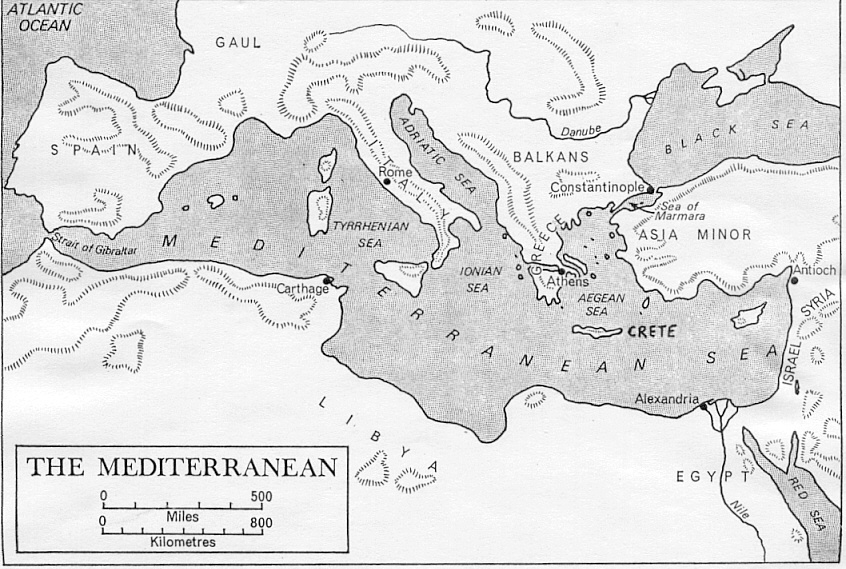
Which Greek city-state helped Athens?
The Persians were from what is modern-day ________.
Russia
India
Iran
Iraq

All of these are true about the Battle of Thermopylae EXCEPT
Leonidas and the brave 300 were killed
The Spartans delayed the Persians long enough for the City States to unite and form an army
The Spartans built a wall out of the Persian dead
The Persians lost the Battle of Thermopylae

Who founded the Persian Empire?
Xerxes
Cyrus II (the Great)
Darius I
Nabonidus
How was Cyrus the Great's leadership different from other Mesopotamian rulers?
He let his enemies live.
He lied to his people.
He relocated his enemies.
He made his enemies governors.
What did the Persians consider as the "most important" route in the empire because it provided them food, water, and fresh horses?
Persian Road
Country Road
Royal Road
Silk Road
Who tried and failed to conquer the Greeks?
Cyrus
Darius I
Xerces
Darius III
What type of religion is Zoroastrianism?
Monotheistic (belief in one god)
Polytheistic (belief in many gods)
Belief in the legendary Zoro
Belief in Jesus Christ

How did the Minoans get their wealth?
With the help of aliens
With the help of Ancient Egyptians
Through Trade
Through warfare
What animal was revered and celebrated by the Minoans?
Donkey
Goat
Bull
Horse

Knossos was...?
A religious temple.
The largest palace on Crete.
The Greece term for house.
A fishing village on Crete.

Half human, half bull
Pegasus
the Kraken
the Minotaur
The largest city of the Mycenaeans was _________
Mycenae
Knossos
Athens
Because they were very proud of their military heroes, the time period when the Mycenaeans were in charge is called ________.
the Heroic Age
The Dark Age
the Enlightenment
Period of time after the Mycenaean civilization collapsed.
Heroic Age
Dark Age
Linear A
What caused the tidal waves that wiped out the Minoans?
Tornado
Volcanic eruption
Hurricane
Global warming

What were the Mycenaeans most known for?
Their wealth
Their trading
Their architecture
Their warfare
Where did the Mycenaeans build fortresses?
Near the sea
On islands
Near trade centers
On top of hills and mountains
In what manner does the buildings of Minoans are arranged?
In a straight line
Like a maze/labyrinth
Like a pyramid
In a circular manner
Which city-state gained power before the Peloponnesian War?
Athens
Sparta
Corinth
Ionia
What is a result of the Peloponnesian War?
Greece gained a lot of land
Greeks lost their sense of community
Athens got richer.
Sparta gained soldiers from Persia.
An Athenian historian and general. His History of the Peloponnesian War recounts the fifth-century BC war between Sparta and Athens until the year 411 BC.
Thucydides
Xenophon
Thrasybulus
Cleon
Alliance between Athens and many of its allied cities following the first attempted invasion of Perisa into Greece.
Delian League
Peloponnesian League
Rule of the Thirty
The King's Peace
Athenian leader noted for advancing democracy and for leading the rebuilding of Athens after the Persian Wars
Pericles
Piraeus
King Philip II
Parthenon
an easily spread disease causing a large number of deaths
Plague
Piraeus
Pericles
Parthenon
An ancient kingdom north of Greece
Macedonia
Piraeus
Thucydides
Parthenon
How did Pericles strengthen democracy?
He only allowed the wealthy to vote.
He allowed all Athenians to vote.
He expanded citizenship to women.
He allowed all citizens to vote on laws.
Why did Pericles rebuild Athens?
Athens was a religious center in Greece.
Athens was in ruins after the Persian War.
Pericles wanted citizens to move to Athens.
Pericles was preparing for an invasion by Sparta.
(a) was a (b) or teacher who focused on learning from (c) .
Match the following characteristics of the Peloponnesian War
Sparta defeated
Athens
War caused
Greek cities to become weak
Peloponnesian League vs.
Delian League
Sparta created the _______League
Peloponnesian
Match the following situations that happened after Persian Wars
Delian League
Athenians created this defensive agreement
Peloponnesian League
Sparta created this to return to war vs. Athens
Peloponnesian War
War fought between two leagues
Athens defeated
Outcome for Sparta in Peloponnesian War
Reorder the following in the correct order by time (Timeline of Classical Greece)
Zoroastrianism 1500-1000 BCE
Persian Wars 499-449 BCE
Athenian Golden Age 449-431 BCE
Peloponnesian War
431 - 404 BCE
What was the name of the Greek philosopher who became Alexander's tutor?
Aristotle
Diogenes
Plato
Socrates


How old was Alexander when he became king?
50
35
20

What was the eastern edge of Alexander the Great's Empire?
Macedonia
Athens
India
Egypt

Alexander was 20 when he became ruler of Macedonia and Greece, but Philip had carefully prepared his son for the job. By age 16, Alexander was serving as a commander in the Macedonian army. He quickly won the respect of his soldiers. After Philip's death, Alexander was ready to fulfill his father's dream. He prepared to invade the Persian Empire.
How old was Alexander when he served as a commander?
18
21
16
20
334 b.c., Alexander led about 40,000 Macedonian and Greek soldiers into Asia Minor. Their goal was to defeat one of the strongest armies in the world—the Persians. Alexander's cavalry (KAV • uhl • ree), or soldiers on horseback, proved to be a stronger force. They fought a battle at Granicus, in what is today northwestern Turkey.
What animal did the cavalry use in the army?
Camel
Sheep
Turkey
Horse


Analyze the map and answer.
Why was the kingdom of Alexander the Great difficult to maintain?
because it was very big
Because of the constant wars and invasions
Because the region was near the sea

When Alexander and his men conquered Egypt, the location was renamed?
Egypt
Greece
Alexandria
Rome

What body of water marks the eastern edge of Alexander's empire?
River Gordium
Indus River
Mediterranean Sea
Euphrates River
This Persian leader thought he could fight Alexander
Xerxes
Cyrus
Babylon
Darius II
Alexander won because of his Cavalry or
Foot soldiers
Heavy soldiers
Horse soldiers
Elephants
Alexander maybe died
in battle
of wounds from a battle
from poison
from old age
When Alexander's armies got in northern India, after ten years of fighting, the exhausted soldiers (a) to continue.
Click on the circle that shows the location of Greece on the map?
Click on the circle that shows the location of Alexandria on the map?
Click on the circle that shows the location of Judea on the map?
Click on the circle that shows the location of Rome on the map?
Which of these areas outlines Alexander the Great's Empire?
What was the King of Sparta's response when King Philip II said:
“If I bring my army to Sparta, I will destroy your farms, slay your people, and raze your city!”
(a)

Choose one characteristic of the Hellenistic Period.
The spread of Greek language and culture to other cultures.
The creation of the agora.
The end to trade.
The isolation of Greece from other cultures.

The division of Alexander the Great's Empire was caused by:
Alexander sharing control of the empire with his brothers.
Natural disasters that divided the empire.
Rebel groups that broke away.
Alexander dying with no successor.

Which of the following is NOT true about Alexander the Great?
He was the son of Phillip II
He took control of Persia
He created a new blended culture called Hellenistic.
He was the elected leader of Macedonia
Which of the following is NOT true about a phalanx?
A group of soldiers rode horses and used a bow and arrows to defend their formation.
A group of soldiers stood close together in lines.
Soldiers carried long spears.
Soldiers were in a square formation.

Which is NOT an accurate statement about Philip II?
King of Macedonia who created a strong military by uniting the Macedonians
Conqueror of Greece
Created the League of Corinth to unify Macedonia and Greece
Conqueror of Egypt and Persia
Who attacked and conquered Greece in 338 B.C.?
King Darius
King Xerxes
King Philip II of Macedonia
Julius Caesar
What was a significant scientific contribution from Ancient Greece?
Invention of the wheel
Accurate estimate of the Earth's circumference
Discovery of penicillin
Development of the steam engine



