
 Worksheets
The Origin and Structure of the Earth
Total questions: 60
Worksheet time: 30mins
This gas makes up 78.1% of the atmosphere.
Nitrogen
Oxygen
Carbon Dioxide
Helium
This layer of the atmosphere protects us from UV rays.
Troposphere
Mesosphere
Stratosphere
Ionosphere
What is the lowest layer of the atmosphere where the weather forms?
Stratosphere
Troposphere
Mesosphere
Thermosphere
Which layer of the atmosphere protects us from space debris like asteroids and comets?
Stratosphere
Troposphere
Thermosphere
Mesosphere
Which layer of the atmosphere does aurora happen?
Stratosphere
Thermosphere
Mesosphere
Troposphere
What is the layer of the atmosphere where you can find the ozone layer?
Mesosphere
Troposphere
Thermosphere
Stratosphere
This is the farthest layer of the atmosphere?
Stratosphere
Mesosphere
Exosphere
Thermosphere
This subsystem of the Earth includes all the soils and rocks in the Earth.
Geosphere
Hydrosphere
Atmosphere
Biosphere
This subsystem of the Earth is composed of all the water on the Earth in all its forms.
Atmosphere
Lithosphere
Biosphere
Hydrosphere
This subsystem of the Earth is composed of all the living organism on Earth.
Lithosphere
Biosphere
Hydrosphere
Atmosphere
Lakes are part of which subsystem?
Hydrosphere
Atmosphere
Lithosphere
Biosphere
Mountains are part of which subsystem?
Hydrosphere
Geosphere
Atmosphere
Biosphere
Seas and oceans are part of which subsystem?
Atmosphere
Hydrosphere
Biosphere
Lithosphere
Crabs are part of which subsystem?
Atmosphere
Hydrosphere
Biosphere
Lithosphere
Bacteria are part of which subsystem?
Lithosphere
Hydrosphere
Atmosphere
Biosphere
The oxygen that we breathe is part of which subsystem?
Hydrosphere
Lithosphere
Atmosphere
Biosphere
The carbon dioxide that traps heat on the Earth is part of which subsystem?
Atmosphere
Hydrosphere
Lithosphere
Biosphere
Who discovered that the spiral nebulae were moving far away from the Earth?
Vesto Slipher
Niel Armstrong
Albert Einstein
Isaac Newton
Who was the proponent of the Big Bang Theory?
Albert Einstein
Stephen Hawking
Georges Lemaitre
Isaac Newton
The Big Bang is an explosion.
True
False
Who proved that the universe is expanding using mathematics?
Albert Einstein
Stephen Hawking
Edwin Hubble
Fred Hoyle
According to this theory, the universe expanded and will soon collapse and expand again.
Big Bounce
Big Bang
Big Crunch
Big Freeze
When the universe collapses, it is called "the Big Crunch."
True
False
According to this Theory, the universe expands but the density remains the same because new stars and galaxies are formed
The Big Bang Theory
The Inflationary Theory
The Dark Matter Theory
The Steady State Theory
Which of the following can best describe the formation of the solar system?
Nebular Hypothesis
Encounter Theory
Accretion Theory
Panspermia Theory
Which of the following is NOT a reason why Earth supports life?
Abundance of oxygen
Presence of liquid water
Extreme temperature
Availability of food sources
Which of the following is the main source of energy on Earth?
Wind
Sun
Water
Fossil Fuels
Which of the following layers of the Earth is responsible for the formation of magnetic field that surrounds the Earth?
Crust
Mantle
Asthenosphere
Core
What are the different criteria to make a planet a habitable one? (You can choose more than one answer)
Presence of liquid water
The planet must be located in the Goldilocks zone
Atmosphere
Presence of two or more stars in its system
Why is Earth called “the living planet?”
It sustains life.
It has atmosphere
It has water at the surface
All of the above
Which among the set of planets are called terrestrial?
Jupiter, Neptune, Uranus
Mercury, Venus, Mars, Earth
Earth, Venus, Mars, Jupiter
Jupiter, Saturn, Uranus, Neptune
How many percent of water comprises the Earth?
15%
30%
50%
70%
Which one of the following figures represents the age of the earth?
4.6 million years
13.7 billion years
4.6 billion years
13.7 trillion years
Which of the following scientific theories on the origin of the universe states that the universe's density and matter remains the same throughout the time?
Big Bang Theory
Inflation Theory
Steady State Theory
String Theory
Which of the following theories on the origin of the universe states that a star or a comet passed by the sun to draw out a stream of solar gas that condensed to form the planets?
Encounter Hypothesis
Tidal Hypothesis
Collision Theory
Vortex Theory
The study of Earth and the universe around it.
Earth Science
Life Science
Physical Science
What makes human and other living organisms capable to live on Earth?
Earth can provide food for the organism
Earth can protect the organism from any possible threat
Earth’s temperature is mostly hot compared to other planets
Earth has the right amount of temperature, water, good atmosphere, and favorable climate

What is the name of the galaxy in which Earth is located?
Big Band
Milky Way
Mars
Universe
Which of the following statements best describes a galaxy?
A system of planets with an elliptical orbit
A giant nuclear reactor held together by gravity
A cloud that produces stars
A system of gas, dust and billions of stars held together by gravity

What two elements mostly make up stars?
Hydrogen and Oxygen
Hydrogen and Helium
Helium and Oxygen
Hydrogen and Nitrogen
Temperature and pressure ___ as you move towards the center of the Earth.
decrease
increase
neither answer is correct.

Which layer is the coolest?
crust
mantle
outer core
inner core

Which layer is the hottest?
crust
mantle
outer core
inner core

Which layer of the Earth is the THICKEST?
crust
mantle
outer core
inner core

Which layer of the Earth is the THINNEST?
crust
mantle
outer core
inner core
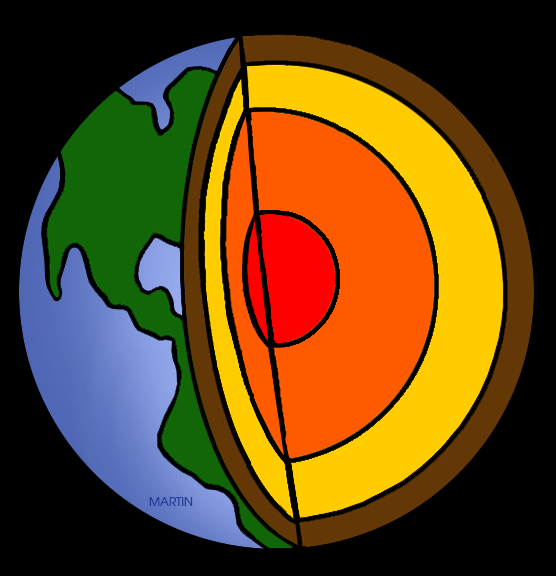
Which layer is shown in red?
crust
mantle
outer core
inner core

Which layer of the Earth is shown in ORANGE?
Crust
Mantle
Inner Core
Outer Core
Which layer of the Earth is shown in YELLOW?
Crust
Mantle
Inner Core
Outer Core
Which layer of the Earth is shown in BROWN?
Crust
Mantle
Inner Core
Outer Core

This layer is a solid ball of metal.
Crust
Mantle
Outer Core
Inner Core
What dwarf planet was downgraded from planetary status in 2006?
Mercury
Uranus
Neptune
Pluto
According to the nebular theory, did the planets start forming before or after the Sun ignited?
The planets started forming during the time the Sun ignited.
The planets started forming before the Sun ignited.
The planets started forming after the Sun ignited.
What is the solar system?
The sun
The planets
The sun and planets ONLY
The sun, planets, and all other objects that orbit the sun
Which planet is the closest to our sun?
Mars
Earth
Mercury
Venus
Which planet is the farthest away from our sun?
Mars
Jupiter
Neptune
Uranus
Why do the planets orbit the sun?
They don't, the planets orbit the Earth
Because Science
The sun is so massive that it has a very large gravitational pull, which causes objects to orbit it
Because they want to
A giant cloud of dust and gas formed out solar system.
True
False
Which planet has a Big Red Spot?
Mars
Jupiter
Neptune
Venus
The majority of asteroids are found between the orbits of which among the following?
Mars and Jupiter
Earth and Mars
Jupiter and Saturn
Saturn and Uranus
What is most likely to be found in a nebula?
planets
asteroids
stars
gas clouds

