
 Worksheets
Force and Motion Test Review (23/24)
Total questions: 55
Worksheet time: 38mins
a force that is directed toward the center of a curved or circular path
centripetal force
inertia
gravity
net force
a push or a pull exerted on an object
force
field
weight
friction
attractive force between two objects that depends on the masses of the objects and the distance between them
gravity
net force
weight
air resistance
tendency of an object to resist any change in its motion
inertia
gravity
free fall
terminal velocity
states that an object moving at a constant velocity keeps moving at that velocity unless an unbalanced force acts on it
Newton's 1st Law
Newton's 2nd Law
Newton's 3rd Law
Law of Conservation of Momentum


Using the gravity of earth at 9.81 m/s2 , how much does a person with a mass of 35 kg weigh in Newton's?
0.28 N
343 N
3.57 N
212 N

A 20 kg bike accelerates at 10 m/s2. what was the force?
25 Newtons
20 Newtons
200 Newtons
10 Newtons
If an object was accelerating at 10 m/s2, and a force of 35 newtons was required to accelerate it, what was the object's mass?
3.5 kilogram
350 kilograms
0.35 kilograms
35 kilograms

How does inertia change as mass increases?
Inertia would increase
Inertia would Decrease
Mass has no effect on inertia
It would depend on the acceleration

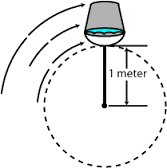
This car is turning, but there’s a puddle of water in the road. Which diagram best shows how the puddle will affect the path of the car after it hits the puddle?



What is the centripetal force acting on a satellite orbiting the Earth?
Tension
Inertia
Gravity
Acceleration
Why do astronauts appear to be weightless in space?
They are weightless, no gravity in space
They are in a state of constant free-fall
They aren't totally weightless, just in micro-gravity
Space is made up by NASA, so astronauts are just in a gravity blocking bunker
The Net Force acting on an object is proportional to both the mass and the resultant acceleration of that object. (F = m x a)
Newton's First
Newton's Second
Newton's Third
Newton's Universal Gravity
If a bowling ball and feather are dropped from the same height in the absence of air, what will happen?
The feather will hit the ground first
The bowling ball will hit the ground first
They will hit the ground at the same time
They will both float in the air
When a force is exerted on an object, an equal and opposite force is exerted by the object. These forces are referred to as ______________?
Centripetal Forces
Frictional Forces
Gravitational Forces
Action-Reaction Forces

If the rocket has a mass of 5 kg, the gasses have a mass of 0.5 kg and there is 1,500 N of force being exerted, what is the acceleration of the gas?
750 m/s2
149.5 m/s2
3,000 m/s2
7,500 m/s2
If the rocket has a mass of 5 kg, the gasses have a mass of 0.5 kg and there is 1,500 N of force being exerted, what is the acceleration of the rocket?
750 m/s2
300 m/s2
3,000 m/s2
7,500 m/s2
If the rocket has a mass of 5 kg, the gasses have a mass of 0.5 kg and there is 1,500 N of force being exerted, why does the rocket accelerate less?
The fins slow it down
The gasses have significantly less mass
Because its the action force not the reaction force
The gasses are assisted by gravity
A freight train has more ___ than a car, so it has greater inertia.
Velocity
Mass
Speed
Acceleration
The SI unit of Force
Kilograms
Seconds
Pounds
Newtons
states that any two masses exert an attractive force on each other, the amount of which depends on the mass of the two objects and the distance between them
Newton's First Law
Newtons' Second Law
Newton's Third Law
Newton's Law of Universal Gravitation
A measure of the gravitational force exerted on an object.
Weight
Mass
Friction
Acceleration
For every action there is an equal and opposite reaction.
Descarte's Fifth Law
Newton's First Law
Newton's Third Law
Law of Conservation of Momentum


Which of these shows a balanced force?
A
B
C
D
Which of these shows a action/reaction pair of forces?
A
B
C
D

What would be the reaction force to the push?
150 N to the left
150 N to the right
300 N to the left
300 N to the right
What would be the net force on the box?
0 N
450 N to the right
150 N to the left
150 N to the right

After the cannon fires the cannonball, why would the cannon have less acceleration compared to the cannonball?
The cannon has more mass
The cannon has less mass
The cannon has more force acting on it
The cannon has less force acting on it
The Big Bang Theory suggests that our universe formed as the result of a huge explosion that sent all existing matter flying outward from a single point. The Big Bang Theory is supported by which of these observations?
All matter in the universe is composed of the same atoms.
All galaxies appear to be moving away from all other galaxies.
All stars in the universe are approximately the same age.
The universe is relatively the same temperature in all locations.
What does it mean if a galaxy gives off light which has been shifted toward the red end of the electromagnetic spectrum?
The galaxy is much older than Earth.
The galaxy is moving away from Earth.
The galaxy is very hot and has not cooled down yet.
The remnants of an explosion are between the galaxy and Earth.
Cosmic Microwave Background Radiation (CMBR) is the term used to describe the residual microwave radiation observed everywhere in the universe that seems to have no single source. The observation of CMBR is used as evidence of The Big Bang Theory because it is believed to be -
The result of collisions between neighboring galaxies.
Particles of dust that have absorbed radioactivity.
Radiation left over from the rapid expansion of matter.
Light energy emitted from the source of The Big Bang.
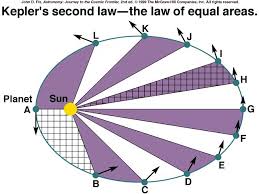
the speed of a planet at different points of it's orbit
The relationship between the speed of a planet and how far it is from the sun (comparing different planets)
Jenny applies a 60 N force to a 20 Kg cart, what is the acceleration of the cart if friction can be neglected?
1200 m/s2
0.33 m/s2
20 m/s2
3 m/s2
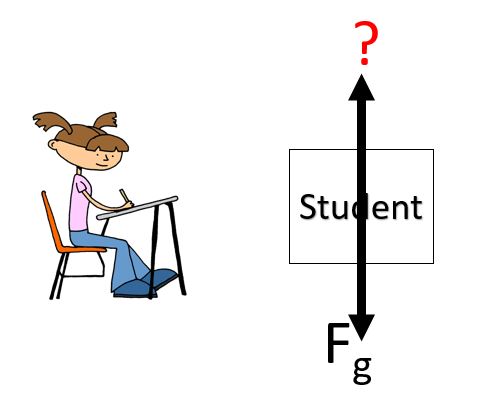

What is the net force?
3 N Right
3 N Left
17 N Right
17 N Left

