
Font size
 Worksheets
Historical Astronomy and Telescopes
Total questions: 51
Worksheet time: 27mins
The observation that everything moved across the night sky from east to west caused early astronomers like Aristotle to believe...
The sun was the center of the solar system.
The earth was the center of the solar system.
The earth was flat.
Ancient Greeks believed, the earth to be the centre of the universe. What do we call this model?
Copernican Model
Geocentric Universe
Heliocentric Universe
The Copernican revolution began when Copernicus suggested
a geocentric model.
a heliocentric model.
a new calendar.
a new constellation.
Tycho Brahe's biggest contribution to astronomy was...?
accurate observations of the stars and planets.
his new invention, the telescope.
his theory of a heliocentric universe.
his brass nose and bad temper.
Astronomer Johannes Kepler...
was made head astronomer for the Church.
invented the first Radio Telescope
showed that the planets have elliptical orbits.
The observation that everything moved across the night sky from east to west caused early astronomers like Aristotle to believe...
The sun was the center of the solar system.
The earth was the center of the solar system.
The earth was flat.
Ancient Greeks believed, the earth to be the centre of the universe. What do we call this model?
Copernican Model
Geocentric Universe
Heliocentric Universe
Which African astronomer/librarian measured the circumference of the earth using sticks and shadows?
Aristotle
Ptolemy
Copernicus
Eratosthenes
Which astronomer of antiquity made elaborate models of an earth-centered universe, an idea which was to stick for over 1000 years?
Copernicus
Eratosthenes
Ptolemy
Tycho Brahe
The Copernican revolution began when Copernicus suggested
a geocentric model.
a heliocentric model.
a new calendar.
a new constellation.
Tycho Brahe's biggest contribution to astronomy was...?
accurate observations of the stars and planets.
his new invention, the telescope.
his theory of a heliocentric universe.
his brass nose and bad temper.
Astronomer Johannes Kepler...
was made head astronomer for the Church.
invented the first Radio Telescope
showed that the planets have elliptical orbits.
Which astronomer of the Middle Ages first applied a telescope to astronomical observation?
Ptolemy
Galileo Galilei
Tycho Brahe
Copernicus
Galileo's discoveries
helped him invent the telescope.
provided evidence that the earth and the planets revolve around the sun.
convinced him the Earth was at the center.
helped him learn about the planets Neptune and Uranus.
A heliocentric view believes everything revolves around the:
sun
earth
universe
moon
Isaac Newton developed a __________ telescope that showed objects in sharper detail.
reflecting
satellite
radio
lense


Who came up with three laws explaining planetary motion?
Isaac Newton
Galileo Galilei
Tycho Brahe
Johannes Kepler

The distance between the Sun and the Earth is called ...
A light minute
A light half hour
An Astronomical Unit (AU)
A short trip.
Why was the discovery of Jupiter’s moons so important?
It proved the theory of gravity
It supported the heliocentric model
It proved Kepler's Laws
It proved there could be multiple moons
Which of the following is NOT a reason that ancient civilizations studied astronomy?
time-keeping
navigation
culture & religion
contact aliens
Ptolemy
Copernicus
Newton
Galileo
Which bands of electromagnetic radiation are blocked from reaching Earth's surface by our atmosphere?
visible light
radio waves
red light
gamma rays

Which of these can solve the issue of atmospheric blurring?
polishing the lens
only using the telescope when it's a clear night
putting the telescope in space
putting the telescope underground
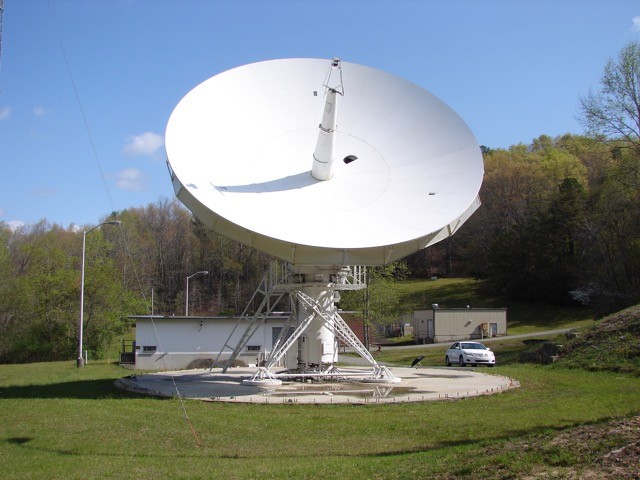
What type of telescope can work 24 hours a day and even be used in the rain?
Refracting Telescope
Radio Telescope
Newtonian Telescope
Solar Telescope


Which of the following is NOT a reason that most modern telescopes are reflectors?
Lenses are difficult to manufacture
Lenses are heavy and fragile
lenses absorb light that passes through them
Lenses require only 1 perfect surface

Modern telescopes don't use film to capture images, instead they use:
CCDs
USBs
HDDs
CD-ROMs

One of the issues created by the air surrounding us is:
Interferometry
Reflection
Interference
Atmospheric blurring
Which of these would NOT solve the issue of atmospheric blurring?
Active Optics
Adaptive Optics
Putting a telescope in space
Putting a telescope underground

What types of telescopes have to be placed in space? (Choose all that apply)
X-ray Telescopes
Gamma ray Telescopes
Infrared Telescopes
Radio Telescopes
When you look at a galaxy that is 2 billion light years away, you see the galaxy as it was ___________ years ago.
2 billion
2 million
zero
20 billion



