Wayground logo

Free Printable Worksheets

Font size

S
M
L
XL
Worksheets

Stretch and challenge quiz

Total questions: 95

Worksheet time: 3585secs

Name
Class
Date
1.
Metals are good conductors of electricity because
a)
they contain free electrons
b)
the atoms are lightly packed 
c)
they have high melting point
d)
all of the above
2.
Planets do not twinkle because
a)
they emit light of a constant intensity
b)
Their distance from the earth does not change the  time
c)
They are very far away from the earth resulting in decrease in intensity of light
d)
They are nearer to earth and hemce we recieve a greater amount of light and, therefore minor variations in the intensity are not noticeable
3.
Pa (Pascal) is the unit for
a)
Thrust
b)
Pressure
c)
Frequency
d)
Conductivity
4.
Stars appears to move from east to west because
a)
All stars move from east to west
b)
The earth rotates from west to east
c)
The earth rotates from east to west
d)
The background of the stars moves from west to east
5.
Light from the sun reaches us in nearly
a)
2 minutes
b)
4 minutes
c)
8 minutes
d)
16 minutes
6.
Light year is a unit of
a)
Time
b)
Distance
c)
Light
d)
Intensity of light
7.
Large transformers, when used for some time, become very hot and are cooled by circulating oil. The heating of the transformer is due to
a)
The heating effect of current alone
b)
Hysteresis loss alone
c)
both the heating effect of current and hysteresis loss
d)
intense sunlight at noon
8.
The absorption of ink by blotting paper involves 
a)
Viscosity of ink
b)
Capillary action phenomenon
c)
Diffusion of ink through the blotting
d)
Siphon action
9.
It is easier to roll a stone up a sloping road than to lift it vertical upwards because
a)
work done in rolling is more than in lifting
b)
work done in lifting the stone is equal to rolling it
c)
Work done in both is same but the rate of doing work is less in rolling
d)
work done in rolling a stone is less than in lifting it
10.
When exposed to lower air pressure, the boiling point of water
a)
Decreases
b)
Increases
c)
Remains the same
d)
All of the above
11.
Which of these is a unit of work?
a)
Watt
b)
Meter
c)
Joule
d)
Newton
12.
The orbits of the planets around the sun are 
a)
Circular
b)
Horizontal
c)
Elliptical
d)
Diagonal
13.

What does RADAR stand for?

a)

RAdiation, Direction And Ranging

b)

RAdio, Direction And Ranging

c)

Reciprocity, Detection, And Ranging

d)

RAdio, Detection, And Ranging

14.

Four Types of Transmissions are pulse repetition frequency, pulse modulation, frequency modulation, and continuous wave.

a)

True

b)

False

15.

Range is...?

a)

Direction

b)

Distance

c)

Detection

d)

Duplexer

16.

Range= Elapsed time ÷...?

a)

6.18microsec

b)

162micosec

c)

21.36microsec

d)

12.36 microsec

17.

Minimum Range determined by...

a)

Pulses radiated

b)

Pulse width

c)

PRF

d)

Pulse doppler

18.

Maximum Range is determined by...

a)

PRF

b)

Pulse time

c)

Pulse modulation

d)

PRT

19.

Pulse Repetition Frequency number of pulses radiated in ... second(s)

a)

1

b)

2

c)

3

d)

4

20.

Ambiguous Returns are returns that appear and incorrect ranges insufficient times between pulses.

a)

True

b)

False

21.

Range resolution?

a)

Same bearing, different range

b)

Same bearing, same range

c)

Different bearing, different range

d)

Different bearing same range

22.

Azimuth Bearing Resolution?

a)

Same range, same bearing

b)

Different range, different bearing

c)

Different bearing, same range

d)

Same bearing, different range

23.
The speed of sound at 20 degrees celcius is:
a)
331 m/s
b)
365 m/s
c)
621 m/s
d)
343 m/s
24.
Sound does not travel in space because
a)
Space is too far away.
b)
There is no matter in space.
c)
Space is the final frontier
d)
Space has planets.
25.
Sound moves in a _________.
a)
Transverse wave
b)
Longitudinal wave
26.

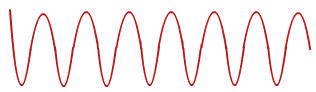
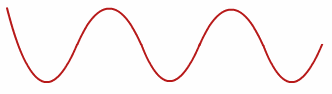
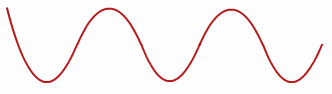
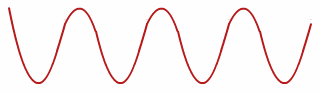
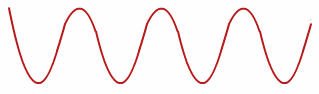
Which of these sound waves has the highest frequency?
a)
b)
c)
27.

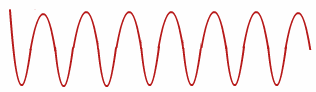
Which sound wave has the lowest pitch?
a)
b)
c)
28.
The volume of a sound is measured in units called ________
a)
decibels
b)
liters
c)
sound waves
d)
inches per minute
29.
A sound with a high frequency has a _____ pitch. A sound with a ____ frequency has a low pitch.
a)
high, low
b)
low, high
c)
medium, high
d)
high, medium
30.
Matter that carries sound waves is called a _________
a)
low
b)
high
c)
medium
d)
surface
31.

The ______ of a sound depends on the medium through which it's moving.

a)

pitch

b)

vibration

c)

speed

d)

loudness

32.

Amplitude affects which characteristic of sound waves?

a)

frequency

b)

pitch

c)

loudness

d)

wave speed

33.
The speed of sound at 20 degrees celcius is:
a)
331 m/s
b)
365 m/s
c)
621 m/s
d)
343 m/s
34.
Which factor does not affect the speed of sound:
a)
temperature
b)
distance
c)
density
d)
elasticity
35.
The ability of a material to bounce back after being disturbed is called:
a)
elasticity
b)
density
c)
rebound
d)
springiness
36.
The more elastic a material the _______________ sound will travel through it.
a)
faster
b)
slower
37.
Which item has more elasticity?
a)
gas
b)
solid
c)
liquid
d)
plasma
38.
How much matter or mass there is in a given amount of space is called:
a)
elasticity
b)
compactedness
c)
density
d)
volume
39.
The more density an object has, the ______________ sound travels through it.
a)
slower
b)
faster
40.
Which item will sound travel faster through?
a)
water
b)
steam
c)
foam board
d)
wooden block
41.
The warmer an object is, the ____________ sound will travel through it.
a)
faster
b)
slower
42.
What pilot was the first to travel faster than the speed of sound?
a)
Amelia Earhart
b)
Charles Lindbergh
c)
Chuck Yeager
d)
Sully Sullenberger
43.
What three things may happen to light that strikes an object? 
a)
The light may be reflected, transmitted or absorbed.
b)
The light may be reflected and refracted.
c)
The light may be absorbed and transmitted.
44.
What are the primary colors of the pigment?
a)
cyan, yellow and magenta
b)
Red, green and blue
c)
black and white
45.
An actorś red shirt and blue pants both appear black. What color is the stage light shining on the actor?
a)
Blue 
b)
Red
c)
Magenta
d)
Green
46.
Which pairs of colors of pigment combine to make black?
a)
green and magenta
b)
red and cyan
c)
yellow and blue
d)
All of the above
47.
The two kinds of reflection are 
a)
transparent and translucent
b)
opaque and translucent
c)
regular and diffuse
48.
______ is a copy of the object formed by reflected or refracted rays of light
a)
reflection
b)
refraction
c)
object
d)
image
49.
A plane mirror produces a/an 
a)
a small, real image
b)
a large, real image
c)
 a small, virtual image
d)
a same sized, virtual image
50.
_______ is an imaginary line that divides a mirror into half.
a)
focal point
b)
equator
c)
optical axis
d)
incident angle
51.
The point at which rays parallel to the optical axis is called the 
a)
reflection point
b)
focal point
c)
refraction point
52.
_______ mirrors can form either a virtual or a real image
a)
concave mirrors
b)
convex mirrors
c)
plane mirrors
53.

Que son los satelites?

a)

son basura espacial

b)

son utilizados para enviar y recibir comunicaciones de uso masivo como telefonía, televisión o Internet

c)

son pronósticos del clima o para prestar servicios educativos

d)

son lanzados al espacio con fines militares

54.

cuales son los dos grupos de tipos de satelites:

a)

orbita y espacio

b)

antena y orbita

c)

finalidad y orbita

d)

satelite y orbita

55.

mencione dos tipos de funciones de los satelites:

a)

antena y fuente de alimentacion

b)

cientificos y aplicados

c)

finalidad y orbita

d)

global y satelital

56.

seleccione cual de las dos siguientes opciones son orbitas:

a)

inclinadas

b)

polar

c)

antena

d)

insular

57.

cual es la frecuencia de los satelites:

a)

3400 a 4200MHZ

b)

4200 a 6000 MHZ

c)

2500 A 3000 MHZ

d)

3000 A 42000 MHZ

58.
Who invented the telescope?
a)
Galileo
b)
Plato
c)
Ptolemy
d)
it's unknown
59.
What was Galileo's contribution to the telescope?
a)
He invented it
b)
He patented it
c)
He discovered it
d)
He promoted it
60.
This instrument can be thought of as a large light bucket
a)
your eyes
b)
a lens
c)
a telescope
d)
a satellite dish
61.
The "collector", or "light-gathering part" of the telescope is called the _____
a)
objective
b)
ocular
c)
eye piece
d)
refractor
62.
If the collector is made 10 times wider, how much more light is collected?
a)
2 times more
b)
10 times more
c)
20 times more
d)
100 times more
63.
When light passes through a lens, it _____
a)
reflects
b)
is absorbed
c)
bounces
d)
changes direction
64.
The bending of light through a lens is called _____
a)
reflection
b)
refraction
c)
diffraction
d)
absorption
65.
When the light comes to a focus, using a refracting telescope, it is _____
a)
upside-down, and flipped left and right
b)
only flipped left and right
c)
only upside-down
d)
unchanged
66.
The image, observed in a telescope, is _____
a)
bigger than the object
b)
the same size as the object
c)
slightly smaller than the object
d)
much smaller than the object
67.
The ability to separate two objects that are very close together, is called the _____
a)
orientation
b)
attitude
c)
magnification
d)
resolution 
68.
In general the bigger the telescope's objective the better your _____
a)
resolution
b)
magnification
c)
attitude
d)
orientation
69.
Telescopes that use mirrors are called _____
a)
refractors
b)
reflectors
c)
catadioptric
d)
resolving
70.
Who was the first to develop reflecting telescopes?
a)
Nicolaus Copernicus
b)
Isaac Newton
c)
Galileo Galilei
d)
Tycho Brahe
71.
What do modern professional-grade optical telescopes use as their objective?
a)
lenses
b)
mirrors
c)
electronic detectors
d)
photographic film
72.
According to Phil, "the problem with astronomers" is getting them to _____
a)
show you their telescope
b)
talk about astronomy
c)
stop talking about astronomy
d)
host a star party
73.
Who discovered infrared light, a kind of light invisible to our eyes?
a)
Robert Hooke
b)
Isaac Newton
c)
Galileo Galilei
d)
William Herschel
74.
What kind of detector is used for radio waves?
a)
a refracting telescope
b)
a metal dish
c)
a reflecting telescope
d)
a digital camera
75.
Our eyes act like movie cameras, taking pictures at a frame rate of about _____
a)
1.4 images per second
b)
14 images per second
c)
140 images per second
d)
1,400 images per second
76.
Photographs allow us to see fainter objects by taking long _____
a)
wavelength
b)
exposures
c)
body tubes
d)
frame rates
77.
Which detectors are dozens of times more light-sensitive than film?
a)
your eyes
b)
digital detectors
c)
computers
d)
mirrors
78.

Kirchoff's First Law states

a)

the sum of the currents entering any junction in an electric circuit must equal the sum of the currents leaving that junction

b)

the sum of the charges entering any junction in an electric circuit must equal the sum of the charges leaving that junction

c)

the sum of the emfs entering any junction in an electric circuit must equal the sum of the pds leaving that junction

d)

none of these

79.

Kirchoff's second law states

a)

in any closed loop in an electric circuit the algebraic sum of the electromotive forces in the loop is equal to the algebraic sum of the potential differences in that loop

b)

in any closed loop in an electric circuit the vector sum of the electromotive forces in the loop is equal to the vector sum of the potential differences in that loop

c)

in any closed loop in an electric circuit the algebraic sum of the currents in the loop is equal to the algebraic sum of the potential differences in that loop

d)

none of these

80.

Select all true statements

a)

Kirchoff's second law depends on the conservation of energy principle

b)

Kirchoff's first law depends upon the conservation of charge

c)

Kirchoff's second law depends on the conservation of charge principle

d)

Kirchoff's first law depends upon the conservation of energy

81.

Select all true statements

a)

In the dark an LDR has very high resistance in the MΩ range

b)

The output p.d. will be low in the dark

c)

In the light an LDR has very high resistance in the MΩ range

d)

The output p.d. will be high in the dark

82.

Select all true statements

a)

This is a thermistor circuit symbol

b)

This component is a semiconductor

c)

This component resistance decreases as temperature increases

d)

This component resistance decreases as temperature decreases

83.

Select all true statements

a)

This component is a light emitting diode

b)

It only allows current to flow one way

c)

It is temperature dependent

d)

It depends on light intensity

84.
a)

i1 + i5 +i4 = i2 + i3

b)

i1 + i5 +i3 = i2 + i4

c)

i5 + i2 +i4 = i1 + i3

d)

i1 + i5 = i2 + i3 + i4

85.

Which equations are correct?

a)

ε1 - i1R1 - i2R2 = 0

b)

ε1 + ε2 + i3R3 - i2R2 = 0

c)

ε1 - i2R1 - i2R2 = 0

d)

ε1 - ε2 - i3R3 + i2R2 = 0

86.

For this circuit select the correct statements

a)

i1 = 2 A

b)

i3 = 8 A

c)

i2 = 6 A

d)

i2 = i1 + i3

87.
a)

V1 = 17 V

b)

V3 = 15 V

c)

V3 = 4.5 V

d)

V1 = 3.0 V

88.

emf stands for

a)

electron motion force

b)

potential difference

c)

electromotive force

d)

electromagnetic force

89.

The defining word equation for the Volt

a)

energy per unit charge

b)

rate of flow of charge

c)

work per unit time

d)

product of electrical resistance and current

90.

If three 1.5 V cells are connected in series

a)

the combined emf is 4.5 V and it will last as long as a single 1.5 V cell

b)

the combined emf is 1.5 V and it will last as long as a single 1.5 V cell

c)

the combined emf is 4.5 V and it will last longer than a single 1.5 V cell

d)

none of these

91.

If three 1.5 V cells are connected in parallel

a)

the combined emf is 4.5 V and it will last as long as a single 1.5 V cell

b)

the combined emf is 1.5 V and it will last longer than a single 1.5 V cell

c)

the combined emf is 4.5 V and it will last as long as a single 1.5 V cell

d)

none of these

92.

five 100 Ω resistors are connected parallel

a)

20 Ω

b)

120 Ω

c)

200 Ω

d)

500 Ω

93.

Two 4000 Ω are connected in parallel, and then these are connected in series to another pair of parallel wired resistors to give a total circuit resistance of 6000 Ω. What are the possible values of the other pair?

a)

both 8000 Ω

b)

both 4000 Ω

c)

one 5500 Ω and the other 8000 Ω

d)

one 6000 Ω and the other 12000 Ω

94.

To measure the emf of a cell accurately use a

a)

slide wire potentiometer

b)

voltmeter

c)

ammeter

d)

power pack

95.

What current would flow?

a)

0.36 A

b)

1.04 A

c)

0.021 A

d)

0.82 A