Font size
 Worksheets
Biology - 3rd 9 Weeks Exam Review
Total questions: 50
Worksheet time: 29mins
The correct sequence of mitosis:
metaphase, anaphase, telophase, prophase
prophase, metaphase, anaphase, telophase
prophase, anaphase, metaphase, telophase
telophase, metaphase, prophase, anaphase
Identical halves of a chromosome are called?
Cousins
Chromatids
Centromere
Centrosome
Chromosomes are visible and spindle fibers start to appear
prophase
metaphase
telophase
anaphase
After mitosis the number of chromosomes in the newly created cells will be:
Half the number of the original cell
The same number as the original cell
Twice as much as the original cell
The division of chromosomes is called?
anaphase
mitosis
cytokineses
G0
Uncontrolled growth can result in:
G0 phase
S phase
Replication
Cancer
Which of the following is an Autosomal Recessive Inheritance?
Cystic Fibrosis
Down Syndrome
Ocular Albinism
Polycystic Kidney Disease
A rare genetic disorder where in the blood does not clot in a typical way that it should due to insufficient blood-clotting factors.
Sickle Cell Anemia
Hemophilia
Phenylketonuria
Rett Syndrome
Which of the following is NOT a chromosomal inheritance?
Trisomy 21
Cri du chat Syndrome
Klinefelter's Disease
Alzheimer's Disease
The gradual erosion of the cartilage that protects the ends of leg bones is called _______.
sprain
bone cancer
arthritis
osteoporosis
What hormones controls the level of sugar or blood glucose in the body?
glucogen
insulin
melatonin
adrenaline
In X-linked recessive inheritance, daughters will be affected if the father is also affected by the disorder.
TRUE
FALSE

A giraffe has a long neck in order to better reach leaves to eat. This is an example of _____.
an adaptation
environment
response
stimulus
What is an example of artificial selection?
Letting dogs choose their own mate
Letting plants pollinate on their own
Crossing a labrador and a poodle to create a labradoodle
Natural Selection is driven by a change in the environment and survival of the
Earth
Fastest
Fittest
Biggest
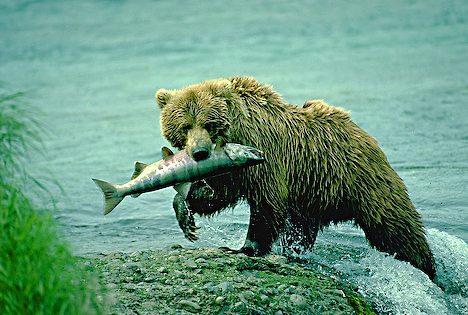
A grizzly bear survives because he is well-adapted to his environment. When he reproduces he passes on those traits to his offspring. this process is called
Natural Selection
Selective Breeding
Random mutations
Variations in a species

What is another name for natural selection?
survival of the smartest
survival of the fastest
survival of the biggest
survival of the fittest
Which of these populations would be most likely regulated by competition for food?
lions
rabbits
spiders
dandelions

Which of the following describes a population?
The total number of people, animals, and plants in New York City
The total number of apartments in New York City
The total number of people living in New York City
The amount of water in the Hudson River
Largest number of individuals of a population that the environment can support...
carrying capacity
population
biome
mutualism

If a disease destroying wheat plants in a field swept through an ecosystem, what would happen to the bird population that feed off of the wheat in the the field ?
The bird population would stay the same
The bird population would increase
The bird population would decrease

When a population grows past the ecosystem's carrying capacity, what most likley happens to the population?
Continues to grow
The population starts to die off to return to carrying capcity
The population will go completely extinct due to lack of resources
Food, water, sunlight, shelter, and space are resources that are called
limiting factors
species
biotic
none of the above
Freshwater is a renewable resource. Ellie claims that because it is renewable, we don't have to worry about overusing it. Which of these best explains why she is incorrect?
Renewable resources will run out in our lifetime
Renewable resources aren't plentiful
Renewable resources can run out if they are consumed faster than they are replenished.
Renewable resources are impossible to measure.
Freshwater supplies are renewed by
the cycling of oxygen and carbon dioxide, driven by respiration and CO2/O2 exchange.
the cycling of earth's water, driven by the sun's uneven heating of Earth.
the cycling of minerals, driven by heat from earth's core.
the cycling of Mr. Lloyd, all throughout Great Falls.
Which of these are renewable resources?
grasslands
river systems
gold ore
oil deposits
Which of these are nonrenewable resources?
human beings
coal deposits
rare metals
chromebooks

Which of the following are Non-Renewable energy resources? (Check all that apply.)
coal
wind
solar
nuclear

One advantage of solar and wind power over fossil fuels is that
wind and solar are presently much less expensive than fossil fuels.
wind and solar come from natural processes and fossil fuels do not.
wind and solar are nonrenewable resources and fossil fuel are renewable.
wind and solar are continuously renewable and fossil fuels take millions of years to be formed.

This energy is from moving air.
Wind Energy
Geothermal Energy
Fossil Fuel Energy
Biofuel
If we keep using non renewable energy , we will not be able to
sustain life on earth
produce more mater
visit another planet
cook a meal
What is a natural resource?
Material from the Earth that people use for their needs.
A place hidden in the mountains.
An object made from natural things.
What is one way you and your family can help to conserve water at home?
watering the garden at the hottest time of the day
using the longest cycle to wash clothes
turning off the faucet while brushing your teeth
letting the water run while washing dishes
Global warming can lead to
deforestation
climate change
oil spills
litter