
NEW
Font size
 Worksheets
Population Growth and Limiting Factors
Total questions: 18
Worksheet time: 54mins
density-independent
density-dependent
density-independent
density-dependent
density-independent
density-dependent
density-independent
density-dependent
What is the abbreviation for carrying capacity?
r
C
K
a
S curve
J curve
M curve
W curve
S curve
J curve
M curve
W curve
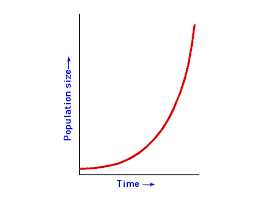
What type of growth is shown in the diagram?
exponential growth
logistic growth
predator-prey cycle
boom-bust curve
Largest number of individuals of a population that the environment can support...
carrying capacity
population
biome
mutualism
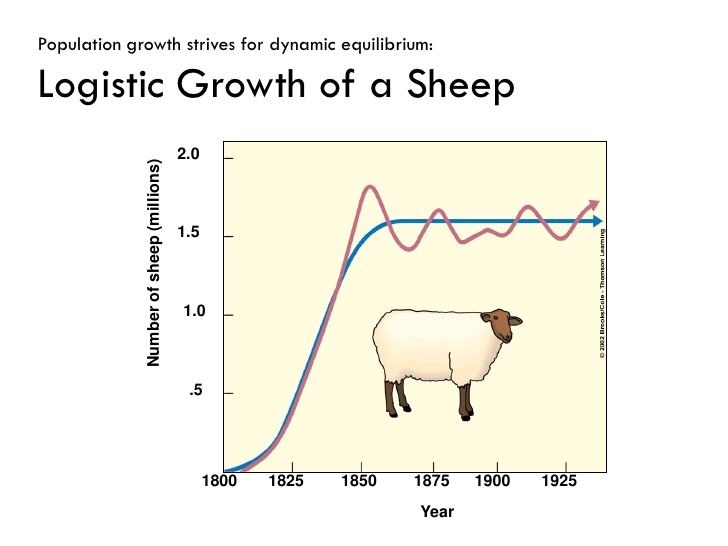
What is the carrying capacity for this sheep population?
2.0 million
1.0 million
1.6 million
0.5 million

What is the approximate carrying capacity of Paramecium aurelia grown alone?
100
200
300
450
Limiting factors are sometimes helpful because they can keep the population from getting to large.
True
False
a limiting measure
a limiting factor
factorization
materialization of precipitation
In a logistic growth model the growth rate will be close to zero when...
the population is close to carrying capacity
the population starts growing quickly
the population decreases due to a lack of food
all of the above
What does "r" represent in population growth calculations?
the rate of growth
the carrying capacity
the size of the population
the amount of time the population has been growing
If the value of "r" in a population calculation is 0, that means that the population...
is not growing or declining
is decreasing in size rapidly
is beyond the carrying capacity
will increase exponentially
Which population will grow faster?
Initial population of 2
Initial population of 5
Initial population of 100
Exponential growth cannot occur indefinitely (forever) on earth because all populations are limited at some point. What is the purpose of using exponential models?
It allows us to see how a population could grow before it hits its carrying capacity
It tells us what the carrying capacity of a population will be
It shows us how bacteria could grow because bacteria populations are not limited
It demonstrates how populations slowly change over time

