
 Worksheets
Learning Goal 4: Mastery Check
Total questions: 40
Worksheet time: 23mins
What is the mass number of an atom that has 10 protons, 20 neutrons, and 15 electrons?
20
25
35
30
The atom has 7 protons
The atom has 7 neutrons
The difference between the number of neutrons and protons is 7
Every Hydrogen atom has
2 electrons
0 neutrons
an atomic number of 1
a mass of 1
The atomic number of an elment is 120. How many electrons are there in an atom of of this element?
120
12
60
Not enough information is provided
Which element has 4 energy levels and 8 valence electrons?
Hydrogen (H)
Potassium (K)
Neon (Ne)
Krypton (Kr)
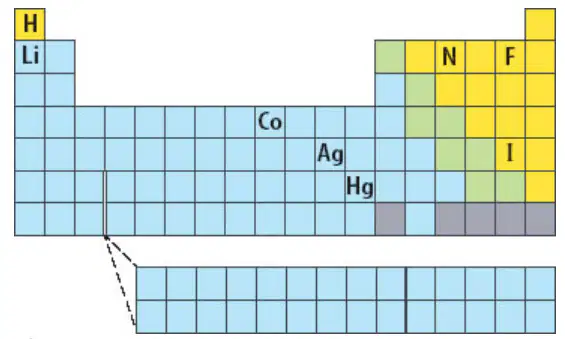
Which subatomic particle is found in the nucleus and has a negative charge?
Proton
Neutron
Electron
the nucleus does not hold any negatively charged particles
Which subatomic particle is found in the nucleus and has a positive charge?
Proton
Neutron
Electron
the nucleus does not hold any positively charged particles
Mass Number - Atomic Number =
number of neutrons
number of protons
number of electrons
the charge of the atom
Atomic mass is
protons + neutrons
protons + neutrons + electrons
electrons + protons
Place the steps in order to create a bohr model
add correct number or protons and neutrons to nucleus
draw energy level
place 2 electrons on energy level
draw another energy level
place 8 electrons on energy level
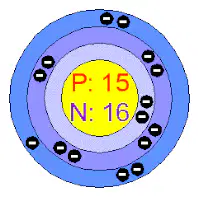
P
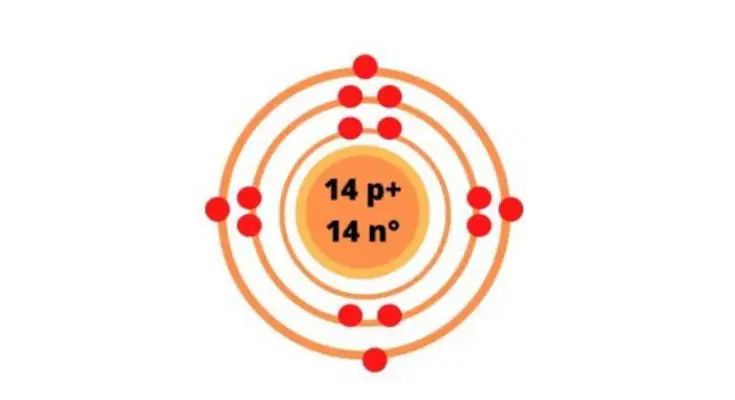
Si

O
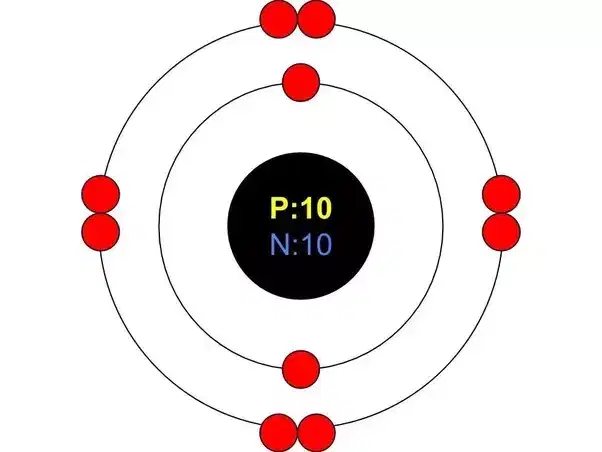
Ne
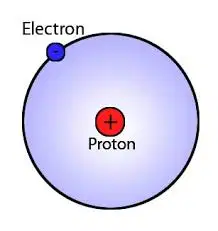
H
Which group contains the halogen family?
Group 1
Group 7
Group 17
Group 18
Which group is the transition metals
group 1-13
group 3-13
group 3-12
group 13-18
Which element has 2 energy levels and 8 valence electrons?
Hydrogen (H)
Potassium (K)
Neon (Ne)
Krypton (Kr)
Which element has 1 energy level and 1 valence electrons?
Hydrogen (H)
Potassium (K)
Neon (Ne)
Krypton (Kr)
What is formally known as the distance from the nucleus of an atom and to the valence shell?
Atomic radius
Electron Affinity
Ionization Energy
Electronegativity

What are valence electrons?
Electrons in the outermost energy level.
Electrons closest to the nucleus.
Electrons that identify the atom as that of a particular element.
Electrons that release photons and move from a higher to lower energy level.

Which atom in the list below has the largest atomic radius?
Argon (Ar)
Helium (He)
Krypton (Kr)
Radon (Rn)
What term essentially means "the size of the atom"?
chemical reactivity
atomic radius
nuclear shielding
effective nuclear charge
Which statement correctly and completely identifies a trend?
Atomic radius decreases across a period and increases down a group.
Atomic radius increases across a period and decreases down a group.
Atomic radius decreases across a period and decreases down a group.
Atomic radius increases across a period and increases down a group.

Which of the following has the largest atomic radius following the predicted atomic radius trend?
hydrogen (H)
lithium (Li)
rubidium (Rb)
sodium (Na)
Rank the following by increasing reactivity:
K, Mg, Na
Mg, Na, K
K, Mg, Na
K, Na, Mg
Na, Mg, K
Rank the following by increasing reactivity:
Ar, As, Cl, P
As, P, Cl, Ar
Ar, Cl, P, As
Cl, P, As, Ar
Ar, As, P, Cl
Rank the following by decreasing reactivity:
I, Kr, Sb, Te
I, Te, Sb, Kr
Kr, I, Te, Sb
Kr, Sb, Te, I
Sb, Te, I, Kr
Rank the following by decreasing reactivity:
Hf, Rf, Ti, Zr
Ti, Zr, Hf, Rf
Rf, Hf, Zr, Ti
Hf, Rf, Ti, Zr
Zr, Ti, Rf, Hf

