
 Worksheets
Midterm Review
Total questions: 173
Worksheet time: 2hrs 22mins
A covalent bond is formed between how many monomers
6
2
4
1
Triglycerides need….
3 glycol and 2 fatty acids
1 glycerol and 3 fatty acid
What are example of nucleic acids
Adenine
DNA
Thymine
RNA
What doesn’t have monomers
Lipids
Carbohydrates
Proteins
Amino acids
What is dehydration synthesis
A reaction where large molecules are made into small molecules by removing water
A reaction where small molecules are made into large molecules by removing water
A reaction where small molecules are made into large molecules by adding water
A reaction where large molecules are made into large molecules by adding water
What is hydrolysis reaction
Splitting the bond using h2O
Creating a polymer using h2O
DNA are
Single stranded
Double stranded
Polymers consisting of monomers are called
nucleic acids
Nucleotides
RNA
DNA
Hydrolysis is held together by
(a)
Protein monomers are called….
Carbonyl
Hydroxide
Amino acids
carbohydrates
A polypeptide consist of a specific order of
(a)
Lipids are polar macromolecules
True
False
The hydrophilic can interact with water
True
False
The hydrophobic can interact with water
True
False
Which of the following does not result from hydrogen bonding in water molecules?
Cohesion
Adhesion
Surface Tension
Dissolving fats
Why is water considered polar?
Nonpolar covalent bonds in structure
Ionic bonds in structure
Polar covalent bonds in structure
Hydrophobic interaction in structure
Which macromolecule(s) have nitrogen?
Carbohydrates
Proteins
Nucleic Acids
Nucleic Acids & Proteins
Which macromolecule(s) have phosphorus?
Carbohydrates
Proteins
Nucleic Acids
Fats
Which macromolecule(s) have sulfur?
Carbohydrates
Proteins
Nucleic Acids
Fats
Describes the forming of a bond between monomers with the removal of a water molecule.
Hydrolysis
Dehydration
Describes the breaking of a bond within a polymer using water.
Hydrolysis
Dehydration
Which of the following is NOT in the monomer of a nucleic acid?
pentose sugar
nitrogenous base
phosphate
amino acid
Which of the following is NOT in the monomer of a protein?
Amine Group
R Group
Carboxyl Group
Nitrogenous Base
Describe the orientation of the phospholipids in the membrane.
Phospholipids orient in bilayer with hydrophilic heads on exterior
Phospholipids orient in monolayer with hydrophilic head on extracellular
Phospholipids orient in bilayer with hydrophobic tails on exterior
Phospholipids orient in monolayer with hydrophobic tails on extracellular
How is DNA/RNA synthesis directionally oriented?
new nucleotides are added to 5' phosphate
new nucleotides are added to 3' phosphate
new nucleotides are added to 5' hydroxyl
new nucleotides are added to 3' hydroxyl
Identify the pairing and number of bonds in DNA double helix
A pairs with T (2 bonds) & G pairs with C (3 bonds)
A pairs with G (2 bonds) & T pairs with C (3 bonds)
A pairs with T (3 bonds) & G pairs with C (2 bonds)
A pairs with G (3 bonds) & T pairs with C (2 bonds)
What component of the polypeptide is the next amino acid added forming the peptide bond?
amino group
hydrogen
carboxyl group
R groups
Which protein involves R group bonding to form the final three dimensional structure?
primary
secondary
tertiary
quaternary
Which protein structure involves the peptide bonds between amino acids?
primary
secondary
tertiary
quaternary
DNA and RNA differ on many qualities, which of the following is NOT a difference?
Sugar
Nitrogenous Base
Phosphate Group
Strandedness
What type of bond is found BETWEEN water molecules?
Hydrogen bonds
Ionic bonds
Nonpolar covalent bonds
Polar covalent bonds
Surface tension of water is the cohesive force between water molecules and other molecules.
True
False
Cohesive force between water molecules and adhesive force between water molecules and other molecules enable this phenomenon to occur.
Surface tension
Capillary action
Float on water
Photosynthesis
Which end of the water molecule has a slightly positive charge?
The hydrogen end
The oxygen end
Both ends are slightly positive
Neither end is positive
What word describes when water is attracted to other substances?
Cohesion
Adhesion
Capillary action
Surface tension
When water molecules stick easily to other water molecules, this is called what?
Cohesion
Adhesion
Solution
Polar molecule
Water beads up on the surface of a penny because of what property?
Adhesion
High surface tension
Universal solvent
Changes in density
The fact that ice floats on liquid water is due to the fact that water's solid form is _____________ than its liquid form.
Less polar
More polar
Less dense
More dense
The tightness across the surface of water that enables insects to walk on it is
Adhesion
Capillary action
Surface tension
Polarity
Which statement explains why water molecules stick together?
Both sides are negative
One side has a positive charge and the other side has a negative charge
One side has a negative charge and the other side has a neutral charge
Both sides are positive
Large bodies of water help to keep nearby climates from being too hot or too cold because they
Absorb heat in the spring and slowly release that heat in the fall
Absorb heat in the fall and slowly release that heat in the spring
Absorb heat in the summer and slowly release that heat in the winter
Absorb heat in the winter and slowly release that heat in the summer
1.) They act like gatekeepers, only let certain things in.
2.) Enzyme receptors embedded in the membrane.
when some molecules can cross the membrane while others cannot.


When particles move from low to high concentration
Passive Transport
Active Transport

Your gums are swollen. How will rinsing with warm salt water help the swelling?
swollen gums will absorb the salt
salt lowers the temp
salt goes against the concentration gradient
water in the gums will diffuse out of the cells


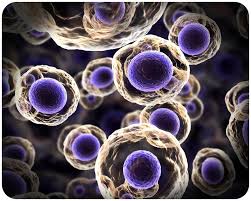


Where are lipids formed?
Rough ER
Smooth ER
Nucleus
Ribosomes

The difference in electric potential between the interior and the exterior of a cell is called:
Concentration Difference
Membrane Potential
Cotransport
Concentration Potential
The combination of an ion's concentration gradient and membrane potential is called
action potential
electrochemical potential
electrochemical gradient
action gradient
Which kind of cell is prokaryotic, may or may not have a cell wall, and has no membrane bound organelles?
Animal
Bacteria
Fungi
Plant
Cell organelle found in all cells that manufactures proteins.
(a)
Major component of the lipid bilayer cell membrane.
Cholesterol
Channel Proteins
Phospholipids
Glycolipid/glycoprotein complexes

The hydrophilic head of the phospholipid ___ to interact with water and is said to be ____.
Loves, polar
Loves, nonpolar
Hates, polar
Hates, nonpolar
The hydrophobic tails of the phospholipid ___ to interact with water and is said to be ____.
Loves, polar
Loves, nonpolar
Hates, polar
Hates, nonpolar
Because the cell membrane is composed of many small parts that move together as a system, it is said to be _____ _____ (two words).
(a)
Select any substances that can simply diffuse through the cell membrane.
Oxygen gas
Sugar
Charged ions
Small
Charged
The diffusion of water through the cell membrane along its own concentration gradient is known as (a) .
Select all forms of cell transport that require ATP energy.
Facilitated diffusion
Endocytosis
Exocytosis
Active Transport
The use of a protein pump (ions like Na+, K+, H+, etc.) is an example of ___ because ___.
exocytosis; ions are moved out of the cell
active transport; ATP is required
facilitated diffusion; a protein is needed for transport
endocytosis; ions are moved into the cell
Because cell membranes only allow certain substances to pass through them, they're said to be (a) .

This cell is experiencing which kind of situation?
Hypertonic
Hypotonic
Isotonic
In this kind of situation, the *initial* concentration of water is greatest _____________ the cell.
Inside of
Outside of
In this kind of situation, water will move _____ the cell, causing it to ___________.
into, swell
out of, swell
into, shrink
out of, shrink
In this kind of situation, the solutes will move _____ the cell, causing it to ___________.
into, swell
out of, swell
into, shrink
out of, shrink
TRICK QUESTION Mrs. J! You almost got me. I know the membrane is IMPERMEABLE to the solutes, so they stay put while the WATER moves!
Because cell function is so heavily dependent on effectively transporting materials across the cell membrane, cell size is limited due to the need for a (a) ratio of surface area to volume.
The point of organelles such as the mitochondria, golgi, ER, etc. all having membranes is to ...
Provide extra protection to those critical organelles
Increase surface area for materials transport
Prevent hazardous materials from escaping the organelles and damaging the rest of the cell
All of the above
Which organelle uses digestive enzymes to break down old cellular components and/or invading bacteria/virsus and recycles those components to other organelles for use in building new macromolecules?
Gap junction
Nucleus
Golgi Body
Lysosome
This theory states that membrane bound organelles evolved from once free-living prokaryotes that were engulfed to compose the eukaryotic cells that we observe today.
(a)
Who is the (ATP producing, glycolysis/krebs cycle running) powerhouse of the cell?
(a)
Select all forms of passive transport below.
Diffusion
Facilitated Diffusion
Endocytosis
Exocytosis
Osmosis
Facilitated diffusion occurs when what kind(s) of molecules require a channel or carrier protein to enter the cell membrane?
small, non-polar
large, non-polar
small, polar
large, polar
Which substance would most easily pass through the cell membrane?
Oxygen
Glucose
Sodium ions
Water
During osmosis, water always moves from an area of ____ solute concentration to ____ solute concentration.
high, high
high, low
low, low
low, high
Where on an enzyme does the substrate bind?
active site
allosteric site
C-terminus
N-terminus
Describe the effect on the free energy of doubling the amount of enzyme.
double the free energy
half the free energy
triple the free energy
no effect on free energy
Which structure is unaffected by denaturation?
Primary
Secondary
Tertiary
Quaternary
Which environmental conditions can cause denaturation of the enzyme?
slight increase in temperature
extreme increase in temperature
decrease in temperature
extreme increase in temperature and pH changes
Which of the following will increase the rate of the reaction?
increase product
increase substrate
increase inhibitor
increase enzyme
Describe why an increase in temperature increases the rate of the reaction.
increase in temperature increases the speed/kinetic energy of particles
increase in temperature activates more enzyme to increase the rate
increase in temperature results in increase in substrate available
increase in temperature allows for a tighter fit in the active site
Describe the difference between competitive and noncompetitive inhibitors.
noncompetitive binds to active site and competitive binds to other site
competitive binds to active site and noncompetitive binds to other site
competitive is irreversible and noncompetitive is reversible binding
noncompetitive is irreversible and competitive is reversible binding
In order to maintain order and power cellular processes,
energy input must exceed energy loss
energy input equals energy loss
energy loss must exceed energy input
energy loss equals energy input
What is the process of an endergonic reaction being fueled by an exergonic reaction called?
second law of thermodynamics
energy coupling
first law of thermodynamics
endergonic/exergonic switch
Where did photosynthesis first evolve?
prokaryotic organisms
alien organisms
eukaryotic organisms
abiotic processes
What are the products of the light-dependent reactions of photosynthesis?
ATP & NADH
CO2 & H2O
NADPH & ATP
Organic Compounds & O2
What is the function of the electron transport chain between Photosystem II and Photosystem I?
establish electrochemical gradient of protons
to funnel electrons into photosystem I for the Calvin cycle
transport electrons to oxygen to make water
to synthesize ATP using ATP synthase
Where does the Calvin cycle take place?
thylakoid membrane
cristae
stroma
matrix
Where does the electron transport chain take place?
chloroplasts
prokaryotic plasma membrane
mitochondria
all of the choices
Which of the following are electron carriers for the electron transport chain in cellular respiration?
NADPH
FADH2
NADH
NADH & FADH2
Which process releases energy in glucose to form ATP, NADH, and pyruvate?
Glycolysis
Oxidative Phosphorylation
Krebs Cycle
Fermentation
What is oxidation?
loss of electrons
loss of water
gain of electrons
gain of water
In the electron transport chain of cellular respiration, where is the electrochemical gradient of protons generated?
cytosol
cristae
matrix
intermembrane space
Which process does NOT require oxygen?
Glycolysis
Oxidative Phosphorylation
Krebs Cycle
Aerobic respiration
Describe the pathway of electrons in the light reactions.
H2O → PSI → ETC → PSII → NADPH
H2O → PSII → ETC → PSI → NADPH
H2O → PSII → ETC → PSI → NADH
H2O → PSI → ETC → PSII → NADH
Which of the following is NOT a part of photosynthesis?
Calvin cycle
Light reactions
Light independent reactions
Krebs cycle
Where do the light reactions take place?
Cytosol
Thylakoid membrane
Stroma
Mitochondrial matrix
What is the input for the light reactions?
Light energy
ATP
NADPH
H2O
What is the output for the light reactions?
Light energy
ATP
NADPH
H2O
Where does the Calvin cycle take place?
Cytosol
Thylakoid membrane
Stroma
Mitochondrial matrix
What is the input for the Calvin cycle?
CO2
H2O
NADPH
ATP
G3P
What is the output for the Calvin cycle?
CO2
H2O
NADPH
ATP
G3P
How many CO2 molecules are needed to make 1 G3P?
1
2
3
6
How many turns of the Calvin cycle are required for 1 G3P to be synthesized?
1
2
3
6
How many NADPHs are required for the Calvin cycle?
2
3
6
9
How many ATPs are required for the Calvin cycle?
2
3
6
9
Which of the following describes the pathway of electrons in the light reactions?
O2 → PS II →
PS I → NADH
O2 → PS II →
PS I → NADPH
O2 → PS I →
PS II → NADPH
O2 → PS I →
PS II → NADH
The delta G of a catalyzed reaction is 30 kJ/mol. If you double the reaction, what would be the delta G of the catalyzed reaction?
0 kJ/mol
15 kJ/mol
30 kJ/mol
60 kJ/mol
What is the function of an enzyme?
To speed up a chemical reaction
To provide additional energy
To inhibit a cellular process
To increase absorption of a molecule
Which of the following would NOT denature an enzyme?
HIGH temperature
LOW pH
HIGH pH
LOW temperature
What happens to the reaction rate if an enzyme is denatured or nonfunctional?
No change in the reaction rate
Increase in reaction rate
Decrease in reaction rate
Decrease then increase in reaction rate
Which of the following is NOT a way that enzymes speed up chemical reactions?
Strain bonds in the structure
Orient reacting molecules
Provide favorable environment
Increase required energy of activation
An enzyme can make an endergonic reaction into an exergonic reaction.
True
False
Which of the following is a way to overcome competitive inhibition of an enzyme?
Increase product concentration
Increase substrate concentration
Decrease enzyme concentration
Decrease environmental temperature
Where does a substrate bind to an enzyme?
Active site
Allosteric site
How does a noncompetitive inhibitor decrease reaction rates?
Binds to the active site
Binds to the allosteric site
Increases the free energy
Increases the substrate concentration

The decreased production of enzyme Trp-T would have which of the following responses?
Decrease in Tryptophan concentration
Increase in I3PA concentration
Increase in IAA concentration
Decrease in I3PA & IAA concentration
Where does glycolysis take place?
Cytosol
Mitochondrial matrix
Mitochondrial cristae
Thylakoid
Glycolysis requires oxygen.
True
False
What is the starting material for glycolysis?
Pyruvate
Acetyl CoA
Glucose
G3P
What is the main function of glycolysis?
To rearrange the glucose molecule to be broken down
To split the glucose molecule to release energy
To recreate acetyl CoA for the Krebs cycle
To absorb and store energy in ATP molecules
What process takes place if NADH is unable to be oxidized?
Krebs cycle
Electron transport chain
Chemiosmosis
Fermentation
There are 10 steps in glycolysis, how many enzymes catalyze these steps?
8
9
10
11
What are the products of glycolysis?
2 ATP, 2 NADPH, 2 pyruvate
2 ADP, 2 NADH, 2 pyruvate
2 ATP, 2 NADH, 2 pyruvate
2 ADP, 2 NADPH, 2 pyruvate
How does glycolysis lead to ATP synthesis?
Glucose provides the phosphate for ADP to synthesize ATP
Glycolysis splits the glucose molecule to create G3P
High energy electrons are stored in NADH for the ETC
Acetyl CoA is synthesized for the Krebs cycle
Justify that glycolysis evolved before oxygen was present in the atmosphere.
Glycolysis does not require oxygen which represents that it evolved prior to free oxygen in the atmosphere
Glycolysis does not take place in the mitochondria and thus does not require oxygen
Glycolysis splits a glucose molecule into 2 pyruvate molecules which does not require oxygen
Glycolysis takes place in all living organisms which means it evolved prior to free oxygen in the atmosphere
Justify that glycolysis evolved prior to the mitochondria.
Glycolysis takes place in the cytosol
Glycolysis does not require a membrane which represents that it evolved prior to membrane bound organelles
Glycolysis has instructions in the nuclear DNA
Glycolysis does not require mitochondrial DNA which represents that it evolved prior to membrane bound organelles
Which of the following is NOT a step in cellular respiration?
Glycolysis
Krebs Cycle
Oxidative Phosphorylation
Calvin Cycle
Where does glycolysis take place?
Cytosol
Mitochondrial matrix
Mitochondrial cristae
Stroma
Thylakoid membrane
What is the input of glycolysis?
Glucose
Pyruvate
NADH
G3P
What is the output of glycolysis?
Glucose
2 pyruvate
2 NADH
2 ATP
2 FADH2
What is the main function of glycolysis?
To complete the breakdown of glucose
To generate a proton gradient and synthesize ATP
To split a glucose molecule in half and synthesize NADH
Where does the Krebs Cycle take place?
Cytosol
Mitochondrial matrix
Mitochondrial cristae
Stroma
Thylakoid membrane
What is the input of the Krebs Cycle?
Pyruvate
Acetyl CoA
Glucose
NADH
What is the output of the Krebs Cycle (one turn)?
3 NADH
1 FADH2
1 ATP
2 CO2
Acetyl CoA
What is the main function of the Krebs Cycle?
To complete the breakdown of glucose
To generate a proton gradient and synthesize ATP
To split a glucose molecule in half and synthesize NADH
Where does oxidative phosphorylation take place?
Cytosol
Mitochondrial matrix
Mitochondrial cristae
Stroma
Thylakoid membrane
What is the input of oxidative phosphorylation?
NADH
FADH2
Pyruvate
Glucose
ATP
What is the output of oxidative phosphorylation?
ATP
NADH
FADH2
Glucose
What is the main function of oxidative phosphorylation?
To complete the breakdown of glucose
To generate a proton gradient and synthesize ATP
To split a glucose molecule in half and synthesize NADH
Which step of cellular respiration REQUIRES oxygen?
Glycolysis
Krebs Cycle
Oxidative Phosphorylation
Calvin Cycle
Which step can be performed by prokaryotes AND eukaryotes?
Glycolysis
Krebs Cycle
Oxidative Phosphorylation
Calvin Cycle

