wayground logo

Free Printable Worksheets

Font size

S
M
L
XL
Worksheets

Bio 2 Final Exam Review

Total questions: 172

Worksheet time: 2hrs 33mins

Name
Class
Date
1.
Which major macromolecule is being represented in this image? 
a)
carbohydrate
b)
lipid
c)
protein
d)
nucleic acid
2.
What are the building blocks of proteins?
a)
amino acid
b)
fatty acid
c)
nucleotide
d)
lipid
3.
What are the single sugars that are the building blocks of carbohydrates?
a)
monosaccharides
b)
disaccharides
c)
polysaccharides
d)
amino acid
4.
The element _______is found in all of the organic compounds.
a)
Iron
b)
Nitrogen
c)
Carbon
d)
Oxygen
5.
Proteins are made of monomers called ___________
a)
Nucleotides
b)
Monosaccharides
c)
Amino Acids
d)
Glycerol and fatty acids
6.
DNA and RNA are examples of 
a)
Carbohydrates
b)
Lipids
c)
Proteins
d)
Nucleic Acids
7.
Waxes, oils and fats are examples of
a)
Carbohydrates
b)
Lipids
c)
Proteins
d)
Nucleic Acids
8.

What are two factors that can affect an enzymes ability to function?

a)

No changing

b)

temperature and pH

c)

night and day

d)

hot and cold

9.

What functional group is shown?

a)

amino

b)

hydroxyl

c)

carboxyl

d)

sulfhydryl

10.

What functional group is shown?

a)

carboxyl

b)

carbonyl

c)

hydroxyl

d)

amino

11.

What functional group is shown?

a)

carbonyl

b)

hydroxyl

c)

carboxyl

d)

amino

12.
a)

sulfhydryl

b)

hydroxyl

c)

amino

d)

phosphate

13.

What functional group is shown?

a)

hydroxyl

b)

amino

c)

carboxyl

d)

sulfhydryl

14.
Connects monomers to form a polymer
a)
Dehydration synthesis
b)
hydrolysis
15.
Breaks up polymers, forming monomers
a)
dehydration synthesis
b)
hydrolysis
16.
Water is used to break bonds between polymers
a)
dehydration synthesis
b)
Hydrolysis
17.
The process of removing water in order to form a bond between monomers is called....
a)
Dehydration Synthesis
b)
Hydrolysis
18.
The following figure is illustrating
a)
Dehydration Synthesis
b)
Hydrolysis
19.

What organelle is associated with the production of proteins during protein synthesis?

a)

nucleus

b)

ribosome

c)

mitochondria

d)

cell membrane

20.

What organelle determines what comes into and out of the cell?

a)

nucleus

b)

mitochondria

c)

ribosome

d)

cell membrane

21.

What organelle is responsible for ATP energy production?

a)

nucleus

b)

mitochondria

c)

ribosome

d)

cell membrane

22.

Which of these do plant cells have that animal cells do NOT have?

a)

cell wall

b)

chlorophyll

c)

chloroplasts

d)

all of these

23.
Name the prokaryote?
a)
animal cell
b)
plant cell
c)
bacteria
d)
fungi cell
24.

What is the major difference between a prokaryote and a eukaryote?

a)

prokaryotes do not have a nucleus

b)

prokaryotes do not have ribosomes.

c)

prokaryotes do not have a cell membrane.

d)

prokaryotes do not contain DNA

25.
Chloroplasts in plant cells are where this process takes place.
a)
cellular respiration
b)
photosynthesis
c)
protein production
d)
glycolysis 
26.
What are the tiny structures that carry out jobs inside cells called?
a)
membranes
b)
nucleus
c)
organelles
d)
animalicules
27.

The function of flagella is:

a)

Movement

b)

Provide Energy

c)

Protection

d)

Make Proteins

28.

The function of the Golgi apparatus is to

a)

Sort, package and modify macromolecules produced by the cell.

b)

Produce proteins

c)

Produce lipids

d)

Produce RNA

29.

The function of the smooth ER is to:

a)

Make proteins

b)

Make lipids

c)

Make carbohydrates

d)

Make nucleic acids

30.
This organelle helps plants keep their rigid structure. 
a)
Cell wall
b)
Cell membrane
c)
Chloroplast
d)
Nucleus
31.
Identify letter K.
a)
nucleus
b)
mitochondria
c)
endoplasmic reticulum
d)
golgi apparatus
32.
What is the difference between rough and smooth ER?
a)
There is no difference.
b)
Plants have rough ER, animals have smooth ER.
c)
What type of injuries the Doctors treat.
d)
Rough has ribosomes, smooth does not.
33.
Identify letter H.
a)
nucleus
b)
mitochondria
c)
golgi complex
d)
cytoplasm
34.
A person with swollen gums rinses his mouth with warm salt water, and the swelling decreases. Which of the following has occurred?
a)
The swollen gums have absorbed the saltwater solution.
b)
The saltwater solution lowers the temperature of the water in the gums.
c)
The salt in the solution has moved against the concentration gradient.
d)
The water in the gums has moved out due to the high concentration of salt in the solution. 
35.
The cell membrane of the red blood cell will allow water, oxygen, and carbon dioxide to pass through. Because other substances are blocked from entering, this membrane is called
a)
perforated
b)
semi-permeable
c)
non-conducive
d)
permeable
36.
Which activity can occur without the use of energy?
a)
contraction of muscle tissue
b)
protein synthesis in a cell
c)
active transport of minerals
d)
movement of water across a membrane
37.
The diffusion of water across a selectively permeable membrane is called 
a)
active transport
b)
facilitated diffusion
c)
osmosis
d)
phagocytosis
38.
During diffusion molecules tend to move 
a)
   up the concentration gradient
b)
 from an area of lower concentration to an area of higher concentration
c)
 in a direction that doesn’t depend on concentration
d)
 down the concentration gradient
39.
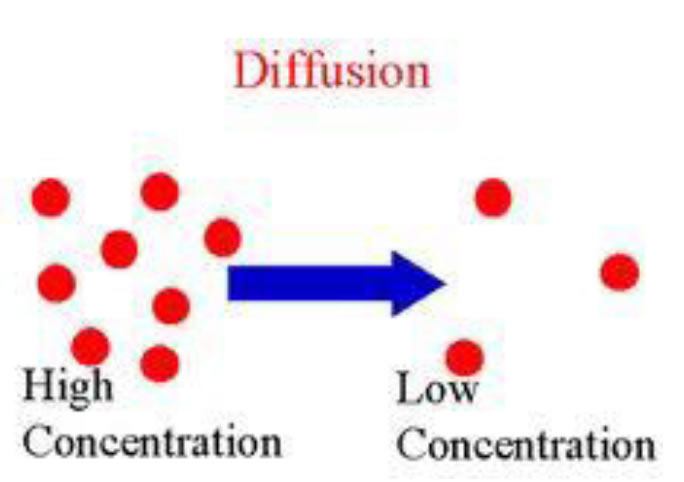
Movement of particles from high to low concentration. 
a)
Passive Transport
b)
Active Transport
40.
This picture represents what type of cell transport?
a)
endocytosis
b)
exocytosis
c)
osmosis
d)
passive transport
41.
Which is true about active transport?
a)
It requires energy
b)
it does not require energy
c)
It moves substances down the concentration gradient
d)
it moves material from high to low concentration
42.
The cell below is in a _________ solution.
a)
Hypotonic
b)
Hypertonic
c)
Isotonic
43.
The cell below is in a _____________ solution.
a)
Hypertonic
b)
Hypotonic
c)
Isotonic
44.
A cell in an isotonic solution will
a)
swell
b)
shrink
c)
stay the same size
d)
impossible to tell
45.

Identify the organelle responsible for photosynthesis.

a)

mitochondira

b)

chloroplast

c)

cell wall

d)

centriole

46.

Identify the organelle responsible for cellular respiration.

a)

mitochondria

b)

centriole

c)

chloroplast

d)

cell wall

47.

What are the reactants of photosynthesis?

a)

carbon dioxide, water, and sunlight

b)

oxygen and glucose

c)

carbon dioxide and glucose

d)

carbon dioxide, water, and ATP

48.

What are the products of photosynthesis?

a)

carbon dioxide, water, and sunlight

b)

oxygen and glucose

c)

carbon dioxide and glucose

d)

carbon dioxide, water, and ATP

49.

What are the reactants of cellular respiration?

a)

carbon dioxide, water, and sunlight

b)

oxygen and glucose

c)

carbon dioxide and glucose

d)

carbon dioxide, water, and ATP

50.

What are the products of cellular respiration?

a)

carbon dioxide, water, and sunlight

b)

oxygen and glucose

c)

carbon dioxide and glucose

d)

carbon dioxide, water, and ATP

51.

Which of the following types of cellular respiration does NOT require oxygen?

a)

anaerobic respiration

b)

aerobic respiration

c)

light dependent respiration

d)

light independent respiration

52.

What is the biggest function of the respiratory system?

a)

to pump blood

b)

to help us digest food

c)

to take in oxygen and release carbon dioxide

d)

to help us fight disease and infection

53.
Away from midline
a)
Lateral
b)
Distal
c)
Superior
d)
Transverse
54.
Toward the back; opposite of Anterior
a)
Superior
b)
Posterior
c)
Inferior
d)
Lateral
55.

Your feet are ________ to your knees.

a)

caudal

b)

cephalic

c)

inferior

d)

superior

56.

The head is _____ to the shoulders.

a)

proximal

b)

caudal

c)

superior

d)

inferior

57.

This plane divides the body into superior and inferior parts.

a)

coronal plane

b)

frontal plane

c)

transverse plane

d)

sagittal plane

58.

_______ means towards the side of the body.

a)

distal

b)

proximal

c)

medial

d)

lateral

59.
Which of the following planes divides the body into left and right halves?
a)
frontal
b)
transverse
c)
horizontal
d)
sagittal
60.
Vertical plane that divides the body into ANTERIOR and POSTERIOR parts
a)
Sagittal
b)
Frontal
c)
Transverse
d)
Oblique
61.
Standing erect with palms and feet facing forward.
a)
Anatomical Position
b)
Anatomical Planes
c)
Anatomical Directions
d)
Anatomical Movements
62.
The knee is _______ to the ankle.
a)
proximal
b)
lateral
c)
distal
d)
medial
63.

The eyes are _________ to the ears

a)

medial

b)

lateral

c)

anterior

d)

posterior

64.
Goosebumps are caused by contractions of the ______ muscle
a)
Arrector pili
b)
Apocrine
c)
Eccrine
d)
Sebaceous
65.
Skin color is due to a pigment called
a)
Keratin
b)
Melanin
c)
Chromatin
d)
Epithelium
66.
The sweat gland that produces "stinky" sweat is the 
a)
Apocrine gland
b)
Eccrine gland
c)
Sudoriferous gland
d)
Sebaceous gland
67.
The protein that makes us "waterproof" is called
a)
keratin
b)
melanin
c)
carotene
d)
mucus
68.
The vascular of the skin is the:
a)
Dermis
b)
Epidermis
c)
Hypodermis
d)
Stratum basale
69.
The function of sebum is:
a)
Keeps skin soft and moist
b)
Help to regulate body temperature
c)
Produce vitamin D
d)
Protect skin from mechanical damage
70.

What muscle is the arrow pointing to?

a)

Pectoralis (Pecs)

b)

Biceps

c)

Triceps

d)

Lats

71.

What muscle is the arrow pointing to?

a)

Biceps

b)

Triceps

c)

Lats

d)

Quads

72.
a)
Quadriceps
b)
Satorius
c)
Hamstring
d)
Gastronecmius
73.
a)
Latissmius Dorise
b)
Erectors
c)
Deltoids
d)
Abdominal
74.
a)
Abdominal
b)
External Oblique
c)
Erectors
d)
Satorius
75.
a)
Trapezius
b)
Gluteals
c)
Deltoid
d)
Hamstring
76.
a)
Hamstrin
b)
Quadricep
c)
Tibialis Anterior
d)
Gastrocenmius
77.
a)
Glutueal
b)
Hamstring
c)
Quadricep
d)
External Oblique
78.
a)
Hamstring
b)
Quadriceps
c)
Gastronecmius
d)
Satorius
79.
a)
Abdominal
b)
External Oblique
c)
Pectorals
d)
Trapezius
80.
a)
Latissimius Dorsi
b)
Trapezius
c)
Triceps
d)
Erectors
81.
What is the opposing muscle group for the biceps? 
a)
Quadriceps
b)
Abdominals
c)
Trapezius
d)
Triceps
82.
Which muscle allows you to smile?
a)
zygomaticus
b)
orbicularis oculi
c)
orbicularis oris
d)
buccinator
83.
What is the action of the masseter?
a)
To raise the eyebrows
b)
To close the eyes
c)
To close the jaw
d)
To blow bubbles
84.
Which muscle allows you to bow your head?
a)
sternocleidomastoid
b)
buccinator
c)
zygomaticus
d)
frontalis
85.

This circular muscle surrounds the mouth

a)

orbicularis oris

b)

orbicularis oculi

c)

zygomaticus major

d)

buccinator

86.

These muscles around your eye help you bat your eyes~ closes the eyelids

a)

orbicularis oculi

b)

orbicularis oris

c)

frontals

d)

corrugator

87.

Muscle that elevates the eyebrows and wrinkles the forehead

a)

occipitals

b)

frontalis

c)

temporalis

d)

corrugator

88.
The human skeleton can be subdivided into two parts, what part is made up of the skull, sternum, vertebral column and rib cage?
a)
appendicular
b)
axial
89.
What type of bone is the scapula?
a)
long bone
b)
short bone
c)
flat bone
d)
sesamoid bone
90.
What type of bone is the femur?
a)
Long bone
b)
Short bone
c)
Flat bone
d)
Irregular bone
91.
Which one of the following is an irregular bone?
a)
humerus
b)
tibia
c)
temporal
d)
vertebrae
92.
What is the name of the collar bone?
a)
Clavicle
b)
Scapular
c)
Sternum
d)
Xiphoid
93.
Name the bone located at number  8.
a)
Humerus
b)
Radius
c)
Fibula
d)
Tibia
94.
Name the bone located at number 12.
a)
Patella
b)
Clavicle
c)
Sternum
d)
Scapula
95.
Name the bone located at number 14.
a)
Femur
b)
Fibula
c)
Tibia
d)
Radius
96.
Name the bone located at number 16.
a)
Clavicle
b)
Humerus
c)
Radius
d)
Ulna
97.
The ______________ is made up of arms, wrists, hands, fingers, legs, ankles, feet, and toes.
a)
Axial
b)
Appendicular
98.
One function of the skeletal system is _______ especially in regards to the vital organs, such as the brain, heart, and lungs.
a)
Protection
b)
Storage
c)
Synthesis
d)
Movement
99.
_________ is a function of the skeletal system that is completed by joints, ligaments, and tendons.
a)
Protection
b)
Storage
c)
Synthesis
d)
Movement
100.
The site of bone growth on a long bone is called
a)
Epiphyseal plate
b)
diaphysis
c)
periosteum
d)
meduary cavity
101.
The shaft of the long bone. 
a)
epphysis
b)
diaphysis
c)
epiphyseal line
d)
growth plate
102.

What type of digestion takes place in the stomach?

a)

mechanical

b)

chemical

c)

both mechanical and chemical

103.

What carries food from the pharynx to the stomach?

a)

larynx

b)

trachea

c)

esophagus

d)

bronchioles

104.

Where does the process of digestion begin?

a)

mouth

b)

esophagus

c)

stomach

d)

small intestine

105.

What enzyme is found in saliva that starts digesting carbohydrates?

a)

amylase

b)

chyme

c)

pepsin

d)

bile

106.

Where does the absorption of nutrients from food take place?

a)

stomach

b)

liver

c)

small intestine

d)

large intestine

107.

What are the rhythmic muscular contractions of your esophagus called to help food move along?

a)

swallowing

b)

peristalsis

c)

inertia contractions

d)

paralysis

108.

Which organ releases digestive enzymes into the small intestine?

a)

pancreas

b)

small intestine

c)

esophagus

d)

salivary glands

109.

What organ is responsible for the majority of the absoption that occurs in the digestive system?

a)

large intestine

b)

small intestine

c)

stomach

d)

oral cavity

110.

Which of the following answers correctly sequences the pathway food takes from the beginning to end?

a)

mouth, esophagus, stomach, small intestine, large intestine

b)

mouth, esophagus, stomach, large intestine, small intestine

c)

mouth, stomach, esophagus, small intestine, large intestine

d)

mouth, stomach, esophagus, large intestine, small intestine

111.

Which organ stores and releases bile?

a)

liver

b)

gallbladder

c)

pancreas

112.

Which organ makes bile?

a)

liver

b)

gallbladder

c)

pancreas

113.

Structure 5 is the

a)

pancreas

b)

appendix

c)

salivary gland

d)

gall bladder

114.

Structure 20 is the

a)

pancreas

b)

stomach

c)

large intestine

d)

small intestine

115.

Structure 11 is the

a)

gall bladder

b)

appendix

c)

large intestine

d)

small intestine

116.

What organ is responsible for the absorption of water and movement of waste?

a)

large intestine

b)

small intestine

c)

stomach

d)

oral cavity

117.

The tube through which food passes through the body is called the

a)

alimentary canal

b)

digestive system

c)

intestines

d)

esophagus

118.
Which of the following delivers oxygen to cells?
a)
Red Blood cells
b)
White blood cells
c)
Platelets
d)
Plasma
119.
Which of the following are the blood vessels that helps blood flow to the heart?
a)
Veins
b)
Arteries
c)
Cappillaries
120.
Which of the following are the blood vessels that have a wall that is 1 cell thick?
a)
Veins
b)
Arteries
c)
Cappillaries
121.
What is the name of the circulation between the heart and lungs?
a)
Diastolic
b)
Systemic
c)
Pulmonary
d)
Coronary
122.
What is the name of the circulation between the heart and the body?
a)
Diastolic
b)
Systemic
c)
Pulmonary
d)
Coronary
123.
What is the name of the part labelled 3?
a)
Right Atrium
b)
Left Atrium
c)
Right Ventricle
d)
Left Ventricle
124.
What is the name of the part labelled 2?
a)
Right Atrium
b)
Left Atrium
c)
Right Ventricle
d)
Left Ventricle
125.
What is the function of a valve?
a)
Helps blood to clot
b)
Keeps blood flowing in all directions
c)
Keeps blood flowing in one direction
d)
Stops blood from flowing
126.
Which vessels carry blood away from the heart?
a)
arteries
b)
veins
c)
capillaries
127.
How many chambers does the heart have ? 
a)
4
b)
6
c)
3
d)
1
128.
Which part of the heart pumps deoxygenated (oxygen-poor) blood?
a)
Left side
b)
Right side
c)
Top side
d)
Bottom side
129.
Which is the muscular wall that separates the heart into right and left sides?
a)
valves
b)
ventricles
c)
atria
d)
septum
130.
Oxygen-poor blood arrives to the heart from the the body via the _____.
a)
aorta
b)
pulmonary arteries
c)
superior and inferior vena cava
d)
pulmonary veins
131.
A blood vessel that carries blood back to the heart.
a)
Cardiovascular System
b)
Heart
c)
Vein
d)
Artery
132.
Pulmonary vein
a)
carries oxygenated blood to left atrium
b)
carries deoxygenated blood to left ventricle
c)
carries oxygenated blood to left ventricle
d)
carries deoxygenated blood to left atrium
133.
During the Cardiac Cycle the diastole phase is when?
a)
The heart is fully contracted
b)
The heart is fully relaxed
c)
When the atria are relaxed and Ventricles contracted
d)
All of the above
134.

What causes change in pressure when we breathe?

a)

Carbon dioxide levels

b)

Oxygen levels

c)

Diaphragm movement

d)

Hypoxia

135.

How many lobes does the left lung have? Right lobe?

a)

R:3, L:4

b)

L:3, R:2

c)

R:3, L:2

d)

R:2, L:2

136.

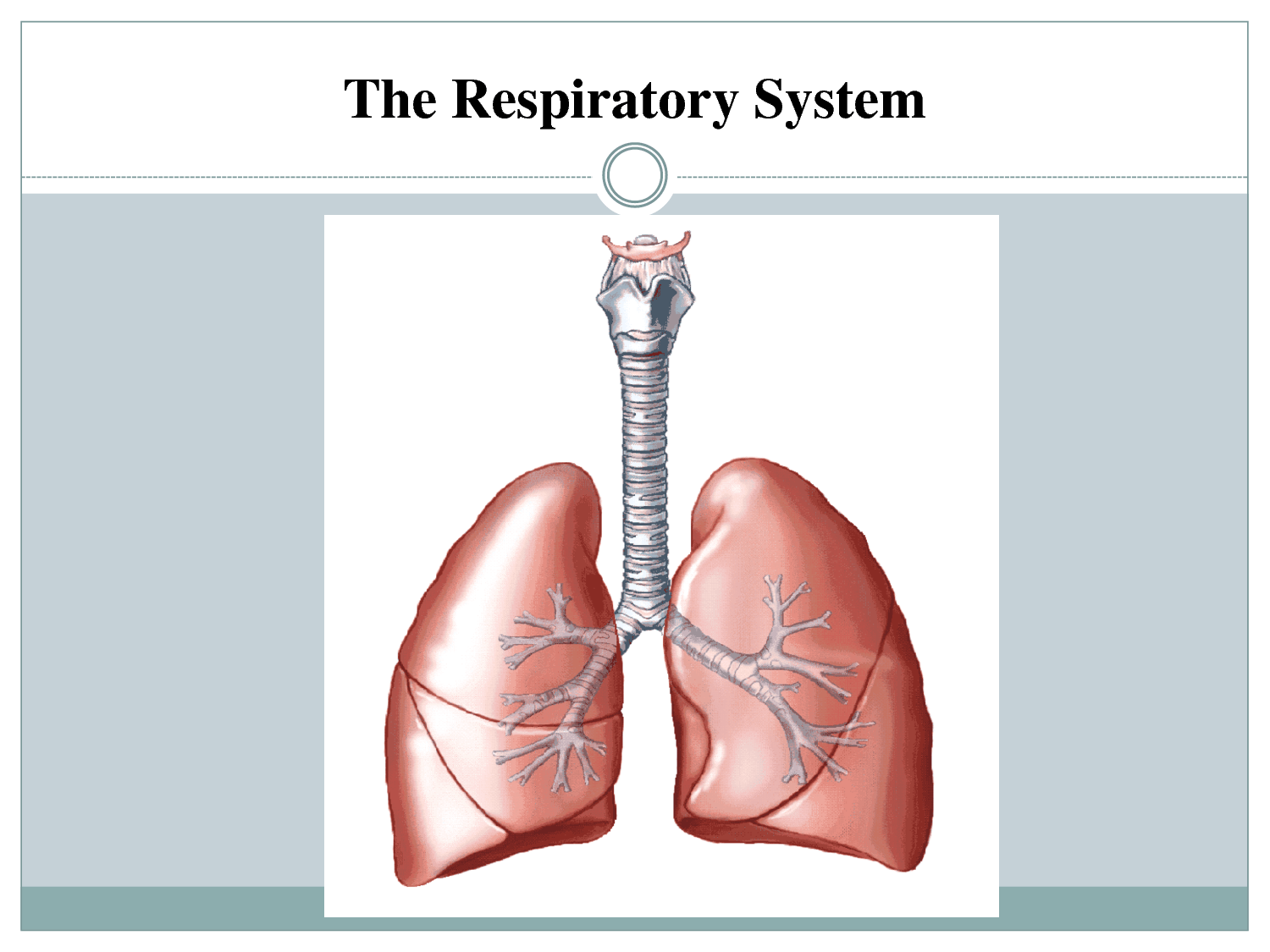
What specific cavity contains the lungs?

a)

Thoracic

b)

Pleural cavity

c)

Ventral

137.
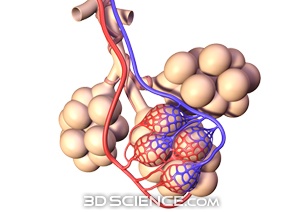
The air sacs that are covered with capillaries where gas exchange takes place
a)
bronchi
b)
lungs
c)
oxygen
d)
alveoli
138.

Flap of tissue that covers the opening to the windpipe during swallowing

a)

Pharynx

b)

Trachea

c)

Epiglottis

139.
What is the main function of the respiratory system?
a)
to provide oxygen and remove carbon dioxide from the body
b)
to bring oxygen to the body
c)
to break down food and absorb nutrients
d)
to remove oxygen from the body and deliver carbon dioxide
140.
The left lung has three lobes and the right lung has two. 
a)
True
b)
False
141.
The left lung has three lobes and the right lung has two. 
a)
True
b)
False
142.
Two short tubes that carry air into the lungs
a)
Trachea
b)
Bronchioles
c)
Lungs
d)
Bronchi
143.
This is a tube about 12cm long with c-shaped rings of cartilage to keep it open
a)
Nasal cavity
b)
Trachea
c)
Mouth Cavity
d)
Pharynx
144.
Smaller tubes within the lungs
a)
Bronchioles
b)
Bronchi
c)
Lungs
d)
Alveoli
145.

Foreign proteins that gain access to the body through cuts and scrapes, through the digestive or circulatory systems, or through the urinary and reproductive systems are called ____.

a)

mineralocorticoids

b)

immunoglobulins

c)

antigens

d)

antibodies

146.

The lymphocytes that kill virus-invaded and cancerous body cells and are also involved in graft rejections are the ____.

a)

B cells

b)

plasma cells

c)

memory cells

d)

killer T cells

147.

The fluid from the blood capillary that is formed in the spaces between the cells is known ..................

a)

interstitial fluid

b)

blood

c)

lymph

d)

plasma

148.

Which of the following are the function of lymph node?

a)

Produces lymphocyte

b)

Stores lymphocyte and macrophages

c)

Filters the lymph

d)

Transport lipid

e)

Remove waste products

149.
The largest lymphatic structure is?
a)
Lymph
b)
tonsils
c)
Spleen
150.
What is the medical term for watery fluid inside the lympathic vessels?
a)
Plasma
b)
Lymph
c)
Blood
151.
Where do T cells mature?
a)
blood
b)
bone marrow
c)
thymus
d)
tonsils
152.

Which immune system organ is found in the back of the throat?

a)

thymus

b)

spleen

c)

tonsil

d)

liver

153.

What name is given to the leucocytes created in the lymphatic system?

a)

lymphocytes

b)

basophils

c)

neutrophils

d)

eosinophils

154.

What do we call the bean-shaped structures that are scattered around the body as part of the lymphatic system?

a)

lymph capillaries

b)

tonsils

c)

spleen

d)

lymph nodes

155.
What "happens" in the lymph nodes?
a)
Excess glucose in the lymph is stored in the liver
b)
Carbon dioxide is removed from the lymph and passed to the lungs for exhalation
c)
Lymph is oxgenated and pumped through the body
d)
Lymph is cleaned of foreign antigens and debris
156.

What are the two types of reproduction?

a)

Sexual and functional

b)

Asexual and conditional

c)

Sexual and menstrual

d)

Asexual and sexual

157.

Why the male testes are located outside the body in scrotum?

a)

It looks pretty

b)

It helps maintain correct pH of sperm

c)

The temperature of sperm production is more favourable

d)

The quantity of sperm secreted is increased

158.

What process creates reproductive cells used in sexual production?

a)

meiosis

b)

mitosis

c)

cellular respiration

d)

photosynthesis

159.

When an egg is fertilized by a sperm cell, a new cell, called a _______

a)

zygote

b)

eukaryote

c)

prokaryote

d)

gene

160.

Where specifically are sperm made in human males?

a)

Testes

b)

Seminiferous tubules

c)

Ovary

d)

Scrotum

161.

Which structure is part of BOTH the reproductive and urinary system?

a)

A

b)

B

c)

C

d)

D

e)

E

162.

Which label indicates the ovary?

a)

d

b)

i

c)

c

d)

h

e)

g

163.

Which structure is the Fallopian tube?

a)

1

b)

4

c)

2

d)

5

164.

At birth, the ovaries of a girl contain oocytes that have stopped at which stage of meiosis?

a)

prophase I

b)

metaphase II

c)

metaphase I

d)

prophase II

e)

anaphase I

165.

The time period where both males and females reach sexual maturity is called _____________.

a)

Birth

b)

Puberty

c)

Menopause

d)

Death

166.

A female's menstrual cycle lasts __________ days.

a)

5-7

b)

28

c)

31

d)

4-6

167.
An asexual method of reproduction used by single celled organisms is:
a)
gemmulation
b)
budding
c)
fragmentation
d)
binary fission
168.
Having both male and female sex organs in a single individual is known as being:
a)
aseual
b)
parthenogenic
c)
dioecious
d)
hermaphroditic
169.

Three ways that offspring are birthed following internal fertilization are ______ , ________ , and ________

a)

viviparity

b)

oviparity

c)

ovoviviparity

d)

vivoparity

170.

Three characteristics of viviparous are _________ , __________ , and ________.

a)

The embryo grows inside the female's womb.

b)

The mother produces milk for the baby.

c)

The embryo gets food from the mother.

d)

The embryo nourished by the egg yolk.

e)

The embryo grows outside the female's body, inside an egg.

171.

Two characteristics of oviparous are ______ , and ________.

a)

The embryo grows inside the female's womb.

b)

The mother produces milk for the baby.

c)

The embryo gets food from the mother.

d)

The embryo nourished by the egg yolk.

e)

The embryo grows outside the female's body, inside an egg.

172.

Two characteristics of ovoviviparous are ______ , and ________.

a)

The eggs hatched within the mother's body.

b)

The mother produces milk for the baby.

c)

The embryo gets food from the mother.

d)

The embryo nourished by the egg yolk.