
 Worksheets
Molecules and Cells Adaptive Quiz
Total questions: 174
Worksheet time: 2hrs 41mins
Which of the following is NOT a correct pair?
Carbohydrates - Sugars & Starches
Lipids - Fats & Oils
Proteins - Waxes
Nucleic Acids - DNA & RNA

Water can move up plant stems do the capillary action, which is the result of...
Surface tension
High specific heat
Solubility
Cohesion and adhesion

What is the optimum temperature and pH of this enzyme?
Temperature: 50°C, pH: 13
Temperature: 37°C, pH: 7
Temperature: 25°C, pH: 4
Temperature: 45°C, pH: 10
Enzymes act as catalysts, meaning they...
Speed up chemical reactions
Slow down chemical reactions
Reverse chemical reactions
Cancel chemical reactions
Enzymes are a type of...
Carbohydrate
Lipid
Protein
Nucleic Acids
Fats, oils, and waxes are examples of...
Carbohydrates
Lipids
Proteins
Nucleic Acids
Capillary action is the process of water molecules moving upwards through a narrow tube, such as a plant stem. Which characteristic of water causes this process?
Adhesion
Solubility
Surface tension
Hydrogen bonds
The water inside a cell is capable of transporting nutrients throughout the cell because -
the non-cohesive property of water allows nutrients to move freely
the pH of pure water in a cell is 3
hydrogen bonding creates a non-adhesive characteristic of water
the polarity of the water dissolves substances
Which of the following pairs are inaccurate?
chromosomes - nucleic acids
amino acids - proteins
lipids - enzymes
carbohydrates - energy

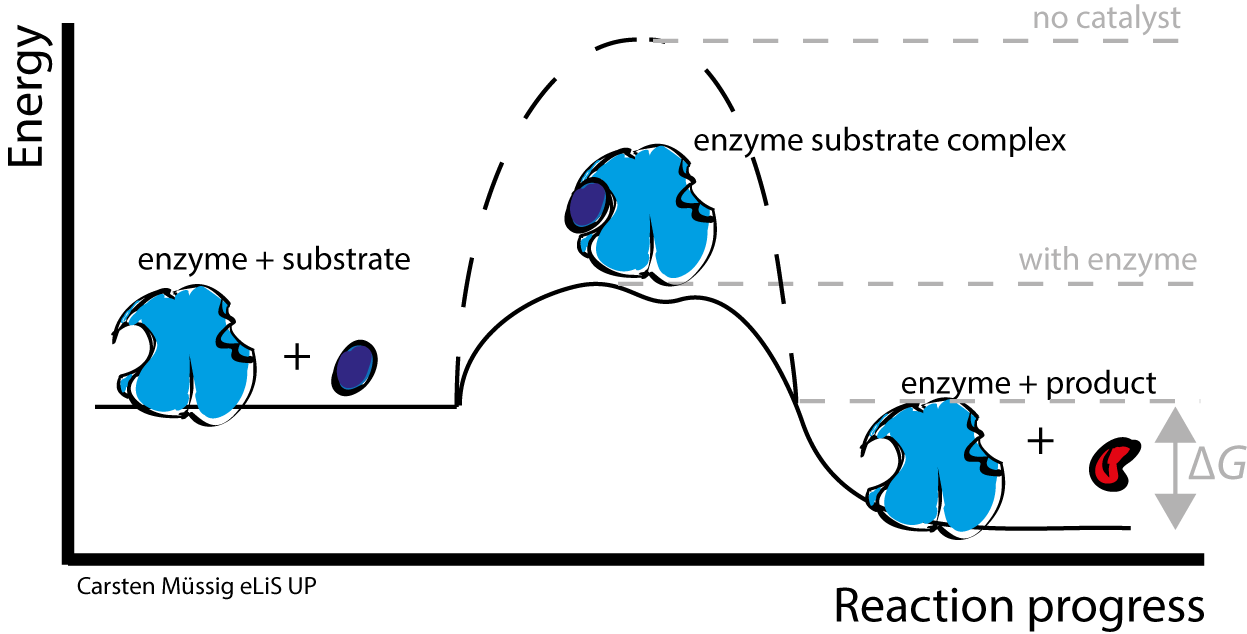
What can be concluded from this graph?
The reactants have less energy than the products
The enzyme is consumed during the course of the reaction
The enzyme lowers the energy of activation for the reaction
The amount of free energy produced in the reaction increases with an enzyme

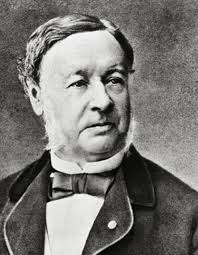
The first scientist to use the term "cell" after looking at cork under a microscope was -
Charles Darwin
Anton van Leeuwenhoek
Francesco Redi
Robert Hooke
Which of these is the best model of a prokaryotic cell?


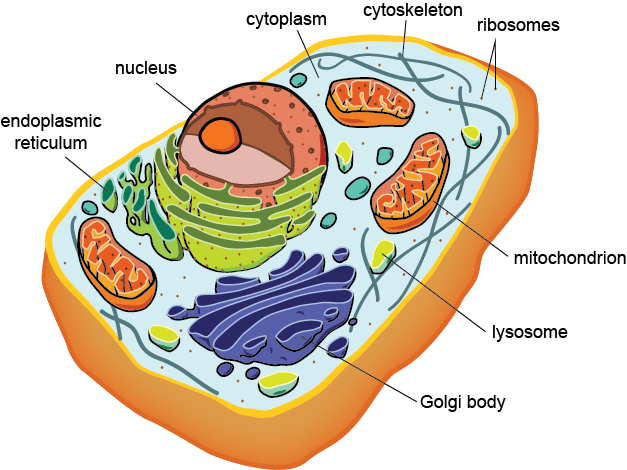
Which pair of structures best shows that plant cells have functions different from animal cells?
Chloroplasts and cell walls
Cytoplasm and mitochondria
Nuclei and centrioles
Ribosomes and cell membranes
Which of the following is NOT found in all cells?
Cell membrane
Cytoplasm
DNA
Cell wall
Which of the following is NOT true about proteins?
They are made of amino acids
They build muscle
Enzymes are an example
They are the main source of energy for your body
Enzymes belong to which class of macromolecules?
lipids
carbohydrates
proteins
nucleic acids
DNA belongs to which class of macromolecules?
proteins
nucleic acids
carbohydrates
lipids
Sugar belongs to which class of macromolecules?
proteins
lipids
nucleic acids
carbohydrates
Which of the following is NOT a correct pair?
Carbohydrates - Sugars & Starches
Lipids - Fats & Oils
Proteins - Waxes
Nucleic Acids - DNA & RNA
Enzymes act as catalysts, meaning they...
Speed up chemical reactions
Slow down chemical reactions
Reverse chemical reactions
Cancel chemical reactions
Enzymes are a type of...
Carbohydrate
Lipid
Protein
Nucleic Acids
The substance on which an enzyme acts is the...
activation energy
active site
substrate
product
The location on an enzyme where the substrates fits into the enzyme is the enzyme's...
reaction site
inhibitor site
receptor site
active site
Which of the following is a correct statement on the state of an enzyme at the conclusion of a chemical reaction?
The chemical reaction causes the enzyme to reduce in size
The enzyme is dissolved by the substrate that covers it during the reaction
The enzyme is not changed by the chemical reaction
The products of the reaction never release themselves from the enzyme
TRUE or FALSE: The shape on an enzyme is important to its function
TRUE
FALSE
Enzymes are sensitive to extreme...
salt and sugar concentrations
heat and pressure
positive and negative charges
temperatures and pH
Enzymes only work with specific substrates because each substrate...
actively interferes with other substrates around it
has a specific activation site for enzyme attachment
destroys its specific enzyme
can only use a specific ionic bond with the enzyme

Which number in the picture represents the enzyme?
1
2
3
4
What is the optimum temperature and pH of this enzyme?
Temperature: 50°C, pH: 13
Temperature: 37°C, pH: 7
Temperature: 25°C, pH: 4
Temperature: 45°C, pH: 10
DNA replication is...
DNA making mRNA
mRNA coding for amino acids
DNA being copied
DNA being divided between two cells
DNA replication must take place BEFORE...
Cell division
Cell death
Protein synthesis
Photosynthesis
DNA replication occurs in the...
Endoplasmic Reticulum
Mitochondria
Ribosomes
Nucleus
The product of DNA replication is...
Two different DNA strands
Two identical DNA strands
One new DNA strand
One mRNA strand
DNA replication is called semi-conservative because...
It has been going on for thousands of years
Half of the nucleotides are DNA, the other half are RNA
Half of each new DNA strand comes from the old strand
It usually votes Republican
What is the complementary DNA sequence for the DNA strand ATCGGAACT.
ATCGGAACT
UAGCCUUGA
CGATTCCAG
TAGCCTTGA
Protein synthesis is the process of...
Converting light energy into chemical energy
Breaking down food to release energy
Building proteins
Determining which protein is right for which job
The two steps of protein synthesis are...
Transcription and Translation
Transcription and Replication
Transcription and Transpiration
Replication and Translation
Transcription is _______ coding for ________.
DNA coding for DNA
DNA coding for mRNA
mRNA coding for tRNA
mRNA coding for proteins
Transcribe the following DNA sequence:
TAAGGCCGA
TAAGGCCGA
ATTCCGGCT
TUUGGCCGU
AUUCCGGCU
What is NOT a difference between DNA and RNA?
DNA has four bases, RNA has five
DNA has thymine, RNA has uracil
DNA can't leave the nucleus, RNA can
DNA is double-stranded, RNA is single-stranded
How many codons are in the following mRNA sequence?
AAU-UAG-CUU-GAC
3
4
16
20
Translation is _____ coding for ______.
DNA coding for DNA
DNA coding for mRNA
mRNA coding for tRNA
mRNA coding for protein
The site of protein synthesis is the...
Nucleus
Chloroplast
Ribosome
Mitochondria
Proteins are made of...
Nucleotides
RNA
DNA
Amino Acids
Each codon codes for _____ amino acid(s).
1
2
3
20
Which base pair is NOT found in RNA?
adenine and thymine
cytosine and guanine
adenine and uracil
guanine and cytosine

Use the codon chart to find the amino acid for the codon ACC.
Leu
Asn
Val
Lys
What is the purpose of photosynthesis?
To break down food for energy
To use sunlight to make food for plants
To produce proteins
To make new cells
Where does photosynthesis take place?
In the mitochondria of plant and animal cells
In the chloroplasts of plant cells
In the nucleus of animal cells
In the ribosomes of plant cells
What is the role of the green pigment chlorophyll in photosynthesis?
Produce proeins
Take in water
Exchange carbon dioxide and oxygen
Capture sunlight
What are the reactants of photosynthesis?
Water and carbon dioxide (+ light)
Glucose and oxygen
Water and oxygen (+ light)
Glucose and carbon dioxide
What are the products of photosynthesis?
Water and carbon dioxide (+light)
Glucose and oxygen
Water and oxygen (+light)
Glucose and carbon dioxide
What is the formula for photosynthesis?
C6H12O6 + 6O2 ---------> 6CO2 + 6H2O + ATP
C6H12O6 + 6H2O ---Light--> 6CO2 + 6O2
6CO2 + 6H2O ---Light--> C6H12O6 + 6O2
6CO2 + 6O2 -----> C6H12O6 + 6H2O + ATP
What is the purpose of cellular respiration?
To break down food for energy
To use sunlight to make food for plants
To produce proteins
To make new cells
Where does cellular respiration take place?
In the mitochondria of plant and animal cells
In the chloroplasts of plant cells
In the nucleus of animal cells
In the ribosomes of plant cells
Glucose is a...
Protein
Fat (Lipid)
Sugar (Carbohydrate)
Nucleic Acids
What are the reactants of cellular respiration?
Water, oxygen, and ATP
Glucose and carbon dioxide
Water, carbon dioxide, and ATP
Glucose and oxygen
What are the products of cellular respiration?
Water, oxygen, and ATP
Glucose and carbon dioxide
Water, carbon dioxide, and ATP
Glucose and oxygen
ATP is..
Sugar (carbohydrate)
Fat (lipid)
Energy
Protein
What is the formula for cellular respiration?
C6H12O6 + 6O2 ---------> 6CO2 + 6H2O + ATP
C6H12O6 + 6H2O ---Light--> 6CO2 + 6O2
6CO2 + 6H2O ---Light--> C6H12O6 + 6O2
6CO2 + 6O2 -----> C6H12O6 + 6H2O + ATP
TRUE or FALSE: Plants can perform BOTH photosynthesis and cellular respiration
TRUE
FALSE
How are photosynthesis and cellular respiration related?
The form a cycle - the products of one become the reactants of the other
Their formulas are essentially opposite
They both involve the transformation of energy from one form to another
All of the above



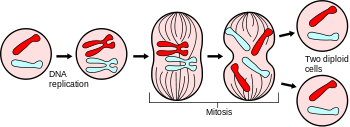
When cells are damaged, new cells are created by cell a process called cell division. How does the cell theory support this fact?
It states that all cells have a nucleus which divides.
It states that all living things are made up of one or more cells.
It states that cells come from previously existing cells.
It states that the basic units of structure and function are cells.
Which of the following is NOT part of cell theory.
All non-living things are made of cells
All cells come from pre-existing cells
Cells are the basic unit of structure and function of all living things

Which scientist did NOT contribute to the cell theory?
Anton Van Leeuwenhoek
Robert Hooke
Charles Darwin
Matthias Schleiden

A major difference between a hypothesis and a theory is that...
Only a theory can be tested
Only a hypothesis is developed by scientists
Only a theory is supported by evidence from multiple experiments
Only a hypothesis can be changed or modified
Which of the following is a law?
Living things evolve through natural selection
If I drink 8 cups of water a day I will have more energy
Microorganisms cause disease
PV = nRT
What did Rudolf Virchow contribute to cell theory?
Cells are the basic unit of structure and function in all living things.
All cells come from other cells.
All animals are made of cells
All plants are made of cells
Which of the following is the correct order of the levels of organization from SMALLEST to LARGEST?
Organs, Tissues, Organ Systems, Organism, Cells
Cells, Tissues, Organs, Organ Systems, Organism
Cells, Organism, Organs, Tissues, Organ Systems
Organisms, Tissues, Cells, Organ Systems, Organs
Which of the following is NOT part of cell theory?
All living things are made of cells
All cells contain a nucleus
Cells are the basic unit of life
Cells come from other, pre-existing cells
The main function of the cell is to...
Give your eyes color
Produce heat
Make proteins
Cells have no function, they are just building blocks
Proteins are important because...
They help build more cells and tissues
They transport nutrients in and out of cells
They act as enzymes to speed up reactions
They send signals as hormones
All of the above AND MORE
The main difference between prokaryotes and eukaryotes is...
Eukaryotes have a nucleus and membrane-bound organelles
Eukaryotes are smaller and simpler than prokaryotes
Eukaryotes have a cell wall and prokaryotes have a cell membrane
Prokaryotes do not have DNA
Which of the following organelles is NOT matched to its correct function?
Cytoskeleton - jelly-like fluid that fills the cell
Centriole - helps with cell division
Flagella and Cilia - movement
Vacuole - stores water, nutrients, and waste
Cells in your liver need to package and secrete a large number of enzymes to help with digestion. You would expect them to have more...
Golgi bodies
Mitochondria
Chloroplasts
Nuclei
What organelle allows plant cells to use photosynthesis - the process of making sugar using sunlight?
Cell Wall
Central Vacuole
Cytoplasm
Chloroplast
Which organelle is larger in plant cells than animal cells?
Golgi apparatus
Vacuole
Mitochondria
Lysosomes
Which type of cells have cell walls?
Plant Cells
Animal Cells
Both Plant and Animal Cells
Which organelles can ANIMAL cells have, but NOT plant cells?
Cell wall and chloroplast
Flagella, cilia, and centrioles
Chloroplast, centrioles, and cytoplasm
Cytoplasm and cytoskeleton
What happened that allowed cells to be studied?
Cells increased in size.
Scientists began to work together.
Scientists became smarter.
The microscope was invented and improved.

Euglena are unicellular organisms that live in pond water and contain a nucleus, chloroplast, and flagellum. Given this information, we can determine that euglena...
Are prokaryotic
Can use photosynthesis
Reproduce sexually
Are a type of fungi

In the cycle shown in the figure above, which processes are shown by letters A and B?
A - respiration, B - photosynthesis
A - respiration, B - excretion
A - decomposition, B - excretion
A - decomposition, B - transpiration
Photosynthesis and cellular respiration are often described as existing in a cycle. Which statement best describes why this is true?
Heterotrophs can perform photosynthesis and cellular respiration, while autotrophs can only perform photosynthesis
Each reaction results in chemical products that are needed as reactants for the other reaction
Plants perform cellular respiration and animals perform photosynthesis
Plants perform only photosynthesis and animals perform cellular respiration
When there is a lower concentration of water outside of a plant cell rather than inside a plant cell, the plant will tend to -
lose water and wilt
gain water and become rigid
grow towards the sun
increase its rate of photosynthesis
To create proteins, mRNA copies the DNA code. The mRNA must then transfer the DNA code from the nucleus to the ribosomes that are located in the cytoplasm. What action occurs next at the ribosomes?
Messenger RNA is transcribed back into DNA to create nucleotide bases
Nucleic acids are formed through the DNA code
Nucleotides detach to form individual protein strands
Specific proteins are formed through the linking of amino acids
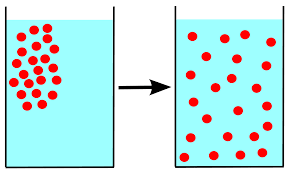
The picture below is an example of _________________.
osmosis
isotonic
diffusion
active transport
During osmosis
water moves from high to low concentration
large or oddly shaped molecules move across a cell membrane
water moves when energy is used
proteins are built
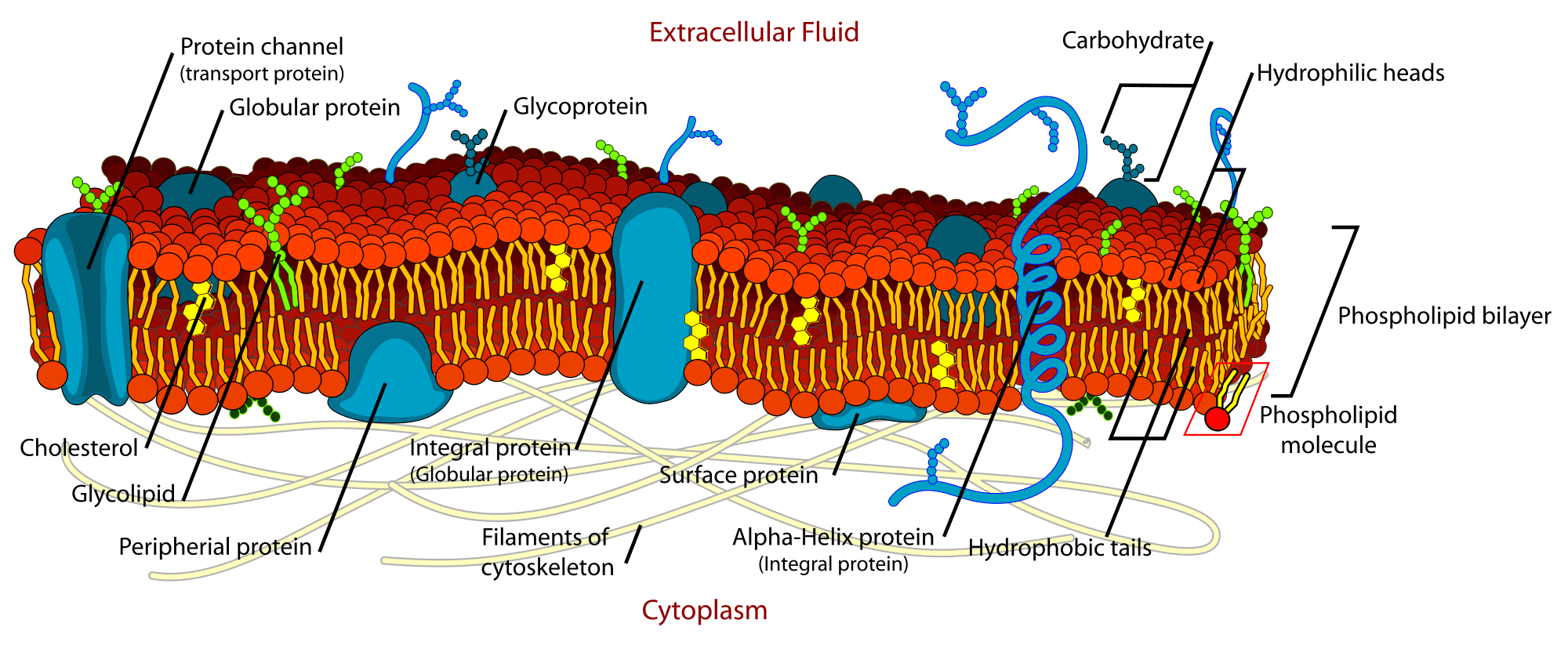
What is this image?
cell membrane
proteins
nucleus
mitochondria


Choose the sequence of the mRNA strand that would be match up with to the following strand:
GTAGTCA
UATUAGA
ACGACTG
CAUCAGU
CATCAGT
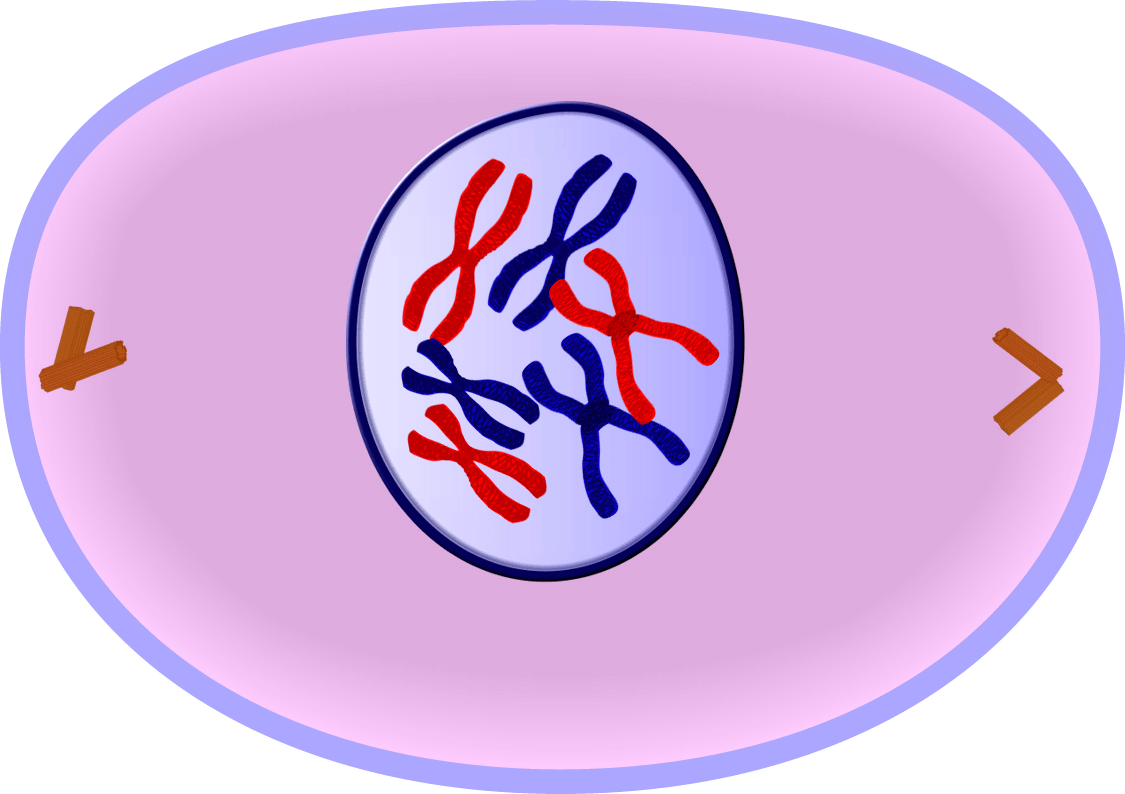
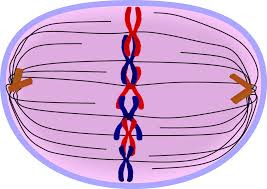
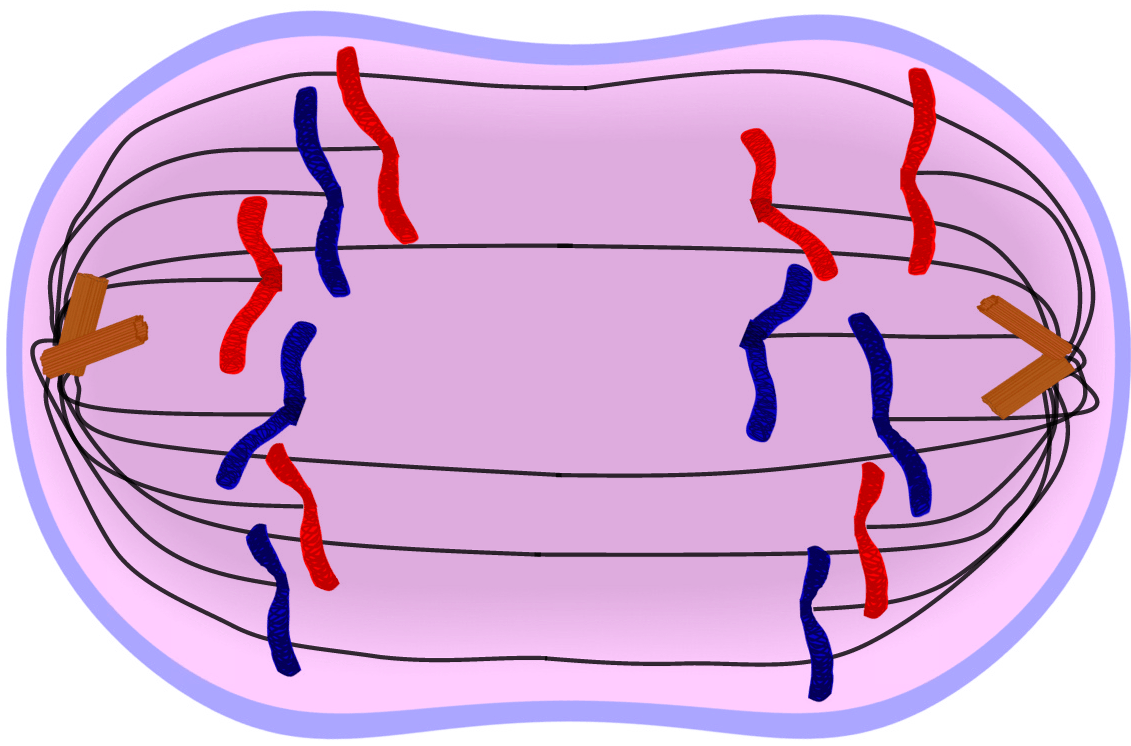
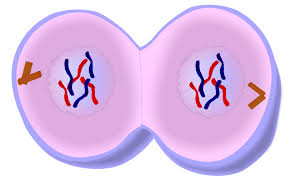

During prophase
chromosomes line up in the middle
chromosomes pull apart to opposite ends
DNA condenses into chromosomes, nucleus dissolves
two new, identical cells are produced.
During cytokinesis
cytoplasm divides to form two cells
chromosomes condense
spindle fibers begin to form
the cell grows and repairs
During anaphase
sister chromatids are pulled apart to opposite ends
spindle fibers begin to form
2 new identical cells are made
chromosomes line up in the middle
DNA replication happens during...
Interphase
Prophase
Telophase
Cytokinesis
The end result of mitosis is...
One new cell
Two new identical cells
Two new different cells
Two cells with half the DNA
During prophase, the DNA is condensed into bundles called...
Centrioles
Spindle Fibers
Chloroplasts
Chromosomes
Which of the following has the phases of mitosis in the correct order?
Interphase, Mitosis, Cytokinesis
Prophase, Metaphase, Anaphase, Prophase
Anaphase, Telophase, Prophase, Telophase
Prophase, Metaphase, Anaphase, Telophase
Osmosis is the movement of _______ across a semipermeable membrane.
Water
Solutes
Salt
Sugar

What happened to this cell?
Passive transport moved molecules out of the cell
Passive transport moved molecules into the cell
Active transport moved molecules out of the cell
Active transport moved molecules into the cell
Which of the following describes homeostasis?
keeps variables exactly at the set point
organism's ability to maintain steady(stable) internal conditions
acts to keep values outside of a desired range
operates through positive feedback
Diffusion and facilitated diffusion are examples of...
Active Transport
Passive Transport
Which type of transport moves molecules from HIGH to LOW concentration?
Active Transport
Passive Transport
Which type of transport requires ATP (energy)?
Active Transport
Passive Transport
Which type of transport results in equilibrium?
Active Transport
Passive Transport
Which type of transport would use a protein PUMP, which requires energy?
Active Transport
Passive Transport

This picture shows...
Passive Transport (Diffusion)
Active Transport

This picture shows...
Passive Transport (Diffusion)
Active Transport
DNA can also be referred to as...
Deoxyribonucleic Acid
The genetic material
The source of genetic information
All of the above
DNA replication is...
DNA making mRNA
mRNA coding for amino acids
DNA being copied
DNA being divided between two cells
DNA replication must take place BEFORE...
Cell division
Cell death
Protein synthesis
Photosynthesis
DNA replication occurs in the...
Endoplasmic Reticulum
Mitochondria
Ribosomes
Nucleus
The product of DNA replication is...
Two different DNA strands
Two identical DNA strands
One new DNA strand
One mRNA strand
DNA replication is called semi-conservative because...
It has been going on for thousands of years
Half of the nucleotides are DNA, the other half are RNA
Half of each new DNA strand comes from the old strand
It usually votes Republican
What is the complementary DNA sequence for the DNA strand ATCGGAACT.
ATCGGAACT
UAGCCUUGA
CGATTCCAG
TAGCCTTGA
Protein synthesis is the process of...
Converting light energy into chemical energy
Breaking down food to release energy
Building proteins
Determining which protein is right for which job
The two steps of protein synthesis are...
Transcription and Translation
Transcription and Replication
Transcription and Transpiration
Replication and Translation
Transcription is _______ coding for ________.
DNA coding for DNA
DNA coding for mRNA
mRNA coding for tRNA
mRNA coding for proteins
Transcribe the following DNA sequence:
TAAGGCCGA
TAAGGCCGA
ATTCCGGCT
TUUGGCCGU
AUUCCGGCU
What is NOT a difference between DNA and RNA?
DNA has four bases, RNA has five
DNA has thymine, RNA has uracil
DNA can't leave the nucleus, RNA can
DNA is double-stranded, RNA is single-stranded
How many codons are in the following mRNA sequence?
AAU-UAG-CUU-GAC
3
4
16
20
Translation is _____ coding for ______.
DNA coding for DNA
DNA coding for mRNA
mRNA coding for tRNA
mRNA coding for protein
The site of protein synthesis is the...
Nucleus
Chloroplast
Ribosome
Mitochondria
Proteins are made of...
Nucleotides
RNA
DNA
Amino Acids
Each codon codes for _____ amino acid(s).
1
2
3
20
Which base pair is NOT found in RNA?
adenine and thymine
cytosine and guanine
adenine and uracil
guanine and cytosine
Use the codon chart to find the amino acid for the codon ACC.
Leu
Asn
Val
Lys

