
 Worksheets
Semester 2 Final Review
Total questions: 175
Worksheet time: 3hrs 25mins
Gray Wolf: Canis lupus
Aardwolf: Proteles cristatus
Coyote: Canis latrans


A rabbit is running away from a fox.
Which organ systems (3) are mainly interacting in this scenario
digestive
muscular
respiratory
skeletal
integumentary
Which human body systems are directly involved in reflex actions, such as knee jerk, blinking, and jumping when startled?
cardiovascular & respiratory
digestive & excretory
nervous & muscular
reproductive & skeletal
Which two body systems interact in the lungs to carry and disperse gas molecules throughout the body?
urinary & reproductive system
endocrine & lymphatic system
nervous & muscular system
cardiovascular & respiratory system
Which organ systems are responsible for regulating body temperature and blood sugar levels?
integumentary and endocrine systems
endocrine & excretory systems
nervous & endocrine systems
endocrine & cardiovascular system
Last night Jane began to feel like she had a stopped up nose. Today she thinks she has come down with a cold. she went to the doctor and her temperature was 102 degrees and her white blood cell count determined she has an infection. Which organ systems is mainly responsible for this scenario
integumentary
cardiovascular
muscular
immune
Each organ system coordinates with other organ systems through
identical sensors and targets
their stem cells
connective and muscular tissue
chemical and nerve messengers
The long term affect(s) of a disruption of homeostasis in the human body can lead to...
regulation of the internal environment
the immune system takes control of the body
destruction of organ system(s)
establishment of feedback mechanisms
What is the name of the proteins released from specialized glands that carry messages throughout the body?
targets
sensors
hormones
organs
When organ systems work together, they form another level of organization called...
an organism
tissues
cells
organs
Why must organs in an organ systems interact ?
each organ has to oversee the functioning of other organs
organ tissues are not specialized, so they work together
no organ can function without positive feedback
each organ alone cannot perform all the necessary tasks
This body system breaks down ingested substances into biomolecules that can be used by the body
digestive
immune
cardiovascular
urinary
Hormones and gland are included in this system
digestive
immune
endocrine
excretory
Which body systems interact when increased blood flow carries white blood cells to the site of an injury
immune and cardiovascular
muscular and digestive
immune and endocrine
excretory and integumentary
Which two body systems help control hormone levels to prepare the body for pregnancy?
reproductive and immune
skeletal and cardiovascular
immune and digestive
endocrine and reproductive
The body systems that work together to protect you from foreign pathogens are...
integumentary and immune
endocrine and digestive
lymphatic and muscular
respiratory and cardiovascular
Which two body systems work together to break down food into chemical energy and rid the body of the waste produced during this process?
skeletal and endocrine
nervous and immune
digestive and excretory
muscular and skeletal
Which two systems interact to remove wastes from the blood?
digestive and muscular
cardiovascular and excretory
immune and respiratory
nervous and skeletal
Which organs systems interact in the following scenario: The pituitary gland in the base of the skull releases hormones that control blood pressure
endocrine and cardiovascular
immune and nervous
respiratory and integumentary
skeletal and muscular
Internal water balance is very important. When we have enough water our urine is clear. When we need more water, our urine is darker yellow. This is regulated by the kidneys, which are part of the ____________________- system.
cardiovascular
digestive
excretory
nervous
Which body systems work together to supply the body's cells with oxygen?
muscular and respiratory
respiratory and immune
cardiovascular and respiratory
nervous and excretory
Which of the following systems DOES NOT work to defensed the body?
integumentary
immune
endocrine
Which organ system uses blood vessels to transport blood, which carries oxygen, carbon dioxide, nutrients, wastes, etc. throughout the body
cardiovascular
endocrine
respiratory
digestive
Which organ system protects and supports body organs and provides a framework the muscles use to support movement. Made up of bones and joints
skeletal
muscular
integumentary
nervous
Which three systems work together to move the body?
skeletal, respiratory, digestive
nervous, cardiovascular, skeletal
skeletal, muscular, nervous
cardiovascular, respiratory, digestive
How does the cardiovascular system help the muscular system?
protects muscles
sends messages to the muscles to contract
brings oxygen into the body
delivers nutrients and oxygen to muscle tissue
The muscular system interacts with the ____________ system as it helps break down and move the food we eat through our bodies.
digestive
nervous
excretory
skeletal
Our brain is a part of our _______________ system and it interacts with our ___________________ system to coordinate movements throughout our bodies.
nervous, muscular
muscular, nervous
nervous, cardiovascular
excretory, muscular
The cardiovascular system interacts with the ___________ system to remove waste from our blood and produce urine.
nervous
excretory
digestive
cardiovascular
The cardiovascular system interacts with the ___________________ system when as it surrounds the small intestine, broken down food is delivered in the blood to all of the body’s cells.
nervous
excretory
digestive
muscular
The immune system interacts with the ___________________ system because most of the immune cells travel in the blood.
muscular
digestive
cardiovascular
respiratory
Which organs systems interact in the following scenario: The pelvis protects a developing fetus from injury.
skeletal and reproductive
muscular and integumentary
endocrine and digestive
immune and urinary
Which two systems interact to remove wastes from the body?
digestive and muscular
digestive and excretory
immune and respiratory
nervous and skeletal
Which organs systems interact in the following scenario: Langerhans cells are present in the epidermis of the skin and provide the first line of defense against infections by initiating an inflammatory response when pathogens enter.
cardiovascular and digestive
endocrine and respiratory
integumentary and immune
nervous and muscular
Which organ system is composed of a network of vessels, ducts, nodes, and organs. It also provides defense against infection.
lymphatic
cardiovascular
respiratory
digestive
Which organ system functions to breaks down food into smaller molecules that are transported and absorbed by our cells to create energy
digestive
urinary
reproductive
cardiovascular
Which organs systems interact in the following scenario: The ribs and sternum form a protective cage
immune and cardiovascular
skeletal and respiratory
muscular and digestive
integumentary and urinary
Plants have a tissue system that forms the first line of defense against physical damage and disease and is the plant's outer protective covering. Which body system is similar to the plant's tissue system?
endocrine
integumentary
skeletal
digestive
These two systems primarily work together to maintain homeostasis
digestive and immune
nervous and endocrine
skeletal and muscular
reproductive and excretory
Which two body systems help control hormone levels to prepare the body for pregnancy?
reproductive and immune
skeletal and cardiovascular
immune and digestive
endocrine and reproductive
The bell rings at the end of class and you jump to head for the door.
Which organ systems (3) are mainly interacting in this scenario
nervous system
muscular system
skeletal system
integumentary
digestive system
You eat a chick nugget meal from Chick-Fil-A. Your body breaks down the food into necessary nutrients and distributes them to your cells for cellular processes
Which organ systems (2) are mainly interacting in this scenario
nervous system
integumentary system
skeletal system
cardiovascular system
digestive system
You are a mountain climber exploring the high mountain peaks. As you climb higher you begin to take deeper breaths as your heart races to ensure your cells get enough oxygen and nutrients for cellular respiration
Which organ systems (2) are mainly interacting in this scenario
nervous system
integumentary system
respiratory system
cardiovascular system
digestive system
Exit: Carbon dioxide
Exit: Glucose
Exit: Oxygen
Exit: Water vapor
Stomates have multiple functions. Select the two answers that best describe what stomates do.
allow carbon dioxide into the leaf
allow oxygen out of the leaf
allow sunlight into the leaf
allow sugars out of the leaf
The shoot system is the part of the plant that is ________________________________.
below the ground
above the ground
in the water
In the tree

In a plant cell this what surrounds the cell membrane and separates the cell from the environment.
cell wall
vacuole
chloroplast
tissue
Green substance that turn the leaves green
Chlorophyll
Roots
Green Paint
Spore
Phloem transports
water
sugar
oxygen
carbon dioxide
Xylem transports...
water
sugar
oxygen
carbon dioxide
Leaves are composed of vascular tissue that brings water in so that ground tissue can conduct photosynthesis. Based on this information, what level of organization describes leaves?
Tissue
Organ
Organ system
Organism
Trees that grow in a forest tend to grow very tall, with few branches. The same species of tree grown in an open area tends to grow shorter and wider, with many branches. The stimulus responsible for these different growth patterns is the amount of -
wind striking the tree
light reaching the tree
nutrients in the soil
water in the ground
Seeds are the offspring of mature plants. If a seed germinates and survives, it will grow to become a mature plant. Based on this information, what level of organization describes seeds?
Tissue
Organ
Organ system
Organism
Plants are complex organisms that are composed of multiple layers of organization. Which of the following best represents the organization of the root system from most complex to least complex?
root system → root → phloem → cell
root system → cell → phloem → root
root system → phloem → root → cell
root system → root → cell → phloem

The diagram illustrates a seed germinating. Many forces, including responses to moisture, light, temperature, and gravity are at work in this process.
Which of the following correctly describes two of the seedling's responses to stimuli?
phototropism and gravitropism
thigmotrophism and gravitropism
thigmotrophism and hydrotropism
Phototropism and thigmotrophism

The diagram illustrates a seed germinating. Many forces, including responses to moisture, temperature, and gravity, are at work in this process.
Which part of the seedling demonstrates a response to gravity?
I
II
III
IV

Students observed a plant left by a window over several days. The plant was watered daily. After three days, the plant began to grow towards the window as shown in the picture.
Which of the following best explains the student’s observations?
Heat from the Sun caused the plant to grow towards the window.
The plant is leaning towards the window to get fresh air.
The plant is responding to the stimulus of sunlight.
The plant is responding to water in the air and growing towards it.

transports water and minerals
control the opening and closing of stoma
carry out photosynthesis
provide support for young plant
What process do plants go through to create glucose
Cellular Respiration
Photosynthesis
Light Reaction
Calvin Cycle

Photosynthesis
Xylem
Root system
Shoot system

What do you call an animal that only eats plants?
niche
carnivore
parasite
herbivore
predator

What is the general term used to describe the interaction between two different organisms that are living in close physical association?
photosynthesis
symbiosis
habitat
prey
omnivore

This term describes a consumer that feeds only on other consumers - in other words, the 'opposite' of vegan…
mutualsim
niche
prey
autotroph
carnivore

The animal in an ecological relationship that results in another animal being hunted, killed, and eaten…
autotroph
habitat
predator
herbivore
producer

The non-living part of an ecosystem
niche
abiotic
biotic
ecosystem
biosphere

An ecological symbiotic relationship between two organisms where one benefits and the other is harmed…
parasitism
herbivore
mutualism
carnivore
commensalism

This is the job or role of a specific organism within its habitat...
producer
prey
carnivore
niche
photosynthesis

What you would call an ecological symbiotic relationship between two organisms where one benefits, but the other is not helped or harmed?
mutualsim
predator
commensalism
parasitism
herbivory

The name of the process that producers use to make their own food…
respiration
commensalism
food chains
photosynthesis
symbiosis

Another word for a plant or other producer that makes its own food using energy from sunlight…
photosynthesis
autotroph
consumer
carnivore
herbivore
Technically speaking, ALL food chains should end with these types of organisms so that nutrients can be recycled back into the habitat…
parasites
predators
herbivores
symbiotes
decomposers

What is the term used to describe ALL of the populations of ALL the species of living organisms within a particular habitat?
savanna
wildlife
community
habitat
ecosystem

The term used to include all of the living things PLUS all the non-living things together in a specific environment...
community
biosphere
habitat
population
ecosystem

What do you call the total count of a specific organism living within their natural habitat?
ecosystem
community
population
symbiosis
niche
What ecological relationship is depicted between Pumba (warthog) and the bugs?
Competition, because pumba is in competition with the bugs for food sources
Mutualistic, because Pumba and the bugs benefit each other
Predator-Prey, because Pumba is a predator that consumes bug as prey
Marlin and his son, Nemo, are clownfish that live in a sea anemone. Clownfish benefit by receiving protection and shelter from the sea anemone. The clownfish, in return, scares away predators of the sea anemone and provides nutrients for the sea anemone through its excrement (waste). The symbiotic relationship between Nemo and the sea anemone is known as -
parasitism
commensalism
predator-prey
competition
mutualism
The flock of white seagulls that are fighting over a single food source (Nemo & Dory) depicts which ecological relatioship?
Intraspecies Competition
Mutualism
Parasitism
Commensalism
The pearlfish receives protection from predators by living inside a sea cucumber. The sea cucumber is not affected during this interaction. This ecological relationship is known as -
predator-prey because the pearlfish is prey to the sea cucumber
mutualism because only the pearlfish benefits in this ecological relationship
parasitism because the pearlfish causes harm to the host sea cucumber
commensalism because only the pearlfish benefits while the sea cucumber is not affected
competition because the sea cucumber and pearlfish often fight for living space
A pair of red, male kangaroos are seen fighting over a potential mate. The ecological relationship between the two male kangaroos shown is -
Commensalism
Mutualism
Predator-Prey
Competition


If farmers use a controlled burn to prevent forest fires, what would most likely be the first plants to return?
trees
shrubs
mosses
grasses
Breaking News! A new island has formed off of Hawaii! What must occur for it to become an ecosystem?
Secondary Succession
Aquatic succession
Primary Succession
Ferns must grow
Which would result in primary succession?
volcano destroying habitat leaving only soil and ash
Tornado destroying a crop leaving very little soil
Glacier retreating exposing bare rock
limiting factors
Primary succession occurs in areas with:
very little soil
lots of soil
no soil
soil that has been disturbed
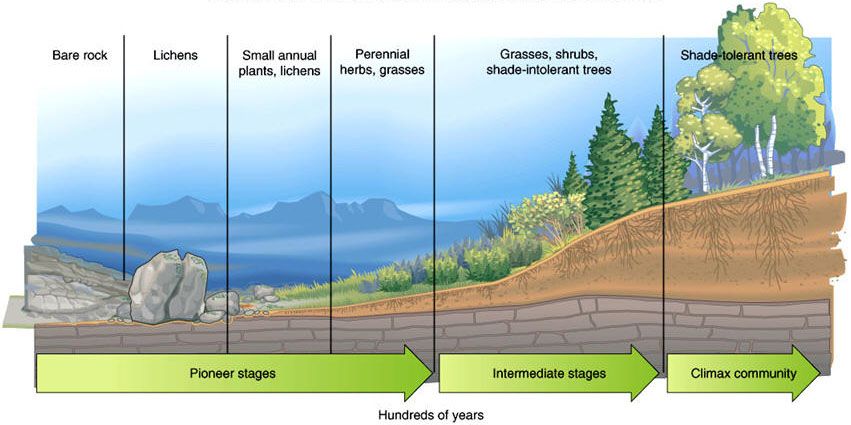
The picture shows what type of succession?
primary
secondary
tertiary
quadanary
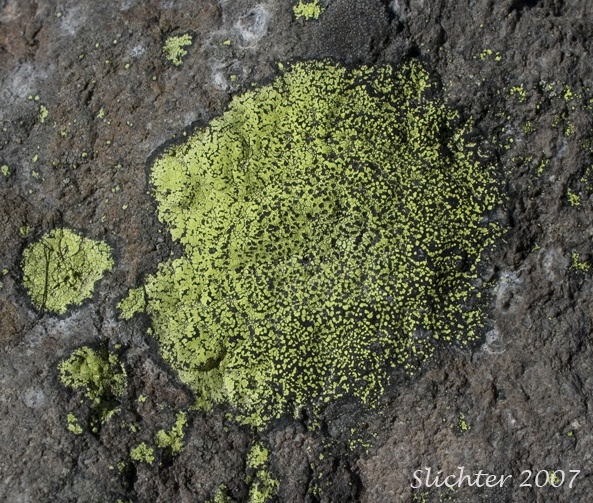
After a volcanic eruption, lava covers the land. What is the order that plants grow to repopulate the area?
Lichens → Shrubs → Grasses → Trees
Lichens → tree → shrubs→Grasses
Grasses → Lichens → Shrubs → Trees
Lichens → Grasses → Shrubs → Trees
The process in which nitrogen circulates and is recycled is called
The nitrogen cycle
The carbon cycle
The water cycle
The phosphorus cycle

Organisms that need nitrogen to survive.
only plants
only animals
only nitrophilic bacteria
all living things

How do animals get the nitrogen they need?
From the air they breathe
From the water they drink
From the food they eat
From the sun
What is the formula for atmospheric nitrogen?
N
N2
NH3
NO3
Gas that makes up 78% of our atmosphere.
Oxygen
Nitrogen
Hydrogen
Carbon Dioxide
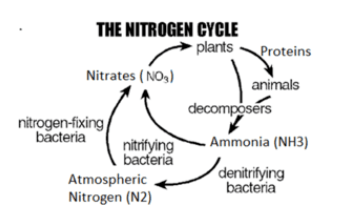
According to this diagram, plants use nitrogen to make _________________________
bacteria
animals
proteins
decomposers
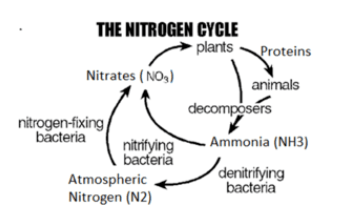
According to this diagram, plants absorb
nitrates
nitrogen fixing bacteria
animals
decomposers
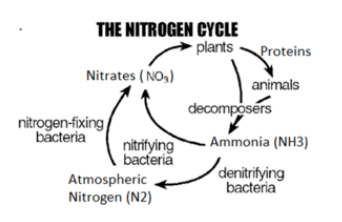
According to this diagram, animals get proteins from eating ________________________
decomposers
bacteria
plants
sunlight
Bacteria fix nitrogen from the atmosphere into a form plants can use.
True
False

What is the process where plants use nitrates to grow?
Nitrogen Fixation
Ammonification
Assimilation
Nitrification

What is the process where bacteria turns Nitrogen gas from the atmospheres into usable compounds?
nitrogen composition
nitrogen fixation
ammonia
denitrification


_____ is the conversion of organic nitrogen into ammonia
Nitrogen Fixation
Ammonification
Denitrification
Assimilation

Bacteria that fix nitrogen into a form plants can use may be found
In root nodules
In leaves
In the air
In the body of decomposers

What is the main reservoir of nitrogen?
Water bodies
Plants
Atmosphere
Soil

The process that convert nitrates (NO3-) back to nitrogen gas (N2) there by replenishing N2 in the atmosphere is called
Nitrogen fixation
Deamination
Denitrification
Nitrification
Which gas do plants release, that humans depend on for survival?
Water
Carbon Dioxide
Oxygen
Sugar
Plants use ____________ to make their own food
Water
Sunlight
Carbon dioxide
All of these
Which statement is an example of how carbon moves through a food chain as part of the cycle?
Producers release carbon dioxide, and consumers take it it.
Producers take in carbon dioxide, and consumers release it.
Producers take in carbon from the soil, and they release it when they decompose.
Producers release carbon into the soil, and consumers take it in from the soil.
Which process(es) release carbon dioxide into the atmosphere?
respiration
combustion
photosynthesis
feeding
What type of organism receives carbon present in dead plants and animals?
producer
primary consumer
secondary consumer
decomposer
Which process removes carbon dioxide from the atmosphere?
deforestation
tree farms
burning fossil fuels
cellular respiration
When organisms die, what process returns their carbon back into the atmosphere?
Respiration
Decomposition
Combustion
Erosion
what is an adaptation?
a change in behavior or physical aspect of an organism in order to be better suited to survive in a particular environment.
a change that an organism quickly develps to survive
a unique characteristic that makes an organsism more dominant
a shift in an organisms behavior
Adaptations can be...
mutations
Behaviors
both behavioral & physical
Phyisical characteristics
Adapatation are caused by
natural selection
harsh environmets
unique organisms
evolution
Adaptations allow organisms to:
To grow bigger
To be better suited to survive
To be more intimidating
To withstand the conditions of the environment they live in
Adapatations lead to...
Unique organisms
Evolution
Mutations
Stronger Organsisms
Adaptations that desert plants have include
waxy cutticles
hairy stems
thin leaves
short roots
Which would be an adaptation useful in a cold biome?
Being of a smaller size
Being active during the cooler times of day
Blubber/fat
Having dark fur
Which adaptations would help animals in a cold biome such as the tundra will to survive?
Thick fur
A thick layer of fat
Bright coloration
Spots
What would an animal in the desert most likely do to stay cool?
lay underneath the sun
Drink a lot of water
eat succulentsthat are high in water content
stay in a burrow during the hottest times of day
What would be the most useful adaptation for a rabbit in the snow...
camoflauge
having long ears
having strong legs
strong teeth
What is an adaptation?
A change in behavior or physical aspect of an organism in order to be better suited to survive in a particular environment.
A change that an organism quickly develps to survive
A unique characteristic that makes an organsism more dominant
A shift in an organisms behavior
Adaptations can be...
Mutations
Behaviors
Both behavioral and physical
Phyisical characteristics
Adaptations are driven by
Changes in the environment
an organisms wanting to change
unique organisms
evolution
Why do organisms have adaptations?
Homeostasis
To be better suited to survive
To be more intimidating
To withstand the conditions of the environment they live in
Adapatations lead to...
Unique organisms
Evolution
Mutations
Stronger Organsisms
Adaptations that desert plants have include
Thick waxy cuticles to prevent water loss
Spines to prevent predators from eating them
Thick water storing leaves
fur
Which would be an adaptation useful in a cold biome?
Being of a smaller size
Being active during the cooler times of day
Blubber/fat
Having dark fur
Plants in a cold biome such as the tundra will most likely have which adaptation?
have broad extended leaves
seasonaly loose their leaves
thin branches
Thin needle like leaves
what would an animal in the desert most likely do to stay cool?
lay underneath the sun
Drink a lot of water
eat succulentsthat are high in water content
stay in a burrow during the hottest times of day
What would be the most useful adaptation for a rabbit in the snow...
camoflauge
having long ears
having strong legs
strong teeth

