wayground logo

Free Printable Worksheets

Font size

S
M
L
XL
Worksheets

Part 2 Bio Final Review

Total questions: 170

Worksheet time: 2hrs 58mins

Name
Class
Date
1.
An important difference between viruses and living cells is that viruses:
a)
contain more nuclei than cells
b)
need an energy source but cells do not
c)
cannot reproduce outside of cells
d)
cannot mutate but cells can
2.
An important difference between viruses and living cells is that viruses:
a)
contain more nuclei than cells
b)
need an energy source but cells do not
c)
cannot reproduce outside of cells
d)
cannot mutate but cells can
3.
Animals coming from foreign countries are kept in quarantine before being allowed into the United States.  This precaution is taken to help prevent --
a)
the escape of foreign animals into local natural habitats
b)
predator destruction of the foreign animals
c)
the introduction of foreign animal diseases
d)
cross-breeding of native animals with the foreign ones
4.
What characteristic do all living things share?
a)
They all contain a nucleus
b)
They reproduce by mitosis
c)
They need oxygen to survive
d)
They contain DNA
5.
What is an organism called when it contains membrane bound internal organelles?
a)
Heterotroph
b)
Autotroph
c)
Eukaryote
d)
Prokaryote
6.
What is an organism called when it does not contain membrane bound organelles?
a)
Heterotroph
b)
Autotroph
c)
Eukaryote
d)
Prokaryote
7.
What is an organism called when it is unable to produce its own food and must find an external source?
a)
Heterotroph
b)
Autotroph
c)
Eukaryote
d)
Prokaryote
8.
What is an organism called when it is able to produce its own food using light energy?
a)
Heterotroph
b)
Autotroph
c)
Eukaryote
d)
Prokaryote
9.
This kingdom is eukaryotic, uni and multicellular, heterotrophic, and has a cell wall made of chitin.
a)
Plant
b)
Fungi
c)
Animal
d)
Eubacteria
10.
This kingdom is multicellular, autotrophic, and has a cell wall made of cellulose.
a)
Fungi
b)
Plant
c)
Animals
d)
Eubacteria
11.
Escherichia coli is the scientific name of a bacterium.  What category of classification is Escherichia?
a)
Species
b)
Order
c)
Phylum
d)
Genus
12.
What species is bird C?
a)
Dunliin
b)
Osprey
c)
Bald Eagle
d)
Baird's Sparrow
13.
What bird is the closest relative to bird K?
a)
D
b)
J
c)
H
d)
B
14.
Do salamanders have claws?
a)
Yes
b)
No
c)
Maybe
15.
Which types of cells have a cell membrane?
a)
Eukaryotes
b)
Prokaryotes
c)
Both
16.
Which types of cells have membrane bound organelles?
a)
Eukaryote
b)
Prokaryote
c)
Both
17.
Which types of organisms have a nucleus
a)
Eukaryote
b)
Prokaryote
c)
Both
18.
Which type of organism has DNA, ribosomes, but no nucleus?
a)
Eukaryote
b)
Prokaryote
c)
Both
19.
What type of symmetry does a butterfly have?
a)
Bilateral Symmetry
b)
Asymmetry
c)
Radial Symmetry
20.
What does a flagella look like?
a)
Tiny hairs surrounding the whole cell
b)
A blob
c)
A tail
21.

How does an amoeba move?

a)

It uses cilia.

b)

It uses a flagellum.

c)

It uses pseudopods.

d)

It cannot move.

22.
The word "pseudopodia" means
a)
small cell
b)
fake eye
c)
false foot
d)
first animal
23.
Identify the organism pictured.
a)
Amoeba
b)
Paramecium
c)
Euglena
d)
Plasmodium
24.

Which organelle functions to remove excess water in many protists?

a)

micronucleus

b)

contractile vacuole

c)

food vacuole

d)

oral groove

25.

What is chemotaxis?

a)

An organism's negative or positive response to a chemical

b)

An organism's positive or negative response to light

c)

An organism's positive response to a liquid

d)

A type of toxic chemical

26.

The long, whip-like structure which helps some protists move is called the ______________.

a)

cilia

b)

flagellum

c)

tail

d)

pseudopod

27.
Protist?
a)
Euglena
b)
Paramecium
c)
Amoeba
d)
Volvox
28.
Protist?
a)
Euglena
b)
Paramecium
c)
Amoeba
d)
Stentor
29.
What type of protists exhibit positive phototaxis?
a)
autotrophic
b)
heterotrophic
c)
decomposers
d)
parasites
30.
Which of the following is true of ALL protists?
a)
unicellular
b)
eukaryotic
c)
prokaryotic
d)
heterotrophic
31.

Which structure stores this organism's genetic information?

a)

Structure A

b)

Structure B

c)

Structure C

d)

Structure D

e)

Structure E

32.

Identify the contractile vacuole.

a)

Structure 1

b)

Structure 3

c)

Structure 4

d)

Structure 5

e)

Structure 6

33.

Which structure is an adaptation for movement?

a)

Structure A

b)

Structure B

c)

Structure C

d)

Structure D

e)

Structure E

34.

Identify the eyespot.

a)

Structure A

b)

Structure B

c)

Structure C

d)

Structure D

e)

Structure E

35.

Which organelle helps this protist maintain homeostasis?

a)

Organelle 1

b)

Organelle 4

c)

Organelle 5

d)

Organelle 6

36.

Which structure is an adaptation for detecting light in this protist?

a)

Structure A

b)

Structure B

c)

Structure C

d)

Structure F

37.

Which organelles found in algae are the sites of photosynthesis?

a)

eyespots

b)

mitochondria

c)

chloroplasts

d)

contractile vacuoles

38.

Which system provides shape and support, protects your organs and makes red blood cells?

a)

Endocrine

b)

Muscular

c)

Skeletal

d)

Respiratory

39.

Which system is used for involuntary and voluntary muscle movement?

a)

Skeletal

b)

Muscular

c)

Respiratory

d)

Digestive

40.

Which system breaks down food into molecules the body can use, and eliminates waste from the body?

a)

Digestive

b)

Circulatory

c)

Muscular

d)

Endocrine

41.

Which system sends electrical messages from the brain to the body and from the body to the brain.

a)

Endocrine

b)

Nervous

c)

Digestive

d)

Skeletal

42.

Which system controls body functions by using chemical messages from glands.

a)

Nervous

b)

Digestive

c)

Circulatory

d)

Endocrine

43.

Which system is considered the "control center" for the body

a)

Skeletal

b)

Muscular

c)

Nervous

d)

Digestisve

44.

Which system brings oxygen into the body and removes carbon dioxide from the body

a)

Circulatory

b)

Digestive

c)

Endocrine

d)

Respiratory

45.

Which system pumps the heart?

a)

Circulatory

b)

Respiratory

c)

Endocrine

d)

Digestive

46.

Which system transports oxygen and nutrients to the cells?

a)

Digestive

b)

Respiratory

c)

Circulatory

d)

Endocrine

47.

What is another name for the circulatory system?

a)

Lymphatic System

b)

Integumentary System

c)

Cardiovascular System

d)

Endocrine System

48.

Which system has tissues that contract and relax to produce movement?

a)

Endocrine

b)

Skeletal

c)

Muscular

d)

Digestive

49.
This system transports essentials and removes wastes to and from the cells of the body.
a)
circulatory
b)
respiratory
c)
skeletal
d)
integumentary
50.
This system supplies the body with oxygen and rids it of carbon dioxide.
a)
circulatory
b)
respiratory
c)
muscular
d)
nervous
51.
This system provides a framework for the body.
a)
muscular
b)
integumentary
c)
skeletal
d)
excretory
52.
This system includes the skin, hair, and nails.
a)
integumentary
b)
nervous
c)
skeletal
d)
muscular
53.
This system filters and removes liquid wastes from the body.
a)
endocrine
b)
digestive
c)
circulatory
d)
excretory
54.
This system receives and proccesses information.
a)
respiratory
b)
immune
c)
nervous
d)
endocrine
55.
This system processes food to provide the body with nutrients. 
a)
digestive
b)
excretory
c)
endocrine
d)
circulatory
56.
This system is the body's defense against attack.
a)
endocrine
b)
excretory
c)
muscular
d)
immune
57.
This system allows for movement of the body.
a)
skeletal
b)
nervous
c)
muscular
d)
integumentary
58.
This system secretes chemical messages (hormones) to different parts of the body.
a)
excretory
b)
endocrine
c)
digestive
d)
immune
59.
Which of these is not a function of bones?
a)
Provide Protection
b)
Give Your Body Shape
c)
Send Messages to Your Brain
d)
Movement
60.
How many bones do adults have?
a)
260
b)
Over 300
c)
206
d)
200
61.
Which is an example of a ball-and-socket joint?
a)
Wrist
b)
Hip
c)
Knee
d)
Elbow
62.
Which is the largest organ of the body?
a)
Intestines
b)
Heart
c)
Skin
d)
Liver
63.

We have ____ types of muscles in our body.

a)

7

b)

6

c)

3

d)

4

64.

What type of disease pattern spreads rapidly over countries and continents?

a)

Outbreak

b)

Pandemic

c)

Epidemic

d)

Endemic

65.

A toxin or other foreign substance which creates an immune response and the production of antibodies

a)

Antigen

b)

Pathogen

c)

Antibody

d)

Immunity

66.

A vaccine made from weakened pathogens is called

a)

Viral Vector Vaccine

b)

Subunit Vaccine

c)

Live-attenuated Vaccine

d)

Inactive Vaccine

67.

Which of the following cells make antibodies?

a)

T Cells

b)

Phagocytes

c)

B Cells

d)

Pathogens

68.

Which of the following is part of our specific (adaptive) immune defense?

a)

Phagocytes

b)

Mucus

c)

Stomach Acid

d)

T Cells

69.

Any virus, bacteria, fungi, or parasite that can cause a disease in a living thing is called a

a)

cancer.

b)

pathogen.

c)

gene.

d)

toxin.

70.

What do we call a disease that can spread between living things in close contact?

a)

Physiological disease

b)

Genetic disease

c)

Infectious disease

d)

Contagious Disease

71.

what do we call a disease caused by a pathogen?

a)

Contagious Disease

b)

Infectious Disease

c)

Genetic Disease

d)

Physiological Disease

72.

An infectious disease from an animal passed to a human that causes illness is a genetic disease.

a)

True

b)

False

73.

Which of the following is NOT a zoonotic disease?

a)

Zika

b)

Ebola

c)

COVID-19

d)

Cancer

74.

What type of disease pattern spreads rapidly in a population or region affecting more than expected?

a)

Endemic

b)

Pandemic

c)

Epidemic

d)

Outbreak

75.

A disease is a disruption in the structure of function of a living thing.

a)

True

b)

False

76.

The scent of food is an example of a (an) ____ stimulus.

a)

innate

b)

external

c)

internal

d)

habitual

77.

A (an) ____ is an environmental change that directly influences the activity of an organism.

a)

stimulus

b)

behavior

c)

innate response

d)

fixed action pattern

78.

Which is an example of innate behavior?

a)

pond ducks flocking to be fed

b)

bears leaning to catch fish

c)

human babies speaking words

d)

birds chirping when hatched

79.

Which is an example of a behavior?

a)

blood flowing through veins

b)

a dog avoiding a foul odor

c)

tree branch providing shade

d)

. a rabbit’s fur turning white

80.

Which behavior is genetically based and NOT linked to past experiences?

a)

innate behavior

b)

habituation

c)

operant conditioning

d)

classical conditioning

81.

A _________ is defined as a way an animal responds to a stimulus.

a)

response

b)

instinct

c)

attitude

d)

behavior

82.

Studies show what 2 factors influence an animal’s behavior?

a)

food & space

b)

genetics & experience

c)

experience & food

d)

genetics & food

83.

A spider making a web is an example of a .........

a)

stimulus

b)

genetic behavior

c)

fixed action patern

d)

learned behavior

84.

________________ behaviors result from an interaction between innate behaviors & past experiences.

a)

Genetic

b)

Hunting

c)

Innate

d)

Learned

85.

This type of innate behavior occurs when an animal carries out a specific set of actions, in sequence, in response to a stimulus.

a)

imprinting

b)

fixed action pattern

c)

habituation

d)

classical conditioning

86.

The interaction between animals of the same species, generally involving some form of communication.

a)

innate behavior

b)

response

c)

reflex

d)

social behavior

87.
A period of reduced activity that some animals experience in the summer
a)
estivation
b)
fight or flight
c)
response
d)
social behavior
88.
The process by which certain animals form strong attachments during an early-life critical period.
a)
migration
b)
imprinting
c)
stimulus
d)
dominance
89.
Defense of a space against encroachment by other individuals.
a)
habituation
b)
migration
c)
submission
d)
territoriality
90.
A period of inactivity that some animals experience in winter that allows them to survive on stored body fat.
a)
pheromone
b)
hibernation
c)
submission
d)
estivation
91.
A behavior that has been developed from experience.
a)
social
b)
innate
c)
learned
d)
aggression
92.
Any physical or verbal behavior intended to intimidate or harm.
a)
aggression
b)
reflex
c)
learned behavior
d)
trial and error
93.

Any biological behavior/process that functions on a 24 hour cycle.

a)

hibernation

b)

migration

c)

estivation

d)

circadian rhythm

94.
Problem-solving method in which one possible solution after another is tried until a successful one is found.
a)
fight or flight
b)
learned behavior
c)
estivation
d)
trial and error
95.
A chemical released by one animal that affects the behavior of another animal of the same species.
a)
submission
b)
hibernation
c)
pheromone
d)
courtship
96.

Using past learned experiences to respond to a new situation or challenge

a)

insight

b)

reflex

c)

instinct

d)

circadian rhythm

97.
A behavior that is inherited rather than acquired.
a)
learned
b)
innate
c)
social
d)
trial and error
98.
A simple, automatic response to a sensory stimulus.
a)
territoriality
b)
habituation
c)
reflex
d)
dominance
99.
A social interaction with the sole purpose of finding a mate.
a)
courtship
b)
hibernation
c)
aggression
d)
submission
100.
A reaction to a stimulus.
a)
territoriality
b)
courtship
c)
response
d)
trial and error
101.

A reaction caused by hormones that prepares an animal to either face an intense activity or remove themselves from the activity.

a)

courtship

b)

fight or flight

c)

trial and error

d)

habituation

102.
A regular, long-distance change in location due to resource availability.
a)
stimulus
b)
imprinting
c)
migration
d)
classical conditioning
103.
An organism's decreasing response to a stimulus with repeated exposure to it.
a)
reflex
b)
habituation
c)
territoriality
d)
classical conditioning
104.
A signal to which an organism responds.
a)
imprinting
b)
habituation
c)
classical conditioning
d)
stimulus
105.
A type of learning in which an organism associates stimuli to a specific behavior.
a)
classical conditioning
b)
pheromone
c)
migration
d)
territoriality
106.
The non living parts of an ecosystem
a)
abiotic factors
b)
biotic factors
c)
oxygen
d)
soil
107.
All of the different populations that live in a specific area.
a)
ecosystem
b)
habitat
c)
ecology
d)
community
108.
An abiotic part of an ecosystem; required by plants to perform photosynthesis.
a)
water
b)
soil
c)
sunlight
d)
oxygen
109.
An abiotic part of an ecosystem; this gas is required by all living things.
a)
oxygen
b)
ecology
c)
biotic factors
d)
jellybeans
110.
The place where an organism lives that provides it with shelter, food and water.
a)
ecosystem
b)
population
c)
community
d)
habitat
111.
The study of the interaction of living and nonliving things in the environment.
a)
biology
b)
ecology
c)
zoology
d)
psychology
112.
All the members of one type of species in a specific area.
a)
habitat
b)
community
c)
population
d)
ecosystme
113.
the living parts of an ecosystem
a)
biotic factors
b)
biology
c)
abiotic factors
d)
animals
114.
An abiotic part of an ecosystem; made of small pieces of rock, water and decaying matter.
a)
sunlight
b)
oxygen
c)
water
d)
soil
115.
All of the different populations that live in a specific area.
a)
community
b)
habitat
c)
ecosystem
d)
village
116.
Cattle egrets forage (feed) in fields among cattle. The egret gets easy access to flying insects stirred up by the cattle, and the cattle don't care if they are there or not.
a)
mutualism
b)
commensalism
c)
competition
d)
parasitism
117.
A relationship between two organisms in which one organism benefits and the other is unharmed...
a)
Mutualism 
b)
Competition
c)
Parasitsm 
d)
Commensalism 
118.
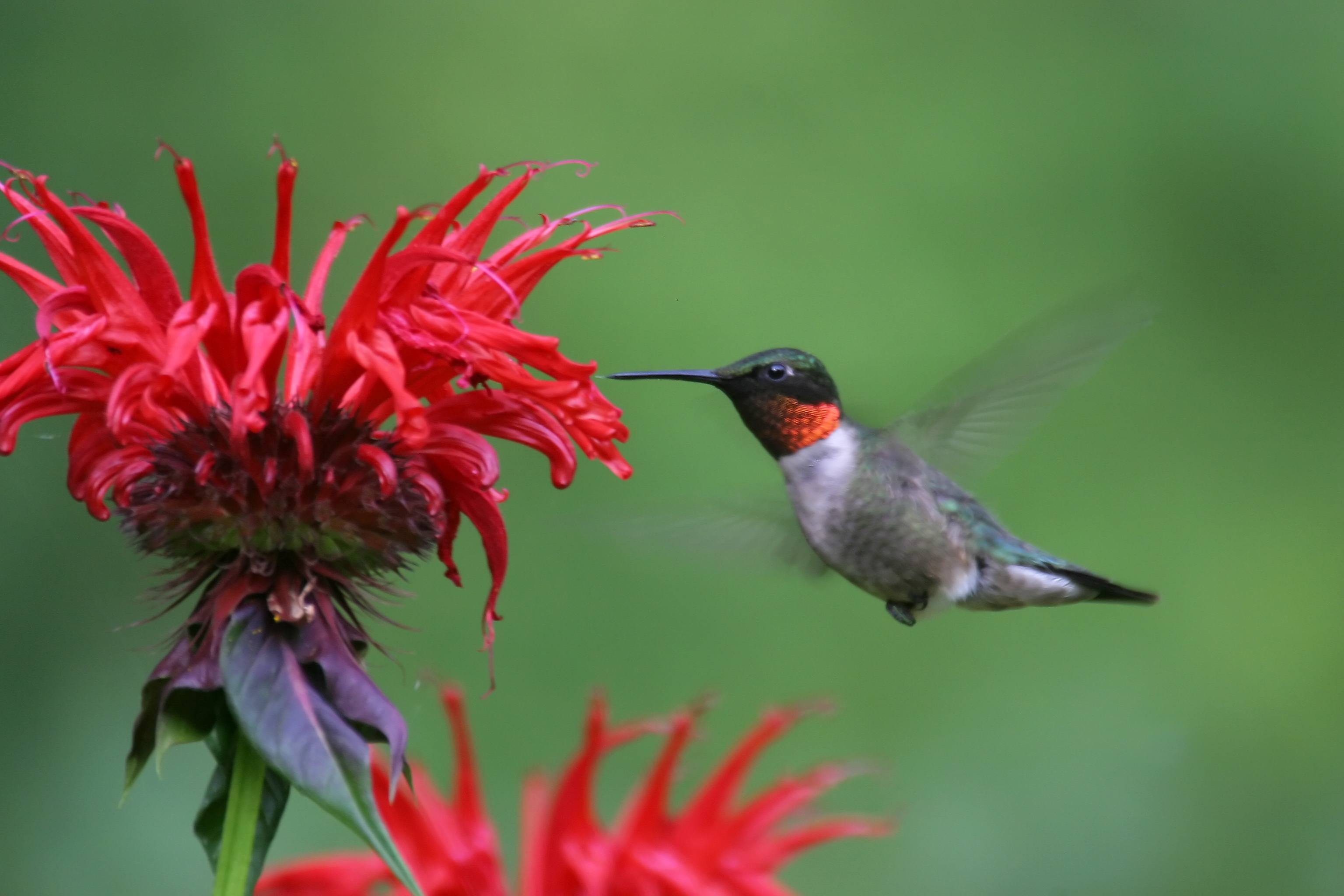
What type of symbiosis?  Hummingbirds feed on nectar from flowers.  The flowers are pollinated by hummingbirds as they move from flower to flower.
a)
commensalism
b)
mutualism
c)
parasitism
d)
predation
119.
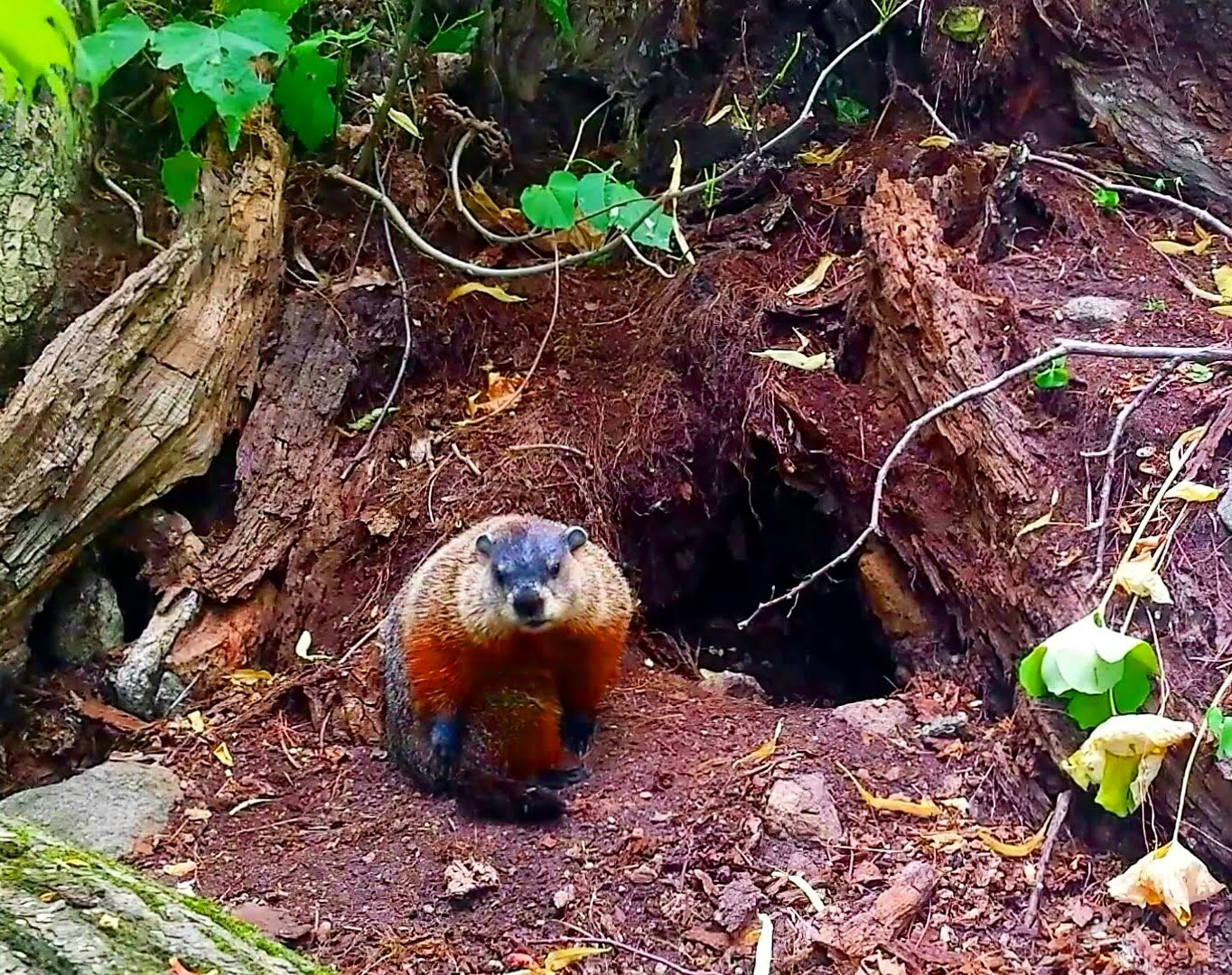
What type of symbiosis?  Skunks often live in burrows that have been dug and abandoned by woodchucks.  
a)
commensalism
b)
mutualism
c)
parasitism
d)
predation
120.
Which symbols best describe parasitism?
a)
+,+
b)
+,-
c)
+,0
d)
-,0
121.
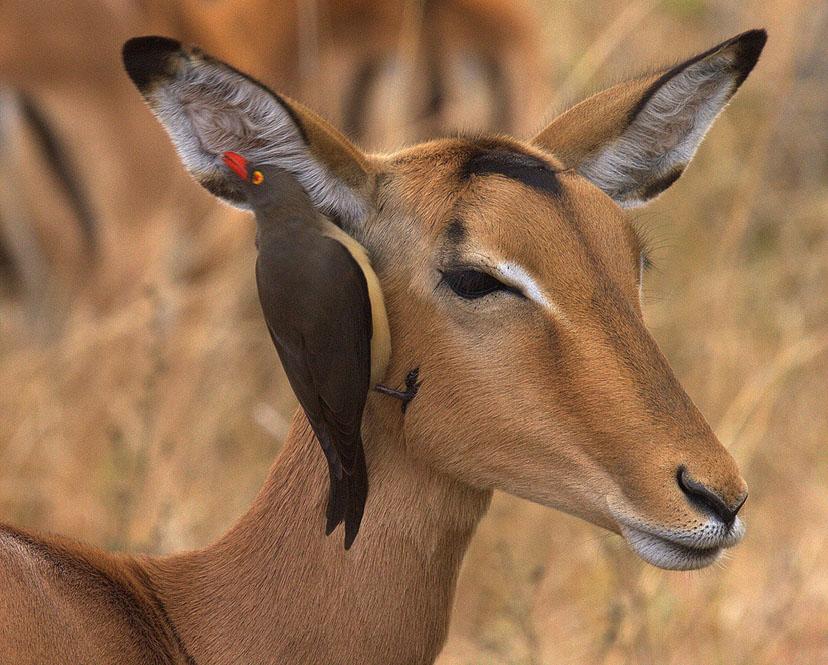
Red-billed oxpeckers are birds that often feed on parasites that infest impala.  This is an example of _______.
a)
commensalism
b)
mutualism
c)
neutralism
d)
competition
122.
A relationship between two organisms in which both organisms benefit. 
a)
Mutualism 
b)
Competition
c)
Parasitsm 
d)
Commensalism 
123.
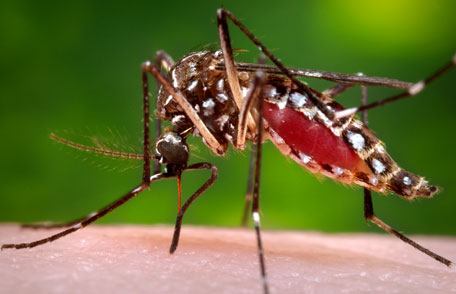
When a mosquito bites you, you are the __________ and the mosquito is the  ____________.
a)
host, hostess
b)
parasite, host
c)
host, parasite
d)
prey, predator
124.

Aphids are tiny insects that live on and eat the leaves of plants, removing vital nutrients from the plants.

a)

Predation

b)

Parasitism

c)

Commensalism

d)

Mutualism

125.
What type of symbiosis is this?
*
Hermit crabs find shells left by snails that have died and move in.
*
  Snails die and leave behind their shells.
a)
commensalism
b)
mutualism
c)
parasitism
d)
predation
126.
Which symbols best describe mutualism?
a)
+,+
b)
+,-
c)
+,0
d)
-,0
127.
Silverfish live and hunt with army ants. They share the prey.  They neither help nor harm the ants. 
a)
Mutualism 
b)
Parasitism 
c)
Commensalism 
128.
A tick and a dog have this type of relationship.
a)
mutualism
b)
commensalism
c)
neutralism
d)
parasitism
129.
Barnacles create home sites by attaching themselves to whales. This relationship neither harms nor benefits the whales. 
a)
parasitism
b)
commensalism
c)
mutualism
130.
Mistletoe extracts water and nutrients from a spruce tree. The spruce tree is harmed. 
a)
parasitism
b)
commensalism
c)
mutualism
131.
Ostriches and gazelles feed next to each other. They both watch for predators and alert each other to danger. Because their visual abilities are different, they can identify threats that the other animal would not see as readily. 
a)
parasitism
b)
commensalism
c)
mutualism
132.
Honey guide birds alert and direct badgers to bee hives. The badgers then expose the hives and feed on the honey first. Next the honey guide birds eat. Both species benefit. 
a)
parasitism
b)
commensalism
c)
mutualism
133.
A cuckoo may lay its eggs in a warbler’s nest. The cuckoo’s young will knock the warbler’s eggs out of a nest and the warbler will raise the cuckoo’s young.
a)
parasitism
b)
commensalism
c)
mutualism
134.
Oxpeckers feed on the ticks found on a rhinoceros. The oxpeckers get a meal and the rhinoceros is helped by the removal of the ticks.
a)
parasitism
b)
commensalism
c)
mutualism
135.
As bison walk through grass, insects become active and are seen and eaten by cowbirds. The relationship neither harms nor benefits the bison.
a)
parasitism
b)
commensalism
c)
mutualism
136.
A team of ecologists observed feeding patterns of several populations in the desert. The energy pyramid shown below depicts the feeding patterns the ecologist observed. Which of the following best explains the difference in the amount of available energy in the trophic levels of the desert ecosystem?
a)
There is less energy available in the producers because their tissues are less dense than those at higher trophic levels.
b)
There is more energy available in the second trophic level because less energy is needed for hunting compared to the higher trophic levels. 
c)
There is more available energy in the birds of prey because they have greater muscle mass for storing energy than organisms in lower trophic levels have. 
d)
There is less available energy in the fourth trophic level because of the loss of energy through metabolism in each of the lower trophic levels.
137.
A diagram of a food web is shown below.Which organism receives the least amount of energy from the producers?
a)
Hawk
b)
Rabbit
c)
Grasshopper
d)
Mouse
138.
The diagram shows the cycling of nutrients in an ecosystem. The removal of which of the following groups would cause an immediate decrease in the amount of energy flowing through the system? 
a)
Producers
b)
Consumers
c)
Decomposers
d)
Inorganic nutrients
139.
Complete burning of plant material returns carbon primarily to the
a)
herbivores
b)
water
c)
vegetation
d)
atmosphere
140.
Which of these organisms would most likely be found at the top of an energy pyramid? 
a)
clams - a primary consumer
b)
sardines - a primary consumer
c)
sharks - a secondary consumer
d)
 kelp - a primary producer
141.
The diagram shows the flow of carbon in a terrestrial ecosystem. Which will most likely happen if the decomposers are removed from the carbon cycle? 
a)
 The amount of carbon dioxide in the atmosphere will increase.
b)
The amount of carbon dioxide in the atmosphere will decrease.
c)
The amount of carbon dioxide used by producers will increase.
d)
The amount of carbon dioxide needed by consumers will decrease.
142.
In a process called transpiration, plants get rid of excess water through pores in the leaves called stomata. This excess water is then released into the atmosphere as part of the water cycle. Which of the following terms best describes how the released water enters the atmosphere?
a)
condensation
b)
precipitation
c)
evaporation
d)
capillary action
143.
The framework of organic molecules essential to all organisms is composed mainly of carbon atoms. Which processes are involved in the cycling of carbon within an environment? 
a)
photosynthesis and respiration
b)
evaporation and condensation
c)
transcription and translation
d)
diffusion and transpiration
144.
Which of the following statements is true about natural systems? 
a)
Consumers form the bottom levels of both the energy pyramid and the biomass pyramid.
b)
Producers are at the bottom level of both the energy pyramid and the biomass pyramid.
c)
Producers are at the bottom of the energy pyramid, but at the top of the biomass pyramid.
d)
Producers are at the bottom of the energy pyramid, but at the top of the biomass pyramid.
145.
Jill made the table below during her research on aquatic zones and living organisms.  Based on Jill’s observations, which conclusion could you draw?
a)
Organisms in the intertidal zone must be able to withstand very cold water.
b)
There are no producers in the benthic zone that rely on photosynthesis
c)
There are no producers in the benthic zone that rely on photosynthesis
d)
The warm water and abundant sunlight in the nertic zone limits the plankton population.
146.

Humans burn fossil fuels and wood, releasing carbon dioxide into the atmosphere. This carbon dioxide is then absorbed by trees for photosynthesis. These processes are contributory to which chemical cycle?

a)

The carbon cycle

b)

The water cycle

c)

The nitrogen cycle

d)

The phosphorous cycle

147.

How does the human body return carbon to the atmosphere in the carbon cycle?

a)

Waste products

b)

Photosynthesis

c)

Cellular respiration

d)

Formation of glucose

148.

In the carbon cycle, animals can release carbon back into the cycle through __________ or through __________.

a)

burning . . . photosynthesis

b)

fixation . . . decomposition

c)

decomposition . . . photosynthesis

d)

respiration . . . decomposition

e)

respiration . . . photosynthesis

149.

Which of the following is an example of human impact on the carbon cycle?

a)

The increased production of methane gases from cattle farms

b)

The burning of fossil fuels

c)

The cutting down of trees for lumber

d)

Driving automobiles

e)

All of the above

150.

If a forest fire occurs, what will happen to the carbon in the forest?

a)

It will go into the soil

b)

It will go into the atmosphere

c)

It will runoff into nearby streams and rivers

d)

It will be destroyed

151.

Where does all the carbon in organisms (living things) originate from?

a)

Earth's atmosphere

b)

Rocks

c)

Water

d)

Soil

152.

How do organisms (living things) move carbon through the carbon cycle?

a)

Respiration only

b)

Decomposition only

c)

Photosynthesis, respiration, and decomposition

d)

Decomposition and sedimentation

e)

Respiration, decomposition, sedimentation, and photosynthesis

153.

By what method is the majority of carbon moved from the lithosphere (upper part of Earth's crust) to the atmosphere?

a)

Weathering

b)

Deposition

c)

The burning of fossil fuels

d)

Respiration

154.

What kind of organism takes out the most carbon from the atmosphere?

a)

Plants

b)

Bacteria

c)

Animals

d)

Humans

155.

Which of the following are some of the major carbon stores on Earth? You can choose multiple answers

a)

The ocean

b)

The lithosphere (upper part of Earth's crust)

c)

The atmosphere

156.
How do invasive plants damage the environment?
a)
Compete with native species
b)
Change plant community
c)
Alter diversity
d)
All of these
157.

The primary cause of invasive species introduction is

a)

too much food

b)

human actions

c)

weather events

d)

asteroids

158.

Which of these is one cause of deforestation?

a)

Urbanization

b)

Buying a Christmas tree during the holidays

c)

Overbreeding birds in the wild

d)

Cutting down the tree in your backyard

159.
What is deforestation?
a)
Clearing Earth's forests on a massive scale
b)
Eating too much vegetables
c)
Going to a forest and pulling weeds
d)
Clearing the five trees in my backyard
160.

Which of the following is NOT a threat to biodiversity?

a)

Pollution

b)

Deforestation

c)

Invasive Species

d)

Ecological Succession

161.

The threat to biodiversity that occurs when the homes of different species are destroyed

a)

pollution

b)

habitat destruction

c)

overexploitation

d)

climate change

162.

When human-made chemicals and garbage find their way into nature and harm the air, soil, and water it is called

a)

pollution

b)

habitat destruction

c)

overexploitation

d)

climate change

163.

The largest threat to biodiversity is

a)

bacteria

b)

fungi

c)

humans

d)

plants

164.
Why are fossil fuels a nonrenewable resource? 
a)
they take millions of years to replace 
b)
they can be used over and over again
c)
they are used to heat and light homes 
d)
they cause air and water pollution 
165.
What does conserving resources mean?
a)
Use as much of the resources as you can
b)
Only use the resources at school
c)
Protecting the resource so it does not run out
166.
Which group includes ALL renewable resources?
a)
Coal, trees, water, oil
b)
Water, wind, sun, plants
c)
Minerals, sun, natural gas, water
167.
Identify the process shown in this diagram.
a)
Extinction
b)
Toxin Accumulation
c)
Pollution
d)
Biomagnification
168.
Most water pollution is the result of
a)
human activities.
b)
drought.
c)
volcanic eruptions.
d)
storms.
169.
What is the major cause for air pollution? 
a)
factories and cars
b)
cigarretes 
c)
deforestation
d)
oil spills
170.
Concentration of toxins in an organism as a result of ingesting other plants/animals in which the toxins are widely distributed
a)
biomagnification
b)
point-source pollution
c)
artificial eutrofication
d)
consumable pollution