
 Worksheets
Final Biology Term 2 Summer 2022
Total questions: 176
Worksheet time: 2hrs 54mins
How many chambers of the heart are there?
25
4
2
3
Arteries
carry oxygenated blood to the heart
carry oxygenated blood away from the heart
carry deoxygenated blood to the heart
carry deoxygenated blood away from the heart
Veins
carry deoxygenated blood to the heart
carry deoxygenated blood away from the heart
carry oxygenated blood to the heart
carry oxygenated blood away from the heart
Blood is made up of
Plasma
Blood cells - red and white
Platelets
All of the above
White blood cells
are mostly water and transport substances around the body
carry oxygen around the body
protect the body from disease
clot the blood


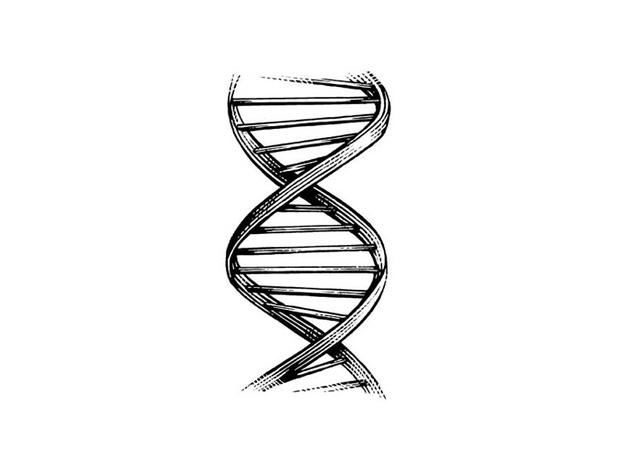

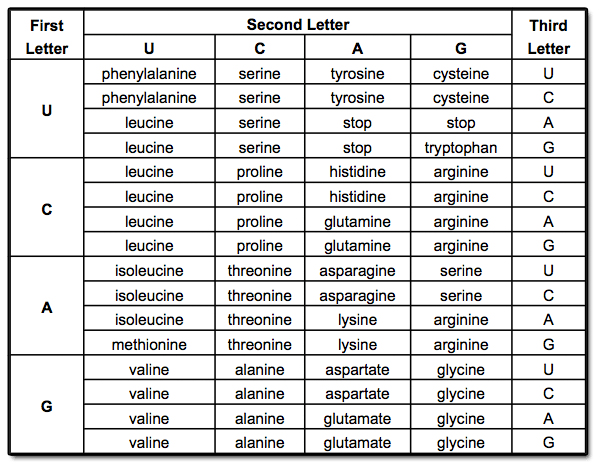
A segment of DNA that has the ability to code for a specific trait.
gene
allele
chromosome
chromatid
Humans have _______ pairs of chromosomes, for a total of _______ chromosomes.
10, 20
25, 100
23, 46
46, 92
Genetically determined characteristic. For example: eye color.
Gene
Genetics
Heredity
Trait
Genes can be turned on or off.
Gene Control
Gene Regulation
Gene Switch
Genetics
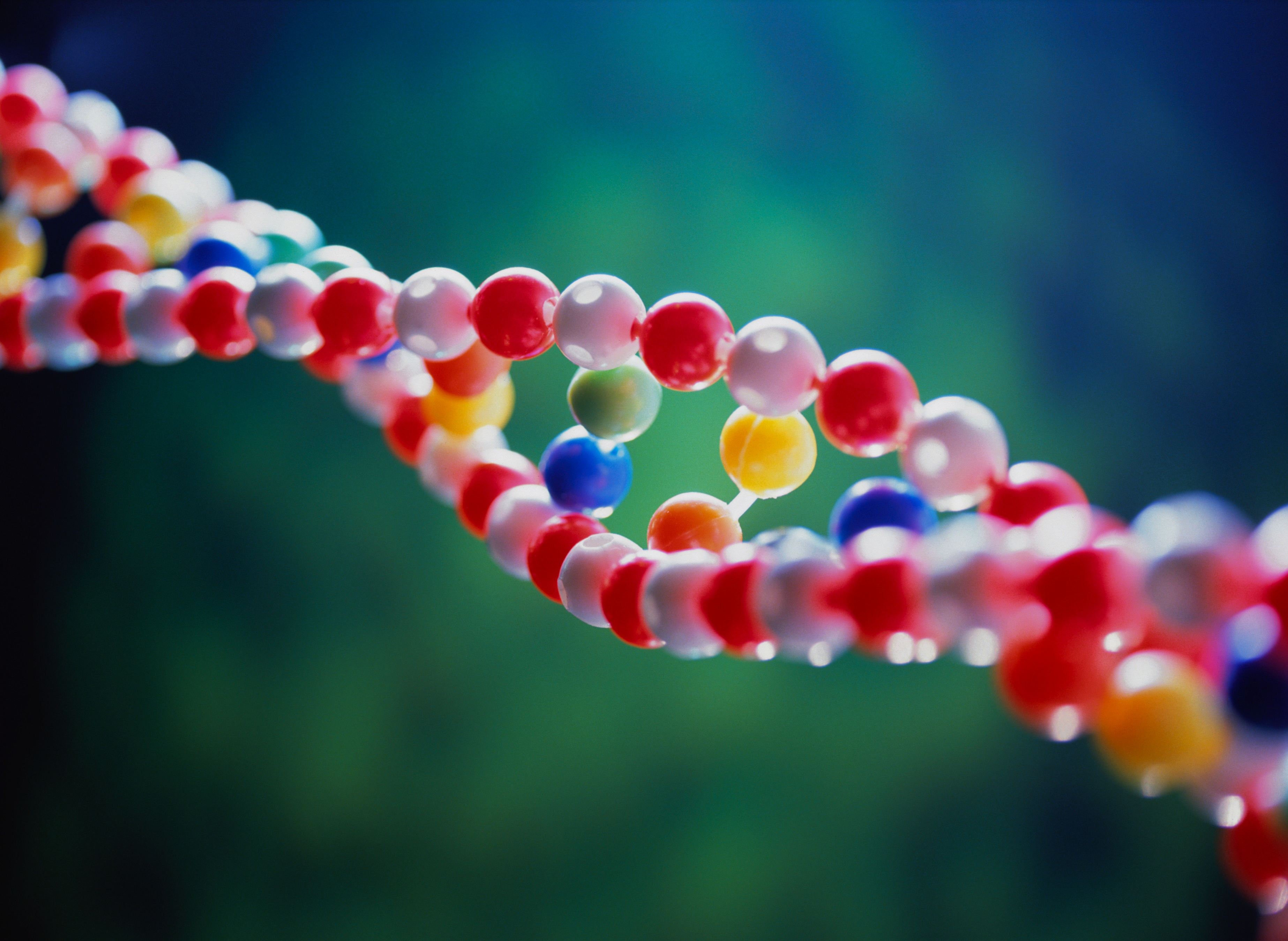
single celled organism that lacks a nucleus
bacteria
cell wall
flagellum
endospore
Cells that lack membrane bound organelles such a nucleus are called
prokaryotic
eukaryotic
Type of medicine used to kill bacterial infections in the body.
vaccine
antibiotics
pasteurization
anti-viral medications
What might happen if you didn't have bacteria in your digestive tract?
Your intestines would shut down
Your body couldn't break down certain types of food
You would never get sick
You wouldn't be able to eat vegetables
Which of the following is a true statement about bacteria?
Bacteria exist in only a few environments on earth
Bacteria can grow to extremely large sizes
Most bacteria are harmful to humans
Bacteria can be both harmful and helpful to humans
In what form does carbon return to the atmosphere after it is released from the burning of fossil fuels?
oxygen
water vapor
carbon dioxide
glucose
Where does Photosynthesis get the carbon dioxide it needs?
from photosynthesis
from the water cycle
from cellular respiration
from the nitrogen cycle
Which gas dissolves in the ocean and is used in Photosynthesis for aquatic plants?
water vapor
nitrogen gas
carbon dioxide
glucose
Which of the following statements is true about carbon and carbon dioxide?
Carbon dioxide returns to the atmosphere as carbon in Photosynthesis.
Photosynthesis returns carbon to the atmosphere as carbon dioxide.
Cellular Respiration returns carbon to the atmosphere as carbon dioxide.
none of the above
List three ways that cause carbon to be released into the atmosphere as carbon dioxide?
burning of fossil fuels
exhaling
photosynthesis
cellular respiration
How is carbon dioxide used in the ocean?
It is used in Cellular Respiration.
It is used in Photosynthesis.
it is as food for the fish.
None of the above.
Where does nitrogen goes once it is in the soil?
stems of plants
leaves of plants
roots of plants
flowers of plants
What lives in the roots of plants that fix the nitrogen so that plants can use the nitrogen?
bacteria
viruses
malaria
protists
Organisms trying to get the same resource.
Mutualism
Predation
Symbiosis
Competition
A type of symbiosis where one organism benefits, while the other organism is harmed.
Mutualism
Commensalism
Parasitism
Amensalism
It captures and kills another organism for food.
Predator
Prey
Decomposer
Scavenger
A type of symbiosis where both organisms benefit.
Commensalism
Mutualism
Predation
Parasitism

Examine the predator-prey graph. The top (higher) line represents the rabbit population, and the bottom (lower) line represents the wolf population.
What happens after the prey population increases?
The predator population decreases because it has a plentiful food source.
The predator population increases because it has a plentiful food source.
The predator population decreases because it has a food shortage.
The predator population increases because it has a food shortage.


What do the circles represent?
Male
Female

Examine the parents in generation I. How many children do they have?
3
5
6
7

Examine the parents in generation I. How many great grandchildren do they have?
0
2
3
5


In the punnett square below, what belongs in the missing square

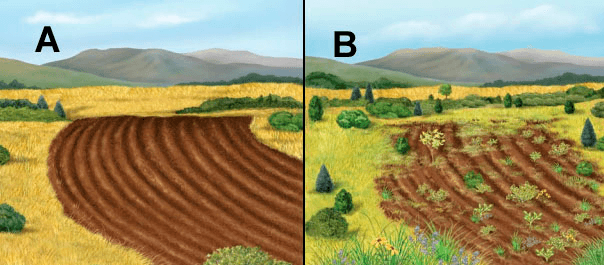
What type of succession occurs in an area that has no soil, for example a lava flow.
Primary
Secondary
Tertiary
Quaternary
What type of succession occurs in an area that once had plants and animals, then there was a disturbance (like a forest fire) and now only has soil?
Primary
Secondary
Tertiary
Quaternary

Consider identical twins. How can one twin develop a genetic related disease while the other does not?
Luck
Epigenetic Factors
Their genes are not identical
One likes Rock music and the other likes Country Western.
How does methylation do DNA transcription?
It affects how and where the DNA is decoded
it changes the Gene coding so the twin is different.
it causes mutations in DNA
It changes the RNA in the Mitochondria
How is methylation changed or added in the DNA? Select all that are true.
Stress during pregnancy
Smoking and drug use
Eating certain types of food
Trauma any time in life
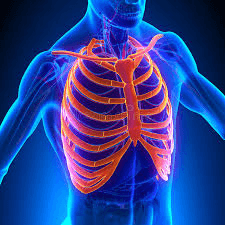
What bone is highlighted?
Ribs
Vertebrae
Clavicle
Femur

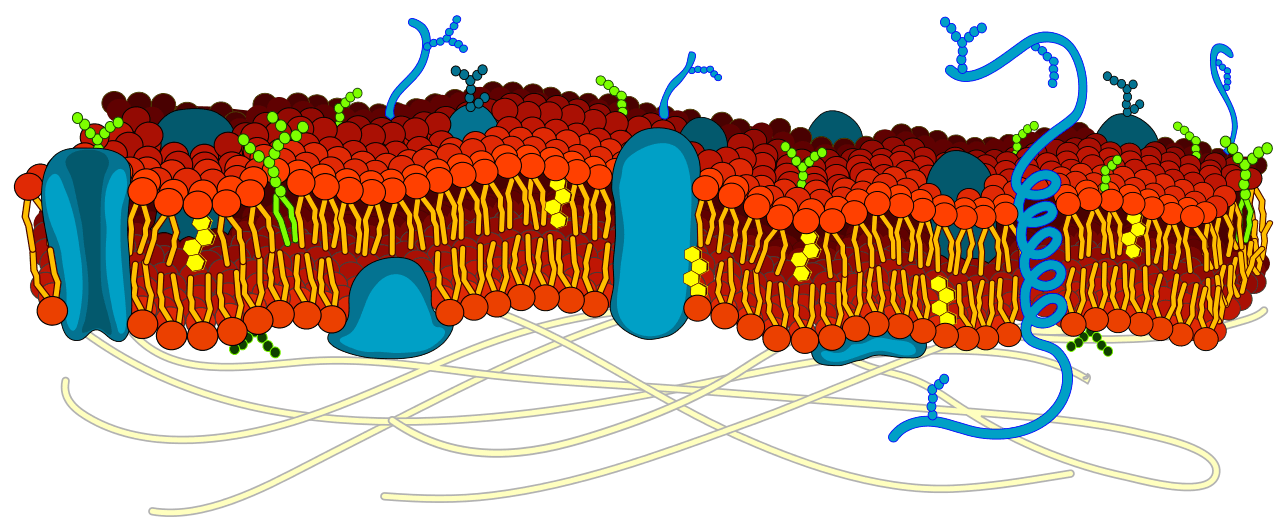
What is the function of the organelle depicted in the photo?
To dispose of waste in the cell.
To capture sunlight and convert it into glucose for the cell.
To release energy into the cell.
To control what leaves and enters the cell.
Which photo shows the mitochondrion of the cell?


The purple organelle in photo depicts which organelle?
Nucleus
Endoplasmic Reticulum
Lysosome
Ribosome

Identify the structure that is indicated by the arrow in the image.
cell wall
central vacuole
chloroplast
cell membrane
Which organelle makes proteins?
Mitochondria
Chloroplast
Ribosome
Lysosome

Which organelle produces the energy a cell needs to carry out its function
Mitochondria
Golgi Bodies
Cytoplasm
Nucleus

what is the function of ribosomes
to assemble amino acids to create proteins
to pack proteins
to clean proteins
Microscopic sacs in the lungs are called:
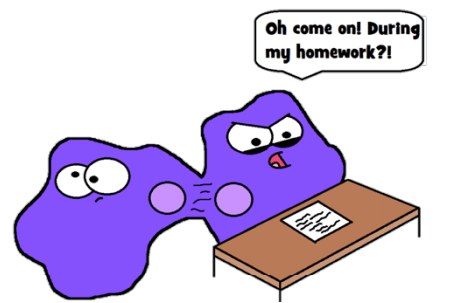
To understand DNA replication, we need to understand the “why.” Why does DNA need to replicate before cells divide?
So that each cell has a full copy of DNA
So that each cell has half a copy of DNA
So that each cell has a no copies of DNA
So that each cell has a different copies of DNA
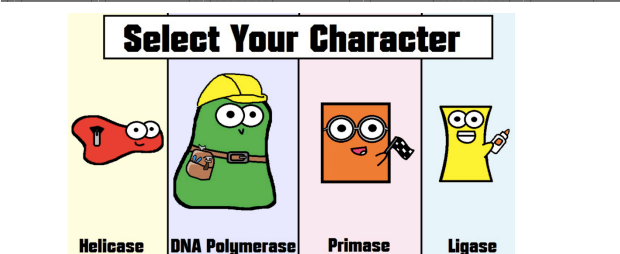
What does the enzyme DNA Polymerase do?
unzips the 2-strand DNA into single strand
builds a new set of DNA
shows way for Polymerase, creates primer
glues fragments of DNA together
What are the structures of the skeletal system?
bones, cartilage, ligaments, joints
support, protection, movement, storage, blood cell production
skeletal muscle, smooth muscle, cardiac muscle
skin, hair, nails, sweat glands, oil glands
What are the structures of the Muscular System?
bones, cartilage, ligaments, joints
support, protection, movement, storage, blood cell production
skeletal muscle, smooth muscle, cardiac muscle
skin, hair, nails, sweat glands, oil glands
What are the functions of the Skeletal System?
bones, cartilage, ligaments, joints
support, protection, movement, storage, blood cell production
produce movement, maintain posture, stabilize joints, generate heat
protection, sensation (feeling), temperature regulation, vitamin d production, excretion (remove wastes)
What are the functions of the Muscular System?
skeletal muscle, smooth muscle, cardiac muscle
support, protection, movement, storage, blood cell production
protection, sensation (feeling), temperature regulation, vitamin d production, excretion (remove wastes)
produce movement, maintain posture, stabilize joints, generate heat
What are the functions of the Integumentary System?
skin, hair, nails, sweat glands, oil glands
produce movement, maintain posture, stabilize joints, generate heat
protection, sensation (feeling), temperature regulation, vitamin d production, excretion (remove wastes)
support, protection, movement, storage, blood cell production
What are the structures of the Integumentary System?
bones, cartilage, ligaments, joints
skeletal muscle, smooth muscle, cardiac muscle
System skin, hair, nails, sweat glands, oil glands
protection, sensation (feeling), temperature regulation, vitamin d production, excretion (remove wastes)
What are the three types of muscles?
Cardiac, Smooth, Skeletal
smooth, rough, muscular
Red, White, and blue
Cardiac, Smooth, Rough
Which type of muscle is voluntary (you can control them)?
Smooth muscle
Skeletal muscle
Cardiac muscle
All the above
Which type of muscles are involuntary (you can't control them)?
Cardiac and Smooth
Cardiac and Skeletal
Smooth and Skeletal
All the above
Which of these is NOT a part of the endomembrane system?
Nuclear membrane
Endoplasmic reticulum
Golgi apparatus
Mitochondria
Which organelle acts like a cellular stomach and degrades things?
Lysosome
Mitochondria
Vacuole
Vesicle
What structures do all cells contain
Chloroplast, Mitochondria, and Cell Membrane
Vacuoles, Nucleus, and Mitochondria
Cytoplasm, Cell Membrane, and Ribosomes
Cell Membrane, Ribosomes, and Cell Wall
A proteins tertiary structure (how they are folded) is created on the inside of the ______

What is one of the main functions of this nucleus?
Protein Synthesis
Lipid Synthesis
Digestion (breaking) of bacteria and old organelles
Making mRNA from the DNA to code for proteins
Is ER and Golgi body in both plant and animal cell?
Only animal
Only plant
Both
Nowhere
Bacteria and archaea are organisms in Kingdom
Protista
Monera
Fungi
Plantae
Animalia

the group of Archaea that survive in the intestine of these ruminants is ..... (Hint: They produce methane.)
Methanogens
Halophiles
Thermoacidophiles
What type of cell is bacteria
Prokaryotic
Eukaryotic
Prokaryotic cells are
cells lack organized nucleus and membrane-bound organelles
Cells that have a nucleus with cell wall and membrane
Cells that are free of ribosomes and DNA
Cells that do not have a membrane or flagellum
How do Monera reproduce?
simple fission and endospores
through photosynthesis
Through the fagilla
Wth archaebacteria
What word describes a trait that helps an organism survive in its environment?
natural selection
mutation
camouflage
adaptation
If a new trait DOES help an organism survive, what may happen to it?
It dies and its DNA is not passed on
It survives and its DNA is passed on
It changes its traits to adapt and survive
If a new trait DOES NOT help an organism survive, what may happen to it?
It dies and its DNA is not passed on
It survives and its DNA is passed on
It changes its traits to adapt and survive
What happens to new traits that HELP organisms survive over time?
They become MORE COMMON
They become LESS COMMON
They are EQUALLY COMMON
Mutations are a change in what?
DNA
tRNA
protein
rRNA
The more genetic variation a population has,
the more likely it is for some individuals to
evolve
migrate
survive
mutate
Mutations are important because they bring about
death of the organism in which they develop
genetic variation needed for a population to evolve
benefits for the individual, not for the population
changes in genotype, but not phenotype
Why is competition important for natural selection?
It shows which variations are more successful, allowing the organisms with those variations to survive.
It causes organisms, regardless of which traits they have, to die out, reducing the population size.
It causes organisms to get stronger due to having to outcompete other species.
Competition is not important for natural selection.
What is genetic drift?
the changes in allele frequencies (genes) ,in a population, happening due to random events/circumstances.
It is an example of primary succession
Genetic drift are different organisms in a population due to inherited traits from their parents
It is part of symbiotic relationships such as mutualism, commensalism, parasitism
Mutations are SOMETIMES helpful to the organism.
true
false
Genetic drift is driven by chance, not Natural Selection.
true
false

Chromosomes condense
Interphase
Prophase
Metaphase
Anaphase
Telophase
Cells spend 90% of their time in this phase
Interphase
Prophase
Metaphase
Anaphase
Telophase
Splitting occurs and two cells form
Interphase
Mitosis
Cytokinesis
Chromosomes arrive at opposite ends of the cell
Interphase
Prophase
Metaphase
Anaphase
Telophase
Chromosomes line up along the middle of the cell
Interphase
Prophase
Metaphase
Anaphase
Telophase
DNA replication occurs
Interphase
Prophase
Metaphase
Anaphase
Telophase
The sister chromatids separate, and begin to move towards the poles of the cell.
Interphase
Prophase
Metaphase
Anaphase
Telophase
The nuclear membrane disassembles (breaks down)
Interphase
Prophase
Metaphase
Anaphase
Telophase
A nuclear membrane forms around each group of chromosomes
Interphase
Prophase
Metaphase
Anaphase
Telophase
Part of the chromosome where sister chromatids are held together.
Spindle fibers
Centromere
Centrioles
Telomere
Meiosis is used to produce body cells, and mitosis is used to make sperm and egg.
True
False
___________________ is the result of uncontrolled cell growth.
Down syndrome
Diabetes
Cancer
Sick cell anemia


Muscles are needed for what?
movement
decoration
pump blood
no one knows
Skeletal muscles are voluntary.
true
false
Where is cardiac muscle located?
lungs
heart
liver
stomach
Smooth muscle is located where?
heart
bones
toes
internal organs
Muscles work in groups of
1
4
3
2

What muscle is the arrow pointing toward?
biceps
traps
pecs
triceps
What is the correct equation for cellular respiration?
6O2 + C6H12O6 + Energy → 6CO2 + 6H2O
6O2 + C6H12O6 → 6CO2 + 6H2O + Energy
6CO2 + 6H2O + Energy → 6O2 + C6H12O6
6CO2 + 6H2O → 6O2 + C6H12O6 + Energy
Where does cellular respiration take place?
chloroplast
mitochondria
ribosomes
nucleus
Where does photosynthesis take place?
mitochondria
chloroplast
ribosomes
nucleus
If there is an increase of oxygen in your body what will happen to cellular respiration?
It will increase
It will decrease
Is cellular respiration done by all organisms? Even Plants?
Yes
No

Autotrophs gain their energy through what process?
fermentation
photosynthesis
respiration
calculation
Which of the following processes is most efficient (produces most ATP per molecule if glucose oxidized)
aerobic respiration
anaerobic respiration
alcoholic fermentation
lactic acid fermentation
In yeast cells,
lactic acid is produced during anaerobic respiration
lactic acid is produced by glycolysis
alcohol is produced during KREBS cycle
alcohol is produced after glycolysis
Oxygen and Sugar
A Halophile, which can handle extremely salty environments, would best be sorted into which domain?
Bacteria
Eukarya
Archaea
E.coli is a single celled organism that you could find on surfaces in your home and is also a prokaryote would best be sorted into which Domain?
Eukarya
Archaea
Bacteria
A mushroom would best be classified as a...
prokaryote
eukaryote
In Binomial Nomenclature, which two classifications are used to create an organism's name? (select two)
Genus
Species
Family
Order
Class
Members of Domain Bacteria are prokaryotic.
True
False
Humans belong to Domain Eukarya because they have a eukaryotic cell.
True
False
All fungi are heterotrophs, and most of them have a cell wall made of chitin.
True
False
All animals are heterotrophic and unicellular.
True
False
All plants are multicellular autotrophs.
True
False
The following are true about nicotine...
it is highly addictive.
it can increase the risk of other types of addiction later in life.
it cannot cause death
it can slow brain development.
The e-cigarette aerosol that users breathe from the device can contain...
substances that can improve concentration.
cancer causing chemicals.
vitamins and minerals.
carbohydrates.
The aerosol in e-cigs contains flavorings, such as diacetyl, a chemical linked to...
muscle cramps.
excessive sweating.
a serious lung disease.
beautiful, glowing skin.
E-cigs are just as addictive as traditional ones.
true
false
From a genetic viewpoint, where are we all descended from?
an entire tribe in southern Africa
A scientific Adam and Eve in Central AFrica.
Many different tribes from throughout the world.
a single light skinned woman in India.
Which statements are true?
We are all from a single man and woman in central Africa.
Some people moved out of Africa, headed east and then headed south to Australia
Some moved out of Europe and headed toward south America.
Humans traveled from Africa to Asia and then on to North America.
Our DNAs are __________ percent the same, regardless of our race.
1%
10%
90%
99%
A small amount of DNA codes for ......
The many differences in the people look.
The wide diversity in human culture.
The many languages that are spoken in the world.
All the things we have in common as a human species.
Forensic Science is
microscopes used for vapor
the applications of testing
applying principles of science to the law
the application of evidence to testing
Locard's Exchange Principle states
every contact leaves trace evidence
every criminal leaves shoe prints
every criminal leaves fingerprints
every criminal will be punished
Mitosis makes sure that all daughter cells are _____.
genetically identical, diploid
genetically identical, haploid
genetically diverse, diploid
genetically diverse, haploid
Type of medicine used to slow down or stop viral infections in the body.
vaccine
antibiotics
pasteurization
anti-viral medications

