
 Worksheets
Sc. 7 - Particle Model of Matter/Expansion and Contraction
Total questions: 38
Worksheet time: 3hrs 10mins

All matter.
All types of energy.
Only liquids.
Solids and gases.

Which of the following is not a state of matter?
Energy
Gas
Liquid
Solid
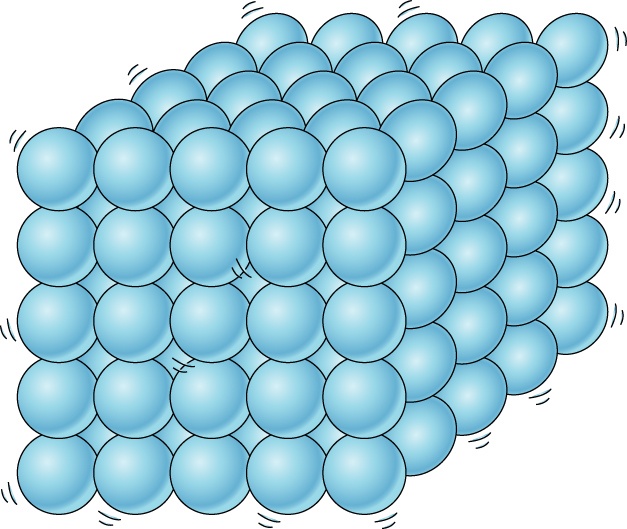
Which description best matches the diagram?
Particles are closely packed and can't move a lot. Mostly vibrate in place.
Particles are close together but can move a little.
Particles have lots of energy and can move around freely.
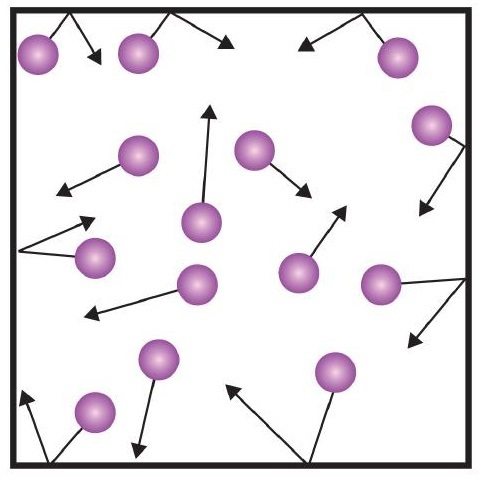
Which description best matches this diagram?
Particles are closely packed and can't move a lot.
Particles are close together but can move a little.
Particles have lots of energy and can move around freely.
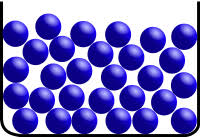
Which description best matches this diagram?
Particles are closely packed and can't move a lot.
Particles are close together but can move a little.
Particles have lots of energy and can move around freely.
What are the states of matter?
solid, liquid, and juice
solid and liquid
solid and gas
solid, liquid, and gas
Which form of matter does not take the shape of its container?
liquid
gas
solid
air
Move faster and farther apart.
Move slower and farther apart.
Move faster and closer together.
Move slower and closer together.

Volume will increase.
Volume will decrease.
Volume will not change.
Removing HEAT from matter (cooling it down) causes its particles to:
Move faster and farther apart.
Move slower and farther apart.
Move faster and closer together.
Move slower and closer together.

Which state of matter is the diagram most likely showing? How were you able to tell?

Which state of matter is the diagram most likely showing? How were you able to tell?

Which state of matter is the diagram most likely showing? How were you able to tell?
As particles are exposed to warmer temperatures they __________
speed up.
slow down.
stay the same.
vibrate at fixed positions.
speed up.
slow down.
stay the same.
become ions.

Number 2 represents a ________
solid
liquid
gas
There are two answers for this.
Particles in a _________ take the shape of the container.
solid
liquid
gas
plasma
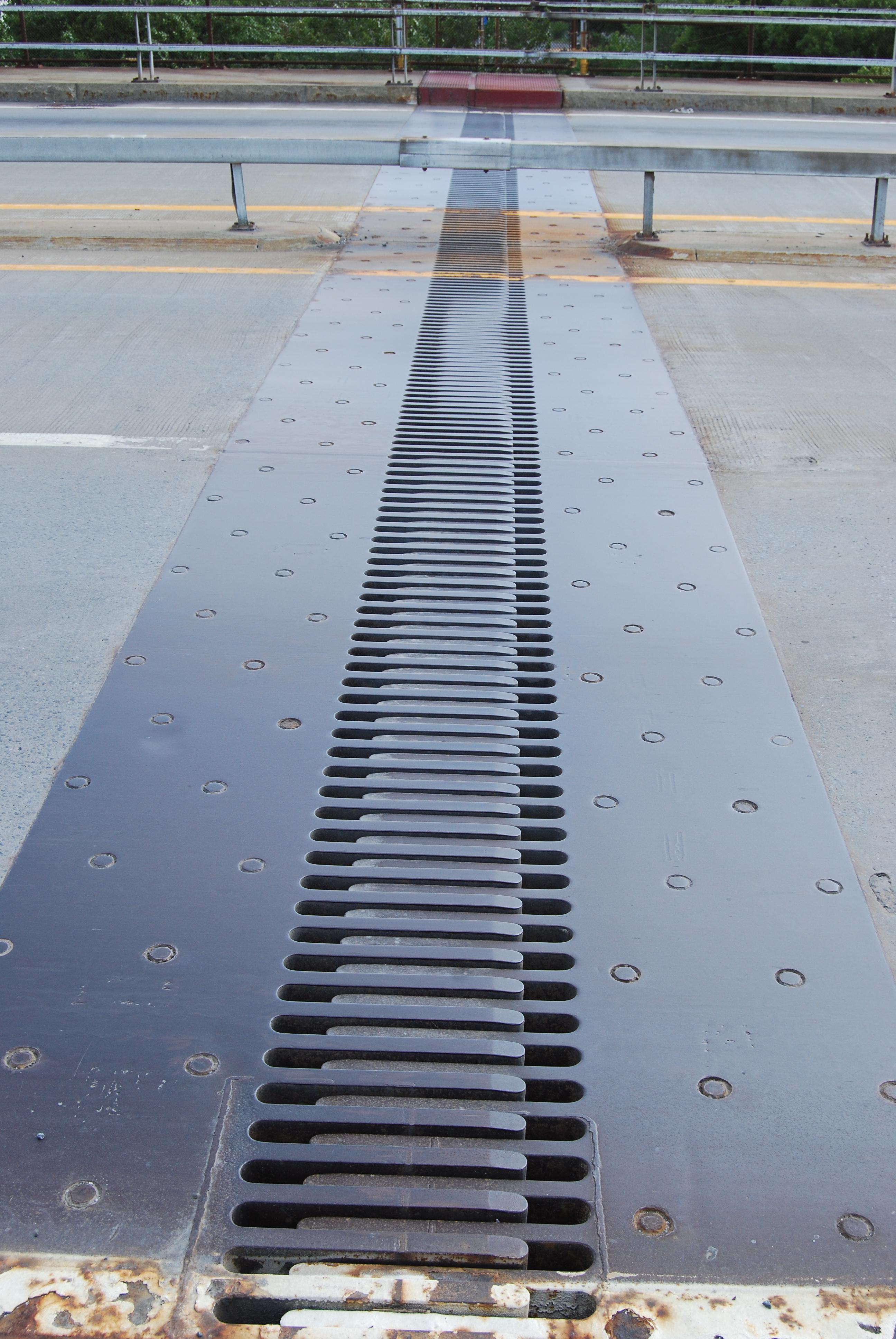
Look at the diagram. Why do you think there are gaps between the metal connectors on the bridge?
To allow water flow during a rain storm.
To allow air flow during a wind storm.
To allow the bridge to expand when the temperature of the surrounding concrete increases.

Look at the diagram. What causes the bottle cap to pop off?
Too much water in the bottle.
Too much air in the bottle.
The air in the bottle expanded when it gained heat.

Electric cables are hung __________ between poles to allow the wires to contract when the temperature ___________.
tightly , increases
loosely , decreases
loosely , increases

The diagram shows an iron ball before and after being heated.
Why can the iron ball not fit through the ring after heating?
The ring contracts because it got colder.
The iron ball expanded after gaining heat.
The iron ball contracted after being cooled.

Observe the diagram. The coloured water level will ___________ after being put in the hot water because it expanded.
fall
rise
remain the same

9. Based on the diagram, the water level falls because the air _________ heat.
loses
gains
3. If the particles of an object are moving or vibrating fast, the temperature would be...
Hot
Cold
Unknown
4. If the particles of an object are moving or vibrating slow, the object would feel...
Cold
Hot
Unknown
Which of the following properly describes contraction?
A decrease in a material's volume when its temperature decreases.
The movement of fluids in a cycle because of convection.
An increase in a material's volume when its temperature increases.
Which of the following properly describes expansion?
The transfer of thermal energy between materials by the collisions of particles.
Is a decrease in a material's volume when temperature decreases.
An increase in a material's volume when temperature increases.

What is happening to the fluid inside the thermometer in this image?
expansion
contraction
vaporization
boiling
When temperature increases, distance between molecules ______________.
decreases
increases
stays the same

When temperature decreases, distance between molecules ____________.
increases
decreases
stays the same
All matter is made of (a) .
The particles are always (a) .
The particles have (a) between them.

