
Font size
 Worksheets
Classification and Adaptation 1
Total questions: 109
Worksheet time: 4hrs 38mins
Which organisms can you find living in extreme places such as salt lakes, hot springs and deep sea trenches
bacteria
Plantae
Archea
Protists
Physiological

Why might some plants that grow on the shady rain forest floor have large leaves?

Animals that stay warm in cold habitats with thick fur body coverings is an example of a ___________ adaptation.
behavioral
physiological
learned
structural
The xylem tubes in vascular plants transports...
Water from the roots to stems and leaves
Sugar from the roots to stems and leaves
Water from leaves and stems down the plant
Sugar from leaves and stems down the plant

Skunk spray is what type of adaptation?
Structural
Behavioral
Physiological
Physical
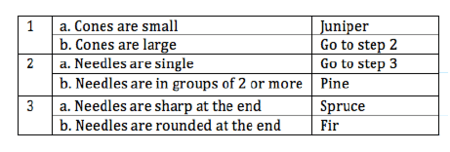
Which of the following is a non-flowering plant?
Tree
Daffodil
Grass
Fern
Which of following animals in an invertebrate?
Snake
Dog
Insect
Fish
What is the correct order of the taxa, from those that contain the least closely related organisms to those which are most similar?
Kingdom
Class
Phylum
Order
Family
Genus
species
Kingdom
Phylum
Class
Family
Order
Genus
species
Kingdom
Phylum
Class
Order
Family
species
Genus
Kingdom
Phylum
Class
Order
Family
Genus
species
How many different kingdoms are there?
3
4
5
6

If the chimpanzee has the classification shown in the diagram, what is its scientific name?
Primates Hominidae
Pan Troglodytes
Pan troglodytes
Hominidae Pan
Which of the following is not a morphological adaptation?
White fur for camouflage against the snow
Thick fur for insulation
Huddling
Large feet to prevent sinking in the snow
What is the competition between individuals of the same species called?
Intraspecific
Interspecific
What do animals compete for?
Food
Territory
Light
Food
Nutrients
Space
Light
Food
Mates
Territory
Food
Territory
Light
Mates
What do plants compete for?
Light
Food
Space
Water
Light
Nutrients
Space
Water
Light
Mates
Nutrients
Water
Light
Mates
Space
Water
Population size will be affected by how well organisms compete for resources and also by predation, pollution and .............................
Strength
Ability to camouflage
Disease
Speed of movement

Canis lupus, the scientific name for a wolf, is in which genus?
Canis
lupus
Animalia
Mammalia

Which category of classification has the largest variety of organisms?
genus
phylum
species
kingdom

An organism identified with binomial nomenclature includes which two taxa?
class and order
family and genus
genus and species
kingdom and phylum

Carl Linnaeus developed a binomial classification system for living things. Why is this contribution important?
because it created new species for identification
because it created specific scientific names for living things
because it created the taxonomy system as it is known today
because it created common names for species with existing scientific names

What is the order of the taxonomic levels from least specific to most specific?
Kingdom, Family, Species, Order, Class, Phylum, Genus
Kingdom, Phylum, Class, Order, Family, Genus, Species
Species, Order, Kingdom, Family, Genus, Phylum, Class
Species, Genus, Family, Order, Class, Phylum, Kingdom

According to the Linnaean Classification of organisms - if two organisms are in the same class then they must also be in the same:
kingdom
genus
family
phylum
Organisms in the plant kingdom are unique because....
they are unicellular.
they lack a nucleus.
they lack a cell wall.
they produce their own food.
Scientists classify organisms by....
giving each several kingdom names.
placing them in groups with organisms with similar characteristics.
the type of brain the organism has.
determining if the organism is helpful or hurtful.


Which of the following adaptations helps birds fly?
They have more fat than most animals
They have hollow bones that make them lighter
They have smaller blood vessels
They have larger stomachs
Penguins swim instead of fly, so they have solid bones which make it easier for a penguin to-
dive deep under water
Detect fish under water
Stay warm under water
Hold its breath under water
Adaptations are characteristics that help an organism to survive in its environment and/or reproduce.
True
False
Adaptations are only behavioral and is involved with survival in an environment.
True
False
Which of the following is a behavioral adapation?
Fur insulation
Body Shape
Color
Hiberation
Which of the following is a behavioral adapation?
Fur insulation
Body Shape
Color
Migration
Which of the following is a behavioral adapation?
Fur insulation
Body Shape
Color
Caching
Which of the following is a physical adaptation?
Fur insulation
Hibernation
Migration
Caching
Which of the following is a physical adaptation?
Color
Hibernation
Migration
Caching
Which of the following is a physical adaptation?
Body Shape
Hibernation
Migration
Caching
Many animals have unique adaptations to protect them from predators, or to help to get food.
True
False
Protection can be both a physical and a behavioral adaptation.
True
False
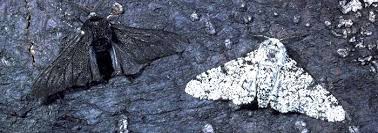
Students construct an obstacle course and watch a hamster successfully navigate through it. This is an example of-
an inherited trait
a learned behavior
a structure
a function
which is an inherited trait?
speaking spanish
bird saying hello
cat using a litter box
spines on a cactus
Which is not an example of an otter's inherited traits?
insulated fur for warmth
webbed paws to help swim
sharp claws for capturing pray
rolling on the ground to dry fur
which is the learned behavior?
shape of beak
monkey riding bicycle
horse eating hay
snake eating mice
What is the difference between learned behavior and inherited trait?
Learned behaviors are taught, and inherited traits are passed down from parent to child.
Learned behaviors take years to acquire, and inherited traits take only a short time.
Learned behavior are difficult to accomplish, and inherited traits are easy to accomplish.
Learned behaviors are passed down from parent to child, and inherited traits are taught to children.
Which of the following is an inherited trait?
swimming
eye color
skateboarding
callused fingers
What trait does a parent cactus pass down to its offspring?
weather conditions
needle shape
location
age
The shape of a bird's beak is a body structure that the bird has at birth. This body structure is a/an-
learned trait
special trait
inherited trait
developed trait
which is not and inherited trait?
number of limbs on a prairie chicken
number of limbs on a dogwood tree
number of limbs on a jersey cow
number of limbs on a tree frog
Desert plants have special structures that help them collect and store water. These structures are most beneficial in-
wet climates
dry climates
windy climates
humid climates

Tundra animals have structures such as thick coats that allow them survive in the vast tundra. Why does the musk ox have a thick coat of fur?
to insulate(cover) from the cold tundra wind and water
to blend in with the snow and water
for protection against predators
to attract a mate during the winter season
All of the following are reasons why it is important to care for the environment EXCEPT-
to support life
to neglect wildlife
to prevent extinction
to protect animals
Tundra is a flat treeless Arctic region with a frozen subsoil. Tundra plants are often dark in color because dark colors absorb more heat from the sun. This helps them survive in the tundra's-
blazing atmosphere
dramatic climate changes
frigid temperatures
changing land surface

All of the following animals are supported by the marsh EXPECT-
frogs
whales
salamanders
fish
Which inhabitant of he forest is most dependent on the decaying (decomposer) plant and animal life of the forest?
reptiles
fungi
mammals
fish


What is binomial nomenclature?
system of 3 names
system of 2 names
the names of the kingdoms
the levels of classification
Who created the 2 name system?
Linnaeus
Edison
Darwin
Einstein
The 3 domains are Eukarya, Archaea, and
Fungi
Plantae
Animalia
Bacteria
What two levels make up a scientific name?
genus and order
genus and species
domain and kingdom
family and genus
What level comes after order?
genus
kingdom
family
species
What level comes before class?
phylum
domain
order
family
The _________ levels that 2 organisms share, the more similar they are to each other.
fewer
more
The 4 eukaryote kingdoms are Animals, Plants, Fungi, and
Bacteria
Archaea
Humans
Protists
Which of these has a backbone?
jellyfish
squid
worm
snake
All living things are made of
cells
prokaryotes
autotrophs
heterotrophs
Scientists place organisms into domains and kingdoms based on cell type, number of cells, and
if they are able to grow.
if they drink water.
if they have the ability to make food.
if they are able to move.
Where are bacteria found
in very few places
only in the air
all over the place
only in cow intestines
Which of these is a fungus?
bacteria
mushroom
algae
seaweed
What is the study of classification?
taxonomy
biology
botany
microbiology
What is a prokaryote?
an organism that has nuclei in its cells
an autotroph
a heterotroph
an organism without a nucleus in its cells
Which of these is a eukaryote?
bacteria living in your digestive system
archaea
bacteria living in food
mold
A heterotroph
cannot make its own food.
is able to make its food.
Which of these is an autotroph?
mushroom
rose
seal
tiger
What is the correct order of classification?family
kingdom, domain, phylum, class, order, family, genus, species
domain, kingdom, phylum, class, order, family, genus, species
domain, phylum, class, order, kingdom, family, genus, species
species, genus, family, phylum, order, class, domain, kingdom
What is the proper way to write a scientific name?
Symbion pandora
Symbion Pandora
symbion Pandora
symbion pandora


