
 Worksheets
Circulatory Respiratory Nervous
Total questions: 111
Worksheet time: 2hrs 43mins
Name
Class
Date
1.
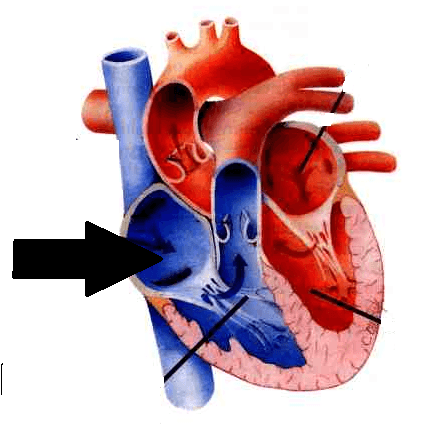
Identify
a)
Left atrium
b)
Right atrium
c)
Left ventricle
d)
Right ventricle
2.
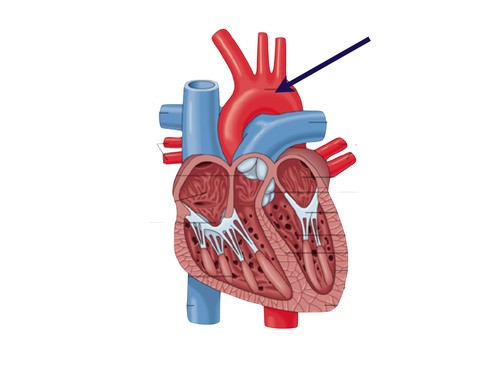
Identify
a)
Pulmonary veins
b)
Pulmonary artery
c)
Aorta
d)
Vena cava
3.
The heart has ___ chambers.
a)
1
b)
2
c)
3
d)
4
4.
This chamber of the heart RECEIVES blood returning from the body
a)
Right Atrium
b)
Right Ventricle
c)
Left Atrium
d)
Left Ventricle
5.
Which chambers of the heart are the thickest and strongest?
a)
Atria
b)
Ventricles
c)
Valves
d)
Aorta
6.
The aorta is the largest artery in the body. The blood leaving the aorta is full of?
a)
Oxygen
b)
Carbon Dioxide
c)
White blood Cells
d)
Potassium
7.
Thin-walled vessels that allow for the exchange of O2 , CO2, nutrients and wastes between blood cells or air sacs in the lungs
a)
Arteries
b)
Veins
c)
Capillaries
8.

What does Deoxygenated mean?
a)
Oxygen-rich
b)
Blood flow
c)
Oxygen-poor
d)
Water Flow
9.

A flap of tissue that prevents blood from flowing backward
a)
Aorta
b)
Atrium
c)
Septum
d)
Valve
10.
Compared to arteries, veins
a)
have a pleated endothelium.
b)
have thinner walls.
c)
have more smooth muscle in their tunica media.
d)
hold their shape better when cut.
11.
Carry blood away from heart; mostly oxygen-rich
a)
Arteries
b)
Veins
c)
Capillaries
12.
Which type of blood vessel has the thickest layer of smooth muscle in its walls?
a)
Arteries
b)
Veins
c)
Capillaries
d)
Ventricles
13.
What is pulmonary circulation?
a)
Blood travelling to and from the lungs
b)
Blood travelling to and from the body
c)
A blood clot in the lungs
d)
The vessel that brings blood to the lungs
14.
Blood circulation from the heart to the rest of the body is called
a)
Full body
b)
Systemic
c)
pulmonary
d)
heart to lung
15.
Which is the correct definition of the Circulatory system?
a)
The system fights disease so the body stays healthy.
b)
The system that circulates blood and oxygen through the body, consisting of the heart,blood vessels,and blood.
c)
Breaks down food into smaller pieces and absorbs those nutrients into the body.
d)
Provides shape and structure for the body.
16.
What function does the heart do?
a)
Protects organs and produces red blood cells.
b)
Generates heat.
c)
Breaks down food into nutrients.
d)
The heart is a pump, which moves the blood. The arteries and veins are the pipes where the blood flows.
17.
What is the main function of the artery?
a)
It controls your brain and your thought process.
b)
They carry oxygen- poor blood BACK to the heart.
c)
Arteries carry oxygen- rich blood AWAY from the heart.
d)
It receives information (senses) and sends messages to the body about how to react to things.
18.
Which is NOT a function of the circulatory system?
a)
deliver O2 and nutrients to cells
b)
remove CO2 and wastes from cells
c)
break down carbohydrates into glucose
d)
transport other materials through body
19.
Structure(s) that keep the blood flowing in one direction.
a)
Valve(s)
b)
Septum(s)
c)
Neuron(s)
d)
Bronchiole(s)
20.
arteries, veins, and capillaries are three types of __________
a)
heart valves
b)
blood vessels
c)
cells
d)
veins
21.

What does the Circulatory System do?
a)
Circulates the Blood throughout the body
b)
Circulates Water throughout the body
c)
Excretes Waste
d)
Controls all parts of the body
22.
What is an upper, thin-walled chamber through which blood is pumped to the ventricles?
a)
Valves
b)
Veins
c)
Ventricles
d)
Atrium
23.

What is a lower, thick-walled chamber that receives blood from the Atrium?
a)
Ventricle
b)
Valve
c)
Aorta
d)
Pericardium
24.

What is the Circulatory System also known as?
a)
The heart
b)
Cardiovascular System
c)
Nervous System
d)
Aorta
25.

What do Red-Blood cells do?
a)
Carry oxygen from the lungs to the body cells and transport carbon dioxide from the cells back to the lungs
b)
keeps blood flowing in one direction to the heart and prevent blood from flowing backwards
c)
Collects blood from the capillaries and drain it into the veins
d)
Bring nutriients to the cells and carries away waste materials.
26.

What does blood do?
a)
Carries Water to cells
b)
Carries Oxygen to cells
c)
Carries Food to cells
d)
All of the above
27.
PLATELETS ARE CELL FRAGMENT THAT
a)
HELP YOUR BLOOD CLOT
b)
CARRY OXYGEN IN THE BLOOD
c)
FIGHT INFECTION
d)
EXCHANGES GASES IN THE LUNGS
28.
THE TYPE OF BLOOD VESSELS THAT RETURNS BLOOD TO THE HEART
a)
ARTEY
b)
VEIN
c)
CAPILLARIES
d)
BLOOD VESSEL
29.
What is the heart ?
a)
meaty organ
b)
a small metal spike with a broadened flat head,
c)
organ of soft nervous tissue
d)
muscular organ
30.
A blood vessel that carries blood TO the heart is called ...
a)
vein
b)
capillary
c)
blood vessel
d)
artery
31.
White blood cells (WBC’s), red blood cells (RBC’s), plasma, & platelets are the 4 parts of what?
a)
blood vessels
b)
organs
c)
heart disease
d)
blood
32.
Veins carry oxygen poor blood back to the heart.
a)
False
b)
True
33.
Platelets
a)
help fight disease
b)
take up oxygen and deliver to cells
c)
help form blood clots
d)
help carries nutrients
34.
Red blood cells
a)
help fight disease
b)
take up oxygen and deliver to cells
c)
help form blood clots
d)
help carries nutrients
35.

What does blood transport?
a)
Oxygen
b)
All of the answers provided are transported in blood
c)
wastes
d)
nutrients
36.

What are the components of blood?
a)
Plasma, Red blood, cells, white blood cells, and platelets.
b)
Oxygen and nutrients.
c)
Minerals
d)
Water
37.
Through which vessel does gas exchange happen?
a)
artery
b)
vein
c)
capillaries
d)
liver
38.
Tiny blood vessels at the ends of veins and arteries that are in contact with the body cells.
a)
capillaries
b)
atria
c)
diffusion
d)
plasma
39.
The little air sacs in the lungs that are covered by blood capillaries.
a)
veins
b)
aveoli
c)
platelets
d)
plasma
40.
These blood vessels allow for the diffusion of substance across their membranes.
a)
veins
b)
platelets
c)
ventricles
d)
capillaries
41.
Solid part of the blood that contains hemoglobin and helps carry out oxygen.
a)
atria
b)
white blood cells
c)
red blood cells
d)
platelets
42.
Plasma makes up about __ % of blood.
a)
45
b)
55
43.
Red blood cells are also known as
a)
leukocytes
b)
thrombocytes
c)
erthrocytes
44.
Hemoglobin is found in rbc's and carry oxygen and carbon dioxide.
a)
true
b)
false
45.
Red blood cells have a nucleus.
a)
true
b)
false
46.
Platelets are small cell ___.
a)
units
b)
fragments
c)
nuclei
d)
erthyoctes
47.
Plasma is made up of ___% water.
a)
50
b)
40
c)
90
d)
10
48.
Which part of human blood carries hormones and nutrients?
a)
plasma
b)
platelets
c)
red blood cells
d)
white blood cells
49.
Platelets are a part of blood that help in the:
a)
formation of hemoglobin
b)
formation of a clot
c)
release of anitbodies
d)
absorption of amino acids
50.
What part of blood is responsible for fighting infections?
a)
Red Blood Cells
b)
White Blood Cells
c)
Platelets
d)
Plasma
51.
What is sickle cell disease?
a)
Don't require inheritance from both parents
b)
sickle cell blood cell
c)
inherited hemoglobin disorder, resulting in sickle-cell shaped RBC's
d)
anemia
52.
liquid part of the blood
a)
plasma
b)
Rh factor
c)
fibrin
d)
hemoglobin
53.
takes up oxygen in the lungs and delivers it to the cells elsewhere in the body
a)
hemoglobin
b)
white blood cells
c)
red blood cells
d)
marker molecules
54.
What are the main organs of gas exchange in the respiratory system?
a)
diapragm
b)
lungs
c)
trachea
d)
bronchi
55.
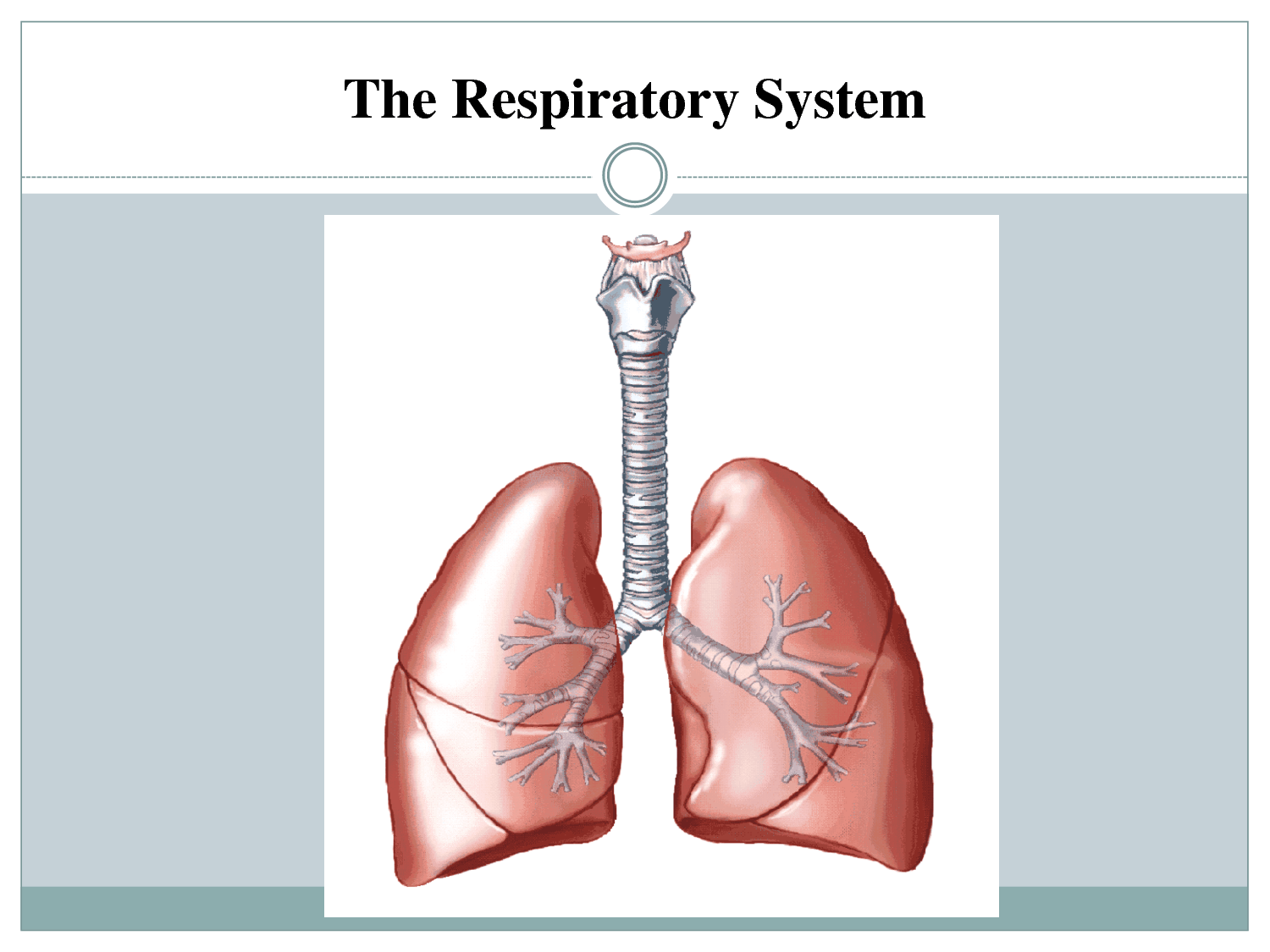
What is the main function of the respiratory system?
a)
to provide oxygen and remove carbon dioxide from the body
b)
to bring oxygen to the body
c)
to break down food and absorb nutrients
d)
to remove oxygen from the body and deliver carbon dioxide
56.
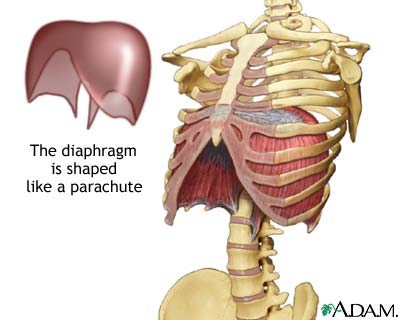
What is function of the dome-shaped diaphragm?
a)
This is where gas exchange happens.
b)
Air passes through the diaphragm on the way to the lungs.
c)
It attaches to the lungs to help in breathing.
d)
It is under the lungs and keeps them from falling down to your stomach.
57.
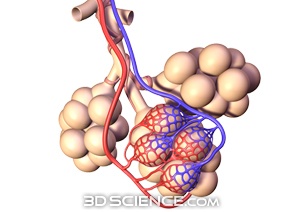
When you breathe, your lungs take in ___ and remove ___.
a)
air/oxygen
b)
oxygen/carbon dioxide
c)
carbon dioxide/waste
d)
waste/air
58.
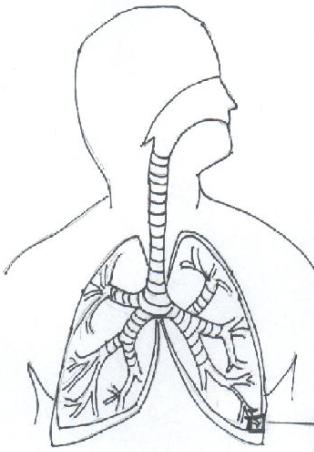
What is the function of the bronchi?
a)
Transport air from nose to lungs
b)
Transport air from trachea to lungs
c)
Transport air from lungs to alveoli
d)
Transport air from alveoli to blood
59.
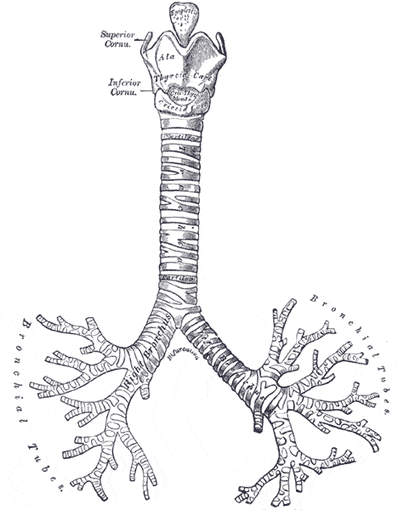
The two main branches from the trachea (one to each lung)
a)
bronchi
b)
alveoli
c)
capillaries
d)
bronchioles
60.
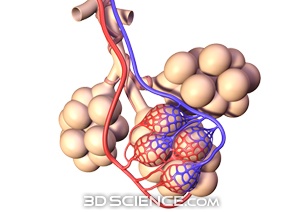
The air sacs that are covered with capillaries where gas exchange takes place
a)
bronchi
b)
lungs
c)
oxygen
d)
alveoli
61.

Within the lungs, the exchange of oxygen and carbon dioxide occurs between the ___ and the capillaries.
a)
trachea
b)
bronchi
c)
alveoli
d)
diaphragm
62.
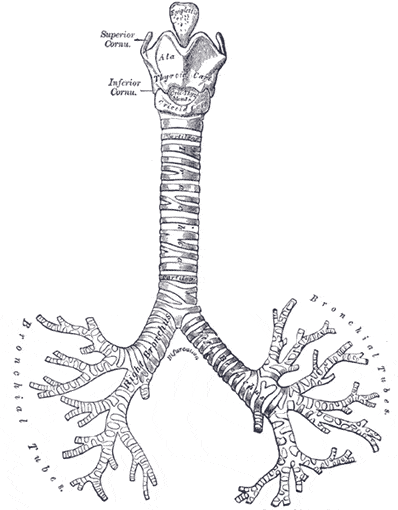
What is tube that is also known as your wind pipe?
a)
esophogus
b)
bronchi
c)
trachea
d)
alveoli
63.
Flap of skin that covers the opening to the windpipe during swallowing
a)
Stomach
b)
Trachea
c)
Pancreas
d)
Epiglottis
64.

The air sacs that are covered with capillaries that separate gases we need from gases we don't need.
a)
bronchi
b)
lungs
c)
oxygen
d)
alveoli
65.

What is the main function of the respiratory system?
a)
to provide oxygen and remove carbon dioxide from the body
b)
to bring oxygen to the body
c)
to break down food and absorb nutrients
d)
to remove oxygen from the body and deliver carbon dioxide
66.

A disorder of the lungs called ____ causes the bronchi to become restricted (get smaller) so air can't get to the lungs.
a)
asthma
b)
cold
c)
influenza
d)
bronchitis
67.

Name the organ labeled #8
a)
alveoli
b)
bronchi
c)
trachea
d)
lungs
68.

Name the structure labeled #6
a)
lungs
b)
trachea
c)
diaphragm
d)
alveoli
69.
What does the cilia do in the respiratory syestem ?
a)
The cilia carries food and air through the respiratory system.
b)
The cilia is known to be part of a cell.
c)
Cilia filters particles that enter the nose.
d)
Cilia contains the vocal chords.
70.
What does the Larynx hold ?
a)
The larynx holds the whole sub system
b)
The larynx is part of the plant cells.
c)
The larynx holds the vocal chords.
d)
The larynx is part of animal tissues.
71.
How is carbon dioxide released from the body?
a)
When we exhale
b)
When we urinate
c)
When we sweat
d)
When we inhale
72.
The beginning of the respiratory system that warms and moistens the air.
a)
trachea
b)
nose
c)
bronchi
d)
diaphragm
73.

spasm of the diaphragm
a)
cough
b)
sneeze
c)
hiccup
d)
yawn
74.
What is the respiratory system ?
a)
The respiratory system is the system that helps circulate our blood .
b)
The respiratory system is the system that takes in oxygen and takes the unneeded particles and creates carbon dioxide.
c)
The respiratory system is a system that is similar to the circulatory system.
d)
The respiratory system is a system that holds the heart as an internal organ.
75.
What two things are found in the central nervous system?
a)
brain/spinal cord
b)
spinal cord/motor neurons
c)
motor/sensory neurons
d)
only brain
76.
Which part of a neuron RECIEVES information?
a)
axon
b)
dendrite
c)
cell body
d)
axon terminal
77.
Which part of the neuron is a long fiber that send information to other cells?
a)
dendrite
b)
terminal
c)
cell body
d)
axon
78.
What are specialized nerve endings that detect change inside and outside the body?
a)
interneurons
b)
receptors
c)
motor neurons
d)
reflex arc
79.
Which of the TWO nervous systems contains motor and sensory neurons?
a)
central nervous system
b)
peripheral
c)
motor
d)
sensory
80.
What is the LARGEST of the 3 parts of your brain?
a)
cerebellum
b)
cerebrum
c)
spinal cord
d)
medulla
81.
The spinal cord is protected by the _____?
a)
vertebrae
b)
skull
c)
lungs
d)
rib cage
82.
The impulse changes to _______________ as it moves ACROSS the synapse to other neurons.
a)
electrical
b)
chemical
c)
it stays the same
d)
liquid
83.
If I step on a nail...what type of neuron take that signal TO the CENTRAL NERVOUS SYSTEM?
a)
interneurons
b)
motor
c)
sensory
d)
receptors
84.
If I step on a nail...what type of neurons take the response to my muscles?
a)
motor
b)
interneurons
c)
sensory
d)
not neurons, muscle tissue sends the response
85.

The nervous system is composed of the ___, ___, and ___.
a)
heart, brain, kidneys
b)
lungs, liver, stomach
c)
brain, spinal cord, nerves
d)
eyes, pancreas, veins
86.

Which part of the brain controls vital functions such as breathing and heart rate?
a)
Diencephalon
b)
Frontal Lobe
c)
Brain Stem
d)
Cerebellum
87.

What is the part highlighted in red?
a)
Cerebrum
b)
Cerebellum
c)
Brain Stem
d)
Diencephalon
88.

Two major branches of the nervous system
a)
central and peripheral
b)
peripheral and motor
c)
motor and sensory
d)
central and motor
89.

Major function of the nervous system
a)
movement
b)
sensation
c)
thought
d)
all of these
90.

The brain is part of the ____ nervous system.
a)
central
b)
peripheral
c)
motor
d)
internal
91.

The nerves in your fingertips are part of the ___ nervous system
a)
central
b)
peripheral
c)
internal
d)
cardiovascular
92.

Neurons send signals in the brain and body via...
a)
neurotransmitters only
b)
electrical impulses only
c)
wifi
d)
neurotransmitters AND electrical signals
93.

This portion of a neuron allows the electrical signal to move very quickly
a)
Dendrites
b)
myelin sheath
c)
nucleus
d)
axon terminals
94.

The spinal cord is part of the ____ nervous system.
a)
Central
b)
Peripheral
95.

The nerves in your legs are part of the ____ nervous system.
a)
Central
b)
Peripheral
96.

TRUE or FALSE: All nerves are the same and do the same things
a)
TRUE
b)
FALSE
97.

Sensory neurons are involved with
a)
all 5 senses
b)
sense of touch only
c)
involuntary movement
d)
all movment
98.

Motor neurons are involved with
a)
all 5 senses
b)
all movement
c)
involuntary movement only
d)
voluntary movement only
99.

Movement can be:
a)
only voluntary
b)
only involuntary
c)
voluntary OR involuntary
d)
none of these
100.

An example of involuntary movement would be:
a)
heart beating
b)
walking
c)
talking
d)
wiggling toes
101.

An example of voluntary movement would be:
a)
smiling
b)
heart beat
c)
digestion
d)
breathing
102.
The _______ send and receive messages from the brain.
a)
Nerves
b)
Spinal Cord
c)
Brain
103.
The ________ is a rope-like bundle of nerves. It is also the main pathway for information.
a)
Nerves
b)
Spinal Cord
c)
Brain
104.
The _____ controls all the other organs, and processes all the information.
a)
Nerves
b)
Spinal Cord
c)
Brain
105.
The bony structure that protects the brain.
a)
vertebrae
b)
Teeth
c)
cranium
d)
rib cage
106.

main organ of the nervous system. protected by the skull, and made of neurons, it is the control center for all actions, thoughts and emotions.
a)
brain
b)
nerves
c)
spinal cord
d)
heart
107.
What is the central nervous system (CNS) made of?
a)
brain and spinal cord
b)
brain and cranial nerves
c)
spinal cord and spinal nerves
d)
cranial nerves and spinal nerves
108.

Label the Neuron-What does the letter "A" represent?
a)
Axon
b)
Dendrite
c)
Axon Terminal
d)
Cell Body
109.
The part of the neuron that receives informatio is called a(n) ___________.
a)
dendrite
b)
axon
c)
nucleus
d)
node of Ranvier
110.

Nerve cells that send information from one to another are called:
a)
red blood cells
b)
neurons
c)
plasma
d)
platelets
111.

What is the green arrow pointing to with in the neuron?
a)
dendrite
b)
axon
c)
soma
d)
axon terminal
100 %

