
 Worksheets
N5 Unit 3 Full Unit Quiz
Total questions: 110
Worksheet time: 1hrs 4mins
What is the name given to a natural biological unit made up of living and non-living parts?
Ecosystem
Habitat
Species
Community
What is a habitat?
The area where an organism lives
All the living organisms that live within a habitat
A natural biological unit made up of living and non-living parts
A group of living things of the same species
What is the definition of a population?
A group of living things of the same species
A group of living things of different species
What is the definition of a species?
A group of organisms that can interbreed to produce fertile offspring.
A group of organisms that can interbreed to produce infertile offspring.
Which form of organism can produce its own food?
Producer
Consumer
Herbivore
Carnivore
Omnivore
Which form of organism must gain energy by eating other organisms?
Producer
Consumer
Herbivore
Carnivore
Omnivore
Which form of organism only eats plants?
Producer
Consumer
Herbivore
Carnivore
Omnivore
Which form of organism only eats animals?
Producer
Consumer
Herbivore
Carnivore
Omnivore
Which form of organism eats both plants and animals?
Producer
Consumer
Herbivore
Carnivore
Omnivore
Which organism is a typical producer?
Green Plants
Owls
Fish
Wolves
Which form of organism is found at the start of a food chain?
Producers
Primary Consumers
Secondary Consumers
What is the definition of a niche?
The area that an organism lives in
The role an organism plays within its ecosystem and how it interacts
A natural biological unit made up of living and non-living parts
All the living organisms that live within a habitat
What form of competition involves different species?
Interspecific Competition
Intraspecific Competition
What form of competition involves the same species?
Interspecific Competition
Intraspecific Competition
Which is the definition for biodiversity?
A species that indicates the environmental quality by their presence or absence
One species living in an area
The variety of living things present in an ecosystem
A large biodiversity
"A group of organisms which can interbreed to produce fertile offspring" is the definition for:
Niche
Species
Habitat
Carnivore
What is intraspecific competition?
Competition between members of the same species
Competition between members of different species
Which type of competition is the most intense?
Interspecific
Intraspecific
What things do animals compete for?
Light
Space
Food
Mates
An ecosystem is
A group of organisms that can interbreed to produce fertile young
A natural biological unit made up of living and non-living parts
The place where an organism lives
All the living organisms that live within a habitat
All living and non-living things in an area make up an _________________.
producers
living things
ecosystem
prey
A ___________ is a diagram that shows the transfer of energy in an ecosystem.
decomposer
web
consumer
food chain
___________are organisms that use the Sun’s energy to make their own food (like plants and algae).
ecosystems
prey
producers
herbivores
A _______________ is any animal that eats plants or other animals
prey
consumer
carnivore
predator
_______________ are animals that eat only plants and are also known as primary consumers.
carnivores
producers
decomposers
herbivores
An animal that eats both plants and animals is a _________________.
omnivore
carnivore
herbivore
prdator


What is the name given to a non-living factor that influences where an organism can live?
Abiotic Factor
Biotic Factor
What is the name given to a living factor that influences where an organism can live?
Abiotic Factor
Biotic Factor
Which of the following is an abiotic factor?
Predation
Temperature
Disease
Competition for resources
Which of the following is an abiotic factor?
Predation
Disease
Competition for resources
Light Intensity
Which of the following is a biotic factor?
Disease
Light Intensity
Temperature
Soil pH
Which of the following is a biotic factor?
Light Intensity
Competition for resources
Temperature
Moisture Levels
Select all of the techniques that can be used to sample biotic factors:
Quadrats
Pitfall traps
pH Meter
Light Meter
Select all of the techniques that can be used to sample abiotic factors:
Quadrats
Pitfall traps
pH Meter
Light Meter
What is the name given to a species which indicates pollution levels by its presence or absence?
Indictor Species
Predictor Species
Pollution Species
Which of the following is NOT an abiotic factor
pH
Light Intensity
Disease
Humidity

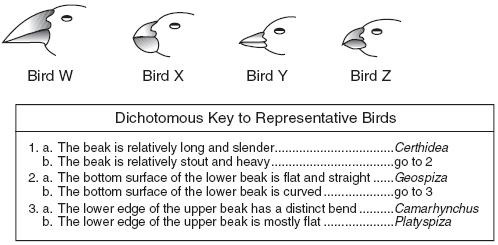
Which of the following is NOT a biotic factor?
Disease
Competition
Temperature
Grazing
Which of the following pieces of equipment is not used to measure abiotic factors
Thermometer
Light intensity meter
Pitfall trap
pH probe
How can errors be minimised when sampling with a quadrat
Placing the quadrat randomly in the sample area
Sampling with a quadrat several times in an area
Counting all the organisms within and touching all the edges of the quadrat
What type of sample technique would we use to measure the abundance of clover in a field?
A pitfall trap
A moisture meter
A light intensity meter
A quadrat
Why do we repeat our samples several times?
It makes our results more accurate
It makes our results more reliable
It makes our results easier to understand
which is best for measuring light intensity?
quadrat
moisture meter
thermometer
light meter
lightsaber
which is best for measuring pH?
soil PH meter
soil Ph meter
soil ph meter
soil meter
soil pH meter
what could be a mistake made while sampling light intensity
the meter is not disinfected between samples
it is a darker place
your shadow covers the meter
not throwing it randomly multiple times
What percentage of energy from one organism is passed onto the next organism in a food chain?
10%
20%
30%
40%
Which of these is not a way energy can be lost in a food chain?
Heat
Movement
Undigested Material
Growth

Which letter represents the producer?
A
B
C
D
There is less energy as you move up a pyramid of energy because...
There are fewer organisms at each level
Energy is stored at each level
Energy is lost at each level
The organisms are bigger as you move up a pyramid
As you work your way up the energy pyramid, what happens to the energy?
It increases
It decreases
It stays the same
Nothing

In the energy pyramid, what is the bottom level composed of?
Producers
Primary Consumers
Secondary Consumers
Tertiary Consumers
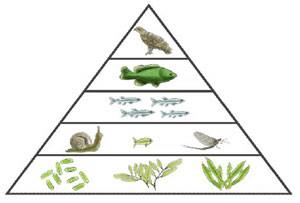
In the energy pyramid, what comes after the producers?
Producers
Primary Consumers
Secondary Consumers
Tertiary Consumers
Which of these are ways energy can be lost in a food chain?
Heat
Movement
Undigested Material
Growth
What percentage of energy is lost between one organism and the next organism in a food chain?
10%
20%
50%
90%
An increasing human population requires...
An increase in food production
A decrease in food production
What is the name given to chemicals that kill plants and animals that could damage crops?
Pesticides
Fertilisers
Biological Control
Nitrogen
What is the term which describes the use of a predators as an alternative to chemicals?
Pesticides
Fertilisers
Biological Control
Nitrogen
Which of the following terms describes a substance that contains extra nutrients required by growing plants?
Pesticides
Fertilisers
Biological Control
Nitrogen
When fertilisers leach into fresh water, it leads to...
A reduction in oxygen levels
An increase in oxygen levels
Plants require Nitrogen in order to produce...
Fats
Chlorophyll
Amino Acids
DNA
What term is used to describe the growth of algae after fertilisers have leached into the water?
Algal boom
Algal sprouting
Algal bloom
Algal increase
Why are chemical fertilisers added to the soil?
To protect the crops.
To make the crops stronger.
To increase food yield.
To make the crops disease resistance.
What is the term used to describe fertilisers washing into waterways?
Washing
Leaching
Running
Polluting
What can fertilisers cause when they are leach into waterways?
algal bloom
genetic variation in fish
death of aquatic life
decrease in plant life
What are pesticides manufactured to do?
kill pests to stop from eating the crops.
Kill predators higher up in the food chain by accumulation.
To make the pests disease resistant.
To make the plants drought resistant.
Bioaccumulation of pesticides means that the pesticides will...
decrease in an organism
increase in an organisms as move up food chain
stay the same in an organism
increase in an organisms as move down food chain
The use of ladybirds to eat aphids is an example of...
a biological control
a niche
a hungry organism
a ecosystem
Animals obtain amino acids for protein synthesis by
absorbing nitrates from the soil
consuming plants or other animals
breathing them in
Which of the following can be used as alternative(s) to pesticides
GM crops
Fertilisers
Biological control
Nitrates
Which of the following can be used as alternative(s) to fertilisers
GM crops
Pesticides
Biological control
Nitrates
The build up of toxic substances in living things is known as
A pyramid of numbers
Leaching
Bioaccumulation
Genetic modification
Which of the following is a problem with the use of fertilisers?
Algal blooms
Bioaccumulation
Energy loss
Genetic modification
What effect do algal blooms have on biodiversity in freshwater areas?
Increase biodiversity
Decrease biodiversity
Help biodiversity levels stay the same
Mutations...
Are predictable
Are controllable
Are spontaneous
Are constant
Mutations...
Are one of the sources of new alleles
Are the only source of new alleles
Are not a source of new alleles
Are the source of some new alleles
Which of the following is a chemical factor that increases mutation rate?
UV Rays
Cigarette smoke
X Rays
Experimentation
What term is used to describe a mutation that leads to an organism becoming better adapted to its environment?
Advantageous Mutation
Neutral Mutation
Disadvantageous Mutation
What term is used to describe a mutation that has no effect on the organism?
Advantageous Mutation
Neutral Mutation
Disadvantageous Mutation
What term is used to describe a mutation that has a negative effect on the survival of the organism?
Advantageous Mutation
Neutral Mutation
Disadvantageous Mutation
Survival of the fittest is also known as...
Selection Pressure
Natural Selection
Selective Advantage
Species Selection
Which organism is most likely to survive?
The oldest
The youngest
The biggest
The best adapted to its environment
Which of the following is an example of a selection pressure?
Having longer fur than the rest of your species
Having larger horns than the rest of your species
A change in temperature
Being brighter in colour than the rest of your species
Which of the following is an example of a selective advantage?
Having short hair in a cold environment
Having longer fur in a cold climate
Having short hair in a very cold environment
Having longer fur in a hot environment
Individuals who have a selective advantage are
More likely to survive and pass on their alleles.
Less likely to survive and pass on their alleles
What name is given to the formation of a new species?
Natural Selection
Speciation
Selective Advantage
Mutation
Which of the following is not an isolation barrier?
Geographical
Ecological
Behavioural
Reproductive
During speciation, sub-populations evolve until
They become genetically identical
They become genetically different
Different groups of the same species respond to different mating calls, this is an example of which type of isolation barrier?
Geographical
Behavioural
Ecological
What is the source of new alleles (that lead to variation) in a population?
Sexual reproduction
Environmental factors
Asexual reproduction
Mutations
What makes it possible for populations to evolve over time in response to changing environmental conditions?
Variation
Alleles
Homozygous
selection pressures
Which of these gases is required for photosynthesis?
Carbon Dioxide
Oxygen
Helium
Nitrogen
Carbon Dioxide concentration is a limiting factor
True
False
What are the products of photosynthesis?
Oxygen and sugar
carbon dioxide and starch
starch and light energy
light energy and oxygen
Which of these is a limiting factor
light intnesity
carbon dioxide concentration
temperature
oxygen concentration
What is the source of energy for photosynthesis?
chemical
light
heat
electrical
What are the raw materials for photosynthesis?
glucose and oxygen
water and oxygen
water and carbon dioxide
glucose and water
What gas is released by plants during photosynthesis?
sulfur
carbon dioxide
oxygen
hydrogen
What is the energy conversion during photosynthesis?
chemical --> electrical
heat --> electrical
chemical --> electrical
light --> chemical
What could be limiting photosynthesis on a sunny winter's day?
light intensity
carbon dioxide concentration
water
temperature
What could be limiting photosynthesis on a warm cloudy day?
light intensity
carbon dioxide concentration
water
temperature
In which stage of photosynthesis is carbon dioxide used?
light reactions
carbon fixation

