
 Worksheets
2021 Midterm Review
Total questions: 110
Worksheet time: 57mins
A characteristic that a parent can pass to their offspring
phenotype
trait
genotype
gene
Not all alleles are dominant or recessive. What is it called when more than two alleles code for a particular trait?
incomplete dominance
codominance
multiple alleles
polygenic
Not all alleles are dominant or recessive. What is the term used when both alleles show up? (a brown cow is crossed with a black cow and the offspring is brown and black)
incomplete dominance
codominance
multiple alleles
polygenic inheritance
Not all alleles are dominant or recessive. What is the term used when the alleles blend? (red flower is crossed with a white flower and the offspring is pink)
incomplete dominance
codominance
multiple alleles
polygenic inheritance
A(n) ______ is the form of a gene that is hidden when the dominant allele is present.
allele
dominant allele
recessive allele
genotype
Genetics is the:
study of pea plants
study of heredity
phenotype of an organism
a characteristic that can be passed on
An organism's genotype describes:
the form of a trait it displays
its physical characteristics
the way it looks
the alleles of the gene it contains
A _____ is a unit that determines traits
chromosome
gene
allele
DNA
For each trait, pea plants contain two forms of the same gene. These different forms of the same gene are called:
alleles
genotypes
chromosomes
all of the above
_______________________ is another term used to describe homozygous alleles.
hybrid
heterozygous
purebred
all of the above
If a green seed (yy) is crossed with another green seed (yy) what can you predict about the offspring?
the phenotype will be green
the genotype will be yy
the recessive trait will show
all of the above
If a purebred (homozygous dominant) red plant is crossed with a purebred (homozygous recessive) white flowered plant, the possible phenotype of the first generation of peas are:
100% white
100% red
50% red and 50% white
75% red and 25% white
What is a purebred plant?
a plant that never produces offspring with the same form of a trait when it self-pollinates
a plant that has been pollinated by human influence
a plant that will always produce offspring with the same form of a trait when it self-pollinates
a plant that will always produce offspring with a different form of a trait when it self pollinates
A _____ is the form of a gene that, when present, covers up the appearance of the ______.
recessive allele, dominant allele
dominant allele, recessive allele
genotype, phenotype
phenotype, genotype
An organism's genotype describes:
the form of a trait it displays
its physical characteristics
the way it behaves
the alleles of the gene it contains
If a pea plant contains a recessive allele for wrinkled seeds and a dominant allele for smooth seeds, the organism's phenotype must be:
smooth seeds
wrinkled seeds
half of the seeds are smooth and half are wrinkled
not really smooth or wrinkled seeds, a mixture of both traits
A punnett square is helpful in predicting:
only genotypes of offspring
only phenotypes of offspring
both the genotypes and phenotypes of the offspring
none of the above
If a round seed pea plant (RR) is crossed with a round seed pea plant (Rr). What are the possible genotypes for seed shape in the cross?
RR, rr
Rr, Rr, RR,
RR, Rr, rr
RR, Rr
If a human with free earlobes (FF), and a human with attached earlobes (ff) mate. What are the possible phenotype(s) of the offspring?
The offspring will either have attached earlobes or free earlobes
The offspring will have attached earlobes
The offspring will have free earlobes
None of the above
A purple flower with genotype PP is crossed with another purple flower with genotype Pp. What phenotype or phenotypes will occur?
white or purple
purple
white
Pp, PP, PP, PP
Yellow seeds are determined by the dominant allele (Y), while green seeds are determined by the recessive allele (y). A cross pollination occurs between a yellow seeded plant and a green seeded plant. The offspring had yellow seeds. What is the possible genotype of the offspring?
YY
yy
Yy
Need more information to determine the genotype
The X and Y chromosomes in humans are called:
multiple alleles
polygenic traits
sex chromosomes
codominance
Which pair of chromosomes would produce a male offspring?
XX
XY
XO
AB
Which pair of chromosomes would produce a female offspring?
XX
XY
XO
AB
A ____ is an abnormal condition that an organism inherits
mutation
genetic disorder
disease
alteration
A ____ is a change in the heredity material of an organism
mutation
genetic disorder
disease
alteration
The order of the base pairs along a gene is important because:
an organism can only survive if the base pairs are in the correct sequence
it forms a code that tells a cell which protein to make
it forms a code that tells a cell how to reproduce
None of the above: the order of base pairs doesn't match
DNA fingerprinting allows scientists, investigators and police officers to:
predict traits of future generations
identify individuals
predict traits of a fetus before birth
transfer genes from one organism into the DNA of another organisms
One side of DNA ladder has the base pairs in the following order: ATCGGTTCCA. What is the order of base pairs on the other side of the DNA ladder?
CGATTGGAAC
ATCGGTTCCA
GCTAACCTTG
TAGCCAAGGT
Predict what happens if cells are missing ribosomes
reproduction cannot occur
proteins cannot be assembled
the information from the DNA in the nucleus is not delivered to the cytoplasm
the base sequence from the nucleus cannot be decoded
The process of selecting organisms such as turkeys with desired traits to serve as parents for the next generation is referred to as:
genetic engineering
artificial selection
gene mutations
selective breeding
How many Kingdoms of Life are there?
Five
Six
Seven
Ten
Which of the following is NOT one of the Kingdoms of Life
Bacteria
Protista
Plantae
Fungi
Scientists believe this is the oldest Kingdom.
Archaebacteria
Bacteria
Eubacteria
Protista
Yeast is an example of an organism from Kingdom __________.
Bacteria
Protista
Fungi
Eubacteria
All bacteria cells are__________.
Prokaryotes
Eukaryotes
__________ are organisms that eat other organisms to obtain energy.
Carnivores
Heterotrophs
Autotrophs
Omnivores
Name the Kingdom: Eukaryotic, multi-cellular, all are producers.
Protista
Fungi
Animalia
Plantae
Name the Kingdom: Prokaryotic, unicellular, likes salt, heat, and methane
Archaebacteria
Eubacteria
Protista
Fungi
Name the Kingdom: E.coli, Strep, Staph
Archaebacteria
Eubacteria
Protista
Fungi
Who is credited with being the father of classification?
Hooke
Darwin
Bill Nye
Linneaus
This kingdom contains chemical autotrophs.
Archaebacteria
Bacteria
Eubacteria
Protista
Name the Kingdom: Prokaryotic, unicellular, producers, consumers, decomposers
Archaebacteria
Eubacteria
Protista
Bacteria
Everyone in this kingdom is a decomposer.
Archaebacteria
Eubacteria
Protista
Fungi
__________ is an example of a BIOTIC factor.
Sun
Dead Tree
Soil
Water
What is the science of classification called?
Binomial Nomenclature
Taxonomy
Sorting
Classification
What is the two-name naming system used by scientists to classify organisms?
Taxonomy
Linneaus
Binomial nomenclature
Classification
Which scientific name is written correctly?
Felis Domesticus
Felis domesticus (underlined or in italics)
Felis domesticus
FELIS domesticus
Two organisms that are in the same order are also in the same __________.
Genus
Class
species
Family
Organisms that make their own food through photosynthesis are called __________.
Producers
Decomposers
Chemical Autotrophs
Consumers
Scientists classify viruses as:
Living
Non-living
Which of the following is NOT a characteristic of living things?
Use energy
Breathe in oxygen
Grow and develop
Made of cells
Which is correct from most broad to most specific?
Species, Genus, Family, Order, Class, Phylum, Kingdom
Kingdom, Phylum, Class, Order, Family, Genus, species
Kingdom, Family, Phylum, Order, Genus, Species, Class,
Kingdom, Class, Order, Phylum, Family, Species, Genus
Which list below describes protists?
Prokaryotic, unicellular, likes salt, heat, and methane (extreme environments)
Plant-like, Animal-like, Fungi-like Producers, consumers, decomposers, unicellular organisms, multi-cellular organisms. Live in watery environments.
Eukaryotic, multi-cellular, all are producers
Prokaryotic, unicellular, producers, consumers, decomposers, live everywhere
An organism is MOST closely related to another organism that is in the same __________.
genus, but a different species.
family, but a different genus.
kingdom, but a different phylum.
class, but a different order.
Which list shows examples of protists?
Homo sapiens, mosquitoes, crayfish
Amoeba, Paramecium, Euglena, Slime mold
Oak Tree, crab grass, vines
What is the nickname for Kingdom Protista?
Cabinet Kingdom
Extreme Kingdom
Decomposer Kingdom
The Junk Drawer Kingdom
What two levels make up the scientific name?
Kingdom and phylum
Genus and species
Class and order
Family and species
An organism is MOST closely related to another organism that is in the same
family, but a different genus.
class, but a different order.
kingdom, but a different phylum
genus, but a different species.
What is a good entry to put on a dichotomous key?
Leaf is soft
Leaf is big
Leaf is ugly
Leaf has thorns

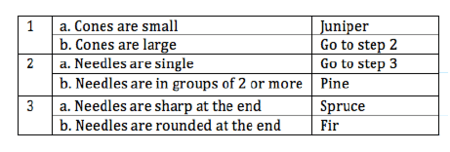
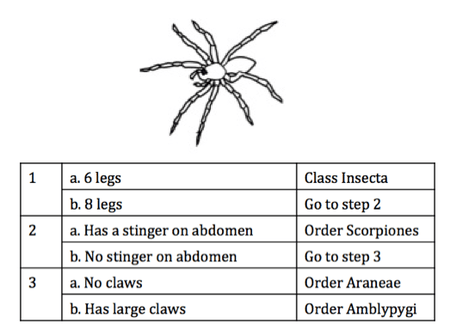

How many options should every branch in a dichotomous key have?
1
2
3
4


Which of the following is produced during the process of cellular respiration?
carbon dioxide
sodium chloride
oxygen
sugar

What is the structure labeled 1?
Mitochondria
Chloroplast
Cell Membrane
Nucleus

What is the structure labeled #5?
Endoplasmic reticulum
Nucleus
Mitochondria
Cell Wall
What structure is in plant cells but not animal cells?
Vacuole
Mitochondria
Cell Membrane
Cell Wall

What are the two types of cell transport?
Passive and Active
Active and Facilitated
Passive and Facilitated
None of the above

The movement of particles from an area of high concentration to an area of low concentration
active transport
osmosis
diffusion
random movement

The movement of materials from an area of low concentration to an area of high concentration would require...
glucose
energy (ATP)
fish
chips
The reactants in photosynthesis are ____________
Sunlight, Water, and Carbon Dioxide
Glucose and Water
Carbon Dioxide and Water
Oxygen and Glucose
Which of these structures surround cells?
A. cell wall and nucleus
B. cell membrane and cell wall
C. cytoplasm and cytoskeleton
D. cell membrane and cytoplasm

These organelles in plants capture light energy and store it in glucose molecules to be used as food (Photosynthesis).
Chloroplasts
Mitochondria
Endoplasmic Reticulum
Vacuoles
holds materials like water and is very large in a plant cell
nucleus
golgi body
chloroplast
(central) vacuole
Mitochondria are found...
In plant cells only
In animal cells only
In protists only
In plant and animal cells
What are the products of Photosynthesis?
Glucose and Oxygen
Water and Carbon Dioxide
Oxygen and Carbon Dioxide
ATP and Glucose
What organelle is used in cellular respiration?
Cholorplast
Mitochondria
Nucleus
Cell Membrane
How does glucose enter our bodies?
Oxygen
Food
Water
Carbon Dioxide
Human body cells contain _________________ chromosomes.
23
46
8
24
Human sex cells contain _________________ chromosomes.
16
32
23
46
__________________ is the phase of mitosis where the chromosomes are lined up along the equator or middle of the cell.
anaphase
telophase
metaphase
prophase
Chromosomes are organized structures of ___________________.
ATP
DNA
ADP
MLS
Once mitosis is complete, the splitting of the cytoplasm into two cells is called_____________.
cellular fission
cellular fusion
cytokinesis
interphase
_________________ is the stage after interphase when sex cells (egg and sperm) are produced.
prophase
mitosis
meiosis
anaphase
__________________ is the stage after interphase when body cells are being produced.
prophase
mitosis
meiosis
telophase
At the end of telophase, two _____________ are produced.
body cells
sex cells
nuclei
blood cells
At the end of the cell cycle that includes meiosis, _________________ daughter cells are produced.
2
4
6
8
At the end of the cell cycle involving mitosis, ________________ daughter cells are produced.
2
4
6
8
Cell division makes more cells.
True
False
What is the job of the golgi body?
Near the cell membrane, transports things within and out of the cell
Has ribosomes
Makes DNA
By the nucleus, transports things only inside the cell
What is the job of the Endoplasmic Reticulum?
Near the cell membrane, transports things within and out of the cell
Has ribosomes
Makes DNA
By the nucleus, transports things only inside the cell

A process in which cells surround and engulf LARGE substances to enter the cell is known as...
Pinocytosis
Phagocytosis
Endocytosis
Receptor-mediated
What does the following equation represent?
Sunlight +water +carbon dioxide--> glucose + oxygen
Cellular respiration
Human respiration
Photosynthesis
Solar energy
glucose + oxygen ---> water + carbon dioxide + Energy (ATP)
This equation represents ___________________.
Human Respiration
Cellular Respiration
DNA Replication
Photosynthesis

