wayground logo

Free Printable Worksheets

Font size

S
M
L
XL
Worksheets

Science 7 Revision 3 Sem1 A

Total questions: 115

Worksheet time: 1hrs 26mins

Name
Class
Date
1.

What effect does the sun have on surface water?

a)

It causes it to boil

b)

It causes it to rain

c)

It causes it to sink

d)

It causes it to evaporate

2.

When water vapor is cooled and forms droplets of liquid water

a)

Condensation

b)

Evaporation

c)

Transpiration

d)

Runoff

3.
Precipitation occurs because 
a)
the droplets evaporate in the air
b)
the droplets are too light for the air to hold
c)
the droplets are too heavy for the air to hold
4.
When water turns into a gas
a)
condensation 
b)
evaporation
c)
precipitation
5.
What is water that flows in rivers and streams into the oceans and lakes?
a)
evaporating
b)
condensing
c)
precipitating
d)
runoff
6.

What is precipitation?

a)

Sweat from our bodies on hot days

b)

Warm rain but not cold snow or sleet

c)

Gas that we use in furnaces or ovens

d)

Any form of water that falls from the sky

7.

The process when plants release water vapor from their leaves is called _____________.

a)

precipitation

b)

evaporation

c)

transpiration

d)

condensation

8.

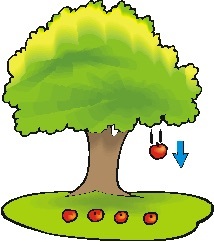
What step of the water cycle does this picture show?

a)

Condensation

b)

Runoff

c)

Precipitation

d)

Evaporation

9.
The water cycle has
a)

a beginning and an end. 

b)

no beginning and no end. 

c)

only a beginning. 

d)

only an end. 

10.
What source of energy evaporates the most water from Earth’s surface?
a)
volcanoes
b)
the sun
c)
lightning
d)
wind
11.

What are formed when water vapor condenses and come together?

a)

Clouds

b)

Mountains

c)

Transpiration

d)

Valleys

12.
Which of these is an example of precipitation?
a)
snow
b)
air
c)
clouds
d)
vapor
13.
The most common form of precipitation in the summer is...
a)
Rain
b)
Snow
c)
Sleet
d)
Hail
14.

Turning water into a steam is a __________ reaction.

a)

irreversible

b)

permanent

c)

reversible

15.

The letter, C, is a ... of carbon.

a)

Name

b)

Chemical Symbol

c)

Nickname

d)

Pseudonym

16.

An element is.....

a)

...made up of lots of atoms

b)

... is more than one kind of atom

c)

...made up of one kind of atom

d)

.... made of one atom

17.

Why is water not an element?

a)

It is made of hydrogen and carbon atoms

b)

It is made of oxygen and hydrogen atoms

c)

It is made of oxygen atoms

d)

It is made of hydrogen atoms

18.
  What is a pure substance made of two or more elements that are chemically combined called?
a)
A. element
b)
B. compound     
c)
C. mixture
d)
D. solution
19.
Which of the following is not a compound?
a)
HCl
b)
Cl
c)
NaCl
d)
CO2
20.
Which of the following represents an element?
a)
H2O
b)
H2
c)
NaCl
d)
CaCO3
21.

It is a combination of two or more substances in which each substance maintains its physical property.

a)

Solution

b)

Mixture

c)

Solubility

22.
Which of the following is NOT a pure substance?
a)
milk
b)
oxygen
c)
water
d)
carbon dioxide
23.
If an unknown substance CANNOT be broken down into simpler substances, it is 
a)
a compound
b)
an element
c)
a homogeneous mixture
d)
a heterogeneous mixture
24.

How are Mixtures made?

a)

Chemically

b)

Physically

c)

Physically and Chemically

d)

Found in Nature

25.

chlorine gas, Cl2, is an example of a(n)

a)

element

b)

compound

c)

mixture

26.

bronze, an alloy of many different metals, is an example of a( n)

a)

element

b)

compound

c)

mixture

27.
Is sugar (C12H22O11) an element or a compound?
a)
Element
b)
Compound
28.

A student sees the diagram shown in a textbook.

What does the symbol in the diagram represent?

a)

a compound

b)

an element

c)

a molecule

29.

Cake is an example of a(n):

a)

A. element

b)

B. compound

c)

C. mixture

30.

H2O is an example of a(n):

a)

A. element

b)

B. compound

c)

C. mixture

31.

When oxygen combines with hydrogen, which substance is formed?

a)

A. water

b)

B. vinegar

c)

C. hydrochloric acid

32.

Which is a chemical compound?

a)

aluminum

b)

carbonated water

c)

sodium chloride

33.

The symbol H represents which element

a)

A. Helium

b)

B. Oxygen

c)

C. Hydrogen

34.

How many different types of atoms are there in the following molecule?

a)

7

b)

6

c)

3

d)

8

35.

Which of the diagrams below represent a mixture?

a)

A

b)

B

c)

C

d)

D

36.

What is an element?

a)

A substance that is made up of one type of atom and can't be reduced to simpler substances.

b)

A substance made of two or more different atoms chemically bonded to one another. They can only be destroyed by chemical processes.

c)

A material containing two or more elements or compounds that are in close contact and are mixed in any proportion. They can be separated by physical means.

37.

Where can you find examples of elements?

a)

Dictionary

b)

Periodic table of compounds

c)

Periodic table of elements

d)

Your neighbor

38.
These contain only one kind of atom. 
a)
element 
b)
compound 
c)
mixture 
d)
water 
39.
Good conductor of heat
a)
Metal
b)
Nonmetal
40.
Which of the following is a property of a non-metal?
a)
Conducts electricity and heats well
b)
Can be hammered into thin sheets
c)
Is brittle and breaks easily
d)
Has a shiny, metallic luster
41.
Metalloids _____________
a)
have no properties of metals.
b)
have no properties of nonmetals.
c)
have some properties of both metals and nonmetals.
d)
none of the above
42.
Where are metalloids located on the periodic table?
a)
to the right of nonmetals
b)
along the zig-zag line
c)
to the left of the zig-zag line
d)
to the right of the zig-zag line
43.

When an object changes shape when struck by a hammer it is said to be...

a)

luster

b)

malleable

c)

brittle

d)

ductile

44.
How do metals differ from nonmetals?
a)
metals are shiny, nonmetals are dull
b)
metals are good insulators, nonmetals are good conductors
c)
metals are powdery
d)
nonmetals are shiny
45.
I have an object that is dull, brittle, and an insulator, what is it?
a)
metalloid
b)
non-metal
c)
metal
d)
matter
46.
Metals are ductile, meaning they can be drawn into wire
a)
True
b)
False
c)
Never
47.
Unlike non-metals, most metals tend to —
a)
conduct electricity and heat well.
b)
be gases at room temperature.
c)
break easily when hammered.
d)
have less luster and shine.
48.
One metal that is liquid at room temperature is 
a)
Magnesium
b)
Manganese
c)
Mercury
d)
Sodium
49.
Low density
a)
Metal
b)
Nonmetal
50.
 Which of the following does not conduct electricity easily?
a)
copper
b)
plastic
c)
silver
d)
salt water
51.
The elements argon, krypton, and xenon are all non-metals. What property would these elements have in common?
a)
Good conductor of thermal energy
b)
Poor conductor of electricity
c)
Shiny, lustrous surface
d)
Soft and malleable
52.
The approximate number of elements we know about today is .......
a)
18
b)
48
c)
118
d)
1018
53.
What is NOT a property of metals
a)
brittle
b)
ductile
c)
malleable
d)
conductor
54.
Some students conducted a laboratory investigation to learn more about the physical properties of different elements. They observed four samples and recorded their observations in the table . Based on these observations, which sample is most likely a nonmetal?
a)
Sample 1
b)
Sample 2
c)
Sample 3
d)
Sample 4
55.
If a substance is magnetic it is most likely a 
a)
metal 
b)
non-metal
56.
What is the net force?
a)
65 N left
b)
65 N right
c)
35 N left
d)
35 N right
57.
What is the net force?
a)
5.5 N left
b)
5.5 N right
c)
2.5 N left
d)
2.5 N right
58.
With unbalanced forces, the object will move in the direction of the _______ force.
a)
larger 
b)
smaller 
c)
equal 
59.
Forces that have a net force of zero ( the object is still).
a)
Balanced force
b)
Unbalanced force
60.
Balanced or Unbalanced?
a)
Balanced 
b)
Unbalanced
61.
Which of the following could cause an acceleration?
a)
A balance between two forces
b)
A balance between three forces
c)
An imbalance between two forces
d)
Zero forces
62.
What is the net force?
a)
1.3 N left
b)
1.3 N right
c)
3.7 N left
d)
3.7 N right
63.

A force can cause an object to

a)

accelerate

b)

slow down

c)

remain in place

d)

all of the above

64.
Students are playing tug-of-war. If group B pulls the rope to the right with a force of 400 N and group A pulls the rope to the left with a force of 250 N, what will happen to the ribbon in the middle of the rope?
a)
The ribbon will move to the left and group A will win the tug-of-war.
b)
The ribbon will move to the left and group B will win the tug-of-war.
c)
The ribbon will move to the right and group B will win the tug-of-war.
d)
The ribbon will move to the right and group A will win the tug-of-war.
65.
In which direction will the box accelerate? 
a)
Down and to the left
b)
Down and to the right
c)
Up and to the left
d)
Up and to the right
66.
In which direction will the box accelerate?
a)
Down and to the left
b)
Up and to the right
c)
Up and to the left
d)
Down and to the right
67.
What is the unit of measurement for force?
a)
AMP
b)
Seconds
c)
Newtons
d)
Miles
68.
The FORCE that PULLS things down or back to EARTH.
a)
Speed
b)
Gravity
69.
If the net force is 0 the object will ... 
a)
CHANGES motion
b)
STAY the SAME, NOT Move
70.
What unit is the intensity of sound measured in?
a)
decibels (dB)
b)
Hertz (Hz)
c)
meters per second (m/s)
d)
meters
71.

Astronauts cannot hear each other on the moon because

a)

Moon has no atmosphere

b)

They are wearing helmets

c)

Moon has less gravity compared to earth

d)

None of these

72.

Sound is a form of energy produced by ______________.

a)

Vibrations

b)

Distances

c)

Prisms

d)

Forces

73.

Which term is this a definition for: the use of reflected sound waves to find food or other objects

a)

Interference

b)

Echolocation

c)

Resonance

d)

Woodwind Instrument

74.

Sound must always travel through a ______. It cannot travel through a vaccuum.

a)

air

b)

medium

c)

material

d)

empty space

75.

To make a louder sound on an instrument, the musician must:

a)

stop playing

b)

apply less force

c)

play a different note

d)

apply more force

76.

The area of a longitudinal wave where the particles are crowded together.

a)

compression

b)

crest

c)

transverse

d)

medium

77.
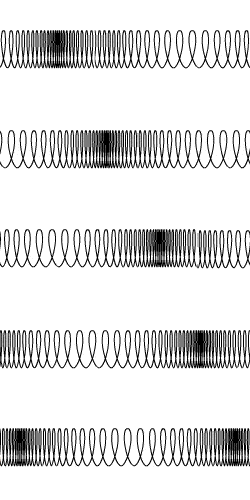
What type of wave is this?
a)
Longitudinal
b)
Transverse
78.
What types of waves carry energy at a right angle or perpendicular to the direction of the energy flow?
a)
Longitudinal waves
b)
Transverse waves
c)
Sound waves
d)
P-waves
79.
Sound is an example of which type of wave?
a)
Transverse
b)
Longitudinal
c)
Both
d)
Neither
80.

A comet

a)

is a cold mixture of dust and ice that develops a long trail of light as it approaches the sun.

b)

is a streak of light produced when a small piece of rock or ice, known as a meteoriod, burns up as it enters Earth's atmosphere.

c)

is a body that orbits a planet.

d)

is an object that orbits the sun.

81.

Rotation

a)

the action of one object moving completely around another in an orbital path

b)

an imaginary line that runs through both poles of a planet

c)

turning or spinning on an axis

d)

the path an object, such as a planet, takes as it revolves around another object

82.

Revolution

a)

turning or spinning on an axis

b)

an imaginary line that runs through both poles of a planet

c)

the path an object, such as a planet, takes as it revolves around another object

d)

the action of one object moving completely around another in an orbital path

83.

orbit

a)

the action of one object moving completely around another in an orbital path

b)

the path an object, such as a planet, takes as it revolves around another object

c)

turning or spinning on an axis

d)

the rising and falling of the ocean's surface

84.

solar system

a)

each of the four divisions of the year marked by particular weather patterns and daylight hours

b)

the shape of the lit part of the moon as seen from Earth

c)

the eight planets, the moons, and other objects that orbit the Sun

d)

the partial or total blocking of light of one object by another

85.

seasons

a)

each of four divisions of the year marked by particular weather patterns and daylight hours

b)

the conditions of the atmosphere at a particular time and place

c)

the weather conditions in a particular place over a long period of time

d)

the air that surround the Earth

86.

moon phases

a)

the shape of the lit part of the moon as seen from Earth

b)

a large hole in the ground caused by an asteroid

c)

the air that surround the Earth

d)

an object that orbits another object in space

87.

What is the tilt of the Earth's axis?

a)

17.5 degrees

b)

23.5 degrees

c)

25.5 degrees

d)

35.5 degrees

88.

If it it winter in Australia what season is it in Canada?

a)

Winter

b)

Spring

c)

Summer

d)

Autumn

89.

What is the red line on the Earth in this picture?

a)

The date line

b)

North Pole

c)

Equator

d)

A line of Longitude

90.

How many days in 2024?

a)

31

b)

365

c)

366

d)

367

91.

Waxing means -

a)

Shrinking

b)

Growing

c)

Disappearing

d)

Reappearing

92.

Which object is closest to Earth?

a)

The Sun

b)

Mercury

c)

Mars

d)

The Moon

93.
Because the earth spins on its axis, we experience:
a)
seasons
b)
weather
c)
day and night
d)
revolution
94.
How long does it take earth to make on complete revolution of the sun?
a)
24 hours
b)
1 day
c)
365 days
d)
365.25 days
95.
How long does it take earth to make on complete revolution of the sun?
a)
24 hours
b)
1 day
c)
365 days
d)
365.25 days
96.
The shape of the earth's orbit around the sun:
a)
oval
b)
circle
c)
semicircle
d)
ellipse
97.
A word used to describe a moon that is "getting larger"
a)
gibbous
b)
crescent
c)
waxing 
d)
waning
98.
A "day" and a "year" on the moon are the same length.
a)
true
b)
false
99.
A moon that is more than a quarter, but less than full is called gibbous
a)
true
b)
false
100.
When the part of the world that you're living in is leaning towards the Sun, its _____
a)
winter
b)
spring
c)
summer
d)
fall
101.

When the North Pole is tilted toward the Sun, it is —

a)

Winter in both hemispheres

b)

Summer in the Northern Hemisphere and winter in the Southern Hemisphere

c)

Winter in the Northern Hemisphere and summer in the Southern Hemisphere

d)

Fall in both hemisphers

102.

How long does earth's rotation last?

a)

48 hours

b)

1 hour

c)

12 hours

d)

24 hours

103.

A solar eclipse only happens during a ________ moon.

a)

New

b)

Full

c)

Crescent

d)

Gibbous

104.

What must happen in order for there to be an eclipse?

a)

the Sun, Earth, and Moon must perfectly align

b)

The Earth must be higher than the Sun and Moon

c)

A full moon occurs

d)

The Moon must be beside the Earth

105.

What type of eclipse is this?

a)

Solar eclipse

b)

Lunar eclipsee

106.
a)

Lunar eclipse

b)

solar eclipse

107.

This image is an example of 

a)

Lunar eclipse

b)

Solar eclipse

c)

New Moon

d)

Full Moon

108.

During a solar eclipse...

a)

The sun is blocked by the moon

b)

The moon is blocked by the sun

c)

The Earth is blocked moon

109.

What is the biggest difference between the Geocentric Model and the Heliocentric Model?

a)

the shape of the planets' orbits

b)

the movement of the moon

c)

the object at the center of the universe

d)

the brightness of the sun

110.
The earth centered view of the universe
a)
Galaxy
b)
Geocentric
c)
Astonomy
d)
Heliocentric
111.

What is the name of this model?

a)

Heliocentric Model

b)

Geocentric Model

c)

Circle Model

d)

Aristotle Model

112.

Who is the astronomer who came up with the heliocentric model of the solar system?

a)

Copernicus

b)

Newton

c)

Galileo

d)

Ptolemy

113.

Which model is this?

a)

Heliocentric

b)

Geocentric

114.
Ptolemy's view of the universe
a)
Galaxy
b)
Geocentric
c)
Astonomy
d)
Heliocentric
115.

The diagram below represents a simple geocentric model. Which object is represented by the Letter X?

a)

Sun

b)

Moon

c)

Earth

d)

Polaris