
 Worksheets
Bio Cello G7 PTS1
Total questions: 108
Worksheet time: 1hrs 4mins
It is one of the main parts of a research paper that includes the purpose, hypothesis, problem or engineering goals, and research objectives?
Results
Discussion
Conclusion
Introduction
Which of the following is the BEST factor to consider when choosing a research topic?
The research topic must be interesting and commendable by others.
The research topic must be challenging and demanding in time requirement
The research topic must be catchy that could attract attention of the teachers and readers.
The research topic must be specific, measurable, attainable, realistic and time-bounded.
What serves as the guide and preliminary blueprint in the conduct of a research?
Research Plan
Research Topic
Research Timetable
Parts of the Research
Which among the following is not a part of a research plan?
Conclusion
Question or Problem being addressed
Goals /Expected Outcomes /Hypotheses
Description in detail of method or procedures
Team A submitted their data logbook to the judges in one of the Division Science and Technology Fairs. The judges were amazed that the entries were all neatly written. However, they noticed that the data were dated earlier than the experimentation process. What do the researchers team failed to do?
The timetable
The research plan
The actual experimentation
Data logbook and Photo-documentation
What part of the research paper presents the summary of the study, findings, conclusions, and some other suggestions for future studies?
Abstract
Methodology
Review of Related Literature
Conclusion and Recommendation
Which of the following parts of a research paper that includes the related studies and current updates, which are relevant to the present study?
Abstract
Methodology
Review of Related Literature
Conclusion and Recommendation
Presentation, analysis, and interpretation of data gathered in the study. Which part of research paper it belongs?
Methodology
Result and Discussion
Review of Related Literature
Conclusion and Recommendation
Which among the research categories encompasses all the divisions of natural sciences examining various aspects of vital processes?
Life Science
Physical Science
Science Innovation
Robotics and Intelligent Machines
Which among the research categories provides an opportunity for researchers to ignite creativity through utilizing/reinventing original products into a new material with novel features and functions.
Life Science
Physical Science
Science Innovation
Robotics and Intelligent Machines
It is a research category which is purposely designed to invent intelligent machines that can help assist humans in daily living.
Life Science
Physical Science
Science Innovation
Robotics and Intelligent Machines
Which Science Investigatory Project criteria is used to evaluate the originality of the question and data analysis?
Clarity
Thoroughness
Creativity ability
Scientific thought
Which Science Investigatory Project criteria is used to evaluate the adequacy of the data to support the conclusion?
Clarity
Thoroughness
Creativity ability
Scientific thought
It is the Science Investigatory Project criteria which is used to evaluate the completeness of the problem covered.
Clarity
Thoroughness
Creativity ability
Scientific thought

Read and analyze the given abstract. Which research category do this study belong?
Life Science Category
Physical Science Category
Science Innovation Category
Robotics and Intelligent Machines Category

The scientific name of asian elephant is Elephas maximus. The genus of asian elephant is….
Elephas
Maximus
Elephant
Animal
The scientific name of asian elephant is Elephas maximus. The genus of asian elephant is….
Elephas
Maximus
Elephant
Animal

Which of the following is the correct organization of the seven taxon of animal classification?
SPECIES –> FAMILY –> GENUS –> ORDER –> CLASS -> PHYLUM –> KINGDOM
SPECIES –> GENUS –> ORDER –> FAMILY –> CLASS -> PHYLUM – KINGDOM
SPECIES –> GENUS –> FAMILY – ORDER –> CLASS –> PHYLUM -> KINGDOM
SPECIES –> FAMILY –> ORDER –> GENUS –> CLASS –> PHYLUM – KINGDOM

The system of Binomial Nomenclature was developed by….
Aristotle
Carolus Linnaeus
Robert Whittaker


Plants make their own energy molecules (food) using photosynthesis. What do we call this type of organism?
Prokaryote
Eukaryote
Autotroph
Heterotroph

Unicellular organisms that lack a nucleus and other cellular organelles are known as...
Prokaryote
Eukaryote
Heterotroph
Autotroph

The most specific level of biological classification is...
kingdom
genus
phylum
species

Kelp (seaweed) is in the ________ kingdom.
Archaea
Protista
Bacteria
Fungi
plant
protist
bacteria
animal
The examples of this kingdom are tomato plants and oak trees. What kingdom is this?
Which kingdom is missing from the following list?
Protista, Fungi, Animalia, Plantae
Monera
Amoeba
Mycelium
Archaea
An organism is made of many eukaryotic cells and eats other, living organisms. To which kingdom does it belong?
Monera
Protista
Fungi
Animalia
This organism spends its day taking in carbon dioxide and releasing oxygen through its stomata. It never eats but can grow many meters tall.
Fungi
Plantae
Protista
Animalia
Which of the following is a unique feature of Kingdom fungi ?
cell wall made up of chitin
cell wall made up of cellulose
autrotrophic mode of nutrition
autotrophic or heterotrophic mode of nutrition
Tigers, Jellyfish, Gorillas and Sponges are all part of kingdom _______.
Animalia
Plantae
Fungi
Monera
You would find mushrooms in which kingdom?
fungi
animalia
monera
protista
The correct arrangement of classification group is _____.
Kingdom - phylum - order - class - family - species - genus
Kingdom - phylum - class - order - family - genus - species
Kingdom - class - phylum - order - family - genus - species
Kingdom - phylum - class - family - order - genus - species
The correct way to write binomial nomenclature is ____.
Pan Troglodytes
Pan Troglodytes
pan trolodytes
Pan troglodytes

Fagus sylvatica
Ulmus minor
Fraxinus americana
Sorbus aucuparia
Which kind of organism that unicellular, microorganism, and can causing disease is ...
bacteria
mushroom
ferns
mosses
Term given to describe the 2 name naming system is ______.
binomial nomenclature
dichotomous key
binomial key
species name
Which of the following organisms are MOST closely related?
organisms that share a kingdom
organisms that share a genus
organisms that share a family
organisms that share a order
organism that their body covered with fur and breath with lungs is ____.
mammal
pisces
reptile
bird

An illustration and a dichotomous key are given. What is the correct classification for this organism?
insecta
scorpiones
aranae
amblypigy
What step do we always start with when using dichotomous keys?
1
2
3
4
When using a dichotomous key to identify organisms, what do we look at?
physical features
environment
weather patterns
diet

The organism below belongs to group ______.
echinodermata
cnidaria
porifera
arthropoda
The scientific name for a kangaroo is Macropus rufus, which indicates the kangaroo’s _______.
Class and genus
Kingdom and class
Genus and species
Class and species

Which phrase best describes the two organisms in the diagram?
same kingdom, same species
different kingdom, different species
same kingdom, different species
different kingdom, same species
Which of the following groups of animals have backbones?
Mammals
Fish
Insects
Amphibians
What characteristic do birds have?
Hair on their bodies
Breathe with gills
Feathers and beak
Dry skin
What characteristics do fish have?
Wet skin
Breathe with lungs
Breathe with gills
Covered with scales
What characteristics do mammals have?
Dry skin
Breathe with lungs
Feathers and beak
Feed young with milk
What characteristic do reptiles have?
Breathe with skin
Pair of wings
Wet skin
Breathe with lungs
What characteristics do amphibians have?
Hard scales
Breathe with skin
Moist skin
Pair of wings
What characteristics do insects have?
Three pairs of legs
Two pairs of antennae
Some have one/two pairs of wings
Bodies made up of two parts
What are the three parts that make up all insects?
Abdomen
Wings
Thorax
Head
Plants can be classified into...
Land plants and flowering plants
Water plants and land plants
Flowering plants and non-flowering plants
Non-flowering plants and water plants
Which animal doesn't belong to the same group as others?
Monkey
Dolphin
Shark
Whale
What type of animal spends a part of its life in water and a part on land?
Birds
Amphibians
Mammals
Fish
How are reptiles and amphibians similiar?
They both have scales
They both have backbones
They both breathe with gills
They both have moist skin
Which animal doesn't belong to the same group as others?
Crocodile
Snake
Frog
Turtle
What characteristics do flowering plants have?
Flowers
Fruits
Spores
Seeds
What characteristics do non-flowering plants have?
Spores
Fruits
Seeds
Flowers
Classify the following organism:
- They breathe with lungs
- They live on land
- Their babies hatch from eggs
Mammals
Reptiles
Birds
Fish
Which two groups of animals are least likely to survive in a dry desert environment?
Amphibians
Reptiles
Fish
Insects
What do all birds and mammals have in common?
They both have legs
They both have hair
They both have lungs
They both lay eggs
Which plant doesn't belong to the same group as others?
Fern
Sunflower
Lily
Daffodil
Which of the following plants reproduce by spores?
Moss
Pine tree
Flame tree
Fern
Why do scientists classify and organize organisms?
To keep a list of all living things on earth
Because it is fun
So that they can note similarities and differences in different organisms and to avoid confusion when studying them
So that each organism know their name
What is taxonomy?
The study of living thing
the branch of science concerned with the classification of living organisms
the study of how living things interact with their environment
the branch of science concerned with studying the animal kingdom
Which of these is NOT apart of the 3 domains?
Archaea
Protista
Bacteria
Eukarya
True or false. Organisms that are in the domain Bacteria and Archaea are Prokaryotes.
True
False
What is the classification system used to classify organisms?
The Einstein system of classification
The Mendel system of classification
The Linnean system of classification
The Darwin system of classification
What are the 7 levels in order used to classify organisms?
Domain, Kingdom, Species, Class, Order, Family, Genus, Phylum
Kingdom, Domain, Order, Class, Genus, Species, Family, Phylum
Phylum, Order, Kingdom, Species, Domain, Class, Family, Genus
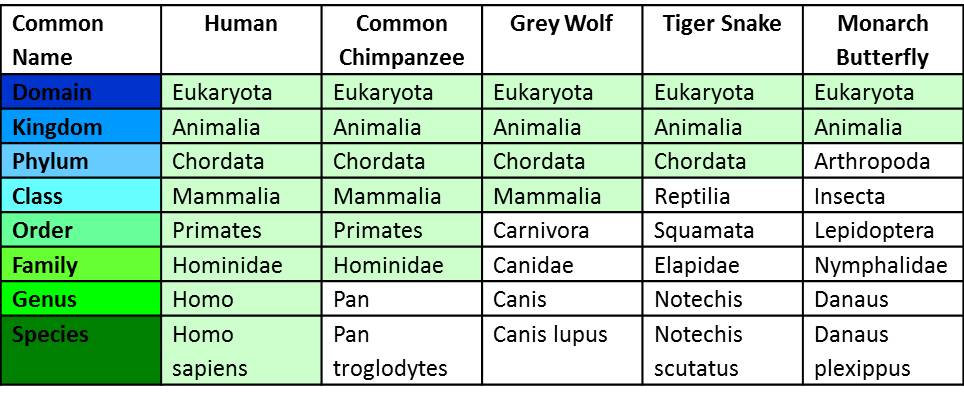
Domain, Kingdom, Phylum, Class, Order, Family, Genus, Species
Over time scientists have used this to classify organisms more accurately.
The Force
DNA
Golgi Apparatus
ATP
True or false. Organisms in the domain Archaea can live in extreme enviornments.
True
False
How can Scientists classify animals? Select all that apply.
How they get energy
How they reproduce
Who they are friends with
Whether or not they have a backbone
What color they are
What is an Omnivore?
An animal that gets its energy by eating both plants and meat
An animal that gets its energy by eating only meat
An animal that gets its energy by eating only plants
An animal that gets its energy by the sun
True or False. The first part of an organism’s scientific name is its genus and the second part is its species.
True
False
True or False. Organisms in the domain Eukarya can live in extreme environments.
True
False
Which of the 3 domains has membrane-bound organelles?
Archaea
Eukarya
Bacteria
Katara
Extra Credit!! What's my name?
Sarah Pico
Samantha Guacamole
Samantha Pico
Sabrina Pico
What is a Platypus classified as?
Amphibian
Mammal
Reptile
Bird
What are some characteristics of mammals? Check all that apply.
They produce milk for their offspring
They have hair on their body
They lay eggs
They have scales
They are warm-blooded
Which of the 3 domains can live world wide? Check all that apply.
Bacteria
Archaea
Eukarya
Which of these are part of your classroom netiquette rules?
Speak over the teacher whenever you feel like it
Always raise your hand and wait to be called on and respect others at all times
Disrespect your classmates
Talk to your friend during class
In 1990, Carl Woese introduced the three domain system for classifying living things, after the advancement of DNA analysis allowed for a comparison of species genetic code. Which of the following is the best explanation for why domains were added to the previous system of classification?
The old system of classification was wrong and needed to be corrected.
New species are evolving too quickly to keep up with the old system of classification.
Domains have always been included, they were just made official recently.
Some organisms, which were previously characterized together, were determined to be genetically very different.
What is the smallest and most specific group in the classification system?
species
domain
kingdom
Genus
Why do we classify living things
To keep information private
To make finding information easier
To confuse students
To make animals healthier
What is taxonomy?
The study of naming and classifying things
Preserving dead organisms
The science of paying your taxes
My cat's name
In a scientific name, what group does the FIRST name identify?
Genus
Species
Kingdom
Domain
In a scientific name, what does the SECOND name identify?
Genus
Species
Kingdom
Domain

To what genus does a Banana tree belong to?
Musa
Ficus
paradisicum
Bamboosa
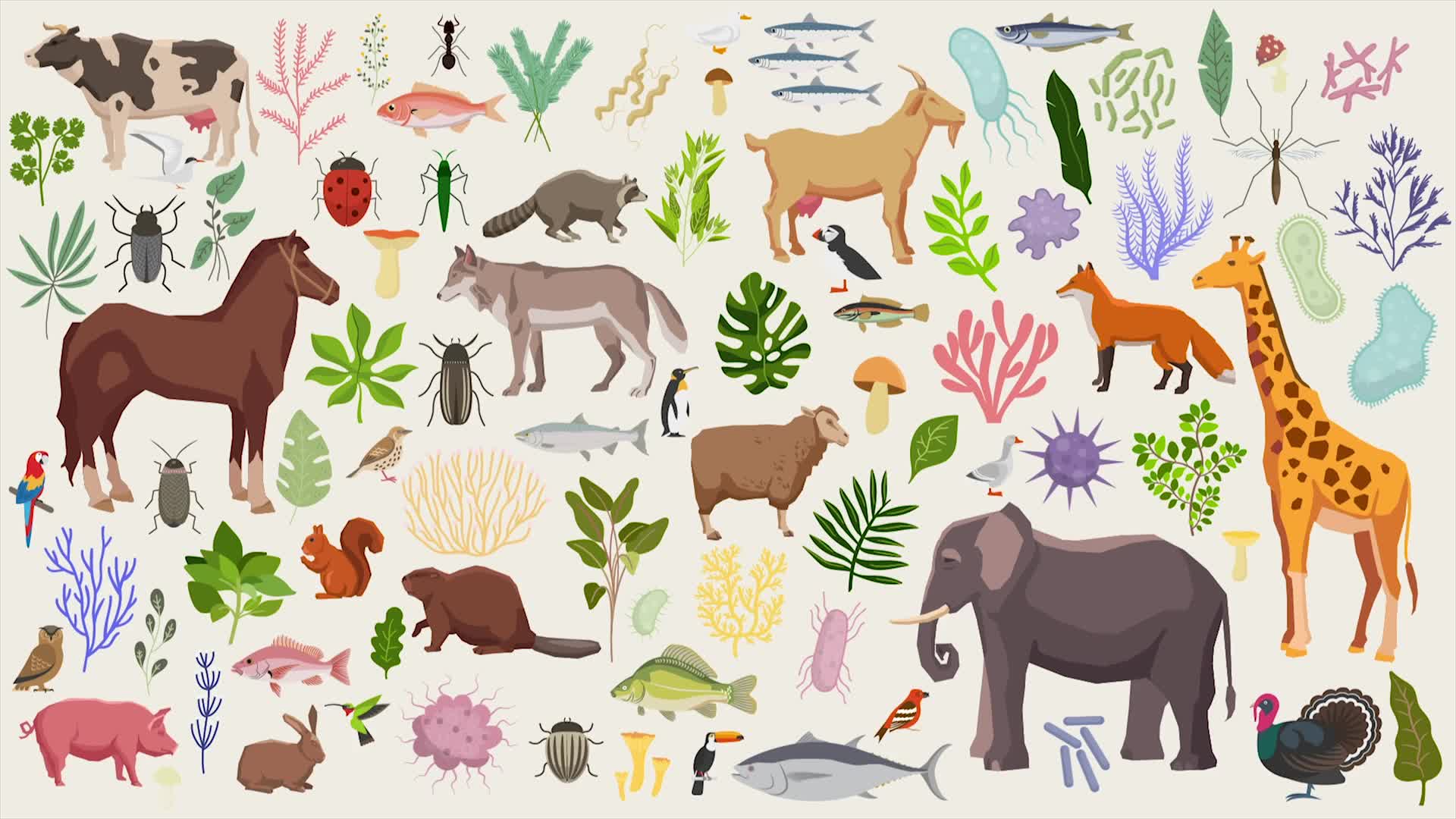

The modern Biological classification system is based on the pioneering work of:
Carl Linnaeus
Isaac Newton
Charles Darwin
John Meritus
Unicellular organisms that lack a nucleus and other cellular organelles are known as...
Prokaryote
Eukaryote
Heterotroph
Autotroph
Plants make their own energy molecules (food) using photosynthesis. What do we call this type of organism?
Prokaryote
Eukaryote
Autotroph
Heterotroph

The two-name naming system used in modern classification of living organisms is called...
cladogram
binomial nomenclature
genetics
phylogeny
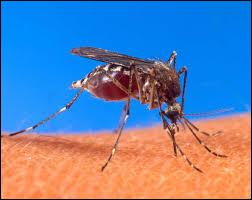

An example of an unicellular organism would be:
monkey
bacteria
spider
human

What is the correct order of taxonomy?
Kingdom, pylum, class, species, genus, family, class
Species, genus, family, order, class, phylum, kingdom
Kingdom, phylum, class, order, family, genus, species
species, phylum, order, class, kingdom, family, genus

