wayground logo

Free Printable Worksheets

Font size

S
M
L
XL
Worksheets

Bio Semester 1 Exam Review

Total questions: 110

Worksheet time: 1hrs 14mins

Name
Class
Date
1.

Which is the correct order for levels of organization from simple to complex?

a)

cell, organ , tissue, organ system, organism

b)

organism, organ system, tissue, cell, organ

c)

cell, tissue, organ, organ system, organism

d)

organ, tissue, cell, organism, organ system
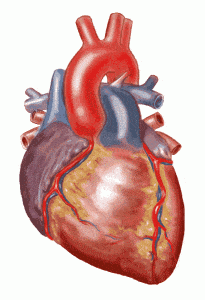
2.
This is a example of ........
a)
cell
b)
organ system
c)
organ
d)
tissue
3.
This is a example of ........
a)
cell
b)
tissue
c)
organ 
d)
organ system
4.
What is it called when a group of the same organisms living together in the same place at the same time?
a)
An organism
b)
A population
c)
A community
d)
A biome
5.
What are groups of different populations living togther in the same place at the same time called?
a)
An organism
b)
A population
c)
A community
d)
A biosphere
6.
What is it called when you have groups of different populations along with their abiotic factors?
a)
An organism
b)
A population
c)
A community
d)
An ecosystem
7.
When all the ecosystems on Earth are combined it is called...
a)
a community.
b)
a biome.
c)
a biosphere.
d)
an Earthsphere.
8.
The temperate decisuous forest, the tropical rain forest, the desert, and the tundra are all examples of...
a)
the biopshere.
b)
biomes.
c)
ecosystems.
d)
communities.
9.
A duck, a dragonfly, a morel mushroom and a bobcat are all examples of...
a)
organisms.
b)
populations.
c)
communties.
d)
ecosystems.
10.
Abby is walking to school with her best friend Jaylyn. They begin talking about everything they see including the ash trees, grass, weeds, ants, and people. They also notice how cold it is, how there are several large puffy clouds out, and how the sun is just starting to come up.  What level of organization are they discussing?
a)
community
b)
ecosystem
c)
biome
d)
biosphere
11.
What is a group of ecosystems that share similar climates and types of organisms called?
a)
A community
b)
A biome
c)
An ecosystem
d)
A biosphere
12.
All of the student, faculty and staff at Hazelwood West high school are considered what level of organization?
a)
A population
b)
A community
c)
A biome
d)
An ecosystem
13.
What are the ecological levels of organization from smallest to the largest?
a)
organism, population, community, ecosystem, biome, biosphere
b)
organism, community, population, ecosystem, biome, biosphere
c)
organism, population, community, biome, ecosystem, ecosphere.
d)
organism, community, population, biome, ecosystem, ecosphere
14.
There are ______________ characteristics of life.
a)
8
b)
6
c)
10
d)
5
15.
When you step out into the cold, your body shivers in order to keep its temperature at 98.6oF.
a)
All living things use energy
b)
All living things contain cells
c)
All living things maintain homeostasis
d)
All living things grow and develop
16.
Green plants produce their own food through the process of photosynthesis.
a)
All living things use energy
b)
All living things contain cells
c)
All living things maintain homeostasis
d)
All living things grow and develop
17.
A baby song bird hatches from its egg with both parent songbirds watching.
a)
All living things reproduce
b)
All living things maintain homeostasis
c)
All living things use energy
d)
All living things grow and develop
18.
A pill bug (roly poly) eats a carrot.
a)
All living things contain cells
b)
All living things use energy
c)
All living things maintain homeostasis
d)
All living things grow and develop
19.
A camel has eyelashes that work to keep the dust and sand out of its eyes.
a)
All living things adapt to their environment
b)
All living things grow and develop
c)
All living things have cells
d)
All living things display organization
20.
A caterpillar hibernates in a cocoon and emerges as a butterfly.
a)
All living things adapt to their environment
b)
All living things use energy
c)
All living things respond to their environment
d)
All living things grow and develop
21.
An amoeba is a unicellular organism. 
a)
All living things reproduce
b)
All living things contain a cell or cells
c)
All living things respond to their environment
d)
All living things grow and develop
22.
A tulip opens in the morning at sunrise and closes in the evening at sunset.
a)
All living things have cells
b)
All living things use energy
c)
All living things respond to their environment
d)
All living things grow and develop
23.
Over three years, Tim's height has increased from 5'4" to 5'11".
a)
All living things display organization
b)
All living things maintain homeostasis
c)
All living things use energy
d)
All living things grow and develop
24.
A cat is an organism that has a respiratory system that contains lungs and a trachea.
a)
All living things contain cells
b)
All living things maintain homeostasis
c)
All living things display organization
d)
All living things grow
25.
A sea worm drops its tail and the tail becomes a new worm.
a)
All living things contain cells
b)
All living things grow and develop
c)
All living things display organization
d)
All living things reproduce
26.
An adult hydra is producing its offspring through budding.
a)
All living things use energy
b)
All living things reproduce
c)
All living things contain cells
d)
All living things grow and develop
27.
Over many hundreds of years, a population of rabbits living in the woods adapts to its surrounding with brown fur.
a)
All living things adapt to their environment
b)
All living things grow and develop
c)
All living things use energy
d)
All living things maintain homeostasis
28.
The roots of a plant grow towards a source of ground water.
a)
All living things use energy
b)
All living things reproduce
c)
All living things respond to their environment
d)
All living things grow and develop
29.
YOU are a multi-celled organism, but an amoeba is a single celled organism.
a)
All living things have cells
b)
All living things grow
c)
All living things use energy
d)
All living things respond to their environment
30.
Which DOES NOT explain the difference between asexual and sexual reproduction?
a)
Asexual is with only one parent, while sexual needs two.
b)
Asexual creates offspring identical to the parent, while sexual is a mix of both.
c)
Sexual and asexual both create identical offspring to the parent.
d)
Sexual involves fertilization of eggs by sperm.
31.
The cells that are older, smaller, less complex, and do not contain a nucleus are _______________________.
a)
eukaryotic
b)
proeukaryotic
c)
prokaryotic
d)
all cells
32.
The maintenance of a stable internal environment to sustain life is __________________________.
a)
homeostasis
b)
heterostasis
c)
metabolism
d)
adaptation
33.
To be considered living, an organism needs to have ___________________ characteristic(s).
a)
at least one
b)
7
c)
all 8
d)
any number of
34.

What is a square called that we use to sample populations?

a)

grid

b)

quadrat

c)

cube

d)

quarter

35.

What type of population would you ESTIMATE using a quadrat?

a)
b)
c)
d)
36.

What can a quadrat be used to measure?

a)

length

b)

weight

c)

population density

d)

volume

e)

time

37.
Unbiased sampling is:
a)
when you choose the group you think will represent the sample
b)
when any member of the population is equally likely to be chosen for the sample
38.

What is the best way to place a quadrate?

a)

Place it where you like

b)

Divide the sample area into a grid and use a random number generator to choose a square.

c)

Throw the quadrate so it's random

d)

Divide the sample area into a grid and choose a square.
39.
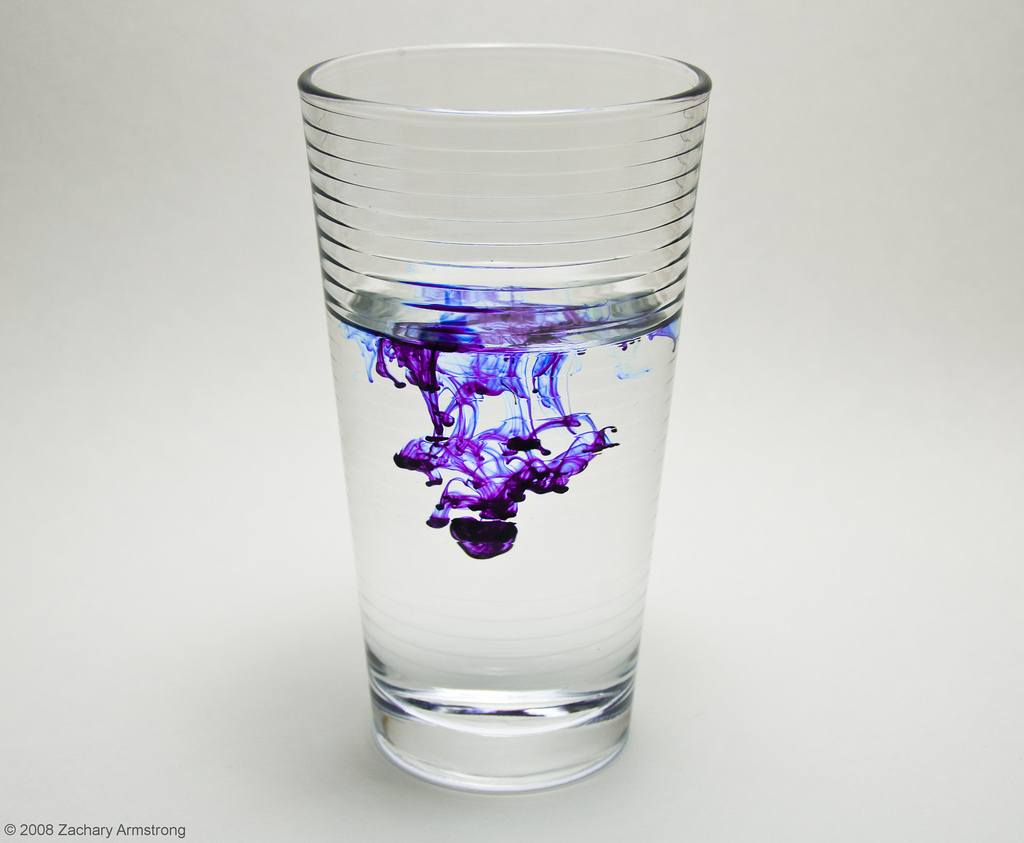
What is diffusion?
a)
when molecules move 
b)
when molecules move from a high concentration to a low.
c)
no movement 
d)
molecules move everywhere
40.
Where is there a low concentration of dye?
a)
at the bottom of cup
b)
in the color
c)
at the top of cup 
d)
no concenteraion gradient
41.
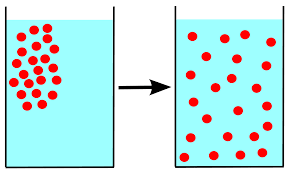
The picture below is an example of _________________.
a)
osmosis
b)
isotonic
c)
diffusion
d)
active transport
42.
Osmosis is the movement of _____ across a membrane.
a)
food
b)
energy
c)
oxygen
d)
water
43.
During osmosis
a)
water moves from high to low concentration
b)
large or oddly shaped molecules move across a cell membrane
c)
water moves when energy is used
d)
proteins are built
44.
When both inside and outside of a cell have the same amount of water it is said that the cell has reached a state of
a)
Osmosis
b)
Diffusion
c)
Equilibrium
45.

What is DIFFUSION?

a)
b)
c)
d)
46.

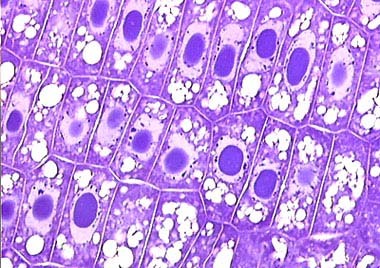
What happened to the CELL WALL and the CELL MEMBRANE in these plant cells?

a)

Both the CELL WALL and CELL MEMBRANE shrunk

b)

Only the CELL WALL shrunk, the CELL MEMBRANE stayed the same

c)

The CELL WALL stayed the same, only the CELL MEMBRANE shrunk

d)

Both the CELL WALL and CELL MEMBRANE stayed the same

47.
_______ regulates what enters and leaves a cell.  
a)
Cell Membrane
b)
Nucleus
c)
Mitochondria
d)
Cytoplasm
48.

Define plasma membrane

a)

lipid that helps minimize effects of temperature

b)

only on the outer surface of the plasma membrane and are attached to proteins or lipids; form distinctive cellular markers

c)

flexible boundary of a cell that separates a cell from its surroundings

d)

may extend partway into the plasma membrane, cross the membrane entirely, or be loosely attached to its inside or outside face

49.

This image is an example of a phospholipid. Which part of a phospholipid is HYDROPHOBIC?

a)

the phosphate "head"

b)

the lipid "tails"

50.

This image is an example of a phospholipid. Which part of a phospholipid is HYDROPHILIC?

a)

the phosphate "head"

b)

the lipid "tails"

51.

Which are example is hydrophobic in nature.

a)

Oil

b)

Sugar

c)

Salt

d)

Water

52.
Which structures are found in every living cell?
a)
cell membrane and cytoplasm
b)
chloroplasts and mitochondria
c)
a cell wall and nucleus
d)
chloroplasts and cell wall
53.
Which cell structure is found in plant and animals cells and controls what can come into or leave a cell?
a)
cell membrane
b)
cytoplasm
c)
nucleus
d)
vacuole
54.
Cell organelles that are responsible for digesting food, worn out organelles and other cellular wastes are called ___________________.
a)
Mitochondria
b)
Vacuoles
c)
Lysosomes
d)
Chlororplasts
55.
What is one basic function of the vacuoles?
a)
circulating oxygen
b)
producing food
c)
controlling cell processes
d)
storing water
56.
All cells need energy to function.  Which cell organelle is responsible for producing energy in the cell?
a)
chloroplasts
b)
mitochondria
c)
nucleus
d)
vacuoles
57.
Cells with a nucleus and membrane-bound organelles are called ____________________.
a)
prokaryotes
b)
eukaryotes
c)
bacteria
d)
protists
58.
Which of the following is not part of the cell theory?
a)
cells must contain DNA 
b)
all living things are made from cells
c)
cells can only come from other cells
d)
cells are the basic unit of life
59.
Who was the first  person to see cells under the microscope and give them their name?
a)
Mattias Schleiden
b)
Robert Hooke
c)
Theordor Schwann
d)
Anton van Leeuwenhoek
60.
The basic unit of structure and function in a living things.
a)
chloroplast
b)
nucleus
c)
cell
d)
cell membrane
61.
Which organelle is only found in a plant cell? 
a)
nucleus
b)
chloroplast
c)
mitochondria
d)
cell membrane
62.
A structure inside a cell that does a certain job is called an ___________________.
a)
cell
b)
organelle
c)
object 
d)
part
63.
Four students examined the cells and made the following observations: 
Student 1: Cell 1 is a plant cell because it has a cell wall
Student 2: Cell 2 is an animal cell because it has a nucleus
Student 3: Cell 1 is a plant cell because it has chloroplasts
Student 4: Cell 2 is an animal cell because it has a cell membrane
Who is correct?
a)
Student 1 and Student 2
b)
Student 2 and Student 3
c)
Student 1 and Student 3
d)
Student 2 and Student 4
64.
My main goal is to produce a lot of ATP energy. 
a)
Chloroplast
b)
Mitochondria
65.
i contain pigments to help capture light energy. 
a)
C
b)
M
c)
both
66.
Oxygen gas production will happen within me. 
a)
C
b)
M
c)
CM
67.
I can be found in plant cells. 
a)
C
b)
M
c)
CM
68.
I can be found in animal cells. 
a)
C
b)
M
c)
CM
69.
Carbon dioxide gas production will happen within me. 
a)
C
b)
M
c)
CM
70.
Muscle cells would contain a lot of me. 
a)
C
b)
M
c)
CM
71.
Water production will happen within me. 
a)
C
b)
M
c)
CM
72.
Glucose production will happen within me. 
a)
C
b)
M
c)
CM
73.
I would be found within a photosynthetic protist.
a)
C
b)
M
c)
CM
74.
Krebs and the Electron transport chain both happen within me.
a)
C
b)
M
c)
CM
75.
I contain the pigment Chlorophyll.
a)
C
b)
M
c)
CM
76.
The calvin cycle happens within me.
a)
C
b)
M
c)
CM
77.
What three things are needed for a plant to do photosynthesis?
a)
Glucose, Oxygen, Sunlight
b)
CO2, Oxygen, Sunlight
c)
CO2, Water, Sunlight
d)
Oxygen, Water, Sunlight
78.
The formula for glucose is...
a)
C12 H22 O11
b)
NaCl
c)
NaOH
d)
C6 H12 O6
79.
Which is the correct formula for photosynthesis?
a)
CO2 + H2O --> (in sunlight) C6H12O6 + O2
b)
sunlight + CO2 + H2O --> C6H12O6 + O2
c)
C6H12O6 + O2 --> (in sunlight) CO2 + H2O
d)
CO2 + H2O --> C6H12O6 + O2 + sunlight
80.
What does the arrow in a chemical equation mean?
a)
equals
b)
produces
c)
yields
d)
means
81.
What is the correct equation for cellular respiration?
a)
6O2 + C6H12O6 -> 6CO2 + 6H2O + Energy
b)
6O2 + C6H12O6 + Energy -> 6CO2 + 6H2O
c)
6CO2 + 6H2O -> 6O2 + C6H12O6 + Energy
d)
6CO2 + 6H2O + Energy -> 6O2 + C6H12O6
82.
Cellular Respiration's goal is to
a)
make water
b)
make ATP
c)
make glucose
d)
make  oxygen
83.

Which of the following is correct concerning cellular respiration?

a)

Only animals perform cellular respiration.

b)

All organisms except for plants perform cellular respiration.

c)

Only eukaryotic organisms perform cellular respiration.

d)

All organisms, including plants, perform cellular respiration.

84.
The two type of fermentation are alcohol and _____________ acid fermentation. 
a)
lactic
b)
sulfuric
c)
hydrochloric
d)
acetic 
85.
The splitting of the glucose molecule is called?
a)
synthesis
b)
denaturalization
c)
glycolysis
d)
dissolving
86.

packages and distributes proteins

proteins may be modified here

a)

golgi body

b)

chloroplast

c)

ribosomes

d)

lysosome

87.

makes proteins from amino acids

a)

ribosomes

b)

mitochondria

c)

nucleus

d)

lysosome

88.
What is the name of the 1st step of cellular respiration?
a)
Glycolysis
b)
Kreb's Cycle
c)
ETC
d)
Anaerobic respiration
89.
What is the net gain of ATP during glycolysis?
a)
1
b)
2
c)
4
d)
34
90.
Which type of respiration occurs in the presence of oxygen?
a)
Aerobic
b)
Anaerobic
91.
Which type of respiration occurs without the presence of oxygen?
a)
Aerobic 
b)
Anaerobic 
92.
Glucose is broken down during which process?
a)
Calvin cycle
b)
Glycolysis
c)
Krebs Cycle
d)
Photosynthesis 
93.
Along with 2ATP, what is produced during glycolysis?
a)
6CO2
b)
6O2
c)
C6H12O6
d)
2 pyruvate
94.
___ produces the most ATP.
a)
Aerobic respiration
b)
Anaerobic respriation
c)
Glycolysis
d)
Photosynthesis
95.
Which is a product of Kreb's Cycle?
a)
Carbon dioxide
b)
Glucose
c)
Pyruvate
d)
Water
96.
What is the name of the process that helps make beer and wine?
a)
Fermentation
b)
Alcoholic fermentation
c)
Lactic acid fermentation
d)
Glycolysis
97.
Which type of fermentation occurs in muscles?
a)
Alcoholic 
b)
Lactic acid
98.

The correct word equation for Anaerobic respiration is

a)

glucose → lactic acid + oxygen

b)

glucose → lactic acid (+ energy released)

c)

glucose + oxygen → lactic acid (+ energy released)

d)

lactic acid → energy released

99.

The correct word equation for aerobic respiration is

a)

carbon dioxide + water (+ energy) → glucose + oxygen

b)

water + oxygen → carbon dioxide + glucose (+ energy)

c)

glucose + oxygen → carbon dioxide + water (+ energy)

d)

glucose + water → carbon dioxide + water (+ energy)
100.
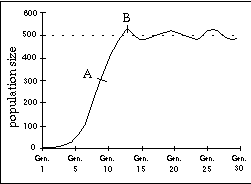
What is the carrying capacity of the graph?
a)
around 500
b)
more than 500
c)
less than 500
d)
around 600
101.

The graph to the right shows the interaction of the wolf and moose populations on Isle Pekie. If the moose population continues to increase, the wolves' food supply will increase. What will most likely happen to the wolf population as a result?

a)

It will decrease.

b)

It will increase.

c)

It will remain the same.

102.

According to the graph, what is causing the deer population to decrease

a)

They got sick

b)

The wolf population is decreasing

c)

The wolf population increased

d)

They ran out of food

103.

Predator population lags behind prey population because......

a)

Increase in predators leads to decrease in prey

b)

Increase in predators leads to increase in prey

c)

Increase in predators leads to decrease in producers

d)

Increase in producers leads to increase in prey

104.

Which of the following is NOT true of the included graphs?

a)

The reintroduction of wolves led to a decline in the beaver population.

b)

The reintroduction of wolves led to an increase in the elk population.

c)

The ecosystem was healthier after wolves were reintroduced.

d)

The reintroduction of wolves led to a decline in the bison population.

105.

Grouse, hares, and voles feed on vegetation. Where on the graph would you expect vegetation to be in short supply?

a)

I

b)

II

c)

III

106.

Identify the tropism in the picture.

a)

Geotropism

b)

Positive Thigmotropism

c)

Hydrotropism

107.
__________occurs when a plant's stem grows up and its roots grow down.
a)
external stimulus
b)
geotropism
c)
turgor pressure
d)
fight of flight
108.
A plant bending toward a window is an example of ...
a)
phototropism
b)
gravity
c)
geotropism
d)
turgor pressure
109.
A root grows downward in a response to an_______stimulus 
a)
external
b)
internal
c)
phototropism
d)
geotropism
110.
A plant's root grow in a downward direction in response to what force? 
a)
sunlight
b)
gravity
c)
soil
d)
turgor pressure