
 Worksheets
Pesticide
Total questions: 111
Worksheet time: 1hrs 7mins
What two factors are most important in relation to vapor drift?
droplet size and wind direction and speed
air stability and temperature
viscosity or liquid pesticides and air turbulence
temperature and pesticide volatility
Which statement about sensitive areas is true?
Never spray a sensitive area to control a pest for any reason.
Do not spray a larger target site if it contains a sensitive area.
Pesticide labels may contain statements that list special precautions around sensitive areas.
Endangered species habitats are not considered sensitive areas.
Which is a recommended best management practice for preventing contamination of surface and groundwater by pesticides?
Use pesticides that are highly water soluble
Use terrace and conservation tillage practices.
Clean sprayers near sinkholes.
Select persistent pesticides.
Which statement is true about groundwater or surface water contamination by pesticides?
Pesticides cannot reach groundwater by runoff
Runoff and erosion are sources of surface water contamination by pesticides
Pesticide-contaminated surface water will not reach groundwater
Groundwater or surface water contamination risk is low when a heavy rain immediately follows a herbicide application
Which statement is true about protecting bees from pesticide injury?
wettable powders are the safest formulation for preventing bee injury
it is best to spray crops when they are in bloom
aerial applications are less hazardous to bees than ground applications
applying pesticides in the evening or during early morning is recommended
what label statement will be on pesticides that might harm endangered species?
advice to consult a county bulletin to determine what special precautions to take when using the product
advice to consult a local conservation officer for a permit to apply the pesticide
ban on use of the pesticide in all areas where endangered species might be harmed
a list of the endangered species that might be harmed by the pesticide
which of these soil types is most likely to experience leaching?
heavy clay soil, low in organic matter, where groundwater is shallow
heavy clay soil, high in organic matter, where groundwater is deep
sandy soil, high in organic matter, where groundwater is deep
sandy soil, low in organic matter, where groundwater is shallow
Which of these may be a cause of non-point source pollution?
back-siphoning of pesticide spills at a wellhead
leaching from a pesticide mixing area
pesticides that dissolve and leach through the soil after a rainfall
dumping leftover pesticide products down a well
What characteristic of a pesticide makes it likely to move with water in surface runoff?
high solubility
high adsorption
high volatility
a tendency to evaporate quickly
What two factors are most important in reducing spray drift?
droplet size and wind condition
temperature and wind condition
viscosity of liquid pesticides and air turbulence
temperature and pesticide volatility
What two factors are most important in relation to vapor drift?
droplet size and wind direction and speed
air stability and temperature
viscosity or liquid pesticides and air turbulence
temperature and pesticide volatility
Applicators of all pesticides or their supervisors must have state certification.
True
False
Pesticide applicators may be classified as private applicators if they apply pesticides-
only on their own property
to produce agricultural commodities primarily on the property of other ppl.
to produce agricultural commodities on their own property.
Pesticides in the restricted use category can be used by the general public without certification if recommended by a state of agency.
True
False
If a commercial applicator wishes to apply for the control pests in agricultural crops and pests in public health, he must obtain certification in each of the appropriate categories.
True
False
The term "Under the direct supervision of" means the supervisor-
must be on the job while the restricted use pesticide is being applied.
Can be in his office when the operator is applying a restricted use pesticide if available when needed.
Can be available at night following the morning the restricted use pesticide is applied.
Can be any distance away provided he can be reached with in 48 hours after the restricted use pesticide was applied.

The ability of an organism to remain unaffected by a harmful agent in the environment
chronic toxicity
acute toxicity
resistance
monoculture
Rats and inscets have become:
weaker with decreasing populations
stronger populations with genetic resistance to pestiiceds.
equally effected by pesticides still being used.
None of the above
What is the target pest for Herbicides?
Weeds
Rodents
Insects
Algae
What is the target pest is matched correctly with its pesticide group?
bactericide - birds
Fungicide - bacteria
acaricide (miticide) - mites, ticks
repellent - insects, plants
Which common types of mixture is formed by dissolving a substance in a liquid?
Suspension
Solution
Emulsions
None of the answers.
Which is NOT an example of dry formulation?
Soluble Powder
Granule
Emulsifiable Concentrate
Wettable Powder
What is a pesticide that form gases or vapors. This type of formulant is highly toxic and require additional licensing.
Microencapsulated
Flowable or Liquid
Granules
Fumigants
Which formulant is a safety concern for bees?
Granules
Solution
Microencapsulated
Emulsifiable Concentrate
A chemical that modifies a pesticide's physical properties and/or enhances a pesticides performance is called?
Adjuvant
Aerosols
Fumigants
Surfactants
Which is NOT considered a Physical Incompatibility for a pesticide?
pH, chemical composition and or temperature
not being able to manually mix together the pesticides
mixtures that settle, layer, curdle or gel.
synergism that increased activity or effectiveness applying them together
What kind of test should be performed if physical compatibility may be a concern?
antagonism
pH test
jar test
I have no clue
Which way do pesticides achieve useful pest control by which of the following?
Selectivity
Mobility
Residual Activity
All of the choices
Spot, Band, Broadcast are all major types of ___________ for pesticides.
applications
formulants
overlap
equipment
Part of equipment that monitors pressure in booms, and determines output of nozzles and affects overall spray quality.
Tank
Agitation
Values
Pressure Gauge
What are two types of Pesticide drift?
particle drift
vapor drift
spray
water
Which are problems associated with pesticide drift?
Non-target damage
Poor pest control
Negative outcomes
all of the choices
Particle drift is primarily influenced by which of the following?
droplet size
wind speed
wind direction
relative humidity
Pesticides have Hazards equation, what are the missing factors in the equation.
Hazard= __________ x __________
Pressure
Toxicity
Water Content
Exposure

Which chemical is the most toxic?
A
B
C
D

Lethal dose (LD50) values are determined by the amount of a substance that:
kills at least 50 individuals of the test population exposed to the substance
kills a test population when given at least 50 ml of the substance
kills at least 50% of the test population exposed to the substance
kills a test population when given at least 50g of the substance

Which material is most likely to be considered chemical resistant?
Leather
Cotton
Nitrile
Wool

What part of the applicator's body is most likely to be exposed to pesticides?
Hands
Feet
Face
Belly

Which scenario does not require extra PPE?
Walking into a previously treated area after the REI
Applying pesticides in enclosed spaces
Adjusting pesticide contaminated equipment
Immersing hands and forearms into pesticides

The minimum items required to wear on most pesticide labels are:
Safety glasses
Long sleeved shirt, long pants, shoes, and socks
Respirator
Chemical resistant gloves

How often should PPE be cleaned?
After every use
After every 3 uses
At least once per month
At least once per growing season
Pesticides should be transported:
In the back of a truck
In a vehicle in a separate place from passengers
Never

What type of toxicity is caused by prolonged exposure to small amounts of pesticide?
Acute
Chronic
Delayed
Allergic

Nausea, diarrhea, headache, difficulty breathing, body aches, and chest pains are symptoms of:
Pesticide poisoning
Pesticide allergies
Heat Stroke
Pop quizzes in this class

Which type of exposure is most common for pesticide handlers?
Oral
Inhalation
Ocular
Dermal
Empty pesticide containers must be rinsed:
Once
Twice
Three times

When mixing and pouring a pesticide, it is best to do it:
Above your head, to avoid ocular exposure
At eye level, to maintain accuracy
Below face level, to prevent splashing on your face

What are your legal responsibilities as a pesticide applicator?
Follow labeling instructions to the letter
Provide pesticide handlers with specific instructions
Make sure no workers are overexposed to pesticides
All of the above

Which of the following is not a common way that pesticides might accidentally be transferred to others?
Sitting in a car or chair while wearing soiled PPE
Using the bathroom right after a pesticide application
Giving high fives in the parking lot after work
Taking pesticide contaminated clothing home.

Which of the following should be taken into consideration when choosing a pesticide formulation?
Application site and equipment
Pesticide movement
Personal Safety
Target Pest
All of the above

Cleaning pesticide contaminated equipment presents a much smaller risk to the handler than actually applying the pesticides.
True
False

Which type of application method involves application of a pesticide to the leafy parts of a plant?
Band
Broadcast
Foliar
Tree Injection

Why is it important to apply the right amount of pesticide to the target site?
Too little pesticide may not control the pest
Too much pesticide may cause damage or injury
Too much pesticide may lead to fines or legal action
All of the above

Which type of sprayer would be best to make a broadcast application to a 25 acre field?
Hand sprayer
Boom sprayer
Drop spreader
Backpack sprayer

During a test, 1/2 gallon is applied to 250 square feet. The label calls for 1 gallon per 1000 square feet. Is it right?
You are applying the correct amount.
You are applying too little.
You are applying too much.
There is not enough information.

A product label recommends 2 pints per acre. The boom sprayer uses 10 gallons of water per acre. What do you need to treat a 10 acre field?
2 pints of spray, 10 gallons of water
20 pints of spray, 10 gallons of water
2 pints of spray, 100 gallons of water
5 gallons of spray, 100 gallons of water

A rectangular shaped field with dimensions that measure 50' x 10' has an area of:
5 square feet
50 square feet
500 square feet
5,010 square feet

When calibrating equipment, you should take into consideration:
The uniformity of pesticide output
The application rate
Both the uniformity and application rate

How many square feet are in one acre?
1,000 ft2
660 ft2
3,301 ft2
43,560 ft2

Which of the following causes drift?
Equipment features and setttings
Spray characteristics
Environmental conditions
Application site features
All of these can cause drift

What can an applicator do to reduce the potential for drift?
Increase the droplet size
Lower the operating pressure of the sprayer
Lower the boom height of the sprayer
All of the above
You are applying a pesticide to a lawn. The total lot size is one acre, however, a house covers an area 60 feet long by 25 feet wide and the driveway covers another area which is 280 square feet. What is the total square feet you will spray.
41,780
43,560
21,780
45,000
What is the purpose of a pesticide formulation?
To enhance the color and odor of the pesticide
To determine the application method
To improve the stability and effectiveness of the pesticide
To determine the concentration of active ingredients
Which type of formulation requires dilution before application?
Baits
Granules
Gels
Dusts
What is a disadvantage of emulsifiable concentrates (EC or E)?
Little visible residue on treated surfaces
Not abrasive to equipment
Easy to handle, transport, and store
High concentration of active ingredient
What is an advantage of ultra-low volume (ULV) formulations?
Specialized equipment requred
Difficult to keep pesticide on target-high drift hazard
Not abrasive to equipment
Easily absorbed through skin
Which type of formulation is most commonly used for ant and cockroach control?
Liquids
Gels
Granules
Dusts
What is a disadvantage of granular formulations?
break down more slowly than WP's or EX's bc of slow-release coating
needs moisture to activate
Little hazard to applicator because there is no spray and little dust
Ready to use with no mixing
What is the main disadvantage of wettable powders (WP or W)?
Abrasive and may cause pumps and nozzles to wear out quickly
Easily measured and mixed
easy to store, transport, and handle
Less skin and eye absorption than ECs and other liquid formulations
Which type of formulation requires constant agitation to keep the particles suspended in water?
Soluble powders (SP or WSP)
Water-dispersible granules (WDG or DG)
Thickeners
Microencapsulated materials
What is the purpose of adjuvants in pesticide formulations?
To reduce foaming of spray mixtures
To increase the effectiveness of the pesticide
To decrease drift
all of the above
Some abbreviations used for common types of formulations include:
EC for emulsifiable concentrate
ER for emulsifiable restriction
GL for granulated low volatility
WS for wettable solute
Which types of adjuvant function as wetting agents and spreaders (by physically altering the surface tension of spray droplets)?
Compatibility Agent
Surfactants
Buffers & pH modifiers
Thickeners
Adjuvants
Are chemicals that affect how the pesticide works
Lack pesticidal properties
Change the characteristics of a pesticide formulation or a spray
All of the above
Which is not an advantage of the listed formulation?
Ready to use low concentrate solution—convenient, no measuring or mixing is required
Liquid baits—ant will carry the material to the colony
Aerosols—easy to get uniform application
Microencapsulated pesticides—reduced odor and volatility
The name “Sevin 4D” on a pesticide label indicates:
Granular pesticide with 4 % inert ingredients
A gel pesticide with 4% active ingredients
A dust pesticide with 4% active ingredients
A dust pesticide with 4% inert ingredients
What is a disadvantage of both EC and concentrate formualtions?
solvents may cause rubber or plastic hoses, gaskets, and pump parts and surfaces to deteriorate
contribute to abrasive wear of nozzles and pumps
require constant agitation to keep in suspension
difficult to handle, transport, and store
Which dry/solid formulation is mixed in water and reduces the risk of inhalation exposure during mixing and loading?
dusts (D)
Wettable Powders (WP)
Soluble Powders (SP)
Water-dispensable granules (WDG) or dry flowables (DF)
Which type of dry/solid pesticide formulation consists of particles that are the same weight and shape?
Dusts
Granules
Pellets
Baits
Which is an advantage of microencapsulated materials?
they pose few hazards to bees
delayed or slow release prolongs effectiveness
pesticidal activity is dependent on weather
require only a short REI
Which liquid pesticide formulation may approach 100 percent active ingredient?
Emulsifiable concentrate (EC).
Ultra-low volume (ULV).
Ready-to-use low-concentrate solutions (RTU).
Aerosols (A).
The name “Sevin 5G” on a pesticide label indicates:
A granular pesticide with 5 percent inert ingredients.
A gel pesticide with 5 percent inert ingredients.
A granular pesticide with 5 percent active ingredients.
A gel pesticide with 5 percent active ingredients.

Where should you look to see if a pesticide is classified as "Restricted Use"?
In a box on the front of the label
Near the barcode on the bottom of the packaging
On the shelf at the retail store
Google search engine?

Which signal word is indicated by this picture?
Danger-Poison
Warning
Caution
Hazardous

Which signal word means that the product is slightly toxic and is less likely to cause acute illness?
Danger-Poison
Warning
Caution
Hazard

What must appear on ALL pesticide labels?
Harmful if Swallowed
Caution
Keep Out of Reach of Children
Re-Entry Intervals

Which product will provide detailed information about a product's physical and chemical properties, toxicity, and accident procedures?
The product label
The product SDS
The product advertising literature
The product receipt of purchase
Glyphosate exposure over time may cause in humans:
Colds
Rashes and burns
Immune disorders
Cancers

What concentration of active ingredients would you expect to find in this product?
8%
80%
92%
Not enough information
Formula to determine necessary nozzle flow rate.
GPM= (GPA x MPH x W)/5940
GPM= (GPA x MPH x 5940)/W
GPM= (GPA + MPH + W)-5940
GPM= (GPA - MPH x W)/5940
Formula for spray application rates. Is GPA= (GPMx5940)/(MPH x W)
What does GPA, GPM, MPH and W represent?
GPA = spray application in gallons per acre
GPM= nozzle flow in gallons per minute
MPH = ground speed in miles per hour
W = sprayed width in inches
GPA = nozzle flow in gallons per minute
GPM= spray application in gallons per acre
MPH = ground speed in miles per hour
W = sprayed width in inches
GPA = nozzle flow in gallons per minute
GPM= spray application in gallons per acre
MPH = sprayed width in inches
W = ground speed in miles per hour
I have no cliue
Your Sprayer is set up with nozzles spaced at 10 inches and you have measured the nozzle flow rate to be .30 gallons per minute at a pressure of 40 psi. You intend to broadcast spray at a ground speed of 5 mph. What is the spray application rate in gallons per acre?
35.64 gallons per acre
3,564 gallons per acre
.3564 gallons per acre
3.564 gallons per acre
You need to apply a pesticide at a spray application rate of 30 gallons per acre. You spray at 7 mph and your boom is setup with a 25 inch nozzle spacing. What nozzle flow rate do you need for this application?
.884 gallons per minute
8.84 gallons per minute
88.4 gallons per minute
884 gallons per minute
To determine the formulation rate you need to know what two things.
area
rate
pressure
MPH
You need to treat 7 acres of football fields with a herbicide labeled at 64 fluid ounces of product per acre. How many gallons of product are needed to treat the entire football fields?
*hint 128 fluid ounces in a gallon*
448 gallons
3.5 gallons
44.8 gallons
35 gallons
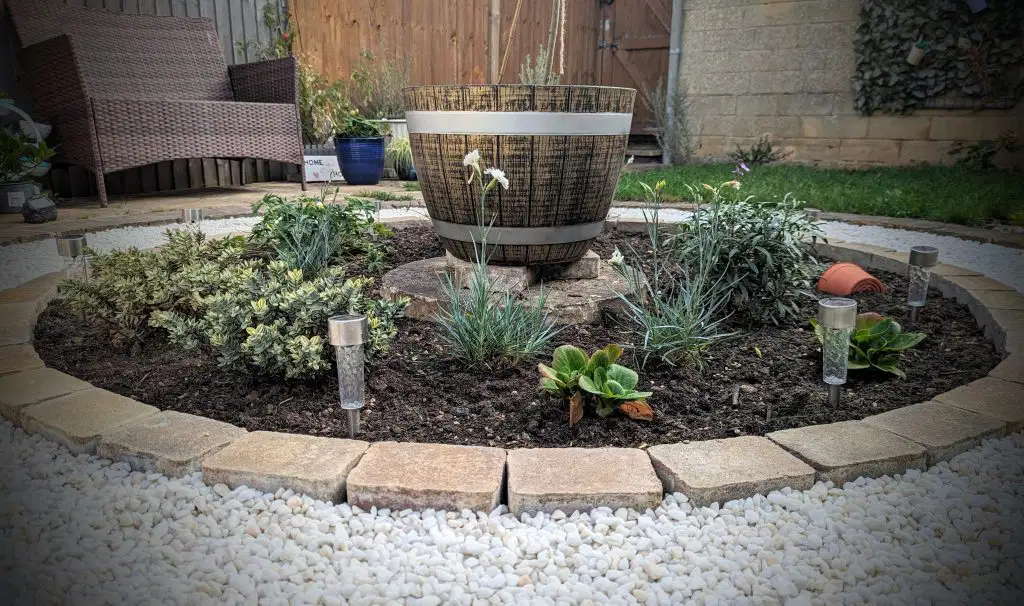
The following are ways to calculate area, Which is the correct formula to apply herbicide to this area.
length x width
(base x height) / 2
3.14 x radius x radius
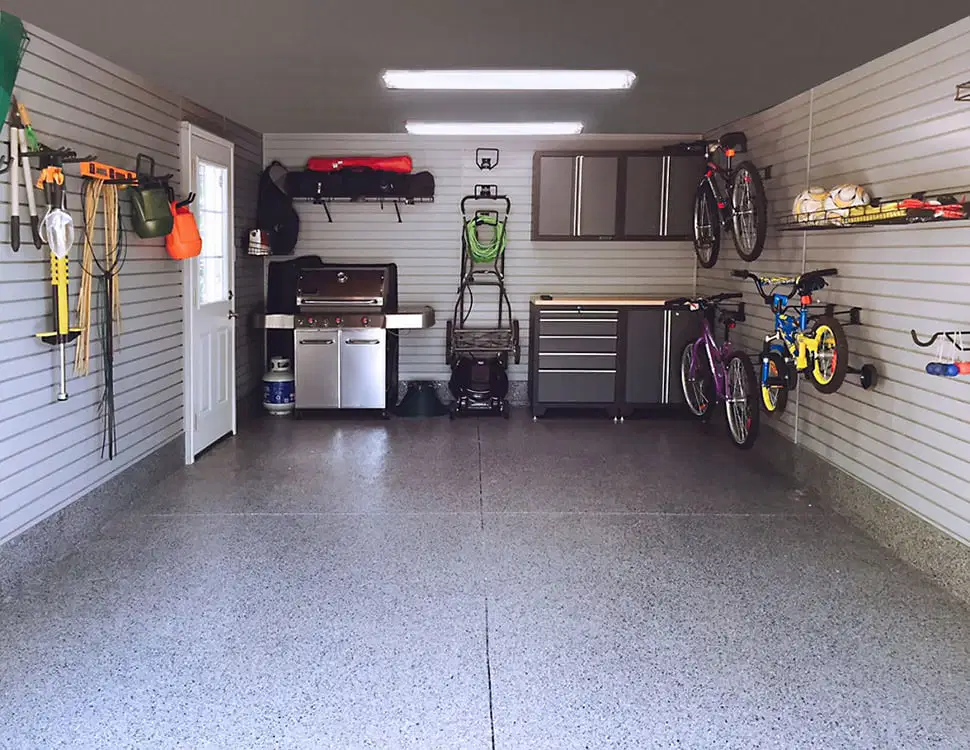
The following are ways to calculate area, Which is the correct formula to apply pesticide to this area.
length x width
(base x height) / 2
3.14 x radius x radius
You have a pesticide that needs to be applied to a triangular area with base of base line of 10 feet and height of 20 feet. The labeled product rate is 40 fluid ounces per 1,000 feet squared. How many fluid ounces of the pesticide formulation will you need to spray this aera?
4 fl ounces
40 fl ounces
10.0 fl ounces
100 fl ounces
How many ponds of a.i. are in 5 pounds of an 60WP insecticide?
3 pounds a.i.
300 pounds a.i.
.00083 pounds a.i.
30,000 pounds a.i.
A pesticide recommendation calls for applying 3 pounds of a.i. per acre. Using a 9EC formulation, what should the product rate be in gallons per acre?
33 gallons of product per acre
.33 gallons of product per acre
27 gallons of product per acre
2.7 gallons of product per acre
The 3 basic rules of an integrated pest management program are: work with a PCO; deny pests access; and
deny pests food, water, and a nesting or hiding place
document all infestations with the local regulatory authority
prepare a chemical application schedule and post it publicly
notify the EPA that pesticides are being used in the operation
What is a basic rule of an Integrated Pest Management program?
Work with a pest control operator.
Destroy pests on sight.
Use pesticides.
Set traps.
What information should be recorded and shared with the pest control operator if pests are spotted at the operation?
Color, weight, gender
Date, time, location
Size, type, number
Species, frequency, temperature
What is the third step in the IPM process?
Identification
Prevention of pests
Monitoring new infestations
Using traps
What additional requirement is there for applying restricted pesticides?
It may be applied by or under the direct supervision of a licensed certified applicator
It must be applied only during daylight hours
It requires a special permit from the local government
It can only be applied in rural areas
If a product is labeled with "Caution," what is its hazard level?
Mild/moderate hazard
Moderate hazard
Extremely flammable
Highly toxic

