wayground logo

Free Printable Worksheets

Font size

S
M
L
XL
Worksheets

Science general revision

Total questions: 108

Worksheet time: 2hrs 46mins

Name
Class
Date
1.

Tissue

a)

Made up of many organs all working towards the same purpose.

b)

A group of tissues working together to carry out a particular function.

c)

A group of cells of the same type working together.

d)

Smallest living unit of an organism. Made of organelles.

2.

Organ system

a)

Smallest living unit of an organism. Made of organelles.

b)

A group of tissues working together to carry out a particular function.

c)

A group of cells of the same type working together.

d)

Made up of many organs all working towards the same purpose.

3.

The process by which plants make food from sunlight is called.....

a)

Respiration

b)

Photosynthesis

c)

Transpiration

d)

Using food webs

4.

Photosynthesis happens in which part of the plant?

a)

Roots

b)

Petals

c)

Green leaf

d)

Pollen

5.

What is needed for photosynthesis?

a)

Sunlight

b)

Chlorophyll

c)

Water

d)

Carbon dioxide

e)

All of the above

6.

What is the correct equation for photosynthesis?

a)

Oxygen + Carbon Dioxide \rightarrow Chlorphyll + Glucose

b)

Glucose + Oxygen \rightarrow Carbon dioxide + Water

c)

Carbon dioxide + Water \rightarrow Glucose + Oxygen

d)

Carbon Dioxide + Glucose \rightarrow Water + Oxygen

7.

How are leaves adapted for photosynthesis?

a)

They have a big surface area

b)

Chloroplasts are found near the top of the leaf

c)

The underside is covered in stomata

d)

All of the above

8.

What is a 'product' of photosynthesis

a)

Carbon dioxide

b)

Water

c)

Glucose

d)

Chlorophyll

9.

How do plants get the mineral nutrients they need?

a)

From photosynthesis

b)

From respiration

c)

Absorbed through the roots

d)

From the stomata

10.

Stomata are tiny holes on the underside of the leaf, they let .......

a)

nitrogen diffuse in, oxygen out

b)

oxygen diffuse in and carbon dioxide out

c)

carbon dioxide diffuse in, and oxygen out

d)

carbon dioxide diffuse in and out

11.

An experimental setup is shown in the diagram below.

Which hypothesis would

most likely be tested using this setup?

a)

Do plants continue to grow in the absence of light?

b)

Do green plants need light for cell division to occur?

c)

Do the roots of water plants absorb minerals in the absence of light?

12.

A student places three identical plants in the same type of containers, uses the same type of soil and the same amount of water for each plant. This student places the three plants in three different locations. Plant A is placed in a sunny area, Plant B is placed in a shaded location, and Plant C is placed in the dark room. Each day this student records the growth of each plant. What is the different variable in this investigation?

a)

the soil

b)

the amount of water

c)

the amount of light

d)

the growth of each plant

13.

What is reliable?

a)

it gives the same result when you repeat the entire experiment.

b)

it gives the different result when you repeat the entire experiment.

c)

it is not fair if we repeat the entire experiment.

d)

it means there is erorr with the experiment

14.

What is the green pigment that "traps" sunlight?

a)

Chlorophyll

b)

Chloroplasts

c)

Photosynthesis

d)

ATP

15.

A test tube is filled with water and a green plant called elodea. When the plant is exposed to sunlight, it begins to produce bubbles.

Which of the following is the most likely conclusion for the identity of the gas in the bubbles?

a)

Carbon Dioxide

b)

Oxygen

c)

Nitrogen

d)

Hydrogen

16.

Students perform an investigation in which four beakers of water are set up with different conditions of plants and sunlight.

The water in all four beakers began with the same amount of dissolved carbon dioxide. The most reasonable prediction is that, at the end of the investigation, the beaker with the lowest concentration of carbon dioxide will be which one?

a)

Beaker A

b)

Beaker B

c)

Beaker C

d)

Beaker D

17.

How would light intensity generally affect the rate of photosynthesis?

a)

Increases the rate, up to a point

b)

Decreases the rate

c)

No relationship to the rate

18.

If we enclosed a plant in an air-proof bottle, what would happen to the rate of photosynthesis

a)

Gradually slow down to zero because CO2 is used up

b)

Gradually speeds up because O2 builds up

c)

Gradually slows down because glucose builds up

19.
How would the concentration of CO2 in water affect photosynthesis?
a)
The higher the CO2, the greater the rate
b)
The higher the CO2, the lower the rate
c)
CO2 concentration doesn't affect photosynthesis
d)
a greater rate of photosynthesis causes higher CO2 concentrations 
20.

What substance can glucose be converted into, which is the energy storage carbohydrate of plants?

a)

cellulose

b)

sucrose

c)

amino acids

d)

starch

21.
An experiment is performed on plants to see how different liquids affect plant growth. Each plant in the experiment is given a different liquid; water, apple juice, or milk. Each plant has the same amount of soil, sunlight, and listens to the same music. In this investigation, the independent variable is ...
a)
The type of plant
b)
The amount of sunlight
c)
The type of music
d)
The type of liquid
22.

What is the dependent variable?

a)

Temperature

b)

Sugar and Salt

c)

Amount of solute

d)

Amount of water

23.

What is the independent variable?

a)

Amount of each trash

b)

Type of trash

c)

Where the trash is located

d)

When the trash was picked up

24.

What is the hazard shown in this hazard sign?

a)

Explosive

b)

Corrosive

c)

Irritant

d)

High level Irritant

25.
What colour is universal indicator in a strong alkali?
a)
Green
b)
Orange
c)
Purple
d)
Red
26.

Strong acids and strong alkalis are.......

a)

Able to turn blue litmus paper red

b)

Corrosive

c)

Sour

d)

Sweet

27.

A(n) ______ is a substance with a pH less than 7

a)

Acid

b)

Alkaline

c)

Neutral

28.

A(n) _______ is a substance with a pH greater than 7.

a)

Alkali

b)

Acid

c)

Water

29.
What is the only substance with a neutral pH of 7?
a)
Milk
b)
Orange Juice
c)
Water
d)
Blood
30.

A solution with a pH of 3.6 would be...

a)

Acid

b)

Alkali

c)

Neutral

d)

Acid and alkali

31.

A solution with a pH of 8.6 would be...

a)

Acid

b)

Alkali

c)

Neutral

d)

Acid and alkali

32.
According to the pH range which substance is more acidic than lemon juice
a)
Hydrochloric acid
b)
cabbage
c)
milk
33.

Acid + Alkali --> Salt + Water

a)

neutralization reaction

b)

synthesis

c)

decomposition

d)

single displacement

34.
A neutralization reaction will always produce...
a)
water & salt
b)
water
c)
salt
d)
water & carbon
35.

Bleach is a strong alkali, what is the pH level of bleach?

a)

13

b)

10.5

c)

1

d)

2

36.

Indicator that only changes colour at pH = 7

a)

Universal indicator

b)

Litmus paper

37.
Which of the following substances contain acid?
a)
An orange
b)
Bleach
c)
Distilled water
d)
Washing powder
38.
Which of the following pH numbers indicates a neutral substance?
a)
1
b)
5
c)
7
d)
14
39.
Which of the following acids do we have in our stomach?
a)
Ethanoic acid
b)
Hydrochloric acid
c)
Nitric acid
d)
Sulphuric acid
40.

What colour does litmus paper turn when added to an alkali?

a)

Blue

b)

Red

c)

Green

d)

Colourless

41.

A wasp sting is alkali. Which substance would neutralise the sting?

a)

Vinegar

b)

Bleach

c)

Baking soda

d)

Distilled water

42.

Antacids are used to help indigestion by neutralising stomach acid. What substances is in the medicine?

a)

Acid

b)

Alkali

c)

Neutral

43.

If you wanted to test a colourless and odourless substance at home, what household item could you use?

a)

Red cabbage water

b)

Bleach

c)

Water

d)

Vinegar

44.

Which pH level indicates a weak alkali?

a)

1-3

b)

4-6

c)

8-11

d)

12-14

45.
What is the hazard shown in this hazard sign?
a)
Fireworks
b)
Broken Glass
c)
Explosive
d)
Corrosive
46.
What is the hazard shown in this hazard sign?
a)
Fire
b)
Goku
c)
Flammable
d)
Inflammable
47.

Which pH levels indicated a strong acid?

a)

1-3

b)

4-6

c)

8-11

d)

12-14

48.
the control center of the cell that directs the cell's activities; it contains the chemical instructions that direct all the cell's activities (DNA)
a)
organelle
b)
nucleus
c)
cell wall
d)
cytoplasm
49.
This type of cell sends messages throughout the body in the form of electrical impulse.
a)
nerve cell
b)
sperm cell
c)
muscle cell
d)
skin cell
50.
This type of cell carries oxygen throughout the body.
a)
gamete
b)
platelet
c)
white blood cell
d)
red blood cell
51.
This type of cell is found in females and is needed for reproduction.
a)
egg cell
b)
sperm cell
c)
fertilization cell
d)
yolk cell
52.
Which of the following is a plant cell?
a)
A
b)
B
c)
C
d)
D
53.
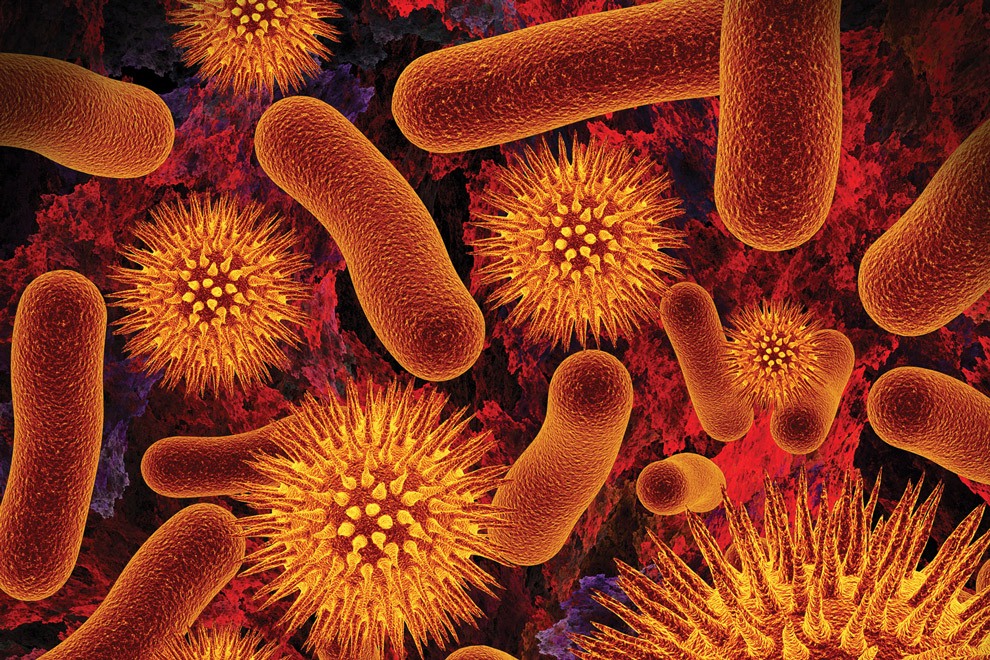
Are microorganisms helpful or harmful?
a)
Helpful
b)
Harmful
c)
Both
d)
Neither
54.
Mold helps dead things (plants, animals)...
a)
Grow
b)
Decay
c)
Sleep
d)
Reproduce
55.
Yeast makes bread, rolls and cakes rise.
a)
True
b)
False
56.
Yogurt contains harmful bacteria.
a)
True
b)
False
57.
Anti-bacterial means:
a)
active against bacteria.
b)
feeds bacteria and helps it grow.
c)
has no effect on bacteria.
d)
sometimes works against bacteria, but not always.
58.
Most microorganisms cannot be seen without a...
a)
microscope
b)
magnifying lens
c)
telescope
d)
x-ray machine
59.

Yogurt and cheese can be produced from ___________.

a)

Bacteria

b)

Virus

c)

Algae

60.

Particles in a _____________ are tightly packed together.

a)

solid

b)

liquid

c)

gas

61.
As particles are exposed to warmer temperatures they __________
a)
speed up
b)
slow down
c)
stay the same
d)
vibrate
62.

What am I? I have a fixed mass, a fixed volume, I cannot be squashed and I have a shape that changes to fit the bottom of my container?

a)

solid

b)

liquid

c)

gas

63.
An inflated balloon is placed in a refrigerator. Which statement describes the movement of the gas particles in the balloon?
a)
The particles move more slowly and become closer together.
b)
The particles move more slowly and become further apart.
c)
The particles move faster and become closer together.
d)
The particles move faster and become further apart. 
64.
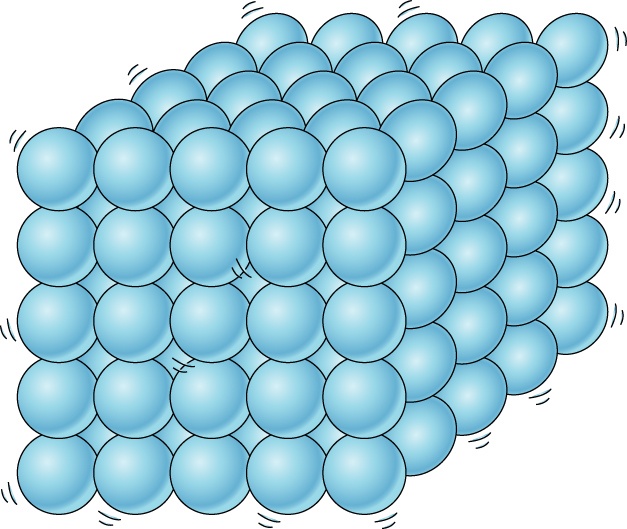
Which description best matches this particle model?
a)
Closely packed and can't move a lot. 
b)
Particles are close together but can move a little. 
c)
Particles have lots of energy and can move around. 
65.
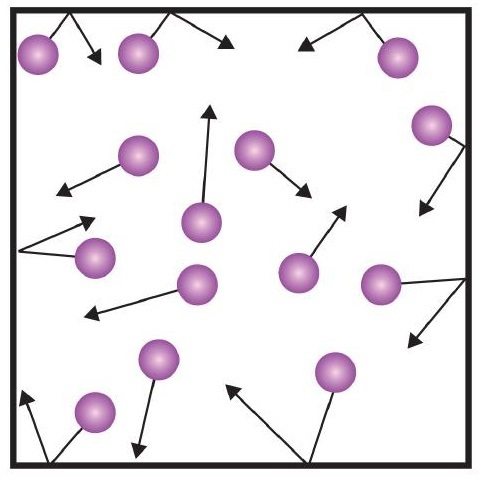
Which description best matches this particle model?
a)
Closely packed and can't move a lot. 
b)
Particles are close together but can move a little. 
c)
Particles have lots of energy and can move around. 
66.
What change of state does this image show?
a)
Freezing 
b)
Evaporation
c)
Condensation
67.

What other laboratory substance can you use to test if colourless substance is an acid or an alkali?

a)

Catalyst

b)

Salt

c)

Universal Indicator

d)

Water

68.

Antacids are used to help indigestion by neutralising stomach acid. What substances is in the medicine?

a)

Acid

b)

Alkali

c)

Neutral

69.

Number 2 represents a ________

a)

solid

b)

liquid

c)

gas

70.
What is the change of state from a gas to a liquid called?
a)
melting
b)
evaporation
c)
condensation
d)
sublimation
71.
What does malleable mean?
a)
able to bend
b)
will break easily
c)
can be used for wire
d)
is shiny
72.
What does ductile mean?
a)
electricity flows easily
b)
quacks like a duck
c)
can be drawn into a wire
d)
able to bend
73.
The list which best describes the properties of metals is .......
a)
strong, good conductor of heat and electricity, solid
b)
strong, poor conductor of heat and electricity, shiny
c)
weak, ductile, good conductor of heat and electricity
d)
weak, low melting point, poor conductor of heat
74.

Easily breaks into pieces when it falls.

a)

malleable

b)

lustre

c)

ductile

d)

brittle

75.
Muscles can ________ bones. 
a)
push
b)
pull
c)
change
d)
strengthen 
76.
The main purpose of the muscular system is to:
a)
Keep the heart beating
b)
Move the body
c)
Protect internal organs
d)
Transfer oxygen
77.
 Skeletal muscles always work in______.
a)
isolation
b)
pairs
c)
alone
d)
none of the above
78.
A place where two bones come together is….
a)
Tendon
b)
Ligament 
c)
Joint 
d)
Skin
79.
How does a pair of skeletal muscles work together?
a)
both muscles contract at the same time
b)
both muscles relax and then work together
c)
when one muscle contracts, the other relaxes
d)
When one muscle is voluntary, the other is involuntary
80.
Why do we have cartilage between our joints?
a)
To reduce friction 
b)
To help our heart 
c)
To hold the joint together 
d)
To lubricate the joint 
81.
The picture describes which type of joint?
a)
Pivot Joint
b)
Immovable Joint
c)
Door Knob Joint
d)
Ball-and-Socket Joint
82.
The picture describes which type of joint?
a)
Pivot Joint
b)
Immovable Joint
c)
Hinge Joint
d)
Moving Joint
83.

What is the name for the connector that attaches muscle to bone?

a)

ligament

b)

tendon

c)

string

84.
The hip and shoulder are examples of this type of joint.
a)
ball and socket
b)
fixed joint
c)
hinge
d)
gliding
85.
What is an example of a fixed joint?
a)
nothing
b)
skull
c)
neck
d)
jaw
86.
The end of your bones are surrounded by ________ to help protect the bones. 
a)
tendons
b)
ligaments
c)
cartilage
d)
muscles
87.
How does friction affect speed?
a)
more friction decreases speed
b)
more friction increases speed
c)
less friction decreases speed
88.
Why are new tires on a car better than older, worn tires?
a)
New tires have less mass than older tires.
b)
New tires are less affected by gravity than older tires.
c)
New tires allow the car to travel faster than older tires.
d)
New tires provide more friction on the road than older tires.
89.
Which best describes the force of gravity?
a)
a pulling force
b)
a pushing force
c)
a change in mass
d)
a change in speed
90.
 What is the unit called that measures force?
a)
weight
b)
meter
c)
Newton
d)
kilogram
91.
The force that acts in the opposite direction of motion when two surfaces come in contact. 
a)
Force
b)
Friction
c)
Static
d)
Kinetic 
92.
You push on a tree with 20 N of force. If the tree doesn't move, the tree is pushing back on you with _____of force.
a)
20N 
b)
40N 
c)
10N 
d)
70N
93.
With unbalanced forces, the object will move in the direction of the _______ force.
a)
larger 
b)
smaller 
c)
equal 
94.

What type of friction acts on an object moving through the air?

a)

Friction

b)

Normal Force

c)

Gravity

d)

Air resistance

95.
Forces that have a net force of zero and the object's movement is not effected.
a)
Balanced Forces 
b)
Unbalanced Forces 
96.

Forces are measured using a ….

a)

calculator

b)

Balance

c)

Ruler

d)

Newton meter

97.
What does friction produce?
a)
light
b)
sound
c)
heat
d)
gravity
98.

What surface would have the most friction?

a)

Glass

b)

Marble

c)

Sandpaper

99.
The amount of friction depends on the weight of the objects pressing together.
a)
True
b)
False
100.
The rougher the surface, the faster an object will travel over the surface.
a)
True
b)
False
101.

Which forces are correct?

a)

up is weight, down is air resistance

b)

up is weight, down is friction

c)

up is air resistance, down is friction

d)

up is air resistance, down is weight

102.

If an object is accelering, the forces are.....

a)

Balanced

b)

Unbalanced

c)

doubled

103.
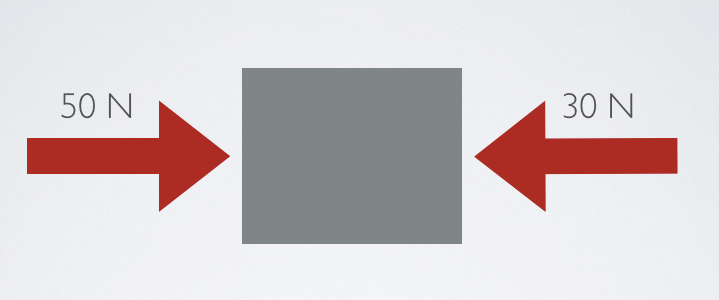
How will this object move? 
a)
It won't move. 
b)
It will move to the right. 
c)
It will move to the left. 
d)
It will move up. 
104.
What is the net force?
a)
30 N left
b)
25 N right
c)
5 N left
d)
55 N right
105.
What is the net force?
a)
10 N
b)
0 N
c)
25 N
d)
1 N
106.
In a tug of war the left team pulls with a force of 200N. The right team pulls with a force of 150N.What is the resultant force?
a)
50N to the left.
b)
350N to the left.
c)
350N to the right.
d)
50N to the right.
107.
Are forces balanced or unbalanced when a marble rolls down a ramp?
a)
Balanced
b)
Unbalanced
108.
Balanced forces can cause
a)
an object to speed up or slow down
b)
an object to stay still or move at a constant speed and direction