Wayground logo

Free Printable Worksheets

Font size

S
M
L
XL
Worksheets

Benchmark Astronomy Review

Total questions: 72

Worksheet time: 40mins

Name
Class
Date
1.
Which of the following is best shown in the picture?
a)
Earth's revolution
b)
A month on Earth
c)
A year on Earth
d)
Earth's rotation
2.
Which of the following do the blue arrows represent in the picture?
a)
A day on Earth
b)
Earth's rotation around the Sun
c)
Earth's revolution around the Sun
d)
A month on Earth
3.
Which of the following amounts of time has gone by when the Moon makes 1 revolution around the Earth?
a)
1 month on Earth
b)
1 year on Earth
c)
1 day on Earth
d)
1 week on Earth
4.
Day and night are caused by _______________.
a)
Earth's rotation
b)
Earth's revolution
c)
Moon's revolution
d)
Moon's rotation
5.
Earth revolves around ________, because it has the __________ in the solar system.
a)
the moon; most gravitational force
b)
the sun; least gravitational force
c)
Jupiter; most gravitational
d)
the sun; most gravitational force
6.
_______________ Law of Universal Gravitation says that all objects in the universe have a gravitational force.  This force of gravity depends on __________________. 
a)
Copernicus; size and distance
b)
Newton; weight and distance
c)
Newton; mass and distance
d)
Galileo; size and distance
7.
List the following items from smallest to largest.
a)
universe, solar system, galaxy
b)
galaxy, solar system, universe
c)
solar system, galaxy, universe
d)
solar system, universe, galaxy
8.

A large collection of stars, dust, and gas held together by gravity is a.........

a)

solar systerm

b)

galaxy

c)

constellation

d)

astronomy

9.

How would you call this lunar phase?

a)

last quarter

b)

full moon

c)

first quarter

d)

new moon

10.

How do you call this phenomenon?

a)

lunar eclipse

b)

ring of fire

c)

solar eclipse

d)

24-hours long night

11.
the time required for the earth to orbit around the sun 
a)
Year
b)
Month
c)
Day
d)
6 Months
12.
the time required for the Moon to orbit around the Earth
a)
Year
b)
Month
c)
Day
d)
6 Months
13.
the time required for the earth to rotate once on it axis 
a)
Year
b)
Month
c)
Day
d)
6 Months
14.
The greater the mass, the ______the gravity
a)
Lower
b)
Greater
c)
Smaller
d)
Heavier
15.
The two things that affect gravity are: 
a)
Size/distance
b)
Size/weight
c)
Distance/weight
d)
Rotation/revolution
16.
The picture is showing a ____tide. 
a)
Spring 
b)
Neap
c)
Winter
d)
Night
17.
The moon causes tides because:
a)
Its gravity is small
b)
Its gravity is like Earth's
c)
It is closer to Earth
d)
It is farther from the Earth
18.
The difference between a meteor and meteoroid is: 
a)
Size
b)
Weight
c)
Position in space
d)
Distance to Earth
19.
A spring tide is a ____ than normal high tide
a)
Lower
b)
Smaller
c)
Wider
d)
Higher 
20.
The largest asteroid is :
a)
Found between Mars and Earth
b)
Found between Saturn and Jupiter
c)
Found between Mars and Jupiter
d)
Found between Earth and Venus
21.
A meteoroid is: 
a)
Found in space
b)
Found entering the atmosphere
c)
Found hitting the surface
d)
Found orbiting the Sun
22.
A lower than normal high tide is a ____tide. 
a)
Spring 
b)
Winter
c)
Neap
d)
Night
23.
The picture is showing a ____tide. 
a)
Spring 
b)
Neap
c)
Winter
d)
Night
24.
As the Earth ____, the tidal range changes
a)
Revolves around the moon
b)
Revolves around the Sun
c)
Rotates around the Sun
d)
Rotates on its axis
25.
The object that is seen from Earth on a regular schedule is a___. 
a)
Asteroids
b)
Comets
c)
Meteoroids
d)
Meteorites
26.
When a comet approaches the Sun...
a)
Its tail gets shorter
b)
The tail disappears
c)
The tail gets longer
d)
The tail blows toward the Sun 
27.
The Sun and all the objects orbiting it are known as ______.
a)
planets
b)
stars
c)
solar system
d)
asteroids
28.
Terrestrial planets are ____.
a)
inner planets, rocky, and small
b)
inner planets, gaseous, and large
c)
outer planets, rocky, and small
d)
outer planets, gaseous, and large
29.
Gas Giants are ____.
a)
inner planets, rocky, and small
b)
inner planets, gaseous, and large
c)
outer planets, rocky, and small
d)
outer planets, gaseous, and large
30.
A unit used to measure long distances, equivalent to the distance from the Sun to Earth is referred to as ____.
a)
Astronomical Unit (AU)
b)
Sidereal Year (SY)
c)
Cosmic Scale (SS)
d)
Light Year
31.
Scientists measure distances beyond our solar system (such as between two stars or galaxies) using which of the following unit?
a)
Miles
b)
Kilometers
c)
Light years
d)
Meters
32.
What information can you find on a H-R diagram?
a)
Where stars are located.
b)
Sizes of planets.
c)
Types and sizes of stars
d)
Shapes of objects in the solar system.
33.
The phrase "a giant, hot ball of gases" is best used to described the ____.
a)
moon
b)
meteorite
c)
planet
d)
star
34.
The Milky Way is a ____ galaxy.
a)
irregular
b)
spiral
c)
elliptical
35.
A small chunk of ice and dust that revolves around the Sun is a ____.
a)
comet
b)
asteroid
c)
meteor
d)
meteorite
36.
True or False:  One half of the whole moon is ALWAYS illuminated.
a)
True
b)
False
37.
A _______ is a burning body of matter that has entered Earth's atmosphere; "shooting star"
a)
Meteor
b)
Comet
c)
Asteroid
d)
Solar Flare
38.
Which phase of the Moon is this?
a)
Full Moon
b)
First Quarter
c)
Last Quarter
d)
New Moon
39.
When the moon is over 50% illuminated it is called a ____________.
a)
Full Moon
b)
New Moon
c)
Crescent
d)
Gibbous
40.
Which phase of the moon is this?
a)
Full Moon
b)
Waxing Crescent
c)
Waning Crescent
d)
Waxing Gibbous
41.
A __________ occurs when the Earth is directly between the Sun and the Moon.
a)
Solar Eclipse
b)
Waning Gibbous
c)
Waxing Gibbous
d)
Lunar Eclipse
42.
A(n) ________ occurs on the day when the tilt of Earth causes the length of day to be longest or shortest.
a)
Equinox
b)
Lunar Eclipse
c)
Solar Eclipse
d)
Solstice
43.
When the sun, earth, and moon form a 90 degree angle, we have _____________.
a)
Neap Tides
b)
Spring Tides
c)
Medium Tides
d)
Winter Tides
44.
What are huge loops of gas seen on the surface of the sun?
a)
Solar Flares
b)
Electromagnets
c)
Prominences
d)
Sun Spots
45.
Looking down from the north pole, which direction do all these celestial bodies rotate?
a)
clockwise
b)
counterclockwise
46.

Solar Prominence

a)

Quick burst of gas into the solar system

b)

Loop of gas that connects sun spots

c)

Hot gas moving into Earth's atmosphere

d)

Breaks power lines

47.

Solar Flare

a)

The crown of the sun

b)

Cooler spots on the sun

c)

A loop of energy

d)

Brief eruption of intense high energy of gas

48.

Rippled sheets of light in the sky because of electrical charged particles.

a)

Denver

b)

Stars

c)

Galaxies

d)

Auroras

49.

The layer of the sun that makes light

a)

Photosphere

b)

Solar flare

c)

Core

d)

Chromosphere

50.

Sun Spots

a)

Throw particles into Earth's Atmosphere

b)

Create donuts

c)

Help the space probes send information

d)

The cooler darker parts of the Sun

51.
The Earth's axis is tilted _____ degrees.
a)
23.5
b)
25.3
c)
30.2
d)
24
52.
At position A, which hemisphere would have summer?
a)
Northern hemisphere
b)
Southern hemisphere
53.
What happens when the area in which you live tilts away from the sun?
a)
It is summer.
b)
It is spring.
c)
It is winter.
d)
It is fall.
54.
The term equinox means....
a)
equal amount of day light and equal amount of night
b)
Equal amount of winter and summer
c)
Equal amounts of hot dogs for everyone
d)
The longest day of the year
55.
What is the longest day of the year?
a)
winter solstice
b)
summer solstice
c)
fall equinox
d)
spring equinox
56.
Why do we experience the changing of the season on the earth?
a)
distance from the sun
b)
rotation of the earth
c)
change in solar output
d)
tilt of the earth's axix
57.
Why is the Equator warmest?
a)
Because it is closest to the sun.
b)
Because it receives the most direct sunlight
c)
Because no clouds form here.
d)
Because it is far from the sun
58.
Which season is taking place in the Southern Hemisphere in Position 1?
a)
Winter
b)
Spring
c)
Summer
d)
Fall
59.
Which season is taking place in the Northern Hemisphere in Position 1?
a)
Winter
b)
Spring
c)
Summer
d)
Fall
60.
Which season is taking place in the Northern Hemisphere in Position 2?
a)
Winter
b)
Spring
c)
Summer
d)
Fall
61.
Which season is taking place in the Northern Hemisphere in Position 3?
a)
Winter
b)
Spring
c)
Summer
d)
Fall
62.
Which season is taking place in the Northern Hemisphere in Position 3?
a)
Winter
b)
Spring
c)
Summer
d)
Fall
63.
Which season is taking place in the Northern Hemisphere in Position 4?
a)
Winter
b)
Spring
c)
Summer
d)
Fall
64.
Phases of the moon in which the moon appears to be getting larger are referred to as _.
a)
waxing
b)
waning
c)
new
d)
eclipse
65.
What Moon phase is this?
a)
Old Moon
b)
Far Side of the Moon
c)
New Moon
d)
Waxing Gibbous
66.

If Katherine wanted to represent a solar eclipse, at what position should she place the Moon?

a)

A

b)

B

c)

C

d)

D

67.
Which type of eclipse occurs when the Moon comes directly between Earth and the Sun?
a)
Lunar eclipse
b)
Solar eclipse
68.
A solar eclipse only happens during a ________ moon.
a)
New
b)
Cresent
c)
Gibbous
d)
Full
69.

Name the eclipse.

a)

solar eclipse

b)

lunar eclipse

70.
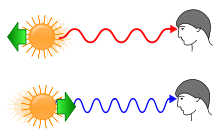
The vast majority of galaxies in our universe are moving away from us.  We know this because we observe __________ in the galaxies absorption spectra.
a)
Redshift
b)
Blueshift
c)
Turbulance
d)
Superposition
71.
What does the Red-shift tell us about the universe
a)
the universe is expanding
b)
the universe is contracting
c)
the big bang is false
d)
nothing
72.
The light of Proxima Centaury takes 4.3 years to reach Earth.  What does it mean?
a)
The star is 4.3  miles from Earth
b)
The star is 4.3 light years from the  Earth
c)
The star is 43.000.0000.000. light years fromm the  Earth
d)
The  star is  4.3 km  from the Earth