wayground logo

Free Printable Worksheets

Font size

S
M
L
XL
Worksheets

WHII Test 2 Review

Total questions: 38

Worksheet time: 22mins

Name
Class
Date
1.
This quote is attributed to which Age of Reason philosopher?
a)
Karl Marx
b)
Thomas Hobbes
c)
Voltaire
d)
Cervantes
2.
Which scientist first discovered microorganisms?
a)
Leeuwenhoek
b)
Newton
c)
Harvey
d)
Kepler
3.
Which of the following was NOT influenced by the Enlightenment?
a)
United States Constitution
b)
Declaration of Independence
c)
Bill of Rights
d)
The Stamp Act of 1765
4.
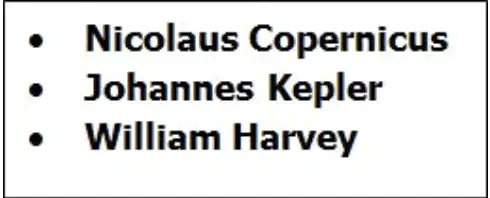
The men in the list are associated with the -
a)
Reformation
b)
Enlightenment
c)
Renaissance
d)
Scientific Revolution
5.
This Scottish Enlightenment thinker strongly supported free market economics --
a)
Adam Smith
b)
Robert Burns
c)
James Hutton
d)
John Locke
6.
Which Enlightenment thinker proposed that a separation of powers would keep any one individual or group from gaining total control of a government?
a)
John Locke
b)
Montesquieu
c)
Voltaire
d)
Thomas Hobbes
7.
Which era of world history is best described by this list?
a)
Renaissance
b)
Reformations
c)
Scientific Revolution
d)
Enlightenment
8.
Whose theory stated that the Sun, not the Earth, is the center of the universe?
a)
Ben Franklin
b)
Nicolaus Copernicus
c)
Francis Bacon
d)
Isaac Newton
9.
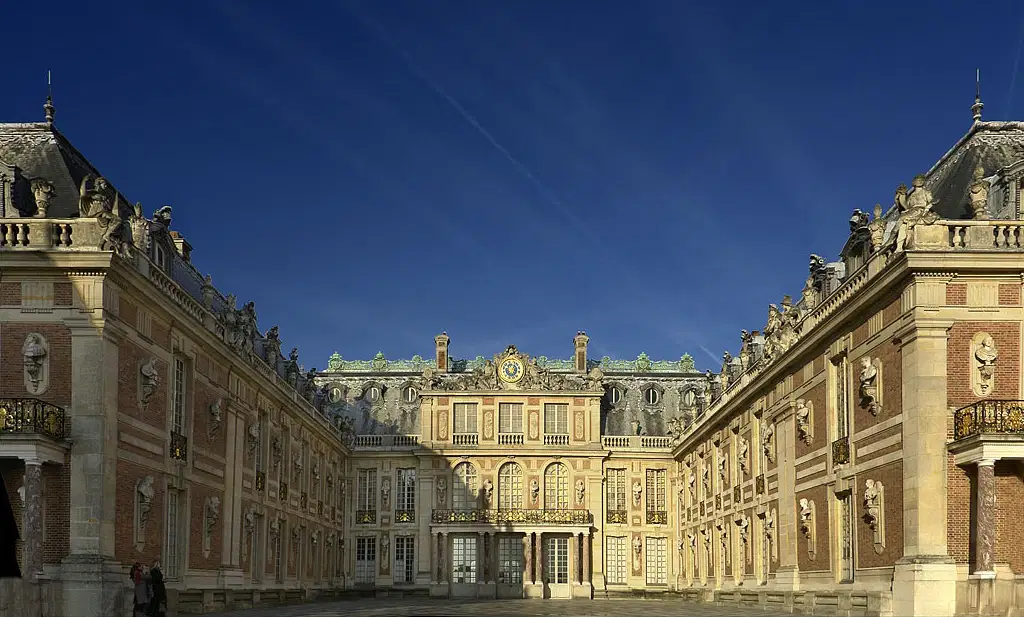
This French Palace is called the --
a)
Palace du Compagnonnage
b)
Palace of Versailles
c)
Royal Palace of Turin
d)
Buckingham Palace
10.
Prussian culture centered on --
a)
Arts and music
b)
Social hierarchy
c)
Militarism
d)
Agricultre
11.
Which absolute monarch was the King of Prussia?
a)
Catherine the Great
b)
Peter the Great
c)
Charles I
d)
Frederick the Great
12.
Which country used St. Petersburg as its capital during the Age of Absolutism?
a)
France
b)
Spain
c)
Russia
d)
England
13.
All of these were part of the Westernization of Russia EXCEPT --
a)
Centralizing power under the monarch's absolute rule
b)
Forcing boyars to shave their beards
c)
Setting up academies to study the liberal arts
d)
Abolishing serfdom
14.
Which ruler is best described by this list?
a)
Louis XIV
b)
Nicolas II
c)
Catherine the Great
d)
Peter the Great
15.
This absolute monarch continued Peter the Great's process of westernization
a)
Ivan the Terrible
b)
Nicholas I
c)
Alexander I
d)
Catherine the Great
16.
Who ruled France during the Age of Absolutism?
a)
Louis XIV
b)
Peter the Great
c)
Charles I
d)
Elizabeth I
17.
The belief that monarchs receive their authority from God and are answerable only to God is known as --
a)
Papal Authority
b)
Protestantism
c)
Divine Right
d)
Calvinism
18.
Oliver Cromwell's puritan ideals led him to --
a)
leave England to live in the colonies.
b)
write a new book of common prayer.
c)
close theaters and outlaw profanity.
d)
return England to the Roman Catholic Church
19.
Which ruler was restored to the throne of England?
a)
Charles I
b)
William III
c)
Charles II
d)
Louis XVIII
20.
Who lost the English Civil War?
a)
Oliver Cromwell
b)
James II
c)
Charles II
d)
Charles I
21.
The English Civil War was fought between --
a)
England and Scotland
b)
Parliament and the King
c)
Parliament and Revolutionaries
d)
King James I and King Charles I
22.
The English Bill of Rights of 1689 was signed as a direct result of the --
a)
Glorious Revolution
b)
Stuart Restoration
c)
end of the Tudor dynasty
d)
English Civil War
23.
The English Bill of Rights did all of the following EXCEPT --
a)
Abolished the monarchy
b)
Strenghtened Parliament's power over the monarchy
c)
Established habeas corpus (the idea that no one can be held in prison without charges)
d)
Banned a Roman Catholic from ruling England
24.
Which English leader was executed?
a)
Charles I
b)
Charles II
c)
James I
d)
Oliver Cromwell
25.
Political philosophies of the Enlightenment fueled revolution in the Americas and what other country?
a)
Spain
b)
England
c)
France
d)
Germany
26.
According to John Locke all people are born with natural rights to life, liberty, and --
a)
property
b)
pursuit of happiness
c)
food
d)
health care
27.
The Enlightenment is also known as the --
a)
Industrial Age
b)
Age of Reason
c)
Age of Discovery
d)
Age of Absolutism
28.

What country did Haiti gain independence from?

a)

Spain

b)

England

c)

Portugal

d)

France

29.

Which event inspired independence movements in Spanish and Portugal colonies?

a)

Reformation

b)

American Revolution

c)

Renaissance

d)

Commercial Revolution

30.

The letter "A" on the map represents-

a)

Haiti

b)

Mexico

c)

Brazil

d)

Colombia

31.

Which country is best described by this list?

a)

Haiti

b)

Columbia

c)

Mexico

d)

Venezuela

32.

Which leader fought for Mexican independence?

a)

L'Ouverture

b)

Washington

c)

Hidalgo

d)

Bolivar

33.

Who was the former slave who led a slave rebellion in Haiti against France, defeating the armies of three nations: Britain, France, and Spain, to win Haiti's independence?

a)

Simon Bolivar

b)

Napoleon Bonaparte

c)

Nat Turner

d)

Toussaint L'Ouverture

34.

One of Napoleon’s most important reforms was the establishment of new laws called –

a)

The Assembly

b)

Balance of Power

c)

Napoleonic Code

d)

Third Estate

35.

Which is a legacy of Napoleon?

a)

Unified Europe under French domination

b)

Refused to be crowned emperor

c)

Awakened feelings of pride and nationalism

d)

France was not centralized and lacked a constitution

36.

National pride, competition, and democratic ideals stimulated growth of –

a)

nationalism

b)

globalism

c)

internationalism

d)

peaceful discussions

37.

Who was a strong nationalist leader that wanted a single republic and joined southern Italy to northern Italy?

a)

Alexis de Tocqueville

b)

Count Cavour

c)

Giuseppe Garibaldi

d)

Louis XVIII

38.

Realpolitik was the philosophy of this individual who is credited with establishing the German state following the Franco-Prussian War -

a)

Otto von Bismarck

b)

Count Cavour

c)

Victor Emmanuel III

d)

Giuseppe Garibaldi