
 Worksheets
Unit 4 Exam Review L5 & L6
Total questions: 83
Worksheet time: 44mins
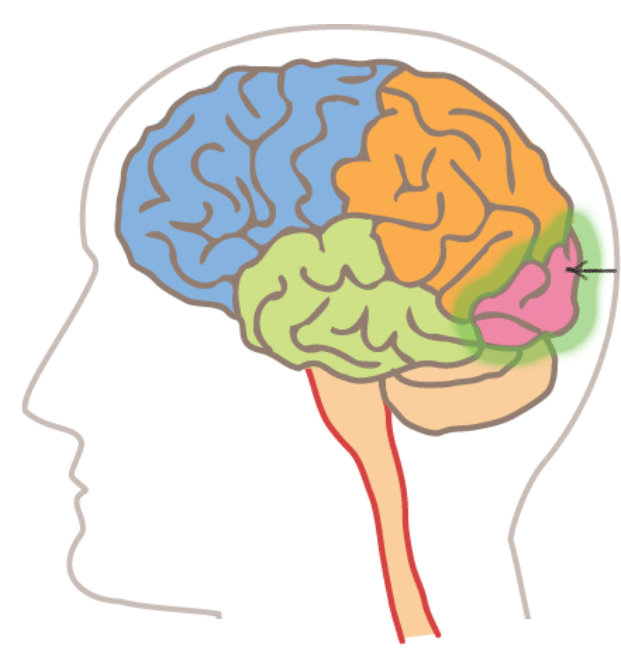
Identify the lobe of the brain highlighted.
Frontal lobe
Parietal lobe
Occipital lobe
Temporal lobe
The center of visual perception
Frontal lobe
Parietal lobe
Occipital lobe
Temporal lobe
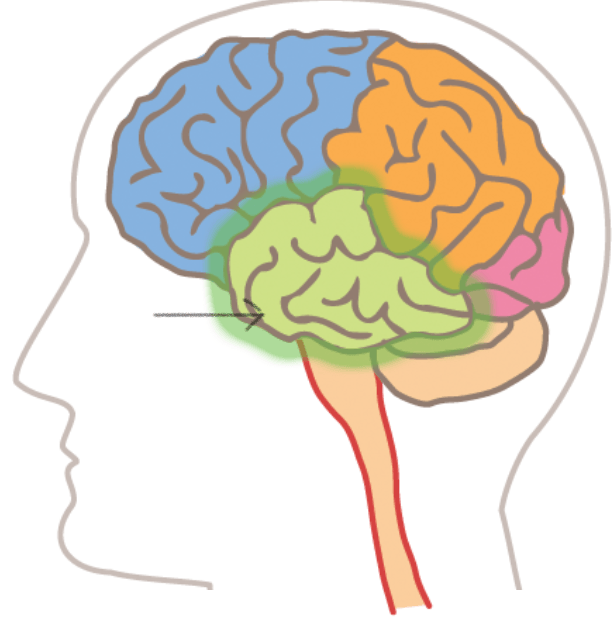
Identify the lobe of the brain highlighted.
Frontal lobe
Parietal lobe
Occipital lobe
Temporal lobe
Processes hearing, language and helps us identify faces.
Frontal lobe
Parietal lobe
Occipital lobe
Temporal lobe
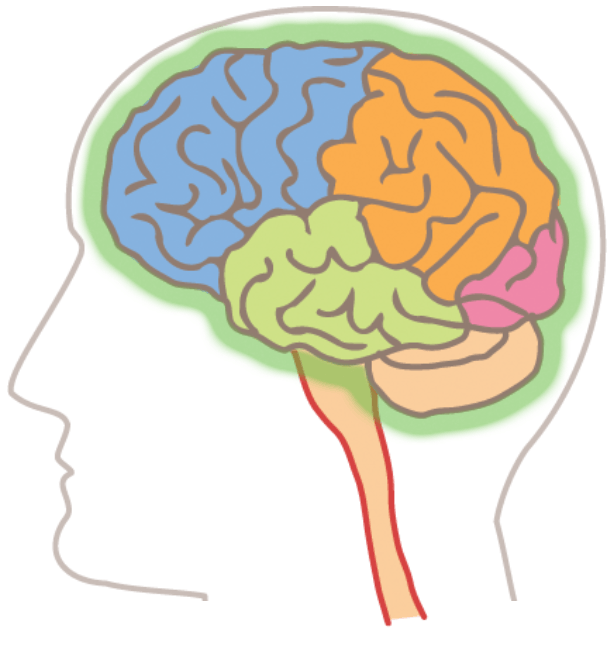
Identify the area of the brain highlighted.
Frontal lobe
Cerebrum
Cerebellum
Hypothalamus
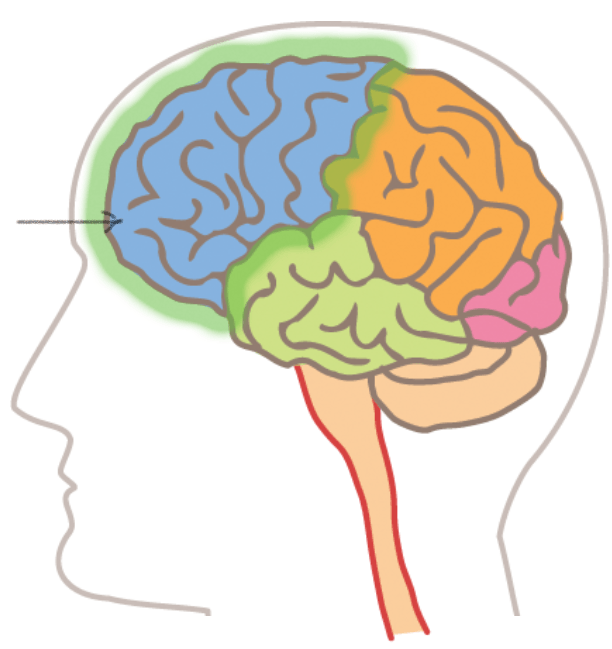
Identify the area of the brain highlighted.
Frontal lobe
Parietal lobe
Cerebellum
Cerebrum
Functions include initiating voluntary movement, working memory, personality, and higher cognitive functions such as decision-making and judgment.
Frontal lobe
Parietal lobe
Occipital lobe
Temporal lobe
Responsible for integrating sensory information, including touch, temperature, pressure and pain.
Frontal lobe
Parietal lobe
Occipital lobe
Temporal lobe

Which lobe of the brain will recognize places?
Frontal
Parietal
Temporal
Occipital

Which part of the brain allows us to recall or remember information?
Frontal
Parietal
Temporal
Occipital

Damage to the brain at the ____ lobe may cause visual problems.
Parietal
Frontal
Temporal
Occipital

Damage to the _____ lobe may affect our ability to hear sounds.
Parietal
Frontal
Occiptial
Temporal
Possesses the somotoensory Cortex
Frontal Lobe
Occipital Lobe
Temporal Lobe
Parietal Lobe
Which controls personality, short term memory, & speech
frontal lobe
parietal lobe
temporal lobe
occipital lobe
The corpus callosum
manages our understanding of speech and language
cannot process messages sent from the left hand
is a deep fissure in the cerebral cortex
is a thick band of nerve fibres linking the two hemispheres of the brain
Wernicke's area is said to be responsible for speech _______________, whereas Broca's area is involved in speech _______________.
production; comprehension
syntax; production
comprehension; syntax
comprehension; production
When a basketballer shoots for a goal, which part of the brain sends the message instructing her to raise her shooting arm?
the primary somatosensory cortex
the prefrontal lobe
the occipital lobe
the primary motor cortex
Compared to Gage's personality before the accident, after the accident Gage was:
quiet and reserved
unreasonable and impulsive
prone to daydream long periods
unable to remember events
Why is Phineas Gage's story important to neuroscientists today?
no other case of that type of brain damage has ever been seen
it was the earliest recorded case of brain damage affecting personality
doctors can compare Gage's brain scans to other patients
it forced 19th century doctors to start doing autopsies
The corpus callosum
manages our understanding of speech and language
cannot process messages sent from the left hand
is a deep fissure in the cerebral cortex
is a thick band of nerve fibres linking the two hemispheres of the brain
Which hemisphere of the brain would Motor Function occur?
Left Brain
Right Brain
Both Hemispheres
Which hemisphere of the brain would Speech occur?
Left Brain
Right Brain
Both Hemispheres
What substance makes up the cerebral cortex?
Grey Matter
White Matter
Insula
Pink Matter
Logic, Decision making, sequencing, Broca's area
Frontal Lobe
Moves right side of the body
Motor Cortex
Receives impulses from the right side of the body
Sensory Cortex
KNowing where you are in space and understanding dimensions
Parietal Lobe
Wernicke's Area, ability to understand and interpret speech
Temporal Lobe
Naming objects and analyzing data
Frontal Lobe
Controls and receives information from the right eye
Occipital Lobe
Auditory processing
Temporal Lobe
Responsible for muscle memory and balance
Cerebellum
touch perception, body orientation, sensory discrimination
Parietal Lobe
Which hemisphere of the brain would Motor Function occur?
Left Brain
Right Brain
Both Hemispheres
Which hemisphere of the brain would Speech occur?
Left Brain
Right Brain
Both Hemispheres
What substance makes up the cerebral cortex?
Grey Matter
White Matter
Insula
Pink Matter
Logic, Decision making, sequencing, Broca's area
Frontal Lobe
Moves right side of the body
Motor Cortex
Receives impulses from the right side of the body
Sensory Cortex
KNowing where you are in space and understanding dimensions
Parietal Lobe
Wernicke's Area, ability to understand and interpret speech
Temporal Lobe
Naming objects and analyzing data
Frontal Lobe
Controls and receives information from the right eye
Occipital Lobe
Auditory processing
Temporal Lobe
Responsible for muscle memory and balance
Cerebellum
touch perception, body orientation, sensory discrimination
Parietal Lobe
Which hemisphere is almost always dominant?
Left
Right
Central
All
Which side of the body does the left hemisphere control?
The left side
The right side
Both sides
Which side of the body does the right hemisphere control?
The left side
The right side
Both sides
Which of these is the primary responsibility of the left hemisphere?
Imagination
Coordination
Reasoning
All of the above
What is the primary responsibility of the right hemisphere?
Imagination
Coordination
Reasoning
All of the above
Which list represents major functions of the left hemisphere?
Speech, reading & writing
Art, music, colors and shapes
Which list represents major functions of the right hemisphere?
Speech, reading & writing
Art, music, colors & shapes
If a sensory message is important enough to enter consciousness, it moves from sensory memory to which type of memory?
Long-Term Memory
Eidetic Memory
Echoic Memory
Short-Term Memory

visual and auditory memory are part of:
long-term memory
working memory
sensory memory
recency

is also known as working memory
sensory memory
primacy
short-term memory
long-term memory

Which type of memory has unlimited capacity to remember things your whole life
sensory memory
primacy
long-term memory
auditory memory
A memory of a specific fact is known as:
episodic
semantic
implicit
sensory
A memory of a specific event is known as:
episodic
semantic
implicit
sensory
The process of translating information into a form in which it can be stored in the brain is called ____(1)____, while the process of locating stored information and returning it to conscious thought is called ____(2)_____.
A. (1) = storage, (2) = retrieval
B. (1) = encoding, (2) = retrieval
C. (1) = storage, (2) = chunking
D. (1) = encoding, (2) = storage
The part of the brain that plays an important role in laying down new long-term memories, including episodic and spatial memories, is known as:
A. the cerebellum
B. the brainstem
C. the thalamus
D. the hippocampus
What other part of the brain does the basal ganglia mainly interact with?
Pineal gland
Cerebellum
Hypothalamus
Broca’s Area
Which of the following symptoms would lead to a diagnosis of Parkinson disease?
Tremor
Rigidity
Postural instability
All of the above
What causes Parkinson's?
Sensory neuron death
Motor neurons apathy
Decreased acetylcholine
Loss of dopamine producing cells
Can parkinson's disease be cured
Yes
No
Can be controlled(reduced)

The degeneration and loss of neurons that produce dopamine occurs in the _________________?
substantia nigra
motor cortex
spinal cord
premotor cortex

The substantia nigra is located in the
Hind brain
Fore brain
Mid brain
Big toe

Where is the cerebellum located?
Behind the brain stem
On the frontal lobe
Near the middle

Latin for "little brain", the cerebellum is responsible for what actions?
coordinating automated movements
speech
personality
releasing hormones
What is the largest area of the brain?
Cerebrum
Cerebellum
Thalamus
Amygdala

What is the thalamus responsible for?
directs all incoming sensory information to other parts of the brain
moderates body functions such as sleeping
monitors higher order thinking
controls muscle movement
Which part of the Hindbrain controls vital functions like blood pressure and heartrate
Pons
Medulla
Cerebellum
Which part of the limbic system is responsible for storing memories?
Amygdala
Thalamus
Hypothalamus
Hippocampus
One of the "newer" and more advanced areas of the brain.
pons
medulla
hippocampus
cerebral cortex
In his 'describe what you see' test, Gazzaniga found that:
When a picture was presented to split-brain patients' right visual field, they could say what they saw.
When a picture was presented to split-brain patients' right visual field, they could not say what they saw.
When a picture was presented to split-brain patients' left visual field, they could not say what they saw.
When a picture was presented to split-brain patients' left visual field, they could say what they saw.
The left hemisphere specialises in language.
From his split-brain research, Gazzaniga concluded that:
The left hemisphere specialises in language.
The right hemisphere specialises in language
The right hemisphere is dominant for facial recognition
the left hemisphere is dominant for facial recognition
A split-brain patient is shown an image of a house in the left visual field. What would they NOT be able to do?
Say what they saw
Draw what they saw with their left hand
Draw what they saw with their right hand
According to hemispheric lateralisation, the right hemisphere specialises in:
Speech production and comprehension
Receiving touch sensations and controlling motor movements on the left side of the body
Processing visual information from the right visual field and auditory information from the right ear
Facial recognition
According to hemispheric lateralisation, the left hemisphere specialises in:
Speech production and comprehension
Receiving touch sensations and controlling motor movements on the left side of the body
Processing visual information from the right visual field and auditory information from the right ear
Facial recognition

