
 Worksheets
BCA: 5th Grade: Science: States of Matter Part 2
Total questions: 68
Worksheet time: 4hrs 30mins
is anything that has mass and takes up space and it makes up everything that you can see, feel, taste and touch
matter
mass
volume
gravity

In this state of matter, particles are packed tightly together and are not able to move freely.
solid
liquid
gas
Which represents solids?
Molecules are loosely packed
Molecules are spread far apart
Molecules are tightly packed
If heat/energy is added to a solid, what state would it change to?
Liquid
Gas
If heat/energy is removed from a gas, what form does it change to?
Solid
Liquid
If heat/energy is removed from a liquid, what form would it change to?
Solid
Gas
This is the amount of space that an object takes up
Volume
Matter
Mass
Weight
Which represents a gas?
Molecules are tightly packed
Has no definite shape or size
Takes the shape of the container
Has a definite shape and size
Which represents liquids?
Takes the shape of the container
Has a definite shape and size
Has no definite shape or size
have definite shape and definite volume, has mass and takes up space
soild
liquid
gas
plasma
Which represents particles in solids:
packed tightly together
have very little energy/heat
vibrate in place
have medium energy/heat
particles flow around each other
takes the shape of their container and have definite volume
liquids
solids
gases
plasma
which represents particles in liquids:
are loosely packed
have medium energy/heat
particles flow around each other
particles move freely
have lots of energy/heat
spreads outs to fill the entire space and do not have definite volume
gases
solids
liquids
plasma
which represents particles in a gas:
move freely
have lots of energy/heat
packed tightly together
vibrate in place
have medium energy/heat levels
What does it take for matter to move from one state to another state or
(What determines the state)
energy
matter
volume
mass
________ are made up of two or more atoms
molcules
particles
plasma
beam
______ are tiny building blocks which make up substances
atoms
molecules
beam
particles
There are several names used to describe states of matter. Name the three we learned.
State Changes
Phase Changes
Physical Change
Matter Change
liquid + energy
liquid to gas
gas to liquid
solid to liquid
liquid to solid
when energy is added to matter, particles
move faster
move slower
no movement
when energy is taken away from matter, particles
move slower
move faster
no movement
______ are air like substances that can move around freely
gases
solids
liquids
We can differentiated matter by their ________.
physical properties
chemical properties
state properties
Matter is differentiated by their physical properties. Physical properties can be also broken down or classified two more ways?
Observable properties
Measurable properties
General properties
Magnificent properties
________ properties are found using some of your five senses ?
Observable properties
Measurable properties
General properties
_______ properties are found using tools.
Measurable properties
Observable properties
General properties
The amount of space an object takes up of matter.
Volume
Mass
Matter
Gravity
Is the measure of heat in an object
Temperature
Radiation
Mass
Energy
The amount of matter in an object
Mass
Gravity
Volume
Matter
Measurable properties of matter are found using tools! List some tools that are used to measure matter
Ruler,meter stick, tape measure (length)
Graduated cylinder, beaker, (volume)
Thermometers (temperature)
Balance (Mass)
Is the force that pulls you down to the ground on earth
Gravity
Centripetal force
Stratosphere
Matter
If you were to travel to the moon, would your mass?
No, your mass will not ever change anywheres in the universe. However, your weight will fluctuate according to gravity.
Yes, your mass will change anywhere in the universe. Also, your weight will change too
______ are air-like substances that can move around freely.
gases
liquids
solids
Plasma is called or classified as an ________.
ionized gas
ionized radiation
ionized salt
Plasma is called an ionized gas. What does that really mean?
means that when heated to very high temperatures, some electrons break away from the core of the atom
means that when cooled to very low temperatures some electrons are added to the core of the atom
means that when heated to medium temperatures, the neutrons explodes
is a state of matter that scientist don't really understand. But in this state of matter there is no exchange of __________ (select two answers)
beam
plasma
heat energy
electrons
If the object is a solid and it melts. What is the best meaning of melt.
heat is added
heat is loss
Boiling vs Evaporation:
In both boiling and evaporation the objects starts off as a liquid and will become a gas. Which statement best describes evaporation???
can take place at any temperature, but happens when the surface of a liquid is heated
happens much faster, because the entire liquid is heated, not just the surface
Boiling vs Evaporation:
In both boiling and evaporation the objects starts off as a liquid and will become a gas. Which statement best describes boiling???
happens much faster because the entire liquid is heated, not just the surface
can take place at any temperature, and happens when the surface of a liquid is heated
when enough heat is removed from a gas, the particles in the gas slow down and the object becomes a liquid. This best describes what??
condenses or condensation
freezing
melts
evaporation
When enough heat is removed from a liquid and that liquid turns into a solid. The best describes _______?
freezing
melting
boiling
condenses or condensation
What are some ways heat energy is created:
burning materials (campfire)
friction (rubbing two things together)
when electricity is present (think about a light bulb)
Which of the following images shows the image the molecules in a solid?


None of the images show a solid
Which of the following images shows the state of matter that is a gas?


none of the images shown
Which of the following images shows a liquid?


none of the images above
Water vapor (evaporated water) in the air is an example of which state of matter?
solid
liquid
gas
physical property
What is the name of the process of a liquid turning into a gas?
evaporation
condensation
melting
freezing
What is the name of the process of a gas turning into a liquid?
condensation
evaporation
melting
freezing
What is the name of the process of a solid turning into a liquid?
evaporation
condensation
melting
freezing
What is the name of the process of a liquid turning into a solid?
evaporation
condensation
melting
freezing
Which of the following is an example of evaporation?
water being placed into a freezer
a popsicle left outside on a picnic table
a puddle that was outside in the morning disappeared by the afternoon
a cold can of soda with water droplets forming on the outside of it.
Which of the following examples shows the process of melting?
Spilled juice in the playground that has seemed to vanish the next day.
an ice cube left on a table turning into a water
a tray of cubes filled with water placed in a freezer
a balloon being filled with helium
Which of the following examples is an example of condensation?
wet clothes being set on a clothesline to dry
the oxygen we breathe in
a cold glass of juice forming water droplets around it
a melting ice cream sandwich being placed in the freezer
Which of the following is an example of the process of freezing?
a bottle of coke being left overnight in the freezer
all the air that surrounds us
a glass of sweet tea with ice forming water droplets around it
water evaporating and turning in to water vapor
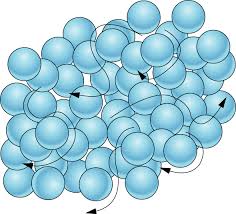
What state of matter?
Solid
Liquid
Gas
Plasma
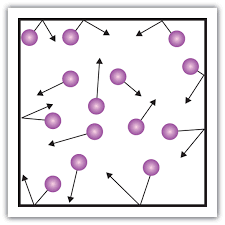
What state of matter?
Solid
Liquid
Gas
Plasma
If I add heat to a solid, how will the motion of the particles be affected?
They will move slower
They will stop moving
They will move faster
They will move to a different container
How can you stop the movement of particles?
Increase the temperature
Decrease the temperature
You can't.
Hold them still with your hands.
Removing energy from particles makes the particles
move faster
move slower
stop moving all together
remain the same
Does a frozen ice cube still contain some form of heat energy?
yes, even cold frozen objects still contain some amount of heat energy
no, its completely frozen so it can not have any heat energy
Heat energy doesn't like to sit still and it loves to share. So we can that heat energy is always being passed from one object to another. So we can say heat energy is _________.
transferrable
non-transferrable
materials that allow heat energy to move through them easily are called______?
conductors
insulators
materials that do not let heat energy pass through them very easily are called _____
insulators
conductors
We already said that heat energy can't sit still and that its energy is transferrable. There are TWO ways heat energy can be transferred.
1.Conduction or 2.Convection.
Which one happens when two hot objects touch each other, allowing the heat to travel from one another?
conduction
convection
We already said that heat energy can't sit still and that its energy is transferrable. There are TWO ways heat energy can be transferred.
1.Conduction or 2.Convection.
Which one happens when heat is transferred through air or liquids.
(hint: think of an air fryer/oven in your mom's kitchen)
convection
conduction

