
 Worksheets
Communication
Total questions: 134
Worksheet time: 1hrs 4mins
True or False: Communication is more than just talking face to face?
True
False
The exchange of information through the use of words or actions is
Active listening
Body language
Communication
Aggressive
The exchange of information through the use of words or actions is
Active listening
Body language
Communication
Aggressive
Which of the following is considered a speaking skill?
Make clear, simple statements
Paying attention
Rereading your words before you send a message
It is a communication between individuals in a personal relationship which builds through time and involves their thoughts and feelings to a certain level.
Intrapersonal communication
Public communication
Interpersonal communucation
Small group communication

verbal communication
sending and receiving wordless messsages
exchange of information using words
nonverbal communication
sending and receiving wordless messsages
exchange of information using words
Our facial expressions, tone of voice, movement, appearance, eye contact, gestures, and posture are called _____________________.
verbal communication
nonverbal communication


True or False: Communication is more than just talking face to face?
True
False
What is Body Language?
Postures, gestures, and facial expressions.
The exchange of information through the use of words.
Your words say one thing but your body language say another.
Speak from your point of view.
The exchange of information through the use of words or actions is
Active listening
Body language
Communication
Aggressive
Which of the following is considered a speaking skill?
Make clear, simple statements
Paying attention
Rereading your words before you send a message

Two types of communication are:
Verbs and Nouns
Verbal and information
Verbal and non-verbal
Happy and sad

An example of verbal communication is:
Phone conversation
Posture
Eye contact
Writing an email
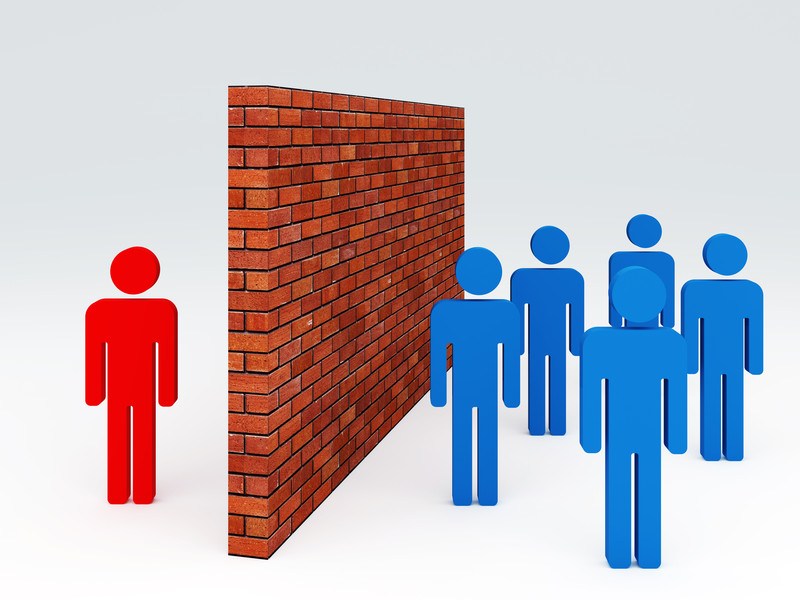
Which of the following is a barrier to communication?
Message is not clear
Not listening
Lack of language skills
All of the above

Which is NOT important in effective communication?
Wearing a red tie
Making eye contact
Using appropriate body language
Using the appropriate tone

A good, clear speaker…
Understands what he/she wants to say
Considers the audience and the setting
Checks to assure understanding, and listens to responses
All of the above

We communicate by:
Speech (Telephone call, conversations, etc)
Visuals (Body language, facial expressions)
Writing (Letter, emails, newsletters, etc)
All of the above

Includes gestures, facial expressions, and body positions
Feedback
Verbal Communication
Dance
Non-Verbal Communication

The use of sounds and words to express yourself
Non-Verbal Communication
Customer Service
Interpretive Dance
Verbal Communication

An example of non-verbal communication is:
Sleeping
Face-to-face conversation
Telephone conversation
Eye Contact

Good customer service is the ability of an organisation to constantly and consistently exceed:
The speed of sound
The customer's expectations
The rainfall in South America
Their competitor's sales

True or False: Communication skills are vital to individuals and businesses
True
False
The four elements of communication are:
Message, sender, receiver and feedback
Sender, message and receiver
Message, feedback, verbal and nonverbal
Books, television, computers and radio
You can help control prejudice by:
believing your first impression and not allowing others to influence your thoughts.
believing only what your parents taught you about other races.
evaluating all information before making a judgement.
doing all of the above.
Good listening skills include:
a message, a sender, and a reveiver.
labeling, cultural sensitivity, and talking slowly.
verbal message, written communication and a receiver
showing interst, hearing the message, and not interrupting
It is a communication between individuals in a personal relationship which builds through time and involves their thoughts and feelings to a certain level.
Intrapersonal communication
Public communication
Interpersonal communucation
Small group communication
In this type of communication you think and learn about yourself, talk and reason with yourself, and evaluate yourself.
Public communication
Interpersonal comunucation
Online communication
Intrapersonal communication
In this communication, you think and learn about each other, talk and reason with each other, and evaluate each other.
Intrapersonal communication
Interpersonal communication
Online communication
Machine-assisted communication
Having a face-to-face conversation with your friend is an example of what type of communication?
Intrapersonal communication
Interpersonal communication
Small group communication
Public communication
You meet with your group mates to talk about your project. What type of communication do you have?
Intrapersonal communication
Interpersonal communication
Small group communication
Public communication
In this principle of communication, all elements interact and affect each other.
Communication has no opposite.
Communication is dynamic.
Communication is unrepeatable and irreversible.
Communication is competence-based.

Essence of communication is
intent implementation impact
thoughts feelings and emotions
sharing caring and progressing
interaction and reaction
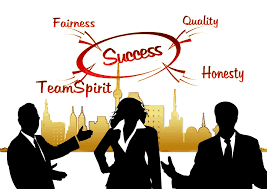
How we sit, stand, and use facial expressions all send nonverbal messages.
True
False
Emotional intelligence is ________________________________.
being smart about emotional situations
the ability to understand, use, and manage our emotions.
never getting angry
A high EQ can predict success in social and emotional situation, help us build strong relationships, make good decisions, and deal with difficult situations.
True
False
Emotion and mood are difficult to control. We DO NOT have the power to decide what mood is right for a situation, and then to get into that mood.
True
False
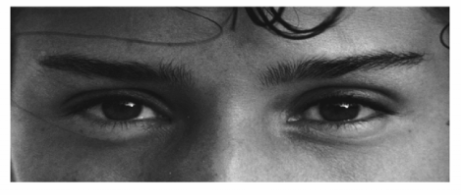
What emotion are the eyes showing?
Playful
Comforting
Irritated
Boring
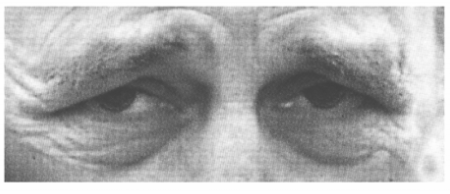
What emotion are the eyes showing?
Terrified
Upset
Arrogant
Annoyed
Listening improves business by
Increases interpersonal trust
Encourages timely feed back
Increases perceptions of integrity
improves costumer service and loyalty
All of the above
True or False: Communication is more than just talking face to face?
True
False
What is Body Language?
Postures, gestures, and facial expressions.
The exchange of information through the use of words.
Your words say one thing but your body language say another.
Speak from your point of view.
Good listening skills include what?
Smiling and waving at people
Yelling loud at people
Writing in slang.
None the above.
Three Styles of Communication
Aggressive, Active Listening, communication
Passive, “I” Messages, Assertive
Aggressive, passive, and assertive
None of the above
The exchange of information through the use of words or actions is
Active listening
Body language
Communication
Aggressive
A person that is overly forceful, pushy, hostile or otherwise attacking in approach is known as
Asserive
Active listener
Aggressive
Passive
Which of the following is considered a listening skill?
Thinking before you speak
Writing clear, simple statements
Paying attention
Two types of communication are:
Verbs and Nouns
Verbal and information
Verbal and non-verbal
Happy and sad
An example of verbal communication is:
Phone conversation
Posture
Eye contact
Writing an email
Which of the following is a barrier to communication?
Message is not clear
Not listening
Lack of language skills
All of the above
Which is NOT important in effective communication?
Wearing a red tie
Making eye contact
Using appropriate body language
Using the appropriate tone
A good, clear speaker…
Understands what he/she wants to say
Considers the audience and the setting
Checks to assure understanding, and listens to responses
All of the above
We communicate by:
Speech (Telephone call, conversations, etc)
Visuals (Body language, facial expressions)
Writing (Letter, emails, newsletters, etc)
All of the above
Includes gestures, facial expressions, and body positions
Feedback
Verbal Communication
Dance
Non-Verbal Communication
What is the definition of communication?
Act of transferring information from one person to another.
Sending a letter to another person.
Transmission of facial expression.
A good communication must include which of the following elements?
Sender, Talking, Writing
Sender, Writing, Discussion
Sender, Message, Recipient
Which of the following is NOT the category of communication?
Written communication
Eye contact
Non - verbal communication
Which of the following is NOT a skill needed to be a competent communicator?
Good vocabulary
Attentiveness
Coordination
Which of the following is NOT the nature of interpersonal communication.
Involves verbal and non-verbal
Involves interdependent individuals
Must be face to face communication
Which of the following is NOT part of the listening process?
Receiving
Looking into another persons eyes
Responding
Process of evaluating involves?
Judging the value of message
Giving feedback to another person
Remembering a message
Which of the following is NOT a type of feedback?
Formative feedback
Summative feedback
Informative feedback
What is the primary tool involved in the receiving process?
Notebook
Ears
Communication
Process of understanding involves...
Communicating with proper vocabulary
Focusing on the speaker
Learning the meaning of the message
What are the characteristics for effective business communication
Consideration
Feedback Skills
Modify the message according to the audience
Courtesy
Public Speaking Skills can connect with an audience through telling a story
True
False
"Use simple language and easy sentences structure in composing message" this statement refers to?
Make effective use of grapevine
Clarity of Purpose
Feedback
Multiple channels of communication
Interpersonal Communication Skills is exchange of information through verbal and non- verbal methods
True
False
Postures, gestures, and facial expressions, to send messages is called (a) .
Nonverbal communication is getting messages across without using words.
True
False
Expressing feelings, thoughts, or experiences with words , either by speaking or writing.
Nonverbal Communication
Verbal Communication
Communication
Body Language
Communication is a (a) way process or exchanging of information between the sender and the receiver of the message.
Which of the following is an example of oral communication ?
Newspapers
Letters
Phone Call
Which of the following skills are important to communicate properly ?
Reading
Writing
Speaking
All of the above
Live blood of any organization is
Effective Communication
Globalization
Diversification
Communication in business is marked by
Informal
Grape-Vine
Formal
Brain Drain is a part of message which is
Sucessful
Understood
Misunderstood
Message decoding is done by
sender
Receiver
buyer
Communication between the same hierarchies is called
Upwards
Horizontal
Downwards
Bypass is one of the communication barrier which belongs to the
Socio-Psychological Barrier
Semantic Barrier
Physical Barrier
Informal communication is also called
Modern
Oral
Grape-Vine
Communication is successful if feedback is
Brain-drain
Understood
Positive
denotative, meanings are
Caustic meanings
Analytical meanings
Dictionary meanings
When the people within the organization communicate with each other is..
External Communication
Internal Communication
Horizontal Communication
communication is a two-way process of reaching mutual understanding.
True
False
Facial Expression is an example of verbal communication
True
False
The communication process includes feedback and noise.
True
False
The right encoding includes.....
Ensure the quality of the communication channel
Using understandable language
Avoiding noise
Written communication is an example of verbal communication
True
False
Provide information needed to make decisions
is not one of the communication functions
True
False
What is communication?
process of transmitting the information
process of changing information
process of sharing thought, ideas and feeling
According to Keyton, communication is....?
process of transmitting information and common understanding
process of exchanging information
process of sharing thought and ideas
Which is not the Model of Communication
Laswell Model
Aristotle Model
Brain Model
Message is a _________.
visual image
verbal utterance
verbal utterance, visual image, and non-verbal behaviour
Channel is one of the _____________ of communication.
tool
route
way
Feedback is a _____ and _________ to a message.
idea and thought
reaction and response
idea and understanding
What is intrapersonal communication?
talking to yourself
talking to other
speaking in public
What is interpersonal communication?
talking to yourself
talking to other people
talking to public
Aristotle model of communication is ?
speaker -speech-audience
speaker-message-audience-feedback
speaker -message-audience-feedback-response
Laswell communication model is?
communicator-message-medium-receiver-response
communicator-message-medium-receiver-feedback
communicator -message-medium-receiver
The following are the barriers in communication, Except.
role
culture
tool
Why culture is one of the barriers in communication?
because different people have different culture
because people have the same culture
because living in one place
Disabilities can be one barrier in communication because.
people dont understand sign language
people are able to understand disable people
people are not understand disable people and their language
in communication process, the most important things that you need to understand is?
language
action
response
Effective communication may lead you to a successful ____________.
speaker
audience
listener
I can use communication to solve conflicts with friends
1 = Strongly disagree
2 = Disagree
3 = Neither agree nor disagree
4 = Agree
5 = Strongly agree
I am able to express my ideas clearly when working in a group.
1 = Strongly disagree
2 = Disagree
3 = Neither agree nor disagree
4 = Agree
5 = Strongly agree
I am comfortable giving public speeches.
1 = Strongly disagree
2 = Disagree
3 = Neither agree nor disagree
4 = Agree
5 = Strongly agree
I can use the Internet to find highly reliable information.
1 = Strongly disagree
2 = Disagree
3 = Neither agree nor disagree
4 = Agree
5 = Strongly agree
Other people tell me that I am a good speaker.
1 = Strongly disagree
2 = Disagree
3 = Neither agree nor disagree
4 = Agree
5 = Strongly agree
My friends tell me that I am a good listener.
1 = Strongly disagree
2 = Disagree
3 = Neither agree nor disagree
4 = Agree
5 = Strongly agree
Others listen to my opinions in group meetings.
1 = Strongly disagree
2 = Disagree
3 = Neither agree nor disagree
4 = Agree
5 = Strongly agree
People rely on me to find the information they need.
1 = Strongly disagree
2 = Disagree
3 = Neither agree nor disagree
4 = Agree
5 = Strongly agree
I am good at delivering speeches.
1 = Strongly disagree
2 = Disagree
3 = Neither agree nor disagree
4 = Agree
5 = Strongly agree
I can effectively lead groups to discuss problems.
1 = Strongly disagree
2 = Disagree
3 = Neither agree nor disagree
4 = Agree
5 = Strongly agree
I make friends easily.
1 = Strongly disagree
2 = Disagree
3 = Neither agree nor disagree
4 = Agree
5 = Strongly agree
I am skilled at using computers to communicate with others (e.g., using Line, Zoom, Facebook, Twitter, Instagram, and other communication tools).
1 = Strongly disagree
2 = Disagree
3 = Neither agree nor disagree
4 = Agree
5 = Strongly agree
I can speak English with other foreigners without fear.
1 = Strongly disagree
2 = Disagree
3 = Neither agree nor disagree
4 = Agree
5 = Strongly agree

