
Font size
 Worksheets
Q3 CSA Review Part 2
Total questions: 23
Worksheet time: 12mins
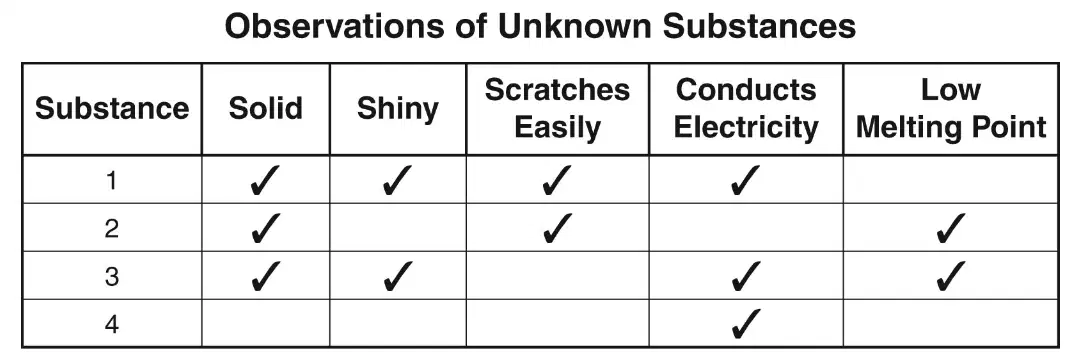
George has four unknown substances. He wants to know which substances are metals. He makes observations of each substance and records his data in the table below. Based on George's observations, which is most likely metal substances?
1 and 3
1 and 4
2 and 3
2 and 4
Select all items that are a compound.
Neon (Ne)
Ozone (O3)
Water (H2O)
Nitrogen (N2)
Ammonia (NH3)
Correctly identify the parts of an atom.
Electron
Isotope
Nucleus
Proton
Molecule
How do you get an atom to have a positive charge?
Add an electron
Remove an electron
Keep it the same
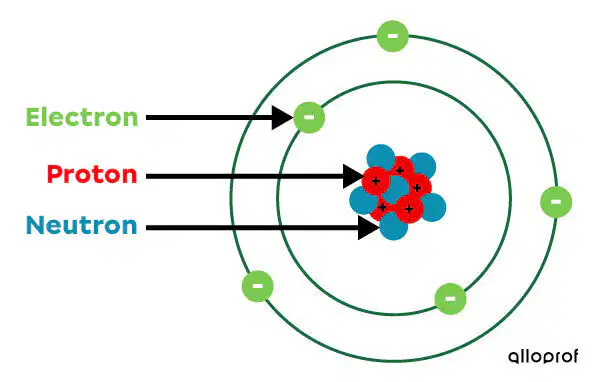
How many neutrons does Boron have?
5
10
6
15
According to the periodic table of elements, which set of elements has similar properties?
H, C, I
He, H, Al
He, Ne, Ar
Na, Ca, Al
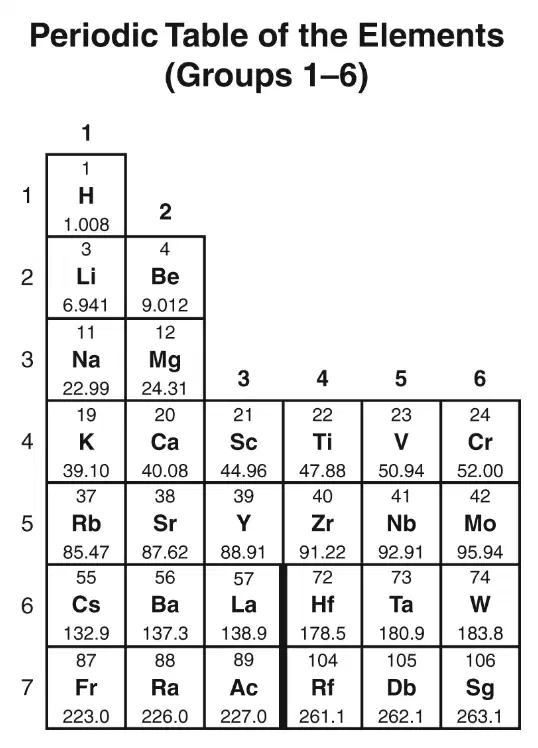
Select the three elements from the choices in the picture that are most similar in chemical behavior.
Be
Ca
K
Ra
Sc
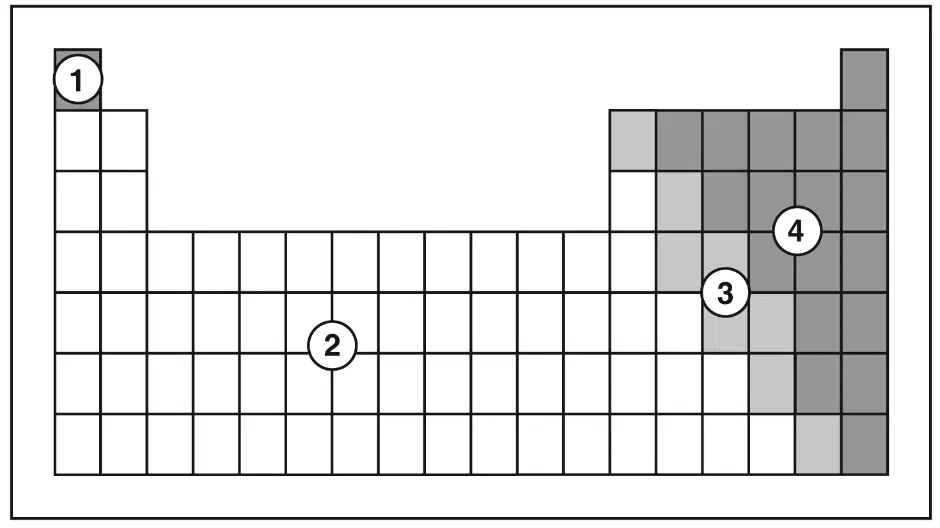
Zinc is a metal. In which section of the periodic table would zinc be part of?
Section 1
Section 2
Section 3
Section 4
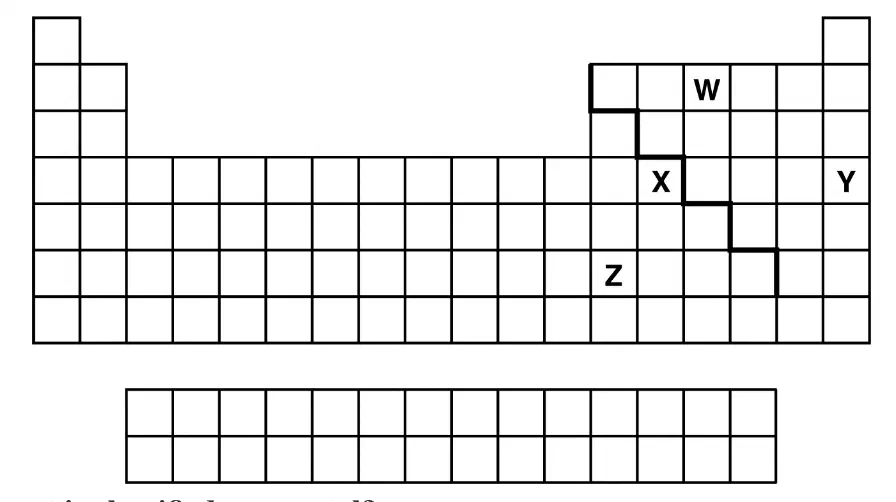
The symbols W, X, Y, and Z represent elements. Which element is classified as a metal?
W
X
Y
Z

During photosynthesis, carbon dioxide and water combine to the general equation in the picture. Why is photosynthesis a chemical reaction?
because a new substance is formed
because an input of energy is required
because the reactants are compounds
because the products include an element
Which is an example of chemical change?
sand separated from water by filtering
water evaporating from a puddle
a rock being eroded by the wind
a nail rusting in water
What is made of atoms, takes up space and has mass?
Molecule
Compound
Gas
Matter

In the element square, the 1 represents -
Element symbol
Mass number
Atomic number
Element name
In the element square, the H represents -
Element symbol
Mass number
Atomic number
Element name
In the element square, the Hydrogen represents -
Element symbol
Mass number
Atomic number
Element name
In the element square, the Hydrogen represents -
Element symbol
Mass number
Atomic number
Element name
On the periodic table, a row is called a -
Period
Group
Element
Square
Sodium (Na) is a -
Halogen
Noble Gas
Alkali Metal
Actinoid
Metals are found on the _______ side of the staircase.
Left
Right
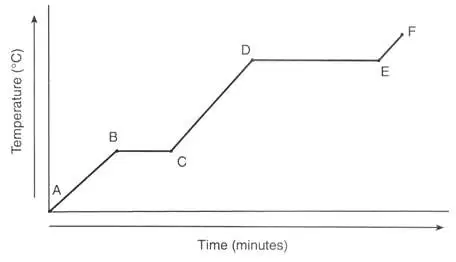
At what part of the phase change diagram, does liquid water change into water vapor?
B
C
D
E
Which of the following is an example of homozygous dominant alleles?
Hh
hh
HH
What do Sulfur (S), Nitrogen (N), Phosphorous (P) and Bromine (Br) all have in common?
They are all nonmetals.
They are all metals.
They are all metalloids.
Nothing.
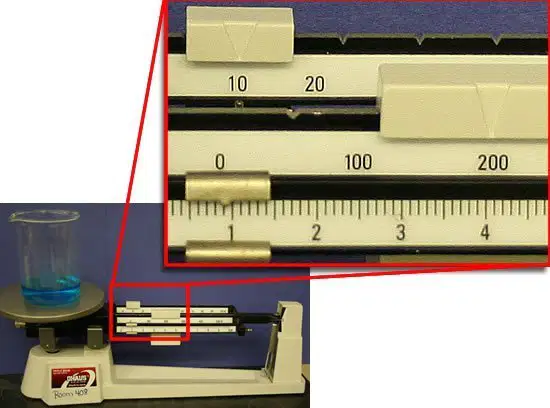
What is the mass of water in the beaker? Assume that the beaker has a mass of exactly 100.00 g.
100.90 g
109.00 g
110.90 g
210.90 g

