
 Worksheets
Solar System Review
Total questions: 58
Worksheet time: 31mins
What planet is eighth in the Solar System?
Uranus
Jupiter
Neptune
Mars
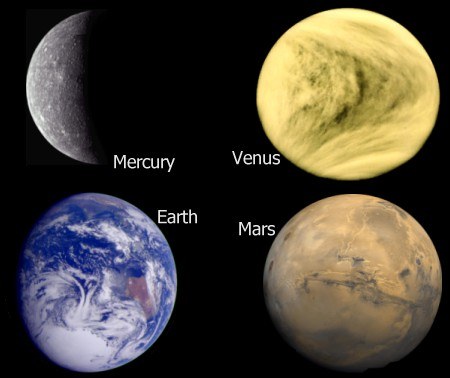
Earth and the other planets closest to the Sun are made mostly of _______.
gas
metal
water
rock

Which planet is NOT one of the
"Gas Giants"?
Uranus
Venus
Neptune
Saturn

What is the largest planet in
our solar system?
Neptune
Jupiter
Uranus
Mars

Day and night are caused by the _____________ of Earth on its axis.
revolution
orbit
rotation

The astronomical model in which the Earth and planets revolve around the Sun at the center of the Solar System.
Aristarchus
accretion
nebula
heliocentric system
Which of these planets is the farthest from the sun?
Mercury
Earth
Neptune
Jupiter
Which planet is sometimes called the "red planet"?
Jupiter
Mercury
Mars
Uranus
Which of these sets of planets are terrestrial planets?
Mercury, Saturn, Mars, Venus
Mars, Earth, Venus, Mercury
Earth, Mars, Neptune, Jupiter
Venus, Mercury, Earth, Uranus
What is in our Solar System?
Planets
Moons
Sun
All of the above
Which planet is the hottest in the Solar System?
Earth
Mercury
Venus
Mars
Which planet is the sixth from the sun?
Venus
Jupiter
Uranus
Saturn
Which planet has the Big Red Spot?
Jupiter
Saturn
Mars
Neptune
Which planet is Earth's sister planet?
Neptune
Mars
Venus
Saturn
About how many days does it take to revolve around the sun on Earth?
30
365
24
1
The correct term for the way Earth spins on its axis is ___?
rotate
revolve
year
rings

This planet has rings.
SATURN
MERCURY
MARS
VENUS

The moon is a natural satellite of Earth.
comet
axis
satellite
space probe

The solar system has planets, moons, comets, and asteroids.
solar system
earth
rotation
United States
What model of the solar system states the sun is the center?
Geocentric Model
Heliocentric model
Biocentric model
Hydrocentric model
What is the center of our solar system?
The sun
Earth
Jupiter
Saturn
Which planet is the closest to our sun?
Mars
Earth
Mercury
Venus
Why do the planets orbit the sun?
They don't, the planets orbit the Earth
Because Science
The sun is so massive that it has a very large gravitational pull, which causes objects to orbit it
Because they want to
What model of the solar system states the Earth is the center?
Geocentric Model
Heliocentric model
Biocentric model
Hydrocentric model
The least dense planet in the solar system is _______. It could float in water.
Jupiter
Saturn
Neptune
Earth
A large planet with a deep and massive gaseous atmosphere; less dense than a terrestrial planet.
Inner Planet
Gas Giant
Terrestrial Planet
Super Big Planet
_______ is a planet whose atmosphere may contain a lot of methane gas, which gives this planet its blue color.
Neptune
Earth
Mars
Mercury
This planet is red in color due to the oxidation of Iron (Fe) (rust).
Venus
Earth
Mercury
Mars
Which planet is the smallest?
Mercury
Venus
Earth
Mars
What is the correct order of the planets starting from the sun?
mars, venus, mercury, earth
venus, mercury, earth, mars
mercury, venus, earth, mars
mercury, earth, venus, mars
How many moons does Mars have?
2
19
5
97
Mars is the ______ planet from the Sun.
1st
2nd
4th
6th
What mountain on Mars is considered the highest mountain in the Solar System?
Mount Mars
Red Mountain
Mount Zeus
Olympus Mons

This person was a Greek philosopher who believed the universe centered around the Earth in a perfect circle.
Copernicus
Ptolemy
Aristotle
Galileo
This person discovered moons on Jupiter, which helped to support the heliocentric theory.
Aristotle
Copernicus
Ptolemy
Galileo
Who supported the Heliocentric model?
Aristotle & Ptolemy
Copernicus & Galileo
True or False: a moon is a natural satellite that orbits a planet.
True
False

