Wayground logo

Free Printable Worksheets

Font size

S
M
L
XL
Worksheets

Unit 7; Lesson 2 Quiz~~Atomic Structure

Total questions: 44

Worksheet time: 11hrs 0mins

Name
Class
Date
1.

All matter is made of _________.

a)
energy 
b)
atoms 
c)
electrons 
d)
compounds 
2.
What is at the center of every atom?
a)
An electron
b)
A compound
c)
A molecule
d)
A nucleus
3.
The positively charged particles of an atom are the ________.
a)
electrons
b)
protons
c)
neutrons
d)
protons & neutrons
4.
What does the nucleus of an atom contain?
a)
Electrons and neutrons
b)
Protons and neutrons
c)
Neutrinos and positrons
d)
DNA and RN
5.

Atoms are made up of ________________

a)

energy

b)

electrons

c)

subatomic particles

d)

gasses

6.

The subatomic particles that make up an atom.

a)

solid, liquid, gas

b)

electrons, protons, nucleus

c)

energy, protons, nucleus

d)

electrons, protons, neutrons

7.

__________ are negatively charged particles that are in the orbitals around the nucleus.

a)

protons

b)

nucleus

c)

neutrons

d)

electrons

8.

A proton has a ___________ charge.

a)

positive

b)

negative

c)

neutral

d)

massive.

9.

An electron has a _________ charge

a)

positive

b)

neutral

c)

negative

d)

massive

10.

A neutron has _________ charge or is ________.

a)

negative ... neutral

b)

positive .... neutral

c)

no .... negative

d)

no ... neutral

11.
Which is an electron?
a)
A
b)
B
c)
C
12.

The smallest part of any element. Made up of protons, neutrons and electrons.

a)

Atom

b)

AMU

c)

Ion

d)

Isotope

13.

The negatively charged particles in an atom

a)

Proton

b)

Electron

c)

Neutron

d)

Electron Cloud

14.

Which TWO of the following subatomic particles are inside the nucleus?

a)

protons

b)

electrons

c)

neutrons

d)

There are no subatomic particles in the nucleus of an atom.

15.
The particles with no charge in an atom are the _______.
a)
electrons
b)
neutrons
c)
protons
d)
protons and neutrons
16.

How many atoms of Hydrogen are in H2O

a)

1

b)

2

c)

3

d)

more than 3

17.

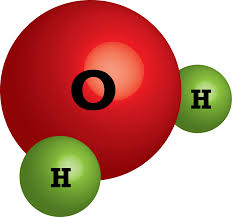
How many atoms of Hydrogen are in this compound?

a)

1

b)

2

c)

3

d)

4

18.

What is the chemical symbol for Hydrogen

a)

H

b)

He

c)

Hy

d)

Hg

19.

What is this subatomic particle that has positive charge?

a)

Electron

b)

Neutron

c)

Proton

d)

Megatron

20.
True or False? Neutrons have a negative charge
a)
True
b)
False
21.
An atoms overall charge is 
a)
positive 
b)
depends on its mood 
c)
neutral 
d)
negative 
22.
What is the atomic number for an element with three protons?
a)
2
b)
1
c)
3
d)
6
23.
An atom's mass number equals the number of...
a)
protons plus the number of electrons
b)
protons plus the number of neutrons
c)
protons
d)
neutrons
24.
Which statement about the atomic nucleus is correct?
a)
The nucleus is made of protons and neutrons and has a negative charge
b)
The nucleus is made of protons and neutrons and has a positive charge
c)
The nucleus is made of electrons and has a positive charge
d)
The nucleus is made of electrons and has a negative charge
25.
Which statement best describes an electron?
a)
Smaller mass than a proton and a negative charge
b)
Smaller mass than a proton and a positive charge
c)
Greater mass than a proton and a negative charge
d)
Greater mass than a proton and a positive charge
26.
A particle that moves around the nucleus is a(n)...
a)
Proton
b)
Neutron
c)
Electron
d)
Quark
27.
Atoms have no electric charge because they...
a)
have an equal number of charged and non charged particles
b)
have neutrons in their nuclei
c)
have an equal number of electrons and protons
d)
have an equal number of neutrons and protons
28.
Which statement best describes an electron?
a)
Smaller mass than a proton and a negative charge
b)
Smaller mass than a proton and a positive charge
c)
Greater mass than a proton and a negative charge
d)
Greater mass than a proton and a positive charge
29.
Most of the mass in an atom is concentrated in the...
a)
electrons
b)
nucleus
c)
protons
d)
empty space
30.
What is the smallest?
a)
worm
b)
molecule
c)
galaxy
d)
atom
31.
Electrons are___________
a)
Extremely small even in comparison to protons.
b)
part of the nuclues.
c)
Super Positive, like cheerleaders!
d)
very large
32.
What is the mass of an atom if it has 11 protons, 12 neutrons, and 11 electrons?
a)
22
b)
11
c)
34
d)
23
33.
If an atom has 10 protons, 10 neutrons, and 10 electrons, what is the mass of the atom?
a)
10
b)
20
c)
30
34.
Protons and Electrons balance the charge of an atom.
a)
True
b)
False
35.
Which one of these is NOT located in the element square on the Periodic Table?
a)
Atomic Number
b)
Atomic Mass
c)
Room Temperature
d)
Chemical Symbol
36.
Where are electrons of an atom found?
a)
Nucleus
b)
Electron Cloud
c)
Some are in the nucleus and some in the electron cloud.
d)
They are moving everywhere.
37.
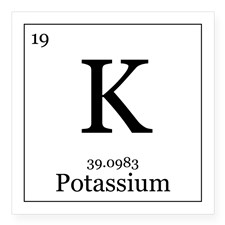
How many neutron are in the atom "K"?
a)
7
b)
2
c)
39
d)
20
38.

The center of an atom where its neutrons and protons are is called the _____________.

a)

nucleus

b)

electron cloud

c)

center

39.
What does the 1.00794 stand for?
a)
Hydrogen
b)
atomic number
c)
atomic mass
d)
atomic explosion
40.

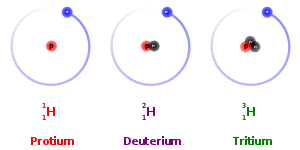
Different isotopes have...

a)

different masses

b)

different protons

c)

different electrons

41.

An atom becomes _______ when it loses electrons.

a)

Positive

b)

Negative

c)

Neutral

42.

An atom becomes _________ when it gains electrons.

a)

Positive

b)

Negative

c)

Neutral

43.
Ions are: 
a)
atoms with a positive or negative charge
b)
atoms with no charge
c)
atoms with ONLY a positive charge
d)
atoms with ONLY a negative charge
44.
What is the number of protons that the element in this image contain?
a)
14
b)
7
c)
15
d)
18