
 Worksheets
Review Unit 1 Y8
Total questions: 95
Worksheet time: 2hrs 54mins
(a) is the movement of soil and rock by wind, water, ice, and gravity.
(a) occurs when eroded materials stop moving and begin to build up.
(a) moves material from one place to another.
(a) changes the identity of rocks and it involves a chemical reaction or change.

This is an example of (a) .
Which process describes water getting into cracks, freezing, and breaking the rocks or pavement apart? (a)
Which process describes a mudslide flowing down a steep hill? (a)
Which process describes waves dropping sand on the beach? (a)
Which process describes wind blasting sand at rock and carving out arches? (a)
How deposition will happen in coastal erosion?
When waves lose energy and leave sediments / sand along a coast.
The wearing away of land, removal of beach rocks/sand by water or wind.
An area of land that smells different to other places.
An area that has a lot of wind.
Which of these coastal landforms are created by deposition? (a)
Which of these coastal landforms is created by erosion?
Sea Cave
Tombolo
Beach
Spit

What type of Landform do you think London Bridge in Port Campbell had before becoming into a stack? (a)
What is the first stage of a stack forming from a headland?
Cracks erode to form a cave.
Erosion and weathering create small cracks in the headland/cliff face.
The cave becomes wider and deeper.
The waves cut through the cave and form an arch.
What is the main factor in which rocks are pushed by waves up against the headland, eroding the cliff face further? (a)

Which feature cannot be seen in this image? (a)

(a) can either form a beach by depositing sand or destroy a beach by eroding the sand.

Sea caves are coastal landform made by (a)
Which erodes quicker? (a)
Waves are generated by (a)
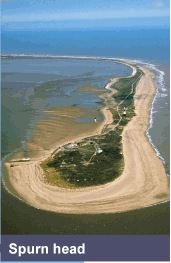
Identify this coastal landform. (a)
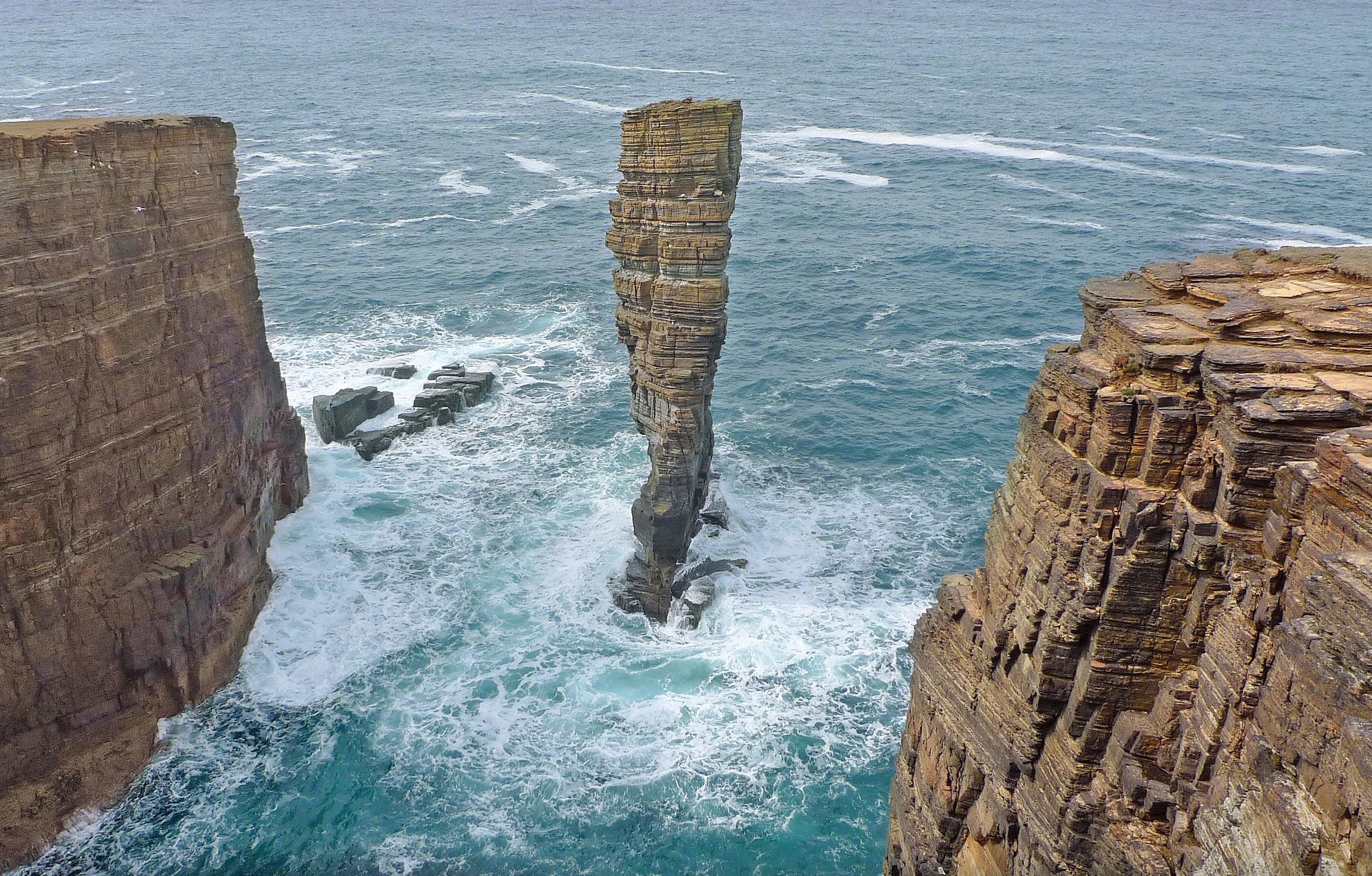
Identify the landform type. (a)
True or false? Sea Stacks are created by erosion and weathering. (a)

Looking at the long profile of the river's course, where does most erosion occur? (a)
In the river process, (a) is when material is worn away from the river bed and banks.
In the river process, (a) is when material is dropped into the river channel.
In the river process, (a) is when material is carried away along with the river flow, to another place.

In the river process of erosion, when rocks and stones in the water act like sandpaper and scrape the river bed and bank, wearing them away, this is called (a) .

A meander is best described as ...
(a)

When the bends of a Meander get close enough they can join, creating a new river path. What is left is called (a)

What is the name of the point where a river starts? (a)
An oxbow lake is an old (a)

What landform is created on the inside bend (...) of a meander and why?
(a)

What landform can be found on the outside bend of a meander(*) and why?
A river cliff as the water flows slowly and deposits the load it is carrying.
A river cliff as the water flows quickly on the outside bend eroding the bank through attrition.
A river cliff
A river cliff as the water flows quickly on the outside bend eroding the bank through hydraulic Action.

Where will there be the most erosion? (a)

Where is the water in the river moving the slowest? (a)
Which of the following is NOT very typical of a youthful stage of a river? (a)

Erosion is most likely greatest at locations (a)
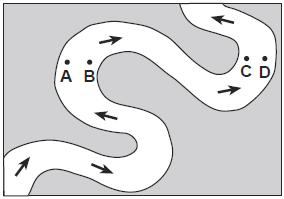
Which two locations have the greatest stream velocities? (a)
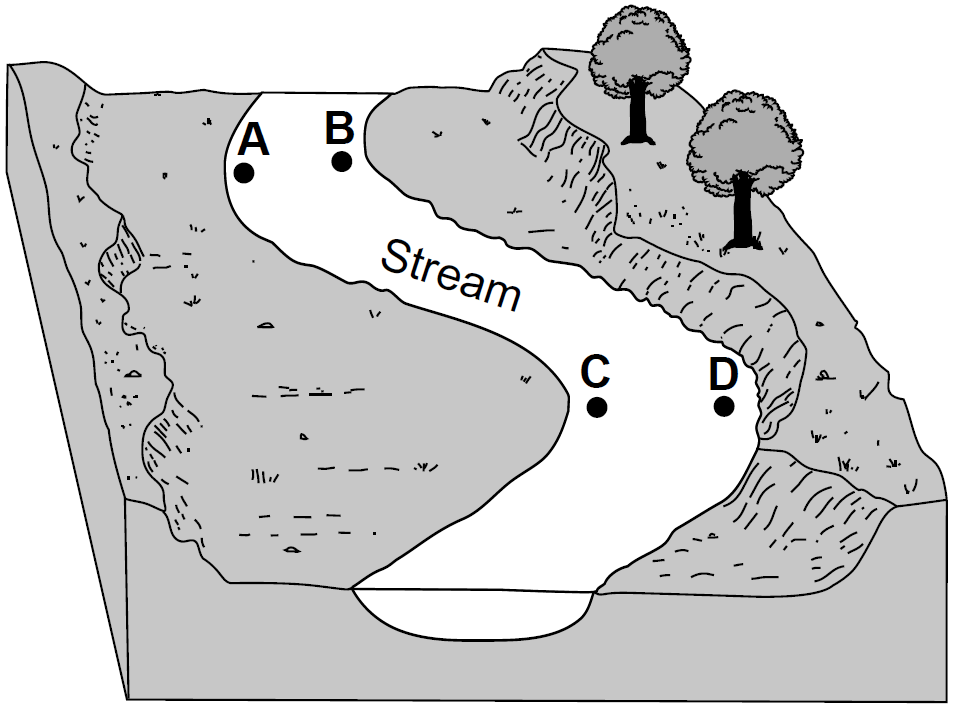
At which two locations would the stream most likely be the deepest? (a)

The streambank on the outside of this meander is steeper than the streambank on the inside of this meander because the water on the outside of this meander is moving (a)
The river undercuts the hard rock, creating an overhang. (a)
"Water cuts into the rock and wears it away," This is called...
sediment
deposition
erosion

What landform can you see in this picture? (a)
What is the deep water called beneath a waterfall? (a)
Waterfalls - what is the gap called between the hard and soft rock created by erosion?
Deadman's drop
Hole
Erosional gap
Overhang
In which section of the river do waterfalls form? (a)
For a waterfall to form there needs to be two layers of rock. Which way round must they be? (a)
Waterfalls are landforms created by....
Erosion
Deposition
Over time the top rock sticks out over the bottom rock. It is unsupported and so eventually (a) into the plunge pool
What is the name for the pool that forms at the bottom of a waterfall? (a)
What two inputs do you need for waterfalls to form?
Steep gradient
Bands of hard and soft rock
Fast flowing water
River sediment
The waterfall retreats (moves back) upstream towards the rivers source over thousands of years leaving behind a steep sided (a)
What is the FIRST step in a water fall formation?
Hard rock
Soft rock
If a river flows over a hard rock and then a soft rock the soft rock will be eroded more.

Which statement is NOT TRUE about waterfalls? (a)
The water in waterfalls can erode the land around it. But many other forces can also erode the earth. What is one way the gravity can erode earth?
By creating electricity that Canadians and Americans can use to power their homes
By breaking down soft rock to create plunge pools at the bottom of a waterfall
By picking up bits of sand and moving them around in a sandstorm
By pulling pieces of earth down the side of a mountain in a landslide
Which section of a river's course is a waterfall most likely to occur in? (a)
A waterfall is formed when there is a section of (a) followed by a section of soft rock along the riverbed.
Groynes are an effective technique because they stop the process of what occurring? (a)
A recurved sea wall is effective because it...
(a)
Sea walls can cost up to what per m? (a)
How much do groynes cost per m? (a)
What is another method that reduces coastal erosion? (a)
What is a rip rap? (a)
What is the cost per m of rip rap? (a)
What is beach rebuilding?
A type of sea wall
Barriers at right angles to the beach
Boulders
The replacement of sand in the beach
How much does the beach rebuilding cost per km? (a)
What is the main advantage of beach rebuilding? (a)
Which is the main reason to prevent coastal erosion?
The look of the beach and economic activities
The protection that will give to the citizens
The amount of money that you ca save in the methods
What is the main advantage of beach rebuilding? (a)

How do groynes work to protect the coastline?
They trap sediment by slowing down longshore drift, thereby building up a wide beach
They absorb wave energy so that the cliffs behind are protected
They act as a hard rock barrier at foot of cliff to provide a buffer again the sea
They allow rapid longshore drift along the coastline

A recurved sea wall is effective because it...
(a)

Old Harry itself is labeled on the picture. What is Old Harry an example of? (a)
What is the cost per km of rip rap? (a)
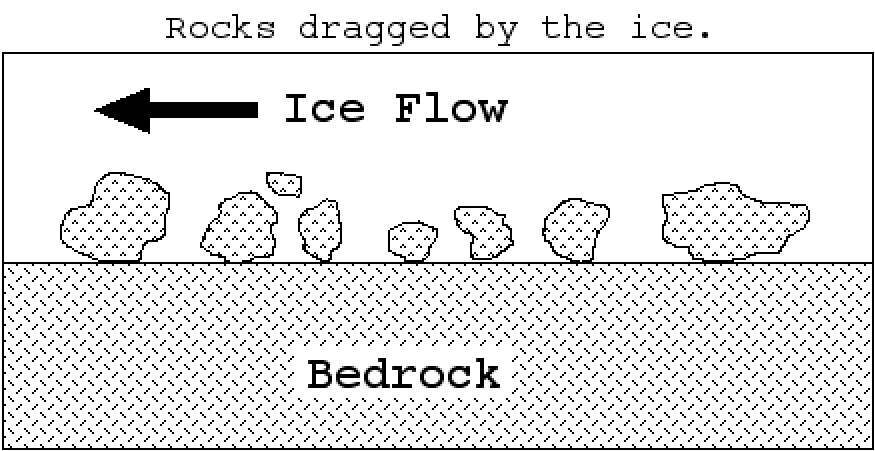
(a) is rock debris embedded in base of ice create polishing, grooves and striations.

(a) are are lines deposited at bottom or along sides of glaciers.

A gigantic mass of moving ice (a)

All material carried and deposited by glaciers (a)
Glaciers can be found in hot regions. (a)
Glaciers move extremely fast (a)
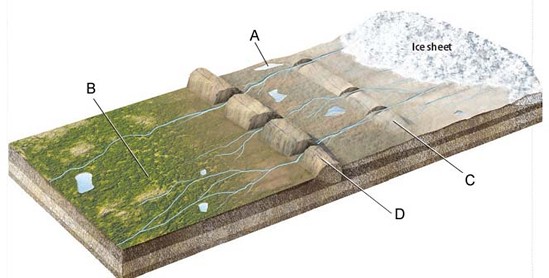
What glacial features are indicated by the labels C and D on the figure? (a)
What type of weathering occurs in a glacier? (a)
The cut edge ridge in the side of a mountain eroded by a glacier is called (a)
Mountains are naturally shaped in with the pyramidal form (a)
A glacier is a large mass of (a) that is slowly moving and is formed through cold temperatures and repeated snowfalls.
Why do glaciers move?
Gravity
Weight
Gravity AND weight
What are you talking about? Glaciers don't move!
Label each picture with a 1, 2, or 3 to show the order that these images occur.

(a) are are lines deposited at bottom or along sides of glaciers.

