
NEW
Font size
 Worksheets
2023 PMA 3 Review-Ramos
Total questions: 50
Worksheet time: 46mins
Diffusion & Facilitated Diffusion are both __________ transport.
Passive
Active
Easy
Free
What is the movement of particles with the concentration gradient using protein "helpers"?
diffusion
facilitated diffusion
active transport
enzymatic reactions
What type of microscope requires light passing through a specimen?
Transmission Electron Microscope
Light/Compound
Scanning Electron Microscope
Dissecting Microscope
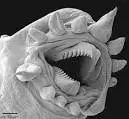
Which type of microscope would give you this type of image: Black and White, High Def, of a dead organism
SEM
TEM
Dissecting Microscope
Light/Compound Microscope
What type of microscope will give you a colored image of a live or dead WHOLE organism
SEM
TEM
Dissecting Microscope
Light/Compound Microsope
How would the blood pressure of someone who exercise compared to someone who is a couch potato?
lower blood pressure
higher blood pressure
They would be the same
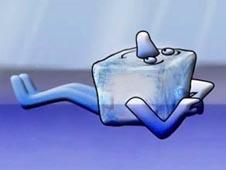

What property of water causes these Alka-Seltzer tablets to dissolve?
Universal Solvent
Expansion Upon Freezing
Cohesive Behavior
High Specific Heat
This organism spends its day roaming through the forest in search of food. Its hunting techniques require use of its keen sense of smell and hearing.
Plantae
Archaebacteria
Fungi
Animalia

What is the difference between a fungus and a plant?
Fungi are autotrophic and the plants are heterotrophic
Fungi are heterotrophic and the plants are autotrophic
Plants can move but fungi cannot move
Plants are multicellular and animals are unicellular
Which of the following is the correct equation for photosynthesis?
sunlight + H20 + CO2 ----> C6H12O6 + O2
sunlight + H20 + O2 -------> C6H12O6 + CO2
ATP + C6H12O6 + O2 ---------> H20 + CO2
C6H12O6 + O2 -------> ATP + H2O + CO2
Which of the following is the correct equation for cellular respiration?
sunlight + H20 + CO2 ----> C6H12O6 + O2
sunlight + H20 + O2 -------> C6H12O6 + CO2
ATP + C6H12O6 + O2 ---------> H20 + CO2
C6H12O6 + O2 -------> ATP + H2O + CO2

Which part of the potato plant body absorbs the MOST water?
A
B
C
D
Which of the following occurs when an athlete runs out of oxygen during a workout?
Without enough oxygen, the athlete's muscle cells will switch to aerobic respiration which makes 36 ATP
Without enough oxygen, the athlete's muscle cells will switch to anaerobic respiration which makes 2 ATP using the lactic acid made by the body
Without enough oxygen, the athlete's muscle cells will switch to aerobic respiration which makes 2 ATP
Without enough oxygen, the athlete's muscle cells will switch to anaerobic respiration which makes 36 ATP using the lactic acid made by the body
Which plant structure transports food throughout the plant?
Pistil
Stamen
Xylem
Phloem
What type of tissue allows for plants to grow rapidly at the tips of their roots and stems?
Ground
Meristematic
Dermal
Vascular

Which organelle is responsible for the structure and strength of the cell?
9
3
5
7

Which two cell parts are only in plant cells?
4, 7
6, 8
7, 9
6, 2
A mutation is defined as:
A change in the cell's structure
Anything that changes in an embryo
Any change in the physical features of a human
A change in the DNA sequence
Why are insertion and deletion (frameshift) mutations so harmful?
They change all of the codons from the mutation on down the line, which changes the amino acid sequence
They insert things that an organism doesn't need.
They often delete things that organisms need.
Insertion and deletions are not any more harmful than substitution mutations.
In what way does comparative anatomy provide support for the scientific theory of evolution?
indicates how an organism adapts to their environment
shows possible common ancestor between organisms
Provides comparison of organisms' ages
provides evidence of chromosomal similarities between organisms
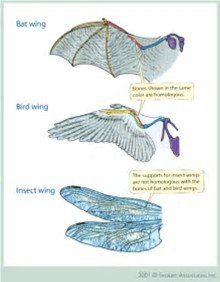
A bat, bird, and insects wings are examples of which of the following?
Homologous structures
Vestigial structures
Analogous structures

A human arm, a turtles paw, a bat wing, and a whale's flipper are examples of which of the following?
Homologous structures
Vestigial structures
Analogous structures
Which of the following is an example of natural selection?
Bald Eagles are hunted until near extinction, population recovers.
Small group of iguanas floats to an island, starts a new population.
Red fox pups are more likely to survive in a snowy environment if they are born white.
Farmer chooses seeds from largest apples to plant next year. This results in larger apples from year to year.


Glycerol & Fatty Acids
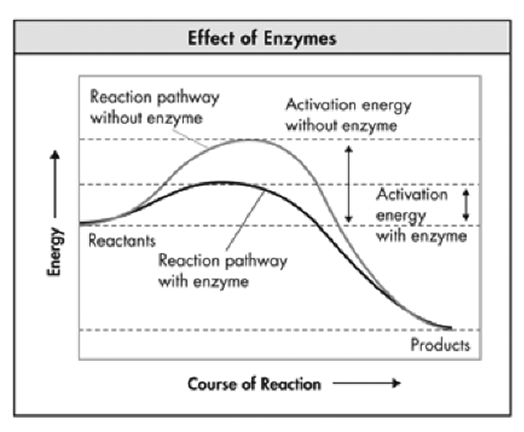

The enzyme doesn't work at 0 degree Celsius

The red line in this graph represents a chemical reaction that is
colder than the black line
with an enzyme
without an enzyme
hotter than the black line
Which do BOTH prokaryotes and eukaryotes contain?
nucleus
mitochondria
ribosomes
cell wall
You can distinguish a prokaryote apart from a eukaryote by--
The presence of a ribosome
The presence of a cell membrane
The presence of DNA
The presence of a nuclear membrane


Which organism in the food web shown to the right would
contain the lowest concentration of chemical pollutants?
producers
primary consumers
secondary consumers
tertiary consumers
The phenomenon by which toxins concentrate in the organisms at higher trophic levels within an ecosystem is known as...
Biotoxicity
Biomagnification
Eutrophication
Predation
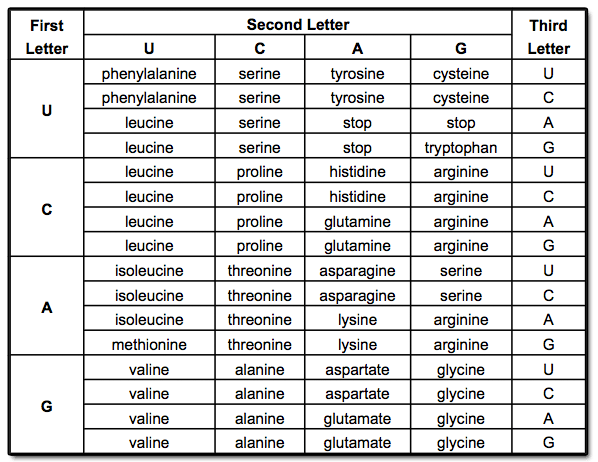
ATG TGA CAG


CGG UCC ACA

What's occuring at point Z
translation
transcription
DNA replication
RNA replicaiton

When looking at DNA what would a pentose sugar, a phosphate, and a nitrogenous base form?
nucleotide
deoxyribose
phosphate
nucleic acid

The plants gets its nutrients from sugar, called __________.
Galactose
Fructose
Sugar
Glucose

