
 Worksheets
TRANSPORT SYSTEM
Total questions: 30
Worksheet time: 23mins
Choose the correct order of the chambers through which deoxygenated blood flows in the human heart.
right atrium-----> right ventricle------> aorta
right atrium -----> right ventricle------> pulmonary artery
left atrium------> left ventricle------> aorta
left atrium-------> left ventricle-------> pulmonary artery
Lymp nodes are widely distributed throughout the body along the lymphatic veins where they filter the _____________before it is returned to the ________________.
lymph, blood
lymph, heart
blood, lymph
blood, heart
Movement of water up a plant through the xylem vessels is due to?
I Transipration-cohesion-tension mechanism
II Root pressure
III Presure flow
I only
I and II only
II and III only
I, II and III
Which structures of the human heart receives impulses directly from the sympathetic and parasympathetic system?
Sinoatrial node
Atrioventricular node
Bundle of His
Purkinje tissue
The loading of sucrose into sieve tubes is by ________ transport and consequently, requires ___________.
Active; ATP
Passive; energy
Active; ions
Passive;ions
Which of the following functions as a source during translocation in plants?
Merismetic tissue in the root
Leaves
Roots
Fruits and flowers
Which of the following are lymphoid organs?
I.Tonsil
II. Spleen
III. Bone marrow
I only
I and II only
II and III only
I,II and III
Xylem transports water and dissolved minerals in which direction?
Upward
Inward laterally
Downward
Outward laterally
In the pressure flow hypothesis of translocation, what causes the pressure?
Root pressure
The osmotic uptake of water by sieve tubes at the source
The accumulation of minerals and water by the stele in the root
The osmotic uptake of water by the sieve tubes of the sink
What is the function of valves in heart?
To prevent the backflow of blood in the chambers.
To allow the backflow of blood in the heart.
To initiate the flow of the blood in the heart.
Where does Atrioventricular Valves (AV valves) are located?
In between atria and ventricle chambers.
In the area where pulmonary artery leaves the right ventricle.
In the area where aorta leaves the left ventricle.
In between left and right ventricles.
When impulses are conducted through the heart, transmission is delayed at the _____________ so that the ____________ may fully contract before the ___________ contract.
Sinoatrial node, atria, ventricles
Sinoatrial node, ventricles, atria
Atrioventricular node, atria, ventricles
Atrioventricular node, ventricles, atria

Sugar is loaded into the phloem from a source or an area of ______________ to a sink or an area of ______________
Low sucrose concentration, high sucrose concentration
High sucrose concentration, low sucrose concentration
Positive water potential, negative water potential
Negative water potential, positive water potential

Which shows the correct pathway of oxygenated blood entering and leaving the heart?
Pulmonary vein > left atrium > left ventricle > aorta
Pulmonary vein > left atrium > right ventricle > aorta
Vena cava > right atrium > right ventricle > pulmonary artery
Vena cava > right atrium > left ventricle > pulmonary artery
Small globules formed when triglycerides coated with phospholipid, cholesterol and protein is called ...
Chylomicron
Chyle
Lacteal
Lymph fluid
Sugar is loaded into the phloem from a source or an area of ______________ to a sink or an area of ______________
Low sucrose concentration, high sucrose concentration
High sucrose concentration, low sucrose concentration
Positive water potential, negative water potential
Negative water potential, positive water potential
The heart sound ‘dup’ which can be heard represents
the flow of blood into the heart.
the flow of blood from the atrium
into the ventricles.
the closure of the
atrioventricular valves.
closure of the semilunar valves.
The impulse that signals each heartbeat is conducted along which path?
1. Atrioventricular node
2. Bundle branches
3. Sinoatrial node
4. Atrioventricular bundle
1, 2, 3, 4
1,3, 4, 2
3,1, 4, 2
4, 1, 2, 3
During ventricular systole
blood flows from the ventricles
to the pulmonary arteries.
the ventricles relax.
the atrium contract.
the tricuspid and mitral valves are opened.
Sugar moves from leaves into the ___________of ___________ by__________ .
sieves-tube members; phloem; active transport
sieves-tube
members; xylem; active transport
sieves-tube
members; phloem; diffusion
tracheids; phloem; active transport
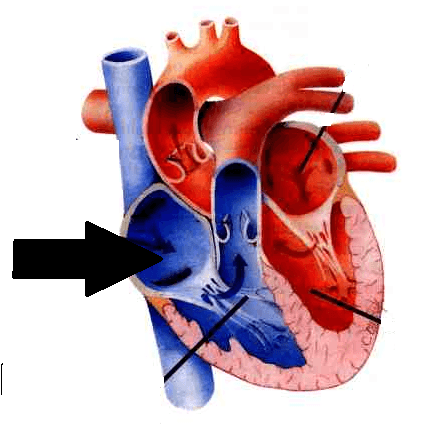
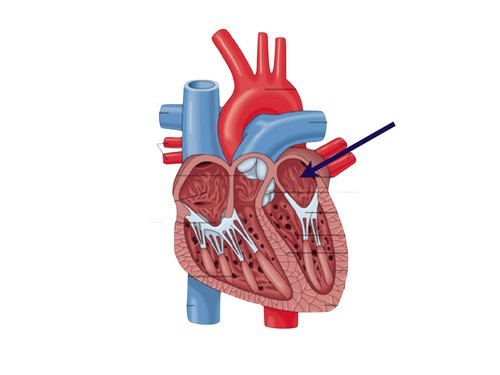
This chamber of the heart RECEIVES blood returning from the lung
Right Atrium
Right Ventricle
Left Atrium
Left Ventricle
Electricity cause your muscles to contract.
True
False

Which part of the heart exerts the highest pressure?
Left atrium
Left ventricle
Pulmonary vein
Pulmonary artery
Casparian strip on endodermis cell are made of ....
lignin
suberin
pectin
cellulose
The heart is made of which of the following types of muscles?
Cardiac muscle
Striated muscle
Smooth muscle
None of the above

