wayground logo

Free Printable Worksheets

NEW

Font size

S
M
L
XL
Worksheets

mass, matter, volume

Total questions: 45

Worksheet time: 47mins

Name
Class
Date
1.
Where do we read the level of liquid?
a)
The highest point the liquid touches.
b)
The bottom of the meniscus.
c)
Half way between, we make an educated guess and round it.
d)
Somewhere about there.
2.
What is the maximum value this graduated cylinder can measure?
a)
1 ml
b)
10 ml
c)
25 ml
d)
50 ml
3.
What is measured with a graduated cylinder?
a)

time

b)

distance

c)

weight

d)

liquid volume

4.

What is the formula for finding volume of a box?

a)

v = l + h + w

b)

v = l x w x h

c)

v = l x h

5.
Volume is the amount of space an object takes up.
a)
True
b)
False
6.
What is the volume of the regular solid in this diagram?
a)
24 cm3
b)
20 cm3
c)
30 cm3
d)
26 cm3
7.
Where should you read the level of water on the graduated cylinder?
a)
Level "A"
b)
Level "B"
c)
Level "C"
d)
None of these
8.

What units is volume measured in?

a)

grams

b)

degrees

c)

milliliters or cm3

d)

pounds

9.

What is the volume of this prism?

a)

16 cubic cm

b)

36 cubic cm

c)

144 cubic cm

10.

Which tool measures liquid volume?

a)

Overflow cup

b)

Beaker

c)

Graduated cylinder

d)

Ruler

11.

What is the volume of the nail?

a)

15 mL

b)

16 cm3

c)

1 mL

d)

1 cm3

12.

What is the volume of the rock in the picture?

a)

30 mL

b)

40 mL

c)

40 cm3

d)

10 cm3

13.

Camila wants to know the mass of a liquid that is inside a glass. After measuring it, she records the following numbers.

The mass of the liquid is:

a)

50g

b)

30g

c)

20g

d)

80g

14.

Is the amount of matter in an object.

a)

Mass

b)

Volume

c)

Weight

d)

Density

15.

What tool is used to measure mass?

a)

Graduated cylinder

b)

Meter stick

c)

Triple beam balance

d)

Ruler

16.
7,000 g = ____ kg
a)
70
b)
700
c)
7
d)
0.07
17.
The mass of an object ___________________________.
a)
changes, depending on where it is located
b)
changes randomly
c)
changes, depending on temperature
d)
does not change
18.

Why do we measure mass?

a)

To see if the object is crazy.

b)

To find out how heavy or light something is.

c)

To count how much we have.

d)

To find out if an object is big or small.

19.

Which units do we use to measure mass?

a)

Litres and millilitres.

b)

Metres and kilometres.

c)

Grams and kilograms.

d)

Centimetres and millimetres.

20.

The abbreviation of kilogram is:

a)

mm

b)

m

c)

kg

d)

g

21.
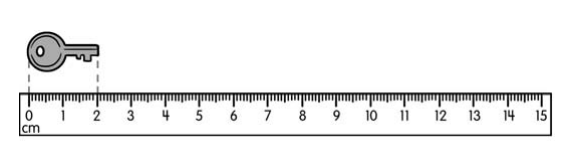
What is the length of the key?
a)
2 cm
b)
0 cm
c)
4 cm
d)
1 cm
22.
Choose the best unit for measurement. 
a)
8 yd. 
b)
1 ft. 
c)
7 in. 
23.

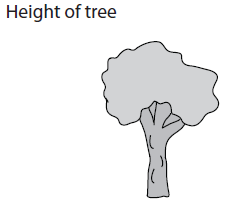
What object would you use to measure this?

a)
b)
c)
24.

What is the length of the match?

a)

5 in

b)

6 in

c)

2 in

25.

Which units would you use to measure the length of an ant?

a)

metres

b)

kilometres

c)

centimetres

d)

millimetres

26.

Which is a non-matter?

a)

shadow

b)

powder

c)

wood

d)

dust

27.

Observable characteristics such as texture, color, size, and mass are known as...

a)

combinations

b)

states of matter

c)

physical properties

d)

scientific tools

28.

Q6: Anything that has mass or takes up space is known as...

a)

matter

b)

objects

c)

physical properties

d)

science

29.
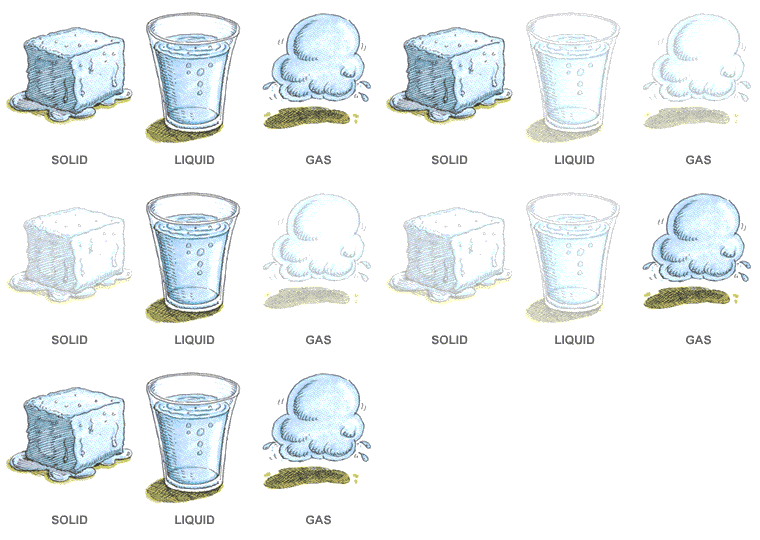
What are the states of matter?
a)
solid, liquid, and juice
b)
solid and liquid
c)
solid and gas
d)
solid, liquid, and gas
30.
Air is an example of a
a)
solid
b)
liquid
c)
gas
31.
Oil is an example of a
a)
solid
b)
liquid
c)
gas
32.
Which of the following statements describes a solid?
a)
It has a fixed shape
b)
It takes the shape of it's container
33.

Which of the following statements describes a liquid?

a)

It has a fixed shape

b)

It takes the shape of its container

34.
Gasses do not have a shape or volume of their own. You cannot see most gasess.
a)
True
b)
False
35.

Vaporization/ evaporation is the change of physical state from _______ to _______.

a)

gas to liquid

b)

liquid to gas

c)

solid to gas

d)

gas to solid

36.

It refers to the space that matter occupies.

a)

volume

b)

mass

c)

weight

d)

density

37.

When does a physical change occur?

a)

When the size, shape or state of matter changes

b)

When a new material is created

c)

When a substance reacts with another substance

d)

When elements combine to form a molecule

38.

The air inside a balloon is a __________.

a)

solid

b)

liquid

c)

gas

39.
Is hammering wood together to build a house a chemical or physical change?
a)
chemical
b)
physical
40.
The separation technique that involves heating a solution until the liquid changes into a gaseous state, leaving behind a solid is known as
a)
decanting
b)
 evaporation
c)
loading
d)
chromatography
41.
Solutions are formed when one or more substances dissolve in another.
a)
True
b)
False
42.
In which of these do particles move slowest?
a)
matter
b)
gas
c)
liquid
d)
solid
43.
Freezing Juice?
a)
Physical Change
b)
Chemical Change
44.

What is texture?

a)

How something looks

b)

How something tastes.

c)

The sound something makes

d)

How something feels

45.

What does density measure?

a)

Nothing

b)

How much volume something has

c)

how packed particles are in a substance.

d)

the temperature of an object.