
 Worksheets
0654 B10 Reproduction
Total questions: 37
Worksheet time: 37mins
A mode of reproduction where cells from one only one parent are used and no reproductive organs are involved.
Asexual reproduction
Sexual reproduction
The union of sperm cell an egg cell.
fertilization
pollination
respiration
reproduction
When an egg cell and sperm cell successfully unites, a _______ is formed.
egg
zygote
sperm
none of the above

What is the collective term for the male part of the flower?
Carpel
Sepal
Petal
Stamen
Which part of the plant produces the male gametes?
Anther
Filament
Ovary
Sepal

What part of the flower becomes the seed?
Ovary
Ovule
Embryo
Cotyledon

Which part of the flower becomes the fruit
Ovule
Root
Anther
Ovary

What is the name of number 3?
Filament
Stigma
Anther
Pistil

What is the name of part 7?
Pistil
Filament
Stamen
Anther

An experiment is set-up to investigate the factors required for seed germination.
Predict which seeds will germinate after one week.
A
B
C
D
What is the correct description of pollination?
Pollen grains are transferred from anther to the ovary
Pollen grains are transferred from the anther to the stigma
Pollen grains are transferred from the ovary to the stigma
Pollen grains are transferred from the stamen to the anther
Insect-pollinated flowers typically have
Small, inconspicuous flowers
No scent
Light, powdery pollen grains
Relatively large, and often sticky grains of pollen

The table shows the condition that four samples of seeds were kept in. Which sample would germinate?
A
B
C
D

The diagram shows a section of a flower that has been cross pollinated.
Which statements about this flower are correct?
1. The pollen produced by this flower will be genetically different from the pollen on the stigma
2. The pollen was carried to the stigma by wind
3. This flower is insect- pollinated because the stigma is enclosed by the petals.
4. The pollen was produced by another flower on the same plant
1,2, and 4
1 and 3
3 only
2 and 4 only
The process of the nucleus of the pollen fusing with the nucleus of the ovule is called ________________.
Pollination
Fertilisation
Germination
reproduction
Which part of the flower is usually feathery or sticky?
petals
stigma
anther
nectar
Which statement describes a structural adaptation of a wind-pollinated flowers?
They have long filaments so that the anthers hang outside of the flower
They have round,sticky sepals to trap pollen grains
Their large petals protect the stigma
Their stamens are feathery so there is a large surface area

How are the offspring different in both methods?
Method A (genetically different)
Method B (genetically identical)
Method A (genetically identical to parent)
Method B (genetically different from Parent)
Method A (sexual reproduction)
Method B (Asexual reproduction)
Method A (Mitosis)
Method B (Meiosis)

"C" will inherit...
46 chromosomes from each parent
half of their chromosomes (23) from each parent
Double the amount of chromosomes from each parent
Pairs of chromosomes from each parent

Identify the structure labeled "B".
Fallopian Tubes
Ovaries
Uterus
Placenta
What is one difference between asexual and sexual reproduction?
Asexual (offspring different from parent)
Sexual (offspirng identical to parent)
Asexual (Slow reproduction)
Sexual (Fast reproduction)
Asexual (offspring no variation)
Sexual (offspring variation)
Asexual (more complicated)
Sexual (less complicated)

What is the function of A & B?
A - transport gametes (eggs)
B - Produce eggs
A - produce eggs
B - transport gametes (eggs)
A - transport gametes (sperm)
B - produce sperm
A - produce sperm
B - transport gametes (sperm)
Asexual reproduction has
1 parent
2 parents
Sexual reproduction has
1 parent
2 parents
Asexual reproduction creates offspring that are
genetically identical to the parent
different from the parent
different from each other
formed by 2 parents
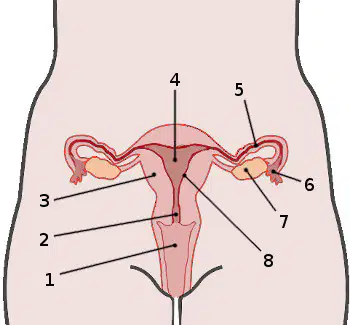
What is 4?
uterus
vagina
ovary
oviduct
What is 5?
uterus
vagina
ovary
oviduct
What is 1?
uterus
vagina
ovary
oviduct
ring of muscle at the opening of the uterus
cervix
vagina
ovary
oviduct
acrosome
describes the fact that gametes contain half the genetic information
place in sperm head that contains enzymes to digest the jelly coat of egg
another name for a tail - used to help sperm swim
outer layer of the egg that changes after fertilisation to stop any more sperm from entering
sac that holds the testes outside
the body
urethra
prostate gland
scrotum
penis
secrete fluids for sperm to swim in forming semen
prostate glands
sperm ducts
cervix
scrotum
egg cells have (pick 2)
tail to swim
jelly coat that changes after fertilisation
lots of energy stored in the cytoplasm
enzymes to help fertilisation
what is ovulation?
the first day of a period
the release of an egg from an ovary
another word for fertilisation
HIV leads to
(a)
what protects the baby during pregnancy from knocks and bumps
cervix
umbilical cord
placenta
amniotic fluid
What is transferred from the mum to the baby during pregnancy?
oxygen
glucose
carbon dioxide
urea

