
 Worksheets
Atomic Structure
Total questions: 71
Worksheet time: 47mins
Who first named the atom?
Democritus
Mendeleev
John Dalton
Aristotle
First person to work on the periodic table
Aristotle
John Dalton
Mendeleev
Democritus
Came up with the model that says electrons travel in fixed orbits around the nucleus
Thomson
Bohr
Dalton
Mendeleev
What experiment did Rutherford use to develop his Nuclear Model?
Plum Pudding Experiment
Chocolate Chip Cookie Experiment
Gold Foil Experiment
Periodic Table Experiment
Explain JJ Thomson’s Plum Pudding Model.
The atom has a nucleus with electron cloud around it.
Atom is a solid sphere that can’t get any smaller
Electrons are negative particles that travel in fixed orbits
The atom is positively charged with negative particles embedded throughout
Subatomic particle that has a positive charge
Protons
Nuetrons
Electrons
Quarks
The charge of a neutron
positive
neutral
negative
The particles that make up protons and neutrons
electron cloud
magnets
quarks
How many electrons can be held in the first energy level?
1
2
8
10
The mass of an atom is in the _____where the ____ are.
The volume of the atom is in the _____where the _____ are.
nucleus, p & n; electron cloud, e
electron cloud, e; nucleus, p & n
nucleus, p & e; electron cloud, e
This group will never combine with any other element naturally.
alkali earth metals
noble gases
hydrogen
halogens
The most reactive metals.
halogens
transition metals
alkali metals
noble gases
The most reactive nonmetals.
halogens
transition metals
alkali metals
noble gases
All elements in this group have 2 valence electrons.
alkali metals
alkaline earth metals
halogens
noble gases
This element is the only one in its group that belongs with the group # (due to having the same # of valence e-) but not with the group name (because it is a different classification)
Oxygen
Helium
Hydrogen
Carbon
The period number tells you…
number of energy levels
number of valence electrons
number of protons
The semi-conductors on the periodic table are classified as…
metals
metalloids
nonmetals
Which number can be used to determine the identity of an element?
atomic number
atomic mass
Hydrogen’s most common isotope has _____ proton(s) and ____ neutron(s).
0, 0
0, 1
1, 0
1, 1
This element has 4 energy levels and is one of the rare earth metals.
Silicon
Yttrium
Scandium
Calcium
The number of protons and neutrons is represented by the…
atomic number
mass number
Isotopes are atoms of the same element with different numbers of
protons
neutrons
electrons
quarks
What noble gas does not have 8 valence electrons?
Hydrogen
Helium
Neon
Argon
Select the two isotope notations for the most common form of Sodium.
11Na
Sodium-11
23Na
Sodium-23

A horizontal row of elements in the periodic table
Molecule
Period
Family
Atom
What is the atomic number?
the number of protons in the nucleus
the number of protons and neutrons in the nucleus
the number of neutrons in the nucleus
the number of protons in the energy levels
What is the mass number?
the number of protons in the nucleus
the number of protons and neutrons in the nucleus
the number of neutrons in the nucleus
the number of protons and electrons in the atom
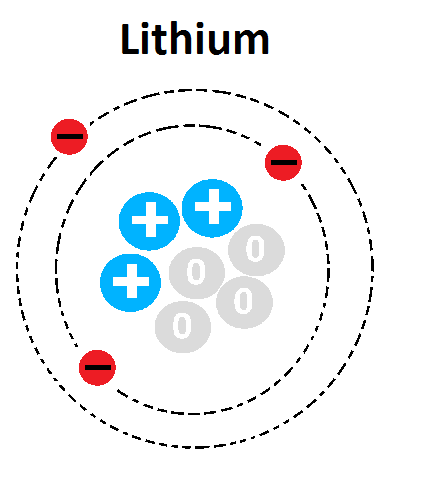
What is the atomic number of this atom?
1
3
4
7
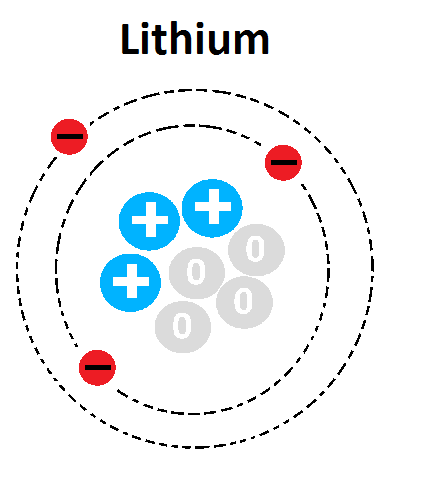
What is the mass number of this atom?
1
3
4
7
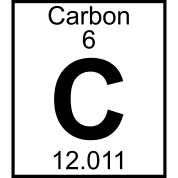

What does the 6 represent?
Atomic mass
atomic number
chemical symbol
element name
An atom has 10 protons, 15 neutrons and 10 electrons what is its mass number.
20
10
35
25
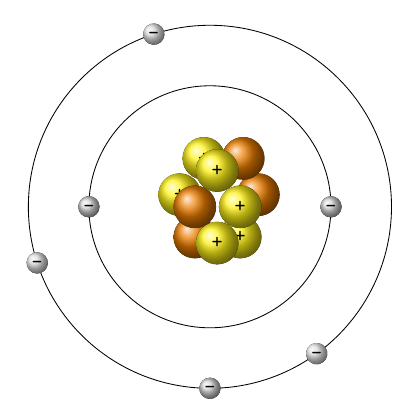
How many electrons does this atom have?
2
4
6
10


Which of the following determines the identity of an element?
number of protons
atomic mass
number of neutrons
number of shells

Look at this picture of Argon off the periodic table. Which of the following is true for this element?
18 protons
40 protons
22 protons
21.9 protons
When you two atoms with different masses, Carbon-12 and Carbon-13 for example, what type of atom do you have?
Neutral atom
Ion
Isotope
When you two isotopes of an atom, Carbon-12 and Carbon-13 for example, what has changed in the atomic structure?
Number of protons
Number of neutrons
Number of electrons
Which of the following is correct?
Protons are positive, electrons are negative, neutrons are neutral.
Protons are neutral, electrons are negative, neutrons are positive
Protons are negative, electrons are positive, neutrons are neutral
Protons are positive, electrons are neutral, neutrons are negative
Subatomic particles with a negative charge
Electrons
Neutrons
Protons
Quarks

What is the atomic mass of Neon?
10
20
30

What is the atomic number?
35
18
17
52


At what part of the atom is the arrow pointing?
nucleus
energy level
electron
proton


How many periods are on the periodic table?
5
6
7
8

Which color on the image of the periodic table corresponds with the halogens.
red
black
blue
orange
Which color on the image of the periodic table corresponds with the noble gases.
red
black
blue
orange
Which color on the image of the periodic table corresponds with the transition metals.
red
black
blue
orange
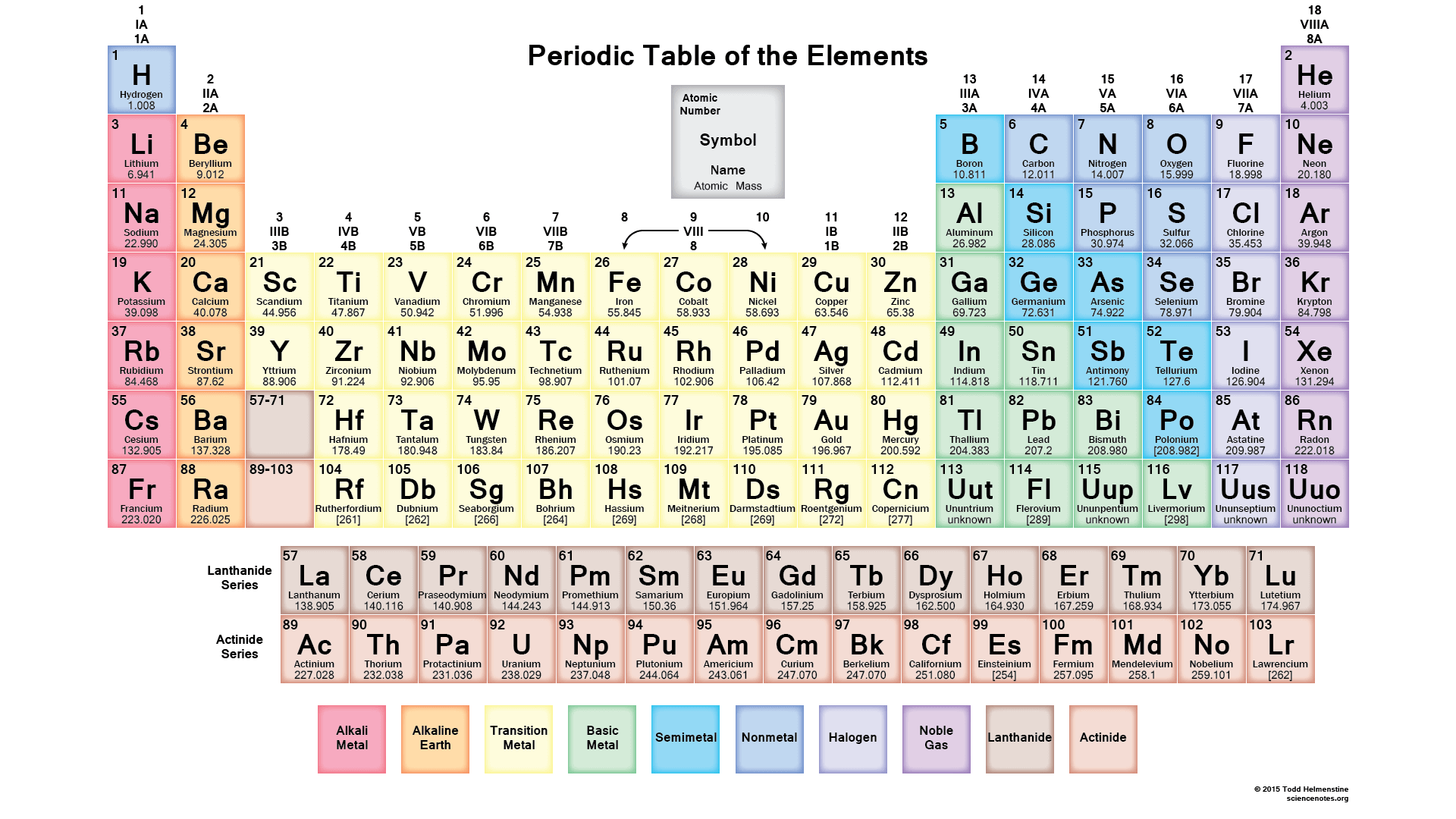
Isotopes of an element have a different number of...
Protons
Neutrons
Electrons
Mass
12 protons and 13 neutrons
Mg-12
Mg-13
Mg-25
Mg-24.305
If a proton is added or removed from an atom, what happens?
It becomes a different element.
It becomes a different isotope.
Nothing happens.
What is the difference between Neon-20 and Neon-22?
They have different numbers of electrons.
They have different numbers of neutrons.
Only 1 is radioactive.
No difference.
Which is the correct symbol for Fluorine-18?



