
 Worksheets
Year 7
Total questions: 80
Worksheet time: 44mins
H20 - name?
hydrooxic acid
hydrogen oxygen
water
hydrogen oxide
CaF2- name?
calcium fluorate
calcium fluoride
fluoride calcite
fluorine calciumate
Na2SO4- name?
sulfur sulfate
sodium sulfide
sodium sulfate
sodium oxygenate
MgO- name?
oxygen magnesium
magnesium oxide
magnesium oxate
magnesium oxygenate
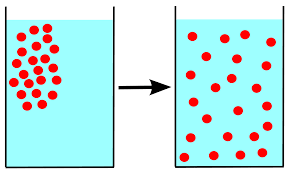
The picture below is an example of _________________.
osmosis
isotonic
diffusion
active transport
Diffusion occurs only in solids
True
False
An increase in temperature does what to diffusion?
Speeds it up
Slows it down
Stops it
No effect
When does diffusion stop?
After a day and a night
When the particles are evenly spread out
When there are no particles left
When all the particles leave the system
1 A substance made up of two or more chemically combined elements is —
an element
mixture
compound
solution


This picture represents which of the following?
A single element
Mixture of molecules
mixture of atoms
mixture of compounds
Which pH could belong to a strong acid?
14
8
5
1
Which pH could belong to a strong alkali?
14
8
5
1
Which pH could belong to a weak acid?
14
8
5
1
Which pH could belong to a weak alkali?
14
8
5
1
Which pH is neutral?
14
7
4
2
What is an indicator in Chemistry?
Chemical dyes that can change colour according to pH
A small light bulb on a car
A chemical involved in a chemical reaction
A substance used to neutralise an acid
When a substance changes from one state to another, its particles don’t change.
True
False
When a liquid becomes a gas, we call it..............
boiling/evaporation
melting
sublimation
When a liquid becomes a gas the particles ............
do not move
move slower
move faster
A substance in the ...................state becomes a gas by evaporation or by boiling.
solid
liquid
The temperature at which a substance boils is its ....................
melting point.
boiling point.
freezing point.
Different substances boil at different temperatures
True
False
When a gas becomes a liquid the particles ...................
move slower
move faster
do not move
A gas becomes a liquid by ........................................
freezing
boiling
condensation
If the boiling point of a substance is less than the room temperature, the substance will be in the .................state
solid
liquid
gas
The change of state from solid to liquid is called .................
melting
freezing
boiling
The temperature at which a substance melts is its .......................
melting point
sublimation point
boiling point
Every substance has its own melting point.
True
False
The temperature at which a substance freezes is its ..................................
freezing point
sublimation point
boiling point
Every substance has its own freezing point.
True
False
The freezing point of a pure substance is ............................. melting point.
the same as its
different from its
Complete the word equation below:
Acid + alkali --> ............... + water
water
salt
gold
metal
.............................. + sodium hydroxide --> sodium chloride + water
Nitric acid
Sulphuric acid
Hydrochloric acid
Ethanoic acid
The reaction between an acid and an alkali
produces salt and water. This reaction is called
acidication
neutralisation
alkalisation
The reaction between an acid and alkali produces ____________
salt
acidic solution
water
alkaline solution
Name the ionic compound, LiCl
lithium chlorine
lithium chloride
lithium chlorate
lithium monochloride
Name the ionic compound, CaCO3
calcium carbide
calcium carbon trioxide
calcium carbon oxide
calcium carbonate
Name the ionic compound, FeBr3
Iron (II) bromide
Iron (III) bromide
Name the following compound:
CO2
monocarbon dioxide
carbon oxide
carbon dioxide
oxygen carbonide
What is the correct formula of phosphorus trichloride?
P2Cl3
P3Cl3
PCl3
PCl5
What is the correct molecular formula for sodium nitrate?
NaNO2
Na3N
Na3NO
NaNO3
What is the correct molecular formula for barium hydroxide?
Ba(OH)2
Ba2OH
BaOH
Ba2OH
What is the name for AlBr3?
aluminum bromide
aluminum tribromide
aluminum bromine
monoaluminum tribromide
MgF2
Al2O3

What is a mixture?
elements chemically combined
a combination of different substances
composed of one atom only
it is made of chemical
The air around is a mixture of gases.
True
False
When two or more substances are combined so each can be separated by physical means, the result is a(n) _____.
chemical change
compounds
mixture
element
Nitrogen (N), Oxygen (O), Carbon (C) and Hydrogen are the most common example of ?
Molecules
Elements
Compounds
Substances
It is a form of matter which mean it has a one
type of atom or molecule.
Substance
Element
Compound
Mixtures
Is water a element or compound?
Element
Compound
A compound consists of two or more elements chemically combined.
True
False
H2O is an example of
Compound
Element
CaCl2 is an example of
Compound
Element

