wayground logo

Free Printable Worksheets

NEW

Font size

S
M
L
XL
Worksheets

General Science Test

Total questions: 76

Worksheet time: 3595secs

Name
Class
Date
1.

When working the laboratory, what is the minumum lenght of time an eye should be flushed if a chemical gets in the eye?

a)

2 minutes

b)

10 mins

c)

15 mins

d)

30 mins

2.

which of the following wastes may be suitable for sink or sewer disposal?

a)

Acetic Acids

b)

Benzene

c)

Acetone

d)

Mercury

3.

When using a microscope, which objectives provides the greatest field on view?

a)

4X

b)

10x

c)

40x

d)

100x

4.

Which of the following is NOT a statement of one of the laws established by Isaac Newton?

a)

The lateral pressure exerted by a moving fluid decreases as the fluid's speed increases.

b)

For every action there is an opposite and equal reaction.

c)

The acceleration of an object is directly related to the force appliec to the objecects and inversely related to the object's mass.

d)

The attraction between two objects is directly related to the masses of the objects and inversely related to the square of the distance between the two objects

5.

When a solid is heated and transforms firectly to the gaseus phases, this process is called:

a)

sublimation

b)

fusion

c)

diffusion

d)

condensation

6.

All atoms have

a)

mass and volume

b)

mass only and no volume

c)

no mass and no volume

d)

volume only and no mass

7.

What are magnets made of?

a)

iron

b)

sulfer

c)

aluminum

d)

copper

8.

How does a warmer temperature affect the atoms of an object?

a)

the particles vibrate slower

b)

temperature has no affect on the particles in an atom

c)

the particles vibrate faster

9.

How is the melting point of 2 samples of gold affected if the samples are different sizes?

a)

The larger sample will melt faster

b)

The smaller sample will melt faster

c)

The melting point is not affected by the sample size

d)

They will melt at the same rate.

10.

True or False. The density of a 12g sample of copper is greater than the density of a 4g sample

a)

True

b)

False

11.

Matter is made of

a)

atoms

b)

mass

c)

volume

d)

solutions

12.

Which of the following are traveling disturbances that carry energy?

a)

sound waves

b)

light waves

c)

earthquake (seismic waves)

d)

all of the above

13.

What is the only part of the electromagnetic spectrum that can be seen?

a)

radio waves

b)

infrared waves

c)

ultraviolet waves

d)

visible light waves

14.

What is the effect of thicker strings on a guitar?

a)

the thicker the string, the higher the pitch

b)

the thicker the string, the lower the pitch

c)

guitar string thickness has no effect on pitch

15.

Sound waves and P waves travel as _______waves.

a)

transverse

b)

longitudinal

16.

Which of these pieces of equipment is beaker?

a)
b)
c)
d)
17.

What is the name of this piece of equipment?

a)

Beaker

b)

Conical flask

c)

Measuring cylinder

d)

Evaporating Basin

18.

Which piece of equipment should you use to measure out liquids?

a)
b)
c)
d)
19.

Which piece of equipment should be used to hold a hot test tube?

a)
b)
c)
d)
20.
What is a device used to measure the mass or "mass out" an object or substance?
a)
striker
b)
balance
c)
graduated cylinder
d)
lab stand
21.

What is a device that draws in liquid and releases it one drop at a time?

a)

Dropper

b)

Eye Dropper

c)

Pipette

d)

Pincher

22.

How do we prove our experiments are true?

a)

Through data

b)

Make up stories

c)

Show videos

d)

Through other people

23.
What direction must the handle for the gas valve be to have gas flow into the burner?
a)
parallel
b)
perdendicular
24.
Igneous Rock that cools very quickly when it forms may have a texture that is
a)
smooth and shiny with no visible rain
b)
multicolored and banded
c)
course grained
d)
made up of jagged grains
25.
What do atoms contain?
a)
elements, neutrons, and bonds
b)
protons, neutrons, and electrons
c)
protons, molecules, and elements
d)
electrons, protons, and bonds
26.
Earth would not have seasons if—
a)
it did not rotate
b)
it was slightly closer to the sun
c)
it was no tilted on its axis
d)
it had more than one moon
27.
A food web is a more realistic model of the flow of energy through an ecosystem than a food chain because - 
a)
most organisms depend on more than one species for food
b)
each organism in a food chain represents multiple feedings
c)
most organisms depend on just one species for food
d)
each organism in a food web represents a single feeding
28.
Why are coal, oil, and natural gas considered nonrenewable resources?
a)
There is a limited supply, and they can be replaced in a short period of time.
b)
There is not a limited supply, and they cannot be replenished in a short period of time.
c)
There is a limited supply, and they cannot be replenished in a short period of time.
d)
There is not a limited supply, and they can be replaced in a short period of time.
29.
Students want to write a summary statement explaining how the sun and oceans interact in the water cycle.  Evidence could be used to prove which of these claims about the water cycle?
a)
Water rains down as precipitation from the clouds and returns to the oceans as runoff.
b)
Water evaporates from the oceans and returns to Earth as precipitation.
c)
Water is heated by the sun and cycles through the oceans, the atmosphere, and Earth's freshwater systems.
d)
All of the above
30.
What's a herbivore
a)
Eats meat
b)
Eats plants
c)
eats meat and plants
d)
decomposes
31.
What kinetic energy?
a)
Energy of Motion
b)
Potential Energy
c)
Food Energy
32.
Liquids have - 
a)
no definite shape or volume
b)
a fixed or definite shape but no definite volume
c)
a fixed/definite shape and volume
d)
a definite/fixed volume but no definite shape
33.
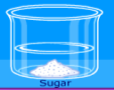
1.When the sugar and water in the beaker are combined, they will create a solution because - 
a)
the water will now turn into a gas 
b)
 the sugar will dissolve into the water
c)
. the water will dissolve into the sugar 
d)
 the two substances are chemically              combining and chemically changing their  properties
34.
In a controlled experiment,
a)
there are at least two variables
b)
a control group is compared with one or more experimental groups
c)
a variable is not needed
d)
should only be conducted one time
35.

A life scientist who observes the relationships between plants, animals, weather and soil on a mountaintop is studying a(n)

a)

community

b)

ecosystem

c)

population

d)

organism

36.

Which of the following statements best describes the composition of air?

a)

air is only made up of nitrogen

b)

air is only made up of oxygen

c)

air is only made up of carbon dioxide

d)

air is made up of a mixture of different gasses

37.

Carbohydrates are made up of which monomers (smallest units)?

a)

amino acids

b)

nucleotides

c)

simple sugars (glucose)

d)

fatty acids

38.
What can you find by working through the statements of a dichotomous key?
a)
how long a fungus can live
b)
when a species first appeared on Earth
c)
the scientific name of an organism
d)
how many animals are birds
39.
Which of the following correctly describes how to write a scientific name?
a)
genus capitlized, species lower case, all italicized 
b)
genus and species both capitalized, all bold
c)
genus capitalized, species lower case, all bold
d)
species only, capitalized and italicized
40.

24. The diagram shows a rock being placed in a graduated cylinder containing water. What is the volume of the rock? (Note: 1 mL = 1 cm3)

a)

5

b)

8

c)

10

d)

12

41.
a)

Force Q is equal to Force S and Force R is equal to Force T.

b)

Force Q is less than Force S and Force R is equal to Force T.

c)

Force Q is equal to Force S and Force R is greater than Force T.

d)

Force Q is less than Force S and Force R is greater than Force T.

42.

Which bar magnet will experience the greatest magnetic attraction?

a)

Magnet 1

b)

Magnet 2

c)

Magnet 3

d)

Magnet 4

43.

Which illustration correctly shows how the spheres will behave?

a)
b)
c)
d)
44.

Which term is an example of force?

a)

weight

b)

energy

c)

work

d)

mass

45.

How does the elastic potential energy in the bow change as the archer fires an arrow?

a)

It decreases from Step1 to Step 2, then increases to Step 3.

b)

It increases from Step1 to Step 2, then decreases to Step 3.

c)

It remains constant from Step1 to Step 2, then increases to Step 3.

d)

It remains constant from Step1 to Step 2, then decreases to Step 3.

46.

An object moves at a constant speed.


What will happen to this object’s motion over time if no new forces are applied?

a)

It will change direction.


b)

It will increase in speed.

c)

It will decrease in speed.

d)

It will maintain a constant speed.

47.
The group number tells us how many _________ there are in an element.
a)
groups
b)
valence electrons
c)
energy levels
d)
chemicals
48.
The ________________ tells you how many energy levels are used in an element.
a)
group number
b)
atom
c)
protons
d)
period number
49.
The element Tellurium has the atomic mass of 127.60 and its atomic number is 52. How many neutrons are in the element Tellurium?
a)
179.60
b)
127.60
c)
52
d)
76
50.
True or False - An energy level has to be full before moving on to the next energy level?
a)
true
b)
false
51.
How many valence electrons do elements in group 17 have in their outer energy level?
a)
7
b)
17
c)
1
d)
0
52.
Which particle does not contribute mass to the atom?
a)
Proton
b)
Neutron
c)
Electron
d)
Nucleus
53.
What property of water allows it to be such a versatile solvent that it is often called the "universal solvent?"
a)
Purity
b)
Polarity and cohesion
c)
High heat capacity
d)
Expansion upon freezing
54.
Vitamin D can be obtained from _______________. 
a)
Carrots
b)
Wholegrain food
c)
Cereal
d)
Sunlight
55.
_____________ cannot be stored in the body  and gets excreted through urine when not used immediately. 
a)
Water-soluble vitamins
b)
Trace minerals
c)
Fat-soluble vitamins
d)
Major Minerals
56.
Why is DNA important?
a)
it is very small and very complicated
b)
it's in everything
c)
it serves as the blueprint for traits of all living things
d)
because we eat it every day for energy
57.
Movement of anything from an area of high concentration to low concentration.
a)
Diffusion
b)
Hypotonic
c)
Isotonic
d)
Passive Transport
58.

The animal that is hunted and killed for food.

a)

Decomposer

b)

Predator

c)

Scavenger

d)

Prey

59.
The amount of energy that usually transfers from one trophic level to the next...
a)
10%
b)
20%
c)
80%
d)
50%
60.
Which statement about viral reproduction is correct?
a)
A virus must complete interphase before entering mitosis
b)
A virus cannot repdouce on its own and depends on the host cell
c)
A virus can only use a host to reproduce if the host cell lacks a cell membrane
61.
What happens in S-phase of the cell cycle?
a)
cell divides
b)
DNA replicates
c)
cell multiplies
d)
cell grows
62.

Organic matter is a main part of soil. What is the other main part of soil?

a)

worms

b)

dirt

c)

water

d)

inorganic matter

63.

Sand dunes in the Middle East are created when the wind moves sand from deserts to new places. The sand being moved to a new location is an example of which of Earth's processes?

a)

erosion and deposition

b)

glacier movement

c)

Earth crust movement

d)

land mass motion

64.

In the rock cycle, what causes igneous rock to form?

a)

heat and pressure

b)

weathering and erosion

c)

tectonic plates

d)

the cooling of magma

65.
Shifting pieces of the Earth's crust are called
a)
tectonic plates
b)
volcano
c)
magma
d)
island
66.
Liquid water changing slowly into a gas and rising into the atmosphere is called
a)
evaporation
b)
condensation
c)
rain
d)
typhoon
67.
Reflection of light by dust particles and gases in the atmosphere is
a)
scattering
b)
greenhouse effect
c)
Coriolis effect
d)
absorption
68.
The second layer of the earth goes down 1800 miles. It is called the
a)
crust
b)
outer core
c)
inner core
d)
mantle
69.
These are very common at plate boundaries.
a)
volcanoes
b)
oceans
c)
valleys
d)
glaciers
70.
Movement of Earth around the sun.
a)
Rotation
b)
Revolution
71.
Spinning of Earth on its axis.
a)
Rotation
b)
Revolution
72.

Occurs when Earth is positioned between the moon and the sun and when Earth's shadow crosses the lighted half of the moon.

a)

Solar Eclipse

b)

Eclipse

c)

Lunar Eclipse

d)

Perigee

73.
Which moon phase is shown in this diagram?
a)
new moon
b)
first quarter
c)
full moon
d)
last quarter/3rd quarter
74.
A small object that appears as a streak of light as it enters earth's atmosphere.
a)
Asteroid
b)
Comet
c)
Moon
d)
Meteor
75.
The GAS GIANTS or Outer planets are:
a)
Mercury, Earth, Jupiter, Saturn
b)
Saturn, Neptune, Pluto, Mars
c)
Saturn, Jupiter, Uranus, Neptune
d)
Earth, Mars, Saturn, Neptune
76.

Which model of the solar system has the sun in the center with all of the planets orbiting it?

a)

heliocentric

b)

geocentric