wayground logo

Free Printable Worksheets

NEW

Font size

S
M
L
XL
Worksheets

Weather Review

Total questions: 50

Worksheet time: 1hrs 1mins

Name
Class
Date
1.

What is the jet stream?

a)

Precipitation in North Carolina

b)

Weather over a long period of time

c)

Strong winds above the Earth's surface

d)

Football flying over the Earth

2.
How does the jet stream affect the weather?
a)
The jet stream transports weather systems that affect us.
b)
The jet stream does not affect the weather.
c)
The jet stream releases oxygen so we can breathe.
d)
The jet stream brings only bad weather.
3.

A narrow band of fast moving winds high in the atmosphere that move from west to east

a)

Jet Stream

b)

doldrums

c)

equator

d)

polar easterlies

4.

The movement of air from areas of high pressure to areas of low pressure

a)

wind

b)

jet stream

c)

Gulf Stream

d)

equator

5.

winds that blow steadily from specific directions over LONG distances

a)

wind

b)

jet stream

c)

Gulf Stream

d)

global winds

6.

The winds that give the United States most of its weather, blow from west to east

a)

prevailing westerlies

b)

Tradewinds

c)

global winds

d)

jet stream

7.
Which has the greatest effect on the movement of the jet stream? 
a)
size of clouds
b)
amount of precipitation
c)
differences in air temperatures
8.

a climate pattern where waters in the Pacific Ocean are warmer than usual, brings flooding and storm

a)

jet stream

b)

Gulf Stream

c)

El Nino

d)

La Nina

9.

a climate pattern where waters in the Pacific Ocean are cooler than usual, brings droughts and drier weather

a)

jet stream

b)

Gulf Stream

c)

El Nino

d)

La Nina

10.

The ocean off of the West Coast of the United States

a)

Pacific

b)

Atlantic

c)

Indian

d)

Southern

11.

movement of air from sea to land during the day when cooler air from above the water moves over the land, forcing the heated, less dense air above the land to rise

a)

land breeze

b)

prevailing westerlies

c)

sea breeze

d)

Tradewinds

12.
What does this tool measure?
a)
Wind speed
b)
Wind direction
c)
Air pressure
d)
Temperature
13.
A rain gauge measures what?
a)
Air pressure
b)
Wind speed
wind speed
c)
Amount of rain fall
d)
Wind direction
14.
This weather instrument is an...
a)
wind vane
b)
anemometer
c)
barometer
d)
thermometer
15.
The weather forecast tomorrow says there will be a 15 mph northeast wind and a high temperature of 52 degrees. What three instruments will a meteorologist use to make this prediction?
a)
anemometer, wind vane, thermometer
b)
barometer, hygrometer, wind vane
c)
thermometer, satellite image, hygrometer
d)
wind vane, satellite image, barometer
16.

All weather begins with ________.

a)

moisture

b)

energy from the sun

c)

wind

d)

temperature

17.
Water vapor is water in which form?
a)
liquid
b)
gas
c)
solid
d)
tiny droplets
18.
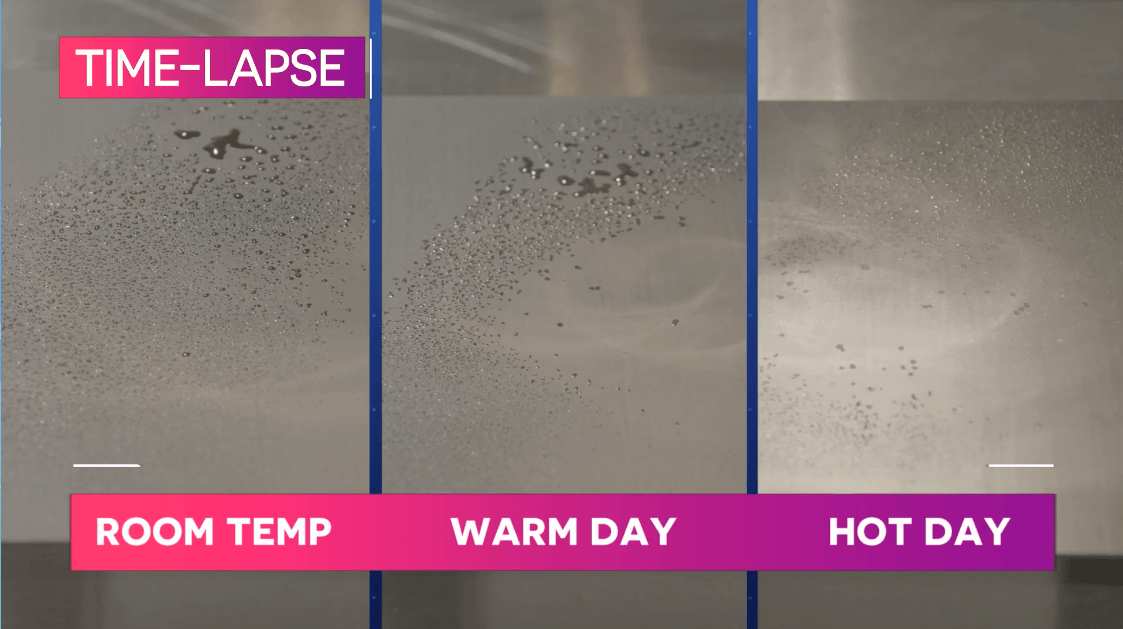
When does water evaporate fastest?
a)
at room temperature
b)
on a warm day
c)
on a hot day
d)
on a cold day
19.
How old is most of the water we drink today?
a)
thousands of years
b)
millions of years
c)
a few months
d)
a few weeks
20.
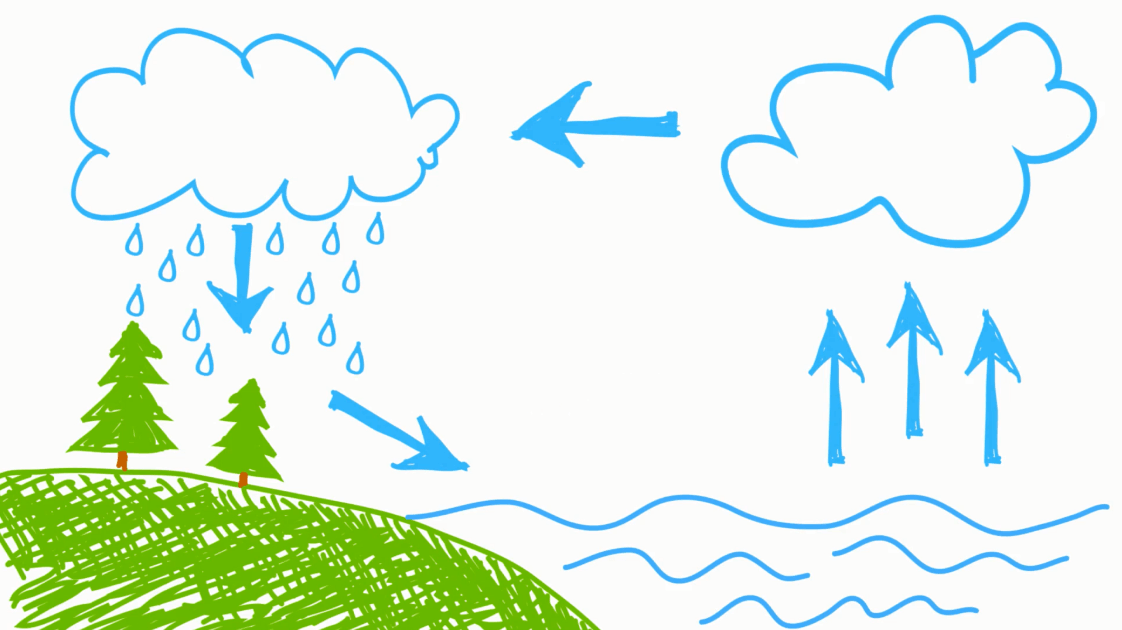
When water vapor s cooled and forms droplets-
a)
Condensation
b)
Evaportation
c)
Transpiration
d)
Run-off
21.
The changes to water when it cycles the earth is called
a)
the moon cycle
b)
the sun cycle
c)
the water cycle
d)
the wind cycle
22.
When water is heated in the ocean by the sun and turns into water vapor
a)
condensation
b)
evaporation
c)
transpiration
d)
runoff
23.
What is it called when plants give off water vapor as a waste product?
a)
condensation
b)
evaporation
c)
sublimation
d)
transpiration
24.
What cloud is found at ground level? 
a)
Cirrus
b)
Stratus
c)
Culumlus 
d)
Fog
25.
These clouds are wispy or curly, white, thin & feather-like
a)
cumulus
b)
cumulonimbus
c)
cirrus
d)
stratus
26.
These clouds are very high in the sky.
a)
cumulus
b)
cumulonimbus
c)
cirrus
d)
stratus
27.
These clouds are puffy and white and sometimes appear to have a flat bottom.
a)
cumulus
b)
cumulonimbus
c)
cirrus
d)
stratus
28.
These clouds appear in blanket-like layers.
a)
cumulus
b)
cumulonimbus
c)
cirrus
d)
stratus
29.

A rotating funnel-shaped cloud with winds that blow up to 500 km/h is called a tornado.

a)

True

b)

False

30.

A _____________ is a large, rotating low-pressure system that forms over the warm waters of oceans near the equator.

a)

tornado

b)

hurricane

c)

thunderstorm

d)

flooding

31.

Most hurricanes

a)

cannot be seen from space.

b)

cross large amounts of land.

c)

become dangerous category 5 storms.

d)

lose their power when they move into cooler waters or moves over land.

32.

What is the name of the weather instrument that measures air pressure?

a)

Barometer

b)

Thermometer

c)

Psychrometer

d)

Anemometer

33.

clear, sunny skies

a)

high pressure

b)

low pressure

34.

stormy weather (clouds and precipitation)

a)

high pressure

b)

low pressure

35.

If the air pressure reading is falling

a)

a storm is approaching

b)

the weather is improving

36.

heavier, sinking air

a)

high pressure

b)

low pressure

37.

tornado

a)

extreme high pressure

b)

extreme low pressure

38.

high pressure

a)
b)
39.
The sun shines down on this family as the play on the beach.
a)
conduction
b)
convection
c)
radiation
40.
A group of friends gather around a fire to stay warm.
a)
conduction
b)
convection
c)
radiation
41.
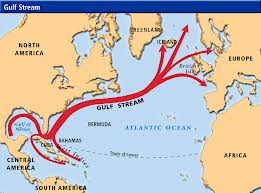
The Gulf Stream is a current that brings warm ocean water from the south to the north.
a)
conduction
b)
convection
c)
radiation
42.
Walking on the warm sand sand with your bare feet.
a)
conduction
b)
convection
c)
radiation
43.
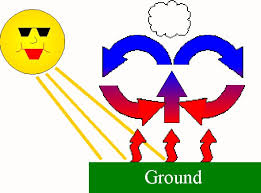
Warm air rises and the cool air sinks.
a)
conduction
b)
convection
c)
radiation
44.

What is climate?

a)

the condition of the atmosphere at any given time and place

b)

cloud cover and temperature

c)

precipitation and humidity at a given time and place

d)

weather conditions in an area over a long period of time

45.

Which two factors determine the climate in a particular region?

a)

temperature and latitude

b)

precipitation and humidity

c)

temperature and precipitation

d)

humidity and air pressure

46.

What climate zone is located near the equator where the sun is directly overhead all year?

a)

polar

b)

tropical

c)

desert

d)

temperate

47.
A tropical climate in the US would be?
a)
Virginia
b)
New York
c)
California
d)
Florida
48.

Differences in air pressure cause wind.

a)

True

b)

False

49.

Which two processes cause clouds to form?

a)

precipitation and runoff

b)

transpiration and precipitation

c)

evaporation and condensation

d)

evaporation and ground water

50.

____ is how hot or cold something is.

a)

temperature

b)

humidity

c)

altitude

d)

wind speed