Wayground logo

Free Printable Worksheets

Font size

S
M
L
XL
Worksheets

March Madness Weather Edition

Total questions: 35

Worksheet time: 1hrs 23mins

Name
Class
Date
1.

Differences in air pressure cause wind.

a)

True

b)

False

2.

A rain gauge is a device that collects rainfall.

a)

True

b)

False

3.

Which of the following does NOT affect the weather?

a)

The temperature of the air

b)

The speed of the wind

c)

The types of clouds in the sky

d)

The phase of the moon

4.
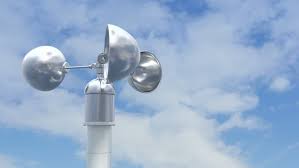
An anemometer is used to measure...
a)
rain fall
b)
snow
c)
wind speed
d)
wind direction
5.
Weather is the current conditions outside.
a)
True
b)
False
6.
Why would a meteorologist use a wind sock? 
a)
To measure wind direction
b)
To measure temperature
c)
To measure wind speed
d)
To measure rainfall
7.
A scientist who studies weather is called ...
a)
a meteorologist
b)
an astronomer
c)
a biologist
d)
a weatherologist
8.
Hot air rises because...
a)
it is less dense
b)
it is heavier
c)
it is more dense
d)
it contains Helium
9.
The process the causes plate tectonics, wind, and ocean currents is known as...
a)
Radiation
b)
Conduction
c)
Nuclear Energy
d)
Convection
10.
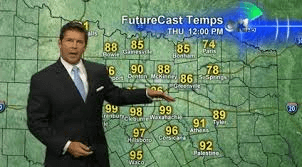
According to the map, which city is likely experiencing warmer weather?
a)
Seattle
b)
Chicago
c)
Boston
d)
San Diego
11.
Which type of weather is Dallas, Texas, likely experiencing?
a)
Thunderstorms
b)
Clear skies
c)
Cold temperatures
d)
Gentle precipitation for days
12.
What type of weather usually goes with this symbol?
a)
Clear, sunny skies
b)
Cloudy skies
c)
Hot temperature
d)
Thunderstorms
13.
What type of weather will occur with this symbol?
a)
Thunderstorms, cooler temperatures
b)
Gentle precipitation, warmer temperatures
c)
Sunny skies, warmer weather
d)
Cloudy skies, cooler weather
14.
____________ air sinks/falls because it is ____________dense.
a)
Cold, More
b)
Warm, Less
c)
Cold, Less
d)
Warm, More
15.
____________ air rises because it is ____________dense.
a)
Cool, Less
b)
Warm, Less
c)
Cold, More
d)
Warm, More
16.
In a high pressure systems
a)
there are few clouds because the air in moving downward
b)
there are many clouds because the air is very humid
c)
there are few clouds because the air is moving outward
d)
there are many clouds because the air is moving upward
17.
A cold front usually brings what kind of weather?
a)
snow  
b)
sunny and fair
c)
heavy rain and/or thunderstorms 
d)
 cool and dry 
18.
Ryan is working on his Science Fair project. He plans to measure the amount of rainfall that has fallen in his neighborhood over the past two weeks. What instrument should he use?
a)
Rain gauge
b)
Wind Vane
c)
Barometer
d)
Thermometer 
19.
What type of front is this? 
a)
warm front
b)
cold front
c)
stationary front
d)
occluded front
20.
What type of front is this?
a)
warm front
b)
cold front
c)
stationary front
d)
occluded front
21.
A severe storm which involves a funnel cloud forming over land is:
a)
hurricane
b)
tornado
c)
thunderstorm
d)
blizzard
22.
A severe storm that involves winds over 119mph and forms over water is:
a)
tornado
b)
thunderstorm
c)
hurricane
d)
blizzard
23.
This severe weather involves low temperatures and snow either falling or drifting
a)
hurricane
b)
thunderstorm
c)
tornado
d)
blizzard
24.
These can be produced by thunderstorms
a)
stationary fronts
b)
tornadoes
c)
volcanoes
d)
tsunamis
25.
This type of front can bring strong storms
a)
cold
b)
warm
c)
stationary
d)
occluded
26.
This type of front results in the same weather for several days
a)
warm
b)
cold
c)
stationary
d)
occluded
27.
Most of the U.S.A weather storms come from the...
a)
East and Travel to the West
b)
West and Travel to the East
c)
North and Travel to the South
d)
South and Travel to the North
28.
This severe weather involves lightning, rain, and forms from a cumulonimbus cloud.
a)
thunderstorm
b)
tornado
c)
hurricane
d)
blizzard
29.
A severe storm which involves a funnel cloud forming from a cumulonimbus cloud:
a)
hurricane
b)
tornado
c)
thunderstorm
d)
blizzard
30.

Climate is talking about the short-term weather changes that happen.

a)

True

b)

False

31.

Which of the following 2 determine the climate of an area?

a)

Temperature

b)

Winds

c)

Plants

d)

Precipitation

32.

What type of climate would you expect areas along the equator to have?

a)

Hot summers, cold winters

b)

Consistent temperatures and precipitation year-round

c)

Warmer temperatures because of it's latitude

d)

Colder than surrounding areas

33.

Locations near the equator get less sunlight than other locations.

a)

True

b)

False

34.

The Earth's surface is curved, and this impacts climate.

a)

True

b)

False

35.

Why is the poles colder than the equator area?

a)

The sun is more direct

b)

The sun is closer

c)

The sun is less direct

d)

The sun is further away always.