
NEW
Font size
 Worksheets
Unit 7: Waves Review
Total questions: 35
Worksheet time: 52mins

What do all waves transfer?
Matter
Heat
Electricity
Energy

The highest part of the wave is called the _______________.
Amplitude
Wavelength
Trough
Crest

The bottom part of the wave is called trough.
True
False

_________________________ is the distance between a point on one wave and the identical point of the next wave.
Amplitude
Frequency
Crest
Wavelength
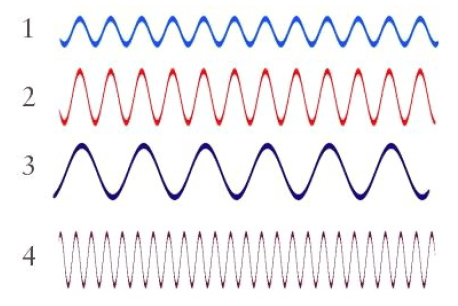
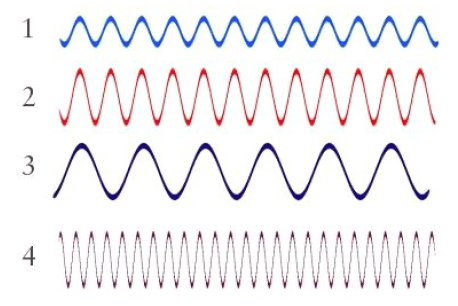
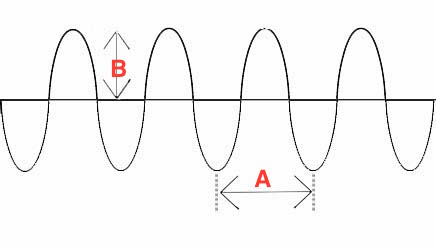
The bigger the amplitude, the ________ energy carried by the wave.
more
less

Which of the following can waves transfer energy through?
solid
liquid
gas
empty space
all of the above

What are the two types of waves?
longitudinal and transverse
sound and light

This illustration best depicts which of the following behaviors?
Reflection
Refraction
Diffraction
Resonance
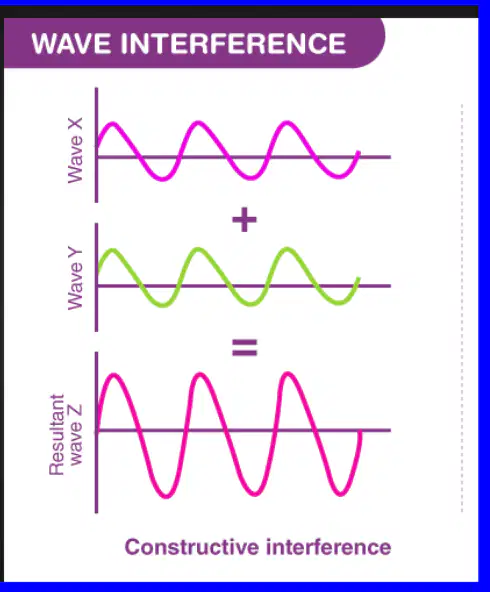
The image depicts which of the following wave behaviors?
Resonance
Doppler Effect
Interference
Polarization
Sound waves must travel through ___________________.
air
a medium
an outward area
a short

More Energy
Less Energy

Images in a plane mirror are
real
larger
same size
smaller


What is a general definition of wave interference?
When a wave bounces off an object
When more than on wave meet and interact in the same medium
When a wave bends around a corner
When a wave creates static

Which electromagnetic waves have the highest frequencies and the shortest wavelengths?
microwaves
visible light
gamma rays
x-rays

Select the correct order of waves on the EMS from the longest wavelength to the shortest wavelength
Radio, Micro, Infra, Visible, Ultra, X-ray, Gamma
Gamma, X-ray, Ultra, Vis, Infra, Micro, Radio
Vis, Micro, Infra, Ultra, X-ray, Gamma, Radio
Micro, Radio, Vis, Infra, Ultra, X-ray, Gamma
How are electromagnetic waves different from other waves?
They have very short wavelengths
They transmit energy instead of matter
They can travel through empty space
They can change direction by reflection

Which section of the spectrum is the ONLY one we can see?
Ultraviolet Rays
Gamma Rays
X-Rays
Visible Light

How much of the electromagnetic spectrum is visible?
All of it
None
Only a small part
Most of it


Way in which sound waves are used by animals such as dolphins and bats.
Echolocation
Transverse
Doppler Effect
Longitudinal
What is sonar used for
To detect fish and any other living things
To detect the distance and direction of under water objects
To catch fish and other Living things
To detect distance of objects underwater

